
Data Center Roadway Design
A guide to data center roadway design by RSP Engineers. Learn about pavement sections for heavy loads, fire access roads, turning radii for oversize vehicles, and site circulation.
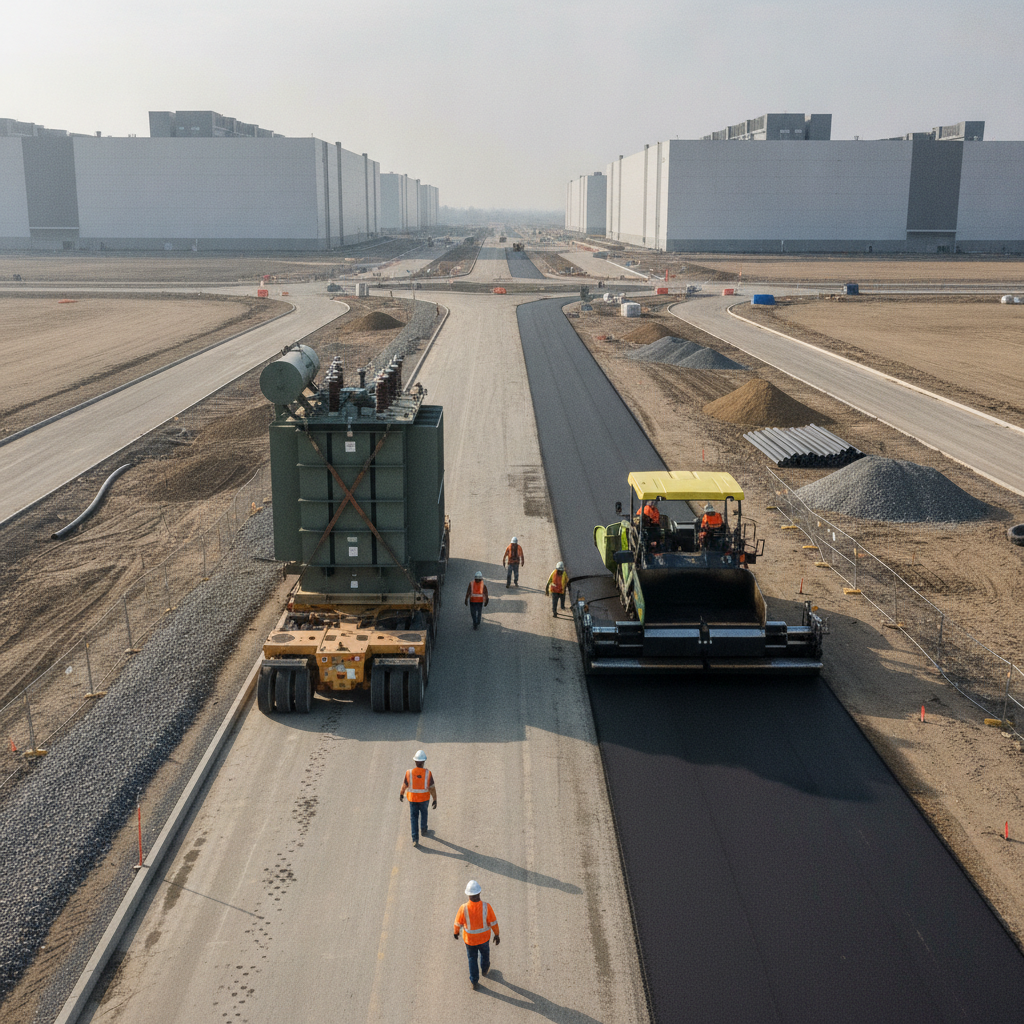
Pavement Design for Extreme Loading Conditions
Standard commercial pavement sections are insufficient for the unique demands of a data center. The primary challenge is accommodating the immense weight of critical equipment delivered during and after construction, including electrical transformers, backup generators, and large cooling units. These deliveries often involve specialized multi-axle transport vehicles that exert concentrated loads far beyond typical highway traffic. A robust pavement design is therefore essential to prevent structural failure, rutting, and costly long-term maintenance. The design process begins with a comprehensive geotechnical investigation to understand the underlying soil conditions. A detailed Geotechnical soil report informs the necessary subgrade stabilization techniques and the required thickness of the aggregate base and pavement layers (whether asphalt or concrete). The engineering analysis must account for both the frequency and magnitude of these heavy vehicle loading events to ensure the infrastructure’s longevity and reliability from day one.
Geometric Design for Oversize Vehicle Maneuverability
Roadway Design Considerations: Permanent vs. Temporary Haul Routes
| Feature | Permanent Access Road | Construction Haul Route |
|---|---|---|
| Pavement Section | Multi-layer asphalt or concrete designed for long-term, specific loads (e.g., transformers, fire apparatus). | Heavy-duty aggregate base (e.g., limerock, crushed concrete) designed for durability under repetitive, heavy construction traffic. |
| Primary Purpose | Operational access for staff, visitors, security, emergency services, and periodic heavy equipment deliveries. | Material delivery, earthmoving equipment access, and general construction traffic during the build phase. |
| Design Life | 20-30+ years, with planned maintenance cycles. | Temporary, intended for the duration of construction (typically 1-3 years). Often removed or paved over. |
| Drainage System | Permanent, integrated system with curbs, inlets, and underground pipes tied to the site's stormwater management plan. | Temporary swales, ditches, and sediment control measures to manage runoff and prevent erosion during construction. |
| Geometric Standards | Precise alignment, grades, and curve radii meeting final design and regulatory requirements for safety and access. | Functional alignment focused on construction logistics; may have steeper grades or tighter turns not suitable for permanent use. |
| Cost Implication | Higher initial cost due to finished surfaces, permanent drainage, and stricter specifications. | Lower initial cost, but considered a necessary project expense to protect the final, more expensive infrastructure. |
Beyond sheer weight, the physical dimensions of delivery vehicles present a significant design challenge. A successful site circulation plan depends on a roadway network with adequate horizontal and vertical clearance. The geometric design must feature wide lanes and generous curve radii to allow oversize loads to navigate the site without encroaching on curbs, landscaping, or other critical infrastructure. This is especially critical at intersections and access points to equipment pads. Civil engineers use specialized software to model the turning paths of specific delivery vehicles, ensuring the design accommodates the required turning radii. This analysis influences the entire site plan design, from the location of security gates to the alignment of primary access roads. Neglecting this step can lead to costly construction-day modifications or, in a worst-case scenario, the inability to deliver essential equipment to its designated location.
Fire Apparatus Access and Emergency Response
Ensuring rapid and unrestricted emergency vehicle access is a non-negotiable requirement for data center sites. The design must incorporate dedicated fire apparatus access roads that meet or exceed the stringent standards set by the relevant authorities. These roads must be engineered to support the weight of the heaviest fire trucks, including aerial apparatus, and feature specific geometric characteristics such as minimum widths, maximum grades, and approved turnaround configurations for dead-end routes. The design must also consider the operational needs of firefighters, providing adequate clearance around the building for ladder truck setup and access to fire hydrants and connections. Fire code requirements for emergency vehicle access and aerial apparatus roads can vary by jurisdiction, and every project team should confirm the applicable standards with the local, state, regional, and federal authorities that hold review authority over the site, including the local fire marshal. Achieving full building code compliance is a critical milestone in the permitting process.
Integrating Security and Site Circulation
Data centers are high-security environments, and the roadway network is the first line of defense. The civil engineering design must seamlessly integrate with the facility’s overall security plan. This includes the strategic placement of security checkpoints, guard houses, and vehicle inspection areas. The layout must provide sufficient queuing space for vehicles awaiting clearance to prevent traffic from backing up onto public roads, which is a common concern for local transportation agencies. Effective site circulation design often involves segregating traffic flows. A common strategy is to create separate routes for staff and visitors, service vehicles, and secure equipment deliveries. This enhances security by controlling access to sensitive areas and improves operational efficiency. The design may also incorporate physical security measures like anti-ram bollards or reinforced gate systems, which have specific foundation and layout requirements that must be coordinated with the roadway and utility plans.
Stormwater Management and Drainage for Paved Surfaces
The extensive network of roads, parking lots, and equipment pads at a data center creates a large area of impervious surfaces, which significantly increases stormwater runoff. A comprehensive stormwater management plan is required to collect, treat, and convey this runoff in a controlled manner, preventing on-site flooding and downstream environmental impacts. This is a key component of the land development permitting process and often requires compliance with federal programs like the National Pollutant Discharge Elimination System (NPDES). The drainage design typically includes a system of curbs, gutters, storm inlets, and underground pipes that direct water to a detention or retention facility. Given the high value of the assets on site, engineers often design the drainage system to a higher standard to protect against water intrusion into critical buildings. This may involve integrating swales, bioretention areas, or underground vaults to manage water volume and quality before it is discharged from the site.
Construction Phasing: Haul Routes vs. Permanent Roadways
A critical and often overlooked aspect of data center site design is construction phasing. The intense construction activity, involving countless trips by heavy equipment and material delivery trucks, can destroy a newly built permanent road before the facility is even commissioned. A strategic approach involves designing and building separate, temporary haul routes to handle the burden of construction traffic. These haul routes are typically constructed with a robust aggregate base and are positioned to provide efficient access to laydown yards and the main building footprint. This strategy preserves the integrity of the final asphalt or concrete pavement, which is installed later in the construction sequence. Careful planning of site logistics and the transition from temporary to permanent infrastructure is essential for managing schedules, budgets, and ensuring the quality of the final product.
The RSP Engineers Approach to Data Center Site Design
At RSP Engineers, we approach data center projects with a comprehensive, lifecycle perspective. Our process begins with thorough due diligence and feasibility studies to identify potential site constraints, from geotechnical challenges to permitting hurdles. We then develop a detailed site plan design that integrates all critical elements: robust pavement and roadway geometry, compliant fire access, secure circulation patterns, and efficient stormwater management. As one of the leading Civil Engineering firms, we prioritize a clear permitting strategy from the outset. Our team collaborates closely with all project stakeholders, including developers, architects, MEP engineers, and security consultants, to ensure a cohesive and optimized design. We leverage our national experience to navigate the complexities of agency reviews and secure timely approvals. During the construction phase, our Construction Management Services provide oversight to ensure the design is implemented correctly, from subgrade preparation to the final pavement course, delivering a site that is ready for its mission-critical purpose.
Common Challenges in Data Center Roadway Engineering
Even with careful planning, data center site development can present unique challenges. One of the most common issues is discovering unforeseen geotechnical constraints, such as poor soils that require extensive and costly remediation before road construction can begin. Another frequent challenge is managing complex utility coordination, ensuring that the proposed roadway alignments do not conflict with the dense network of underground power, water, and fiber optic conduits essential to the data center’s operation. During the design review phase, navigating detailed agency review comments related to fire access, traffic impact, and stormwater management can be complex. A proactive approach to engaging with permitting authorities is crucial. Finally, a failure to perform a thorough constructability review can lead to designs that are difficult or unnecessarily expensive to build, highlighting the importance of having an experienced engineering team involved from the project’s inception.
Partner with RSP Engineers for Your Mission-Critical Project
The success of your data center project depends on resilient and reliable site infrastructure. The team at RSP Engineers provides the expert civil engineering, land development, and permitting services needed to navigate the unique challenges of mission-critical facilities. We deliver thoughtful, robust designs for roadways, drainage, and utilities that provide a solid foundation for your operations. Contact us today to discuss how our site engineering services can support your project from concept through construction.
Conclusion
Data center roadway design is a highly specialized field of civil engineering that is foundational to project success. It requires a detailed understanding of heavy vehicle loading, precise geometric design for oversize vehicles, and strict adherence to fire code compliance and security protocols. By prioritizing a comprehensive design process that includes geotechnical analysis, strategic construction phasing, and proactive agency coordination, developers can ensure their site infrastructure is secure, compliant, and built to last.
FAQs
-
Data center pavement must be designed for infrequent but extremely heavy vehicle loading from equipment like transformers and generators. This requires thicker pavement sections, a more robust subgrade, and detailed analysis beyond what is typical for a commercial site that primarily handles passenger cars and standard delivery trucks.
-
A Geotechnical engineer investigates the site’s soil and subsurface conditions. They provide a Geotechnical soil report with critical recommendations for subgrade stabilization, pavement section thickness, and foundation support. This data is fundamental to designing a roadway that will not fail under load.
-
Security is integrated through controlled access points, such as guard houses with queuing lanes, and by designing site circulation patterns that segregate traffic. The roadway layout is a key part of the overall security strategy, often incorporating physical barriers and clear lines of sight for surveillance.