
Data Center Permitting Guide
Navigate the complex data center permitting process. Our guide covers zoning entitlements, site plan review, environmental compliance, and utility agreements for mission-critical facilities nationwide
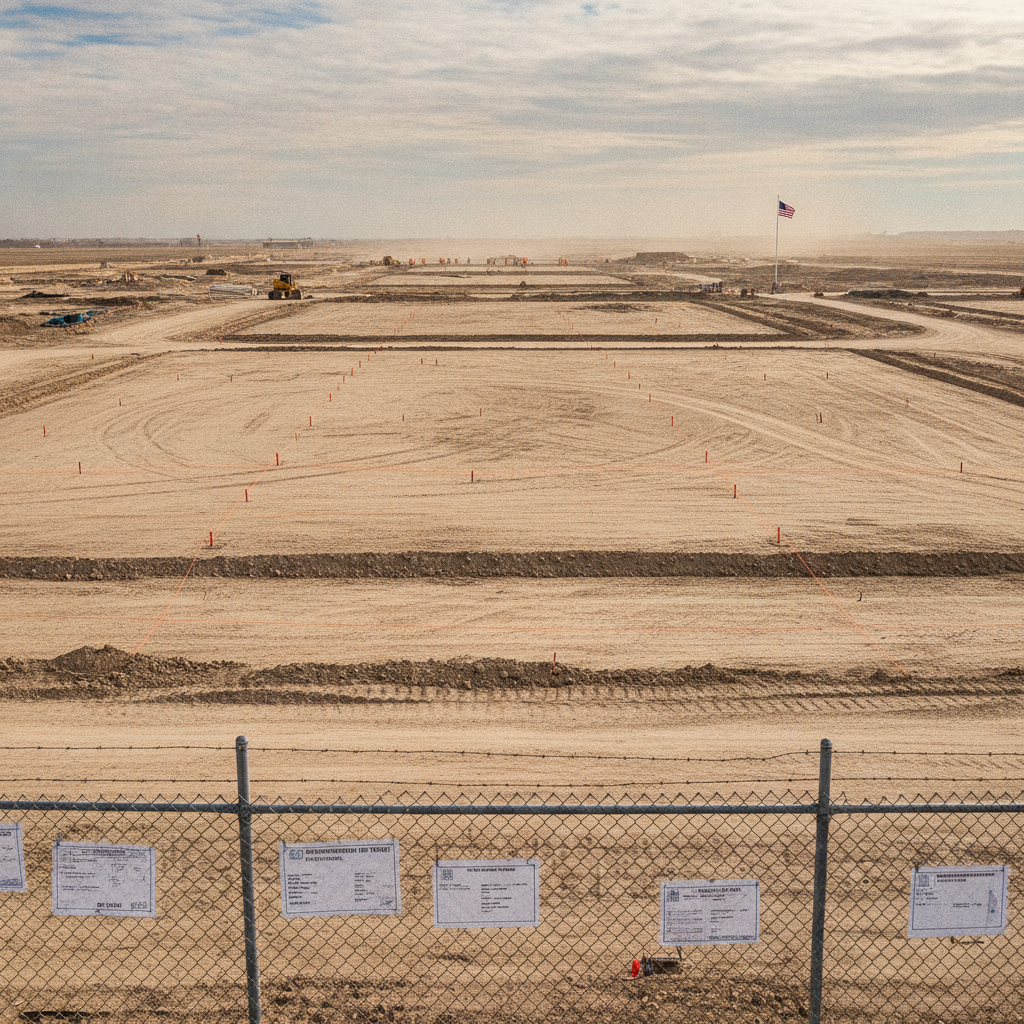
Navigating Zoning and Land Use Entitlements
The first hurdle in any data center project is ensuring the chosen property is zoned for such an intensive use. Typically, data centers are best suited for industrial, manufacturing, or specific commercial zoning districts that allow for 24/7 operations and the associated infrastructure. The initial zoning compliance analysis involves a thorough review of the local land development code to confirm that a data center is a permitted or conditional use. If it’s a conditional use, a public hearing process is often required to secure a special exception or conditional use permit, which can add significant time to the entitlement phase. This early stage requires careful due diligence and strategic engagement with local planning staff. Zoning codes and land use regulations vary by jurisdiction, and it is imperative that the project team confirms all applicable requirements with the local, state, regional, and federal authorities that hold review authority over the site. A Professional Engineer experienced in local entitlement processes can identify potential roadblocks, such as height restrictions, noise ordinances, or setback requirements, and develop a strategy for securing the necessary variances or rezoning actions if required. This proactive approach is essential for establishing a solid foundation for all subsequent permit submittals.
Comprehensive Site Plan Review and Approval
Key Data Center Permit Approval Pathways
| Permit/Approval Type | Typical Reviewing Agency (Generic) | Key Considerations | Estimated Timeline Range |
|---|---|---|---|
| Zoning & Land Use Entitlement | Local Planning/Zoning Department | Permitted vs. Conditional Use, Public Hearings, Variances, Zoning Compliance | 3-12+ Months |
| Site Development Plan | Local Engineering/Public Works Dept. | Grading, Drainage Design, Utilities, Access, ADA Compliance, Landscaping | 6-15 Months |
| Environmental Resource Permits | State Environmental Agency / Federal (e.g., USACE) | Wetlands, Endangered Species, Water Quality, NPDES, Cultural Resources | 6-24+ Months |
| High-Capacity Utility Agreements | Electric, Water, and Fiber Providers | Capacity Availability, Substation Design, Off-site Infrastructure, Easements | 12-36+ Months |
| Building & Trade Permits | Local Building Department | Building Code Compliance, Structural Integrity, MEP Systems, Fire/Life Safety | 3-6 Months |
Once the land use entitlements are secured, the focus shifts to the detailed site plan design. This is the core civil engineering phase where the physical layout of the facility and its supporting infrastructure is documented for agency review. The site plan is a comprehensive set of drawings that illustrates grading, drainage, utility connections, internal circulation, parking, landscaping, and lighting. It must demonstrate full compliance with all applicable development standards and engineering design criteria. The site development plan undergoes a rigorous review by multiple municipal departments, including planning, engineering, public works, and fire safety. Reviewers scrutinize every aspect of the design, from stormwater management calculations to roadway access points and ADA compliance for pedestrian routes. A well-prepared submittal package, supported by detailed engineering reports and calculations, is crucial for minimizing review cycles and avoiding costly requests for additional information. This is where experienced Civil Engineers add immense value by anticipating agency comments and designing a resilient, code-compliant site from the outset.
Environmental Permitting and Federal Compliance
Data center sites, particularly large greenfield developments, often trigger a range of environmental regulations at the state and federal levels. A critical early step is identifying potential environmental constraints, such as wetlands, floodplains, endangered species habitats, or cultural resources. The presence of jurisdictional wetlands, for example, may require a Section 404 permit from the U.S. Army Corps of Engineers under the Clean Water Act. This is a separate and often lengthy process that runs parallel to local site plan approvals. Furthermore, any project disturbing one acre or more of land requires a National Pollutant Discharge Elimination System (NPDES) permit for stormwater discharges associated with construction activity. This involves preparing a detailed Stormwater Pollution Prevention Plan (SWPPP) and implementing best management practices on site. Depending on the project’s funding, location, or specific impacts, a more comprehensive review under the National Environmental Policy Act (NEPA) could also be required. Navigating these federal regulations requires specialized environmental consulting and close coordination with the entire land development team.
Securing High-Capacity Utility Agreements
Perhaps the most unique challenge for data centers is securing adequate utility capacity. The power demands of a modern data center are immense, often requiring a new electrical substation and high-voltage transmission lines. The utility coordination process for power alone can be the longest lead-time item in the entire development schedule, sometimes taking years to design, permit, and construct. Early and continuous engagement with the electric utility provider is non-negotiable. Beyond power, data centers require significant water for cooling systems and reliable fiber optic connectivity. Securing agreements for water, sewer, and fiber involves detailed capacity studies and negotiations with multiple providers. The civil engineering plans must precisely document on-site and off-site utility extensions, easements, and connection points. Failure to secure these agreements early can bring a project to a complete halt, regardless of how quickly other permits are obtained. This phase demands a dedicated effort in utility coordination and infrastructure planning.
Stormwater Management and Drainage Design Permitting
The vast impervious surfaces of data center roofs and parking lots create a significant volume of stormwater runoff that must be managed on-site. Effective stormwater management is a primary focus of regulatory agencies to prevent downstream flooding and protect water quality. The drainage design must incorporate sophisticated systems like detention or retention ponds, underground storage chambers, and water quality treatment units to control the rate, volume, and quality of runoff leaving the site. The design must adhere to the stringent criteria of the local authority, which often has its own stormwater technical manual. The permit application requires detailed hydrologic and hydraulic modeling to prove the system’s performance during various storm events. This is a highly technical aspect of site engineering services that demands expertise in complex drainage calculations and familiarity with the latest stormwater technologies. A robust and compliant drainage design is critical for securing site plan approval.
Building Permit and Trade Permit Coordination
After the site development permits are issued, the final step is obtaining the building permit for the vertical construction. While the architect and structural engineer lead this effort, the civil engineering firm remains involved to ensure a seamless transition. The building permit application includes architectural, structural, mechanical, electrical, and plumbing (MEP) plans, which are reviewed for compliance with the applicable building codes. For data centers, this review is particularly intense due to the complex life-safety systems, backup power generation, and specialized cooling equipment. The building department will coordinate reviews with the fire marshal and other trade-specific inspectors. The civil engineer’s role often includes certifying the building foundation location, ensuring final utility connections are correct, and providing as-built surveys upon completion. This final phase of permitting represents the culmination of all prior design and approval efforts.
RSP Engineers’ Strategic Permitting Approach
At RSP Engineers, we understand that a successful data center project hinges on a proactive and integrated permitting strategy. Our approach is built on decades of experience navigating complex regulatory environments for mission-critical facilities across the nation. We manage the process through distinct, collaborative phases to minimize risk and accelerate timelines. Our process begins with comprehensive Due Diligence and Feasibility Studies to identify potential site constraints and entitlement risks before significant capital is invested. We then move into a collaborative Entitlement and Master Planning phase, working with local authorities to establish a clear path to approval. During Detailed Design and Permit Submittals, our team of Civil Engineers prepares meticulous and complete application packages designed to streamline agency review. Finally, we provide robust Construction Administration support, ensuring that construction proceeds according to the approved plans and that final certifications are secured without delay.
Common Pitfalls in Data Center Permitting
Even with a strong team, data center permitting is filled with potential pitfalls. One of the most common errors is underestimating the lead time for high-capacity power delivery; this should be the very first item investigated. Another frequent issue is the late discovery of environmental constraints like jurisdictional wetlands, which can force costly redesigns or even render a site unusable. Incomplete submittal packages are a primary cause of delay, as they trigger multiple rounds of agency comments and revisions, burning valuable time. Navigating conflicting requirements between different review agencies—for example, where a fire department’s access requirements conflict with environmental preservation rules—is another significant challenge. A seasoned civil engineering consultant acts as the central coordinator, identifying these conflicts early and negotiating practical solutions that satisfy all stakeholders. Proactive communication and a deep understanding of the interconnected nature of these permits are key to avoiding these common setbacks.
Partner with RSP Engineers for Your Next Mission-Critical Project
The speed, complexity, and scale of data center development demand an engineering partner with proven expertise in navigating high-stakes permitting challenges. RSP Engineers provides the comprehensive site engineering services needed to guide your project from concept to completion. Our nationwide experience in site development, utility coordination, and managing the agency review process ensures that your project is positioned for success. We specialize in creating efficient, compliant designs that meet the rigorous demands of mission-critical facilities while accelerating your path to market. Don’t let regulatory hurdles slow your growth. Contact RSP Engineers today to discuss how our strategic approach to civil engineering and permitting can bring certainty and efficiency to your next data center development.
Conclusion: A Proactive Path to Permit Approval
Successfully permitting a data center in the United States is a marathon, not a sprint. It requires a deep understanding of interwoven regulations, a proactive approach to stakeholder engagement, and meticulous technical documentation. From initial zoning compliance to final utility connections, every step must be carefully planned and executed. By prioritizing early due diligence, strategic utility coordination, and expert civil engineering, developers can navigate the complexities of the approval process and mitigate the risks of costly delays. Ultimately, a well-managed permitting strategy is the foundation upon which a successful mission-critical facility is built. Related Articles The Civil Engineer’s Role in Mission-Critical Facility Design Navigating Stormwater Regulations for Large-Scale Industrial Sites Utility Coordination: The Unseen Challenge in Land Development
FAQs
-
You should engage a civil engineering firm during the site selection and due diligence phase, even before the land is purchased. An experienced engineer can perform a feasibility study to identify critical flaws related to zoning, utility availability, environmental constraints, and site access that could derail the project later on.
-
While many factors can cause delays, the single longest lead-time item is typically utility coordination, especially for high-voltage power. The process of designing, permitting, and constructing a new substation and transmission infrastructure can take several years and must be initiated at the very beginning of the project.
-
Often, yes. Due to their large footprint, data centers frequently impact over an acre of land, which automatically triggers the need for a federal NPDES permit for stormwater management. Depending on the site’s characteristics, permits for wetland impacts, endangered species, or other sensitive environmental resources may also be required.