
Data Center NEPA Compliance Guide
A guide for data center developers on navigating the NEPA process in Florida. Learn about Environmental Assessments (EA), EIS, and the federal permitting nexus.
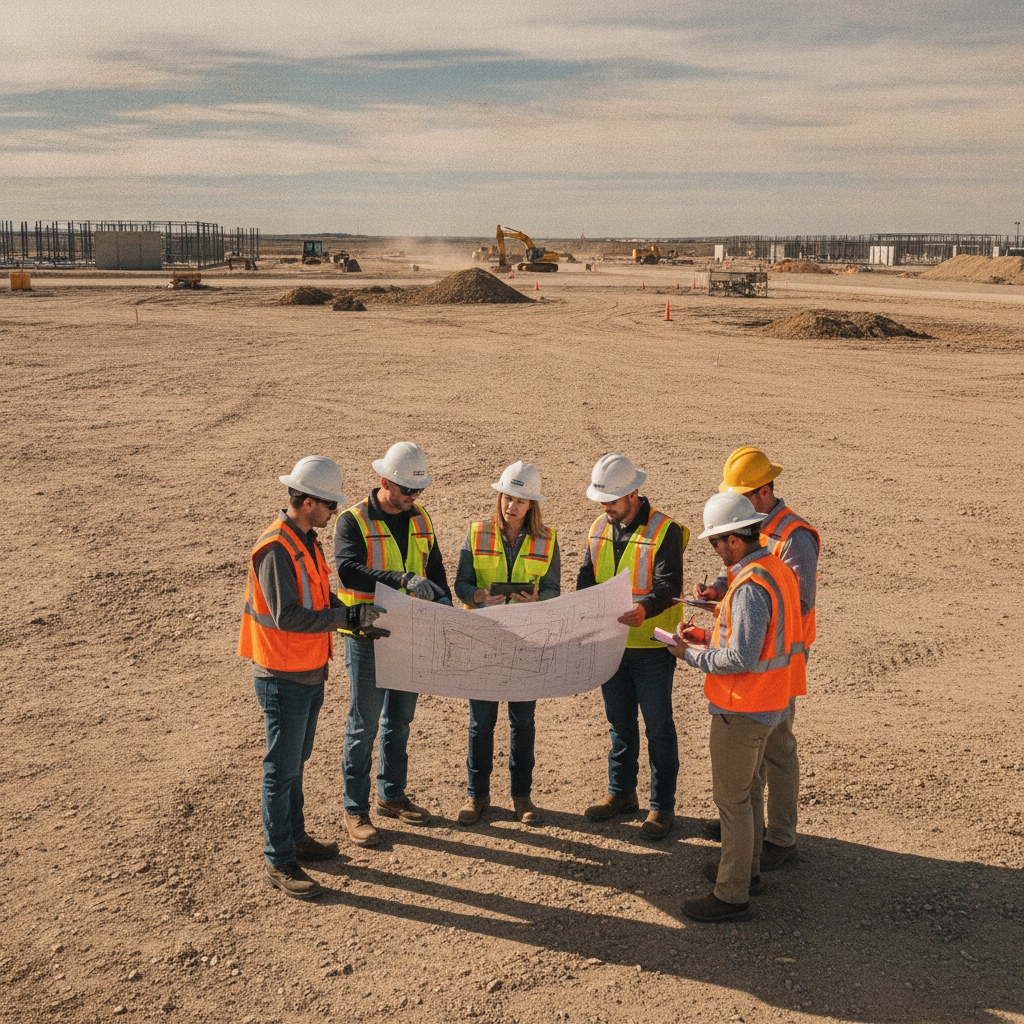
Understanding the NEPA Trigger: The Federal Nexus
A private development project, such as a data center, is not automatically subject to NEPA. The requirement hinges on the presence of a federal nexus, which is any form of federal agency control or authority over the project. Identifying this nexus early in the due diligence phase is a critical task for the project’s civil engineering team. A nexus can be created in several common scenarios, such as requiring a permit from the U.S. Army Corps of Engineers (USACE) under Section 404 of the Clean Water Act to impact federally protected wetlands—a frequent occurrence on large undeveloped sites in Florida. Other examples of a federal agency action that can trigger NEPA include receiving federal grants or funding, needing an easement to cross federal lands, or requiring specific permits from agencies like the Federal Aviation Administration (FAA) for structures near airports. The lead federal agency responsible for the permit or action is also responsible for ensuring NEPA compliance. This means the project sponsor—the data center developer—must provide all necessary studies, documentation, and analysis for the agency to complete its review. Failure to identify a federal nexus can lead to significant project delays when it is discovered late in the permitting process.
The Three Pathways of NEPA Review
NEPA Review Level Comparison for Data Centers
| Feature | Categorical Exclusion (CatEx) | Environmental Assessment (EA) | Environmental Impact Statement (EIS) |
|---|---|---|---|
| Typical Trigger | Minor equipment upgrades on a previously approved site with no new disturbance. | New site development with potential but not necessarily significant impacts (e.g., minor wetland impacts, requires mitigation). | Project with significant, unavoidable impacts on sensitive resources (e.g., major wetland loss, impacts to critical habitat, significant community controversy). |
| Typical Timeline | 1-3 months | 6-18 months | 2-5+ years |
| Public Involvement | None required. Decision is documented in the administrative record. | Public comment period on the draft EA and FONSI (typically 30 days). | Formal public scoping meetings, extensive comment period on Draft EIS, public hearings may be held. |
| Required Documentation | Agency-specific checklist or memo to file. | EA document (50-200 pages), leading to a Finding of No Significant Impact (FONSI). | Draft EIS, Final EIS (often 1,000+ pages with appendices), and a Record of Decision (ROD). |
| Key Analysis | Confirmation that the action fits a pre-approved category. | Analysis of impacts, alternatives, and mitigation to support a FONSI. | In-depth analysis of alternatives, direct, indirect, and cumulative impacts. |
| Outcome for Developer | Fastest path to federal permit issuance. | Federal permit issued after FONSI is finalized. Most common path for well-planned projects. | Federal permit issued (or denied) after ROD is signed. High risk of project delays and legal challenges. |
Once a federal nexus is established, the lead agency determines the appropriate level of NEPA review. The process is tiered, designed to match the intensity of the review with the potential significance of the project’s environmental impacts. A project can proceed down one of three pathways. Categorical Exclusion (CatEx) A Categorical Exclusion is applied to actions that a federal agency has determined, based on past experience, do not have a significant effect on the human environment, either individually or cumulatively. For a new, large-scale data center, a CatEx is highly unlikely. It is more commonly used for minor actions like equipment upgrades on an existing, previously reviewed site or activities with a very small footprint that fall under a pre-approved agency list. The documentation is minimal, but the agency must still maintain an administrative record supporting the decision. Environmental Assessment (EA) The most common pathway for data center projects triggering NEPA is the Environmental Assessment (EA). An EA is a concise public document used to determine whether a project’s potential environmental impacts are significant enough to warrant a full Environmental Impact Statement. The EA process involves analyzing the project’s environmental effects and exploring reasonable alternatives. If the analysis concludes there are no significant impacts, especially after incorporating mitigation measures, the agency issues a Finding of No Significant Impact (FONSI). The EA and draft FONSI are typically released for a public comment period before the decision is finalized. Environmental Impact Statement (EIS) An Environmental Impact Statement (EIS) is the most intensive and rigorous level of NEPA review. It is required for projects that are determined to have a significant impact on the environment. The EIS process is lengthy and complex, involving formal public scoping, the preparation of a draft EIS for public and agency review, a final EIS responding to comments, and ultimately a Record of Decision (ROD) from the lead agency. The ROD explains the agency’s decision, identifies the alternatives considered, and states the commitments to mitigation and monitoring. For data center developers, triggering an EIS can add years to the project timeline and significantly increase costs, making early site development planning crucial to avoid or minimize significant impacts.
Key Environmental Considerations in a NEPA Review
The NEPA process requires a comprehensive evaluation of a project’s potential impacts on various resources. For data center developments in Florida, several key areas consistently require in-depth analysis. These reviews often run parallel to state and local permitting efforts but are viewed through the lens of federal regulations. The findings directly influence the site plan design and overall project feasibility. A primary concern is the impact on wetlands and water resources. This involves a thorough wetland delineation to identify jurisdictional areas, followed by an analysis of how the proposed stormwater management systems and site grading will affect them. The review is closely tied to the USACE Section 404 permit process and state-level Environmental Resource Permitting (ERP). Another critical component is the evaluation of impacts on threatened and endangered species, governed by the Endangered Species Act (ESA). This requires a biological assessment to determine if the project will affect listed species or their critical habitat, often necessitating a Section 7 consultation with the U.S. Fish and Wildlife Service (USFWS). Furthermore, cultural and historic resources are protected under Section 106 of the National Historic Preservation Act (NHPA), a process that is integrated with NEPA. This requires a cultural resource survey to identify any significant archaeological or historic sites. The findings are coordinated with the Florida State Historic Preservation Officer (SHPO) to determine if the project will have an adverse effect and to develop mitigation strategies if necessary. Each of these components requires specialized consultants managed by the lead civil engineering firm to ensure a complete and defensible analysis.
Integrating NEPA with Florida State and Local Permitting
A common misconception is that NEPA review replaces state or local permits. In reality, NEPA runs parallel to, and must be coordinated with, a host of other regulatory approvals. A successful data center project requires a holistic strategy that integrates the federal NEPA process with permitting from the Florida Department of Environmental Protection (FDEP), the relevant Water Management District (WMD), and local government land use and building departments. For example, the data and analysis prepared for a WMD Environmental Resource Permit application concerning drainage and wetlands can often be leveraged for the NEPA review, but the standards and focus may differ. Effective utility coordination and design must also account for findings from the NEPA process. If an EA identifies a sensitive habitat, utility corridors may need to be rerouted, impacting the overall site layout and cost. Similarly, achieving zoning compliance at the local level does not guarantee NEPA approval. The federal review considers a broader range of impacts, including cumulative effects and alternatives, that may not be part of a local zoning board’s purview. Proactive agency coordination between federal, state, and local reviewers is essential to avoid conflicting requirements and streamline the overall approval timeline.
RSP Engineers’ Approach to NEPA Strategy and Coordination
At RSP Engineers, we approach NEPA compliance not as a standalone obstacle but as an integrated component of the overall site development strategy. Our process begins during the earliest stages of due diligence, where our team works to identify any potential federal nexus that could trigger a review. By understanding these triggers upfront, we can help clients evaluate site feasibility and anticipate timelines and costs with greater accuracy. We act as the central coordinator, managing the entire environmental review process on behalf of the developer. Our role involves direct agency coordination with the lead federal agency and relevant state and local bodies. We assemble and manage a team of specialized sub-consultants, including wildlife biologists, archaeologists, and environmental scientists, to perform the necessary technical studies. The data from these studies is then synthesized into a coherent and defensible NEPA document—whether an EA or an EIS. We ensure the environmental analysis is seamlessly integrated with the civil engineering design, from drainage design to utility routing, to proactively mitigate impacts and streamline the path to a FONSI.
Common Pitfalls in Data Center NEPA Reviews
Navigating the NEPA process for a data center project is fraught with potential challenges that can derail timelines and inflate budgets. One of the most common pitfalls is an incomplete or poorly defined Purpose and Need statement. This statement is the foundation of the entire review, as it frames the alternatives analysis—a core component of any EA or EIS. A weak Purpose and Need can open the door to agency requests for the analysis of unworkable alternatives, causing significant delays. Another frequent issue is underestimating the timeline for agency review and public comment periods, which are often subject to federal agency workload and priorities. Failing to properly analyze cumulative impacts is another major vulnerability. NEPA requires agencies to consider how a project’s impacts, when combined with other past, present, and reasonably foreseeable future actions, affect the environment. This requires a broader perspective than typical site engineering services might entail. Finally, insufficient documentation in the administrative record can leave an agency’s decision vulnerable to legal challenges. A thorough, well-organized record showing a “hard look” at the environmental consequences is the best defense against litigation, which can halt a project indefinitely. Frequently Asked Questions (FAQ) Does every data center in Florida require a NEPA review? No. A NEPA review is only required if the project has a federal nexus, such as requiring a U.S. Army Corps of Engineers permit for wetland impacts, receiving federal funding, or crossing federal lands. Many projects without these triggers proceed with only state and local permits. How long does an Environmental Assessment (EA) typically take? While timelines vary based on project complexity and agency workload, a typical Environmental Assessment process for a data center can take anywhere from 6 to 18 months from initiation to a final Finding of No Significant Impact (FONSI). This includes time for technical studies, document preparation, and agency and public review periods. Can we begin site work while the NEPA process is ongoing? Generally, you cannot begin any construction activities that are related to the federal action or would limit the choice of reasonable alternatives before the NEPA process is complete and the federal permit is issued. Proceeding with such work could jeopardize the entire permitting process. What is the difference between NEPA and a Phase I Environmental Site Assessment? They serve different purposes. A Phase I ESA is a due diligence tool used to identify potential environmental contamination and liability from past uses of a property. NEPA, on the other hand, is a forward-looking process that analyzes the potential impacts of a proposed federal agency action on the natural and human environment. How does NEPA review affect our utility coordination and design? The NEPA review can significantly influence utility coordination. For example, if the Environmental Assessment identifies sensitive habitats or cultural resource sites, utility corridors may need to be rerouted to avoid them. This requires close collaboration between the environmental team and the civil engineering design team to ensure the final site plan is both compliant and functional.
Partner with RSP Engineers for Your Mission-Critical Development
Successfully navigating the complexities of NEPA requires a partner with deep experience in both federal environmental regulations and the practical realities of large-scale site development. RSP Engineers provides the strategic guidance and technical expertise needed to manage the entire process. We specialize in identifying the most efficient path forward, coordinating with all regulatory agencies, and integrating environmental compliance with your core project goals. From initial due diligence and permitting strategy to detailed drainage design and construction administration, our team is equipped to support your mission-critical project from concept to completion. Contact us to discuss how we can help de-risk your next data center development in Florida.
Conclusion
For data center developers in Florida, understanding the National Environmental Policy Act is not optional—it’s a critical component of risk management and project planning. The key is to identify the potential for a federal nexus early and engage a knowledgeable team to navigate the process. By proactively addressing environmental considerations and integrating NEPA compliance with state and local permitting, developers can avoid costly delays and position their projects for success. A well-executed NEPA strategy is fundamental to delivering the complex infrastructure that powers our digital world.
FAQs
-
Data Center NEPA Compliance Guide requires careful planning, qualified engineering, and compliance with the applicable codes and permits.
-
Getting Data Center NEPA Compliance Guide right protects safety, supports regulatory compliance, and avoids costly redesigns or delays.
-
RSP Engineers provides licensed expertise and end-to-end support for Data Center NEPA Compliance Guide, from early planning through permitting.