
Data Center Logistics Planning for Modular Equipment Delivery
A guide to the civil engineering logistics of modular data center delivery, covering transport routing, crane pads, utility coordination, and site readiness for mission-critical projects.
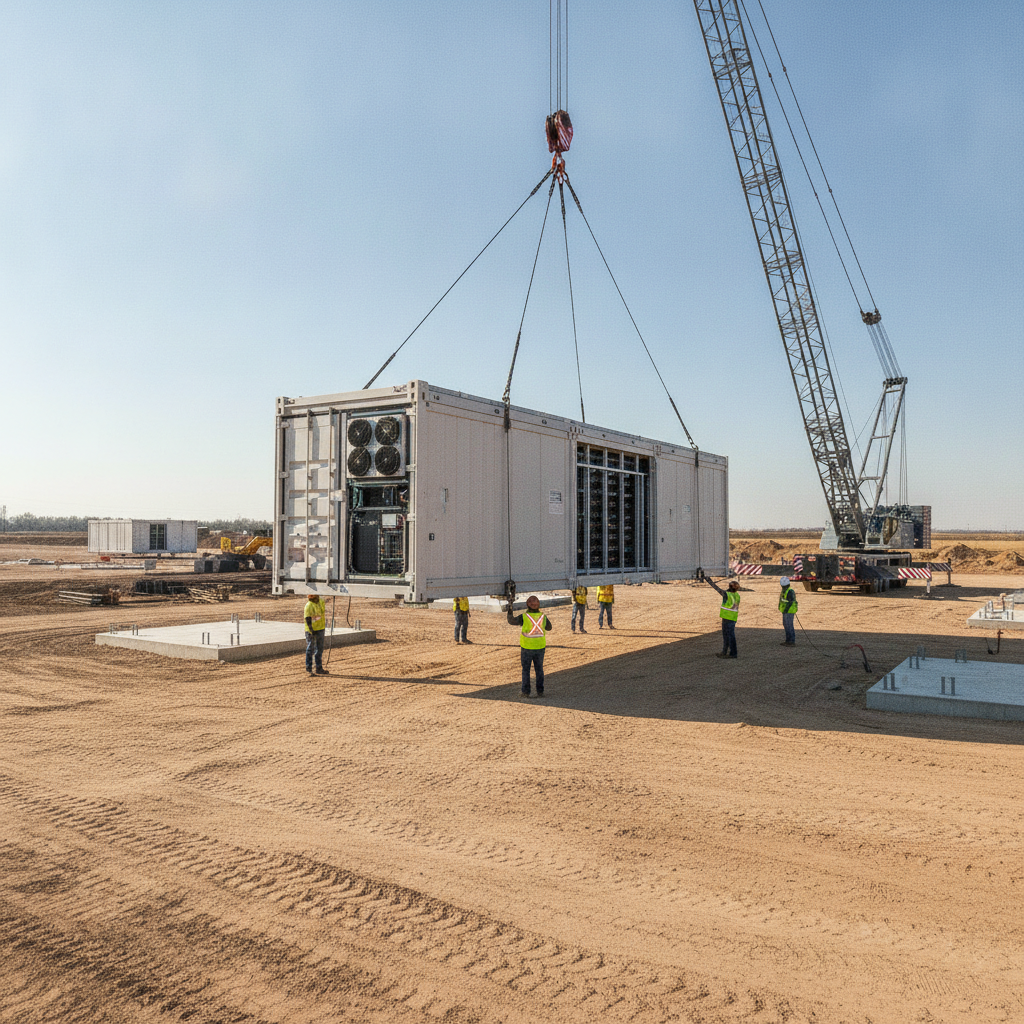
Synchronizing Factory Production with Site Readiness
The core of modular logistics is timing. A multi-ton power module leaving the factory has a precise arrival window that must align perfectly with the completion of its on-site foundation and utility connections. This requires seamless communication and schedule integration between the module fabricator, the general contractor, and the civil engineering firm. The civil engineer is responsible for designing the “docking station” for these modules, which includes more than just the concrete pad. This work involves precise grading to ensure level surfaces, the design of foundations engineered to support immense point loads, and the installation of underground utilities that must stub up at exact coordinates. Any discrepancy between the approved site plan design and the as-built conditions can be catastrophic. The site development schedule must be meticulously managed to ensure that all earthwork, utility trenching, foundation pours, and backfilling operations are complete and verified before the modules are dispatched from the factory, creating a just-in-time environment that minimizes on-site storage and double-handling.
Oversized Transport Routing and Permitting Strategy
Modular Delivery Logistics: Key Planning Considerations
| Logistical Element | Civil Engineering Focus | Key Risk Factor |
|---|---|---|
| Transport Route Analysis | Review of clearances, turning radii, and roadway structural capacity. Coordination with transportation authorities. | An overlooked low bridge or weight-restricted road forces a last-minute, costly rerouting. |
| Crane Pad & Access Roads | Geotechnical soil report analysis, structural design of aggregate base, grading for level surfaces, and load distribution calculations. | Inadequate soil bearing capacity leads to crane pad failure or transport getting stuck, causing major delays and safety hazards. |
| Utility Stub-Up Coordination | Precision layout of electrical, water, sewer, and data conduits based on module shop drawings. As-built verification. | Misaligned stub-ups require concrete demolition and rework, delaying module connection and commissioning. |
| On-Site Staging & Laydown | Grading and stabilization of laydown areas, planning for circulation to avoid congestion, and stormwater management. | Insufficient or poorly prepared staging space leads to double-handling of modules and site gridlock. |
| Weather Contingency | Site stabilization measures, all-weather access road design, and schedule buffers for high winds or heavy rain. | A single weather event makes the site impassable, causing transport and crane crews to go on standby at significant cost. |
Moving prefabricated modules, which often qualify as oversized and overweight loads, is a significant undertaking that requires extensive upfront planning. The process begins with a detailed route survey conducted by transportation specialists in coordination with the project’s Professional Engineer. This survey identifies every potential obstacle, including vertical clearance issues at overpasses, horizontal clearance constraints on narrow roads or tight turns, and, critically, bridge load capacity limitations. The chosen route must be viable not only on paper but in practice, accounting for temporary traffic patterns and local restrictions. Securing the necessary transport permits is a complex, multi-agency process. Permitting requirements for oversized loads vary by jurisdiction, and the project team must confirm all applicable standards with the local, state, regional, and federal authorities that hold review authority over the proposed route. This often involves submitting detailed route plans, vehicle configurations, and traffic control plans for approval. Proactive engagement with these agencies is essential to prevent last-minute permit submittals from delaying a critical delivery and disrupting the entire construction administration timeline.
Temporary Access Roads and Crane Hardstand Design
Standard site access roads are rarely sufficient for the demands of modular delivery. The transport vehicles and the massive cranes used for placement exert extreme ground pressures that can easily destroy undersized roads or destabilize unprepared soil. A key component of the logistics plan is the design of robust temporary access roads and crane hardstands. This begins with a thorough Geotechnical Engineering investigation, including a detailed Geotechnical soil report based on a comprehensive Soil boring test, to understand the site’s soil characteristics and bearing capacity. Based on the Soil Test data, the civil engineer designs a temporary road section with the appropriate aggregate thickness and subgrade preparation to handle the anticipated loads without failure. The crane hardstand is even more critical; it must be a perfectly level, stable platform capable of supporting the crane and its load under full extension. The design must account for the crane’s specific outrigger loads and spacing, ensuring the ground pressure remains within the safe bearing capacity of the underlying soils. Failure to properly engineer these temporary structures can lead to catastrophic equipment failure, safety incidents, and project delays.
Utility Stub-Up Coordination and Precision Placement
For a modular unit to be set and commissioned quickly, all utility connections—including power conduits, data fiber, chilled water lines, and sanitary sewer—must be in the exact right place. Unlike traditional construction where adjustments can be made in the field, prefabricated modules have fixed connection points. A misalignment of even a few inches can require costly and time-consuming rework, such as saw-cutting a concrete slab or re-trenching a utility line. Achieving this precision requires rigorous utility coordination between the module fabricator’s shop drawings and the civil engineer’s site plan design. The civil design must specify the precise X, Y, and Z coordinates for every utility stub-up. During construction, it is critical to perform as-built surveys to verify that the installed utilities match the design intent before the foundation is poured. This meticulous quality control process, managed by the civil engineering team, is the final checkpoint to ensure a seamless module installation and rapid connection.
Just-in-Time Delivery vs. On-Site Staging
Two primary strategies govern the arrival of modules: just-in-time (JIT) delivery and on-site staging. JIT involves scheduling transports to arrive at the exact moment the crane is ready to lift the module into place. This approach is highly efficient, minimizing the need for large on-site storage areas and eliminating the risk of damaging modules by moving them multiple times. However, JIT is highly sensitive to disruption; a single traffic delay or weather event can halt the entire installation sequence. On-site staging, conversely, involves delivering modules to a designated laydown area on site ahead of the installation date. This creates a valuable buffer in the schedule, ensuring modules are available when the crane is ready. The trade-off is the requirement for a significant amount of prepared, stable ground for storage. This increases the initial site development footprint and introduces the risk of damage during the extra step of moving the module from the laydown area to its final placement. The choice between these strategies depends on site constraints, project risk tolerance, and the reliability of the transportation network.
Our Process: Integrated Logistics and Site Design at RSP Engineers
At RSP Engineers, we treat logistics planning as an integral part of the site development process, not a separate workstream. Our approach begins during the earliest due diligence phases, where we identify potential logistical constraints that could impact site viability. We collaborate directly with the client, general contractor, and module fabricator to ensure our site engineering services are fully aligned with the project’s delivery strategy. Our process involves developing a comprehensive site logistics plan that incorporates temporary access routes, crane pad locations, and laydown areas directly into the initial site plan design. We model transport vehicle turning movements to ensure access is feasible and coordinate with geotechnical engineers to guarantee that all load-bearing surfaces are designed to the highest safety standards. By integrating permitting strategy, detailed design, and construction administration support, we de-risk the entire delivery process and ensure the site is ready to receive its most critical components on schedule.
Common Challenges in Modular Delivery Logistics
Even with careful planning, modular deliveries can face significant hurdles. A common oversight is an inadequate geotechnical investigation, leading to crane pads that settle under load. Another frequent issue is discovering a utility conflict or clearance issue along the transport route that was missed during the initial survey. Permitting delays with transportation agencies are also a major risk, especially if applications are not submitted with sufficient lead time and complete documentation. On site, poor communication between the site contractor and the transport company can lead to confusion about arrival times and staging locations. Finally, weather remains a constant variable; a sudden downpour can turn a well-compacted access road into an impassable mud pit, halting all operations. Mitigating these challenges requires experienced oversight, proactive communication, and robust contingency planning from the project’s civil engineering team.
Partner with RSP for Mission-Critical Site Logistics
Successfully executing a modular data center project requires an engineering partner who understands that the work extends far beyond the property lines. RSP Engineers provides the expert civil engineering and site development services necessary to manage the complex logistics of modular delivery. From initial route feasibility studies to the detailed design of crane pads and the meticulous coordination of utility connections, we ensure your site is prepared for a seamless installation. Our team has the nationwide experience to navigate the permitting strategy and provide the critical construction administration oversight that mission-critical projects demand.
Conclusion: The Foundation of a Successful Modular Build
In the world of modular data center construction, logistics planning is not an afterthought; it is a foundational discipline. The success of a project depends on the seamless integration of off-site manufacturing with on-site readiness. This requires a proactive and detailed approach to logistics planning, driven by experienced civil engineering professionals. By addressing transport routing, site access, geotechnical challenges, and utility precision early in the design process, developers can unlock the full potential of modular construction, achieving speed-to-market while mitigating significant risks.
FAQs
-
Logistics planning should begin during the site selection and due diligence phase. Early identification of potential transport route limitations or challenging on-site Geotechnical Engineering conditions is critical for assessing a site’s viability and developing a realistic project budget and schedule.
-
Typically, a specialized heavy-haul transportation company is responsible for the direct application and acquisition of permits. However, the project’s civil engineering firm provides essential supporting documentation, such as route analysis and confirmation that on-site infrastructure is designed to handle the loads.
-
A misalignment is a serious issue that requires immediate remediation. This could involve precise concrete cutting, re-excavation of trenches, and re-routing of pipes or conduits. This rework leads to significant delays and added costs, highlighting the importance of rigorous utility coordination and as-built verification.