
Data Center Inspection Process
Understand the critical civil engineering inspection milestones for data center construction, from erosion control and subgrade to utilities and final site acceptance. Learn how to avoid common failur
The Role of Inspections in Mission-Critical Facility Development
In data center construction, inspections serve as critical quality gates. They are formal verifications that the work completed in the field conforms to the approved engineering plans, specifications, and applicable building codes. For a mission-critical facility, where uptime is measured in fractions of a percent, the consequences of cutting corners are catastrophic. A properly executed site development plan, verified through rigorous inspections, ensures the long-term stability and performance of the entire facility, from its foundations and pavement to its complex stormwater management systems. These inspections provide an auditable record of building code compliance and adherence to design standards. This documentation is vital not only for securing a Certificate of Occupancy but also for satisfying investors, insurers, and future tenants that the facility was built to the highest standards. Ultimately, a robust inspection program mitigates risk by identifying and correcting deficiencies early, preventing minor issues from escalating into costly rework or long-term structural problems that could jeopardize operations.
Key Parties Involved in the Inspection Process
Data Center Inspection Milestone Comparison
| Milestone / System | Key Inspection Points | Primary Inspecting Party | Consequence of Failure |
|---|---|---|---|
| Erosion & Sediment Control | Silt fence installation, construction entrance, inlet protection, NPDES compliance. | Local Inspector / Environmental Agency | Stop-work order, fines, project delays, environmental impact. |
| Subgrade Compaction | Proof-rolling results, soil density tests, verification of fill material and lift thickness. | Geotechnical Engineer / Third-Party Inspector | Rework of subgrade, future settlement of foundations/pavement, structural risk. |
| Underground Utilities | Pipe material, slope, bedding, separation from other utilities, pressure/leakage tests. | Local Inspector / Utility Provider | Must excavate and reinstall, costly rework, delays to subsequent trades. |
| Concrete Foundations | Rebar placement, formwork, concrete strength (cylinder breaks), anchor bolt placement. | Special Inspector / Structural Engineer | Demolition and replacement, compromised structural integrity, significant schedule impact. |
| Pavement Base Course | Aggregate type, thickness verification, compaction test results. | Geotechnical Engineer / Local Inspector | Pavement failure (rutting, cracking), costly asphalt/concrete replacement. |
| Final Site & ADA Compliance | Final grading, accessible routes, ramp slopes, signage, striping, landscape installation. | Local Inspector / Civil Engineer | Certificate of Occupancy withheld, required rework of hardscape and grading. |
A successful data center inspection process involves the coordinated effort of several key parties, each with a distinct role. The general contractor’s quality control (QC) team typically manages the day-to-day scheduling and readiness for inspections. They are the first line of defense, ensuring work is complete and ready for review before calling for an official inspection. The primary external reviewers include inspectors from the authority having jurisdiction (AHJ), such as the local building or public works department, who are responsible for enforcing local codes and ordinances. Alongside municipal inspectors, the project team includes the Professional Engineer of record (or their representative) who provides construction administration services to confirm the work aligns with the approved design intent. For certain critical components, third-party agencies perform ‘special inspections’ to verify materials and workmanship. Finally, representatives from public and private utility providers will conduct their own inspections of infrastructure like water mains, sanitary sewers, and electrical duct banks before accepting them into their systems. Effective utility coordination is crucial for sequencing these specialized reviews without causing delays.
Critical Civil and Site Work Inspection Milestones
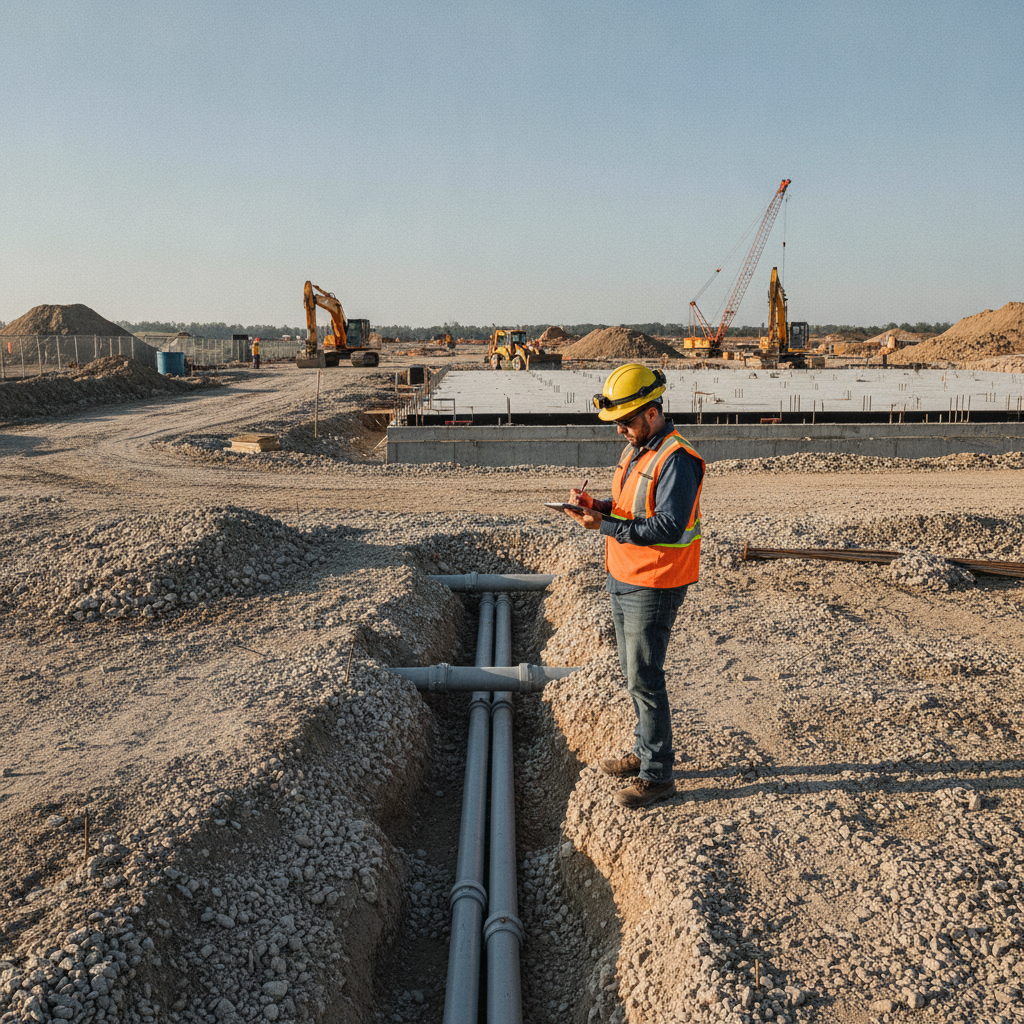
The civil construction phase of a data center project follows a logical sequence of inspections, each building upon the last. Successfully passing one inspection is often a prerequisite for starting the next phase of work. Erosion and Sediment Control (ESC) Before mass grading begins, the initial erosion and sediment controls must be installed and inspected. This includes verifying the correct placement and installation of silt fences, stabilized construction entrances, and inlet protection. This inspection is critical for compliance with the project’s National Pollutant Discharge Elimination System (NPDES) permit, which is a federal requirement under the Clean Water Act. Ongoing inspections are required throughout construction, particularly after significant rainfall events, to ensure these measures are maintained and functioning correctly to protect water quality. Earthwork and Subgrade Preparation Once erosion controls are approved, earthwork can commence. Inspections in this phase focus on the stability and preparation of the ground that will support the building, pavements, and underground utilities. Inspectors will witness proof-rolling to identify soft spots and require compaction testing, often using a nuclear density gauge, to verify that the soil density meets the specifications outlined in the Geotechnical soil report. Proper subgrade preparation is fundamental to preventing future settlement and structural failure of foundations and asphalt. Underground Utility Installation and Backfill All underground utilities—including stormwater management pipes, sanitary sewer lines, water mains, and electrical/telecom conduits—must be inspected in the open trench before backfilling is permitted. The inspector checks for proper pipe material, slope (for gravity systems), bedding material, and separation between different utilities. Once the utility installation is approved, the trench backfill is placed in lifts and compacted, with testing often required to ensure it meets project specifications. This step is critical for preventing pipe damage and surface settlement. Pavement Section and Final Site Features After the building is substantially complete and underground utilities are in place, the final site work inspections occur. This includes verifying the thickness and compaction of the aggregate base course for roadways and parking lots before paving. During asphalt or concrete placement, inspectors may check material tickets, temperatures, and finished thickness. The final site inspection covers surface features like final grading for proper drainage design, pavement markings, signage, and verification of ADA compliance for sidewalks, curb ramps, and accessible parking spaces.
Understanding Special Inspections for Data Centers
Beyond the standard municipal inspections, data center projects require a program of ‘special inspections’ as mandated by the International Building Code (IBC). These are inspections of materials, installation, fabrication, erection, or placement of components and connections requiring special expertise to confirm compliance with approved construction documents and referenced standards. The scope of these inspections is defined by the structural engineer of record and is focused on elements critical to the building’s structural integrity and life safety systems. Examples relevant to data center construction include testing high-strength concrete cylinders, observing structural steel welding and high-strength bolting, and verifying the installation of deep foundations or fire-resistant coatings. These inspections are performed by an independent, certified agency approved by the AHJ. The requirements for special inspections and other permit submittals can vary by jurisdiction, and every project team should confirm the applicable standards with the local, state, regional, and federal authorities that hold review authority over the site. Proper coordination and documentation of these inspections are essential for project closeout.
How RSP Engineers Manages the Inspection Lifecycle
At RSP Engineers, our involvement doesn’t end when the design is approved. We provide comprehensive construction administration services to guide our clients’ projects through the complexities of the inspection process. Our approach is proactive, beginning with a pre-construction meeting to align with the contractor and inspectors on the project’s specific requirements and sequence. We meticulously review contractor submittals and shop drawings to ensure they align with the approved site plan design before materials are ever ordered. During construction, our field representatives attend critical inspections to serve as a resource for the inspector, clarifying design intent and resolving issues in real-time. This direct engagement helps prevent misunderstandings that can lead to failed inspections and unnecessary delays. By facilitating clear communication between the developer, contractor, and regulatory agencies, we help ensure that the civil engineering components of the project are built correctly the first time, protecting the project schedule and budget.
Common Reasons for Failed Inspections and How to Avoid Them
Even with careful planning, inspections can fail. Understanding the common reasons is the first step to avoiding them. A primary cause is work performed out of sequence—for example, a contractor backfilling a utility trench before the pipe has been inspected. Another frequent issue is the use of unapproved materials or deviations from the approved plans without proper authorization. Inadequate maintenance of erosion control measures is a common trigger for a stop-work order, especially during rainy seasons. Other pitfalls include insufficient documentation on-site (such as material delivery tickets or compaction test reports), poor workmanship, and simply not being ready when the inspector arrives. The best mitigation strategy is a combination of robust internal QC by the contractor, clear communication, and a pre-inspection walkthrough. Having a representative from the design team, such as a Civil Engineer near me, available during critical inspections can also help resolve potential issues before they result in a formal failure. Frequently Asked Questions What happens if a civil inspection fails? If an inspection fails, the inspector will issue a correction notice detailing the deficiencies. A stop-work order may be issued for the affected portion of the project until the issues are resolved. The contractor must correct the work and then schedule a re-inspection, which can impact the project’s schedule and budget. Who is responsible for scheduling inspections? The general contractor is typically responsible for scheduling inspections with the authority having jurisdiction and other inspecting parties. They must provide adequate notice, often 24 to 48 hours in advance, and ensure the work is complete and accessible for the inspector. Can construction continue while waiting for an inspection? Construction can generally continue on other parts of the project that are not dependent on the pending inspection. However, work cannot proceed on the next sequential step that relies on the approval. For example, you cannot pour a concrete slab until the underlying plumbing and subgrade inspections have passed. How do special inspections differ from regular municipal inspections? Municipal inspections are performed by a government employee to verify compliance with local codes. Special inspections are required by the building code for specific critical systems (e.g., structural steel, high-strength concrete) and are performed by an independent, certified agency hired by the owner to provide a higher level of scrutiny and testing. What is the role of the civil engineer during construction inspections? The civil engineer’s role during construction is to provide construction administration. This includes clarifying design intent for the contractor and inspector, reviewing test results, helping to resolve field issues, and confirming that the work is being built in general conformance with the approved site development plans and specifications.
Partner with RSP Engineers for Your Next Mission-Critical Project
Navigating the complex inspection process for a data center requires deep technical expertise and proactive project management. At RSP Engineers, we provide the expert site engineering services and construction administration support needed to move your project from design through final acceptance. Our team excels at utility coordination, managing agency review processes, and providing the real-time problem-solving that keeps your project on schedule. Contact us today to discuss how we can ensure your mission-critical facility is built to the highest standards of quality and compliance.
Conclusion
The construction inspection process is a non-negotiable, critical path activity in the development of any data center. Each inspection serves as a vital checkpoint, ensuring that the final facility is safe, compliant, and built for the long-term reliability that mission-critical operations demand. By understanding the key milestones, engaging the right experts, and implementing a proactive management strategy, developers can navigate this process efficiently. A successful outcome relies on meticulous planning, clear communication, and the oversight of an experienced civil engineering firm to ensure every component, from the stormwater management system to the final paving, meets the project’s exacting standards and passes all permitting requirements.
FAQs
-
Data Center Inspection Process requires careful planning, qualified engineering, and compliance with the applicable codes and permits.
-
Getting Data Center Inspection Process right protects safety, supports regulatory compliance, and avoids costly redesigns or delays.
-
RSP Engineers provides licensed expertise and end-to-end support for Data Center Inspection Process, from early planning through permitting.