
Data Center Geotechnical Cost Savings
Discover how strategic geotechnical engineering saves millions on data center projects. Learn about foundation optimization, earthwork balancing, and risk mitigation from Florida’s expert civil engine
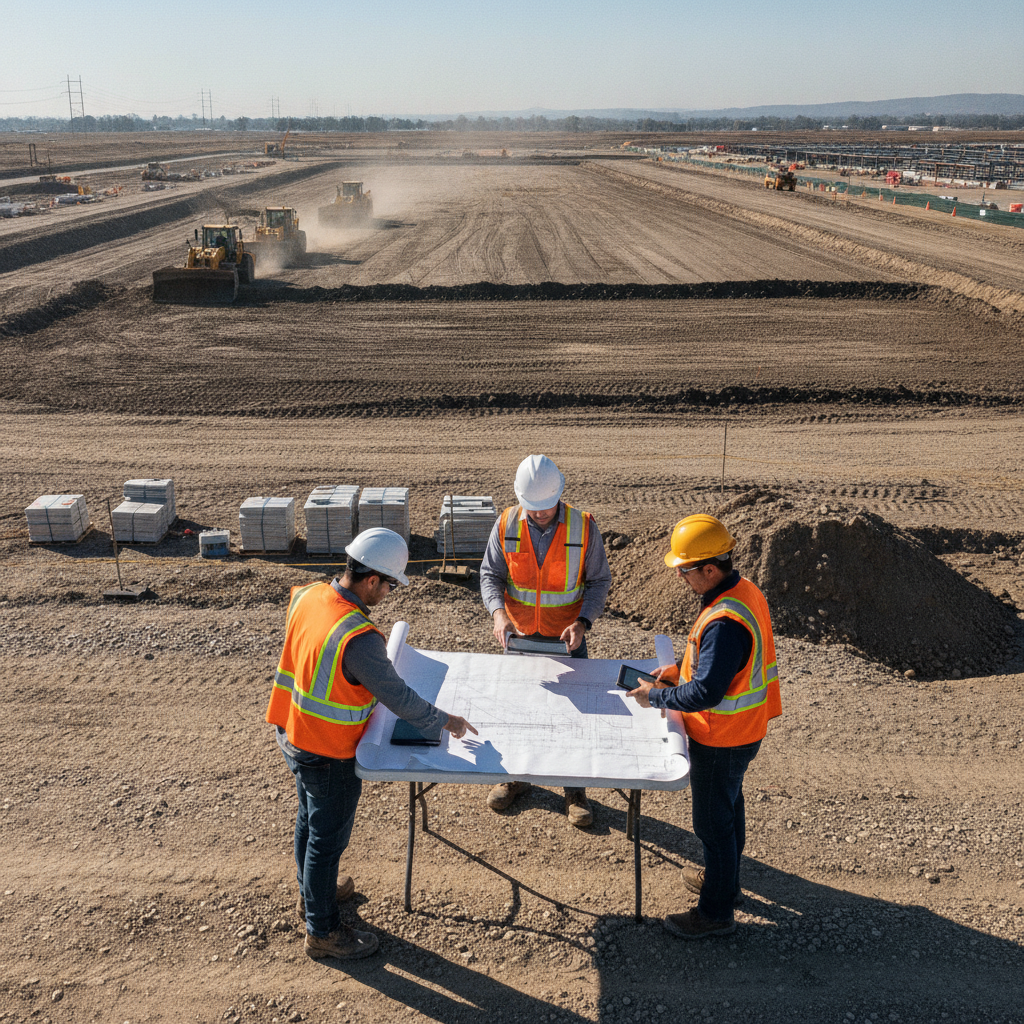
Right-Sizing the Geotechnical Investigation for Maximum ROI
The foundation of any cost-effective data center project is a properly scoped geotechnical investigation. It’s a common misconception that minimizing the number of soil borings saves money. In reality, an undersized investigation creates data gaps, forcing designers to make conservative assumptions that lead to overbuilt foundations and excessive site preparation costs. A strategic approach involves a phased investigation, starting with a thorough desktop study of geological maps and existing data, followed by a targeted Soil boring test program. The goal is to characterize the subsurface conditions with confidence, identifying soil strata, groundwater levels, and potential hazards like soft clays or karstic features common in Florida. By investing in a comprehensive Geotechnical soil report, developers gain the clarity needed for value engineering. For a sprawling data center campus, this means varying the depth and spacing of borings based on the anticipated loads of different structures—the main data hall, administrative buildings, and utility yards. This targeted approach provides high-resolution data where it matters most, allowing for precise foundation design and avoiding the immense cost of a one-size-fits-all, overly conservative solution. This initial investment in data acquisition directly prevents far larger expenditures during construction.
Foundation System Optimization: Shallow vs. Deep Foundations
Geotechnical Cost-Saving Strategy Comparison
| Strategy | Primary Cost Savings | Key Geotechnical Data Required | Implementation Considerations |
|---|---|---|---|
| Phased & Targeted Investigation | Avoids foundation over-design; reduces risk of change orders. | Geologic maps, historical data, targeted Soil boring test plan, laboratory testing. | Requires early engagement with a Geotechnical engineer to align investigation scope with project loads. |
| Shallow Foundation Optimization | Eliminates high cost of deep foundation materials, labor, and equipment. | Accurate soil bearing capacity, settlement analysis, groundwater levels. | Dependent on confirming competent soil strata within a practical depth. |
| On-Site Material Reuse | Drastically reduces costs for soil import/export and disposal fees. | Soil classification, moisture-density relationships (Proctor tests), organic content. | Requires careful planning in the grading design and on-site material management. |
| Ground Improvement | Enables use of shallow foundations on poor soils, avoiding deep foundation costs. | Soil type and profile, shear strength parameters, compressibility characteristics. | Requires specialized contractors; cost-benefit analysis is critical. |
| Proactive Undercut Planning | Prevents costly, unscheduled excavation and replacement during construction. | Precise mapping of unsuitable soil depths and extents. | Allows costs to be budgeted upfront rather than absorbed through contingency-draining change orders. |
Foundation design is one of the largest cost centers in data center construction, and the choice between shallow and deep foundation systems has massive budget implications. Data centers impose heavy, vibration-sensitive loads, and the default assumption is often a costly deep foundation system like driven piles or drilled shafts. However, a detailed Geotechnical Engineering analysis can often prove that a more economical shallow foundation system, such as mat foundations or spread footers, is perfectly viable. This is especially true if the subsurface investigation confirms competent bearing strata at a reasonable depth. The savings are substantial, not just in materials but also in labor, equipment, and schedule. A thorough Soil Test and analysis might reveal that with minor ground improvement or strategic soil conditioning, the site can easily support a shallow foundation. This avoids the significant expense and logistical complexity of bringing in specialized deep foundation contractors. The key is having robust subsurface data to confidently engineer a solution that meets stringent settlement and vibration criteria without unnecessary over-design, a core competency of experienced Civil Engineers.
Earthwork Strategies: Cut/Fill Balancing and On-Site Material Reuse
Moving dirt is expensive. The costs of exporting unsuitable soils and importing engineered fill can quickly spiral, impacting both the budget and the project timeline. A primary goal of the site development plan should be to achieve a balanced earthwork site, where the volume of soil excavated (cut) equals the volume needed for fill. A detailed geotechnical analysis is critical to this process. It determines which on-site soils are suitable for reuse as structural fill and which require amendment or disposal. This analysis includes tests for compaction characteristics, moisture content, and organic content. By identifying usable on-site materials early, the civil engineering team can design a grading plan that minimizes off-site hauling. For example, soils from stormwater pond excavation can be used to build up the building pad. This strategy not only saves on trucking and disposal fees but also reduces the project’s carbon footprint and reliance on quarry materials. Effective earthwork balancing, guided by precise geotechnical data, is a powerful tool for controlling site work costs and streamlining the construction schedule.
Ground Improvement as a Cost-Effective Alternative to Deep Foundations
When faced with poor soil conditions, such as loose sands or soft clays, the default solution is often to bypass the problematic layers with expensive deep foundations. However, modern ground improvement techniques offer a compelling, cost-effective alternative. Methods like vibro-compaction, aggregate piers (stone columns), or rapid impact compaction can densify and strengthen the existing soil in-place, creating a suitable bearing stratum for more economical shallow foundations. This approach can eliminate the need for deep foundations entirely. The decision to use ground improvement hinges on a sophisticated understanding of the site’s soil mechanics, which is derived from the Geotechnical soil report. An experienced Geotechnical engineer can evaluate the feasibility and potential savings of these techniques compared to deep foundations or massive overexcavation and replacement. For large data center sites, the cost savings can be in the millions, while also accelerating the construction timeline. This value engineering exercise is a critical step in optimizing the site development budget.
Mitigating Overexcavation and Undercut Risks
Unforeseen poor soil conditions discovered during excavation are a developer’s nightmare, leading to costly change orders and significant delays. The most common issue is the need for deep overexcavation (undercutting) of unsuitable soils and replacement with engineered fill. This unplanned activity halts progress and incurs massive costs for extra labor, equipment, and imported materials. A robust upfront geotechnical investigation is the best insurance against these surprises. By identifying the depth and extent of soft or organic soils before construction begins, the site plan design can account for them. The project team can then proactively budget for and schedule the necessary remediation, whether it’s targeted undercutting, ground improvement, or a specialized foundation design. A high-density Soil boring test program significantly reduces the risk of encountering unexpected conditions between boring locations, providing the project team with a reliable subsurface model. This proactive risk management is far cheaper than reactive problem-solving in the middle of construction.
Pavement and Utility Subgrade Preparation
While the main building foundation gets the most attention, the performance and longevity of pavements and underground utilities are also governed by geotechnical factors. The extensive network of access roads, parking lots, and utility trenches at a data center represents a significant investment. A proper geotechnical analysis provides recommendations for subgrade preparation, ensuring that these elements are built on a stable foundation to prevent premature failure, cracking, and settlement. This includes specifying the required compaction levels and determining if soil stabilization with cement or lime is needed. Proper subgrade preparation avoids costly long-term maintenance and repairs. For underground utilities, a stable trench bottom and appropriate backfill material are essential to protect sensitive conduits and prevent settlement that could damage connections. The Geotechnical soil report provides the necessary parameters for the drainage design and utility installation plans, ensuring that all site infrastructure is supported by a competent subgrade and avoiding future operational disruptions.
RSP Engineers’ Approach to Geotechnical Optimization
At RSP Engineers, we treat geotechnical investigation as the cornerstone of successful site development. Our process begins with a comprehensive desktop study and a collaborative planning session to understand the specific structural loads and performance requirements of your data center. We then design a phased and targeted geotechnical investigation program to build a reliable subsurface model with maximum efficiency. Our team of Florida Licensed Engineers works hand-in-hand with the civil and structural teams, using the collected data to perform value engineering. We analyze foundation alternatives, model earthwork scenarios to maximize on-site material reuse, and evaluate innovative ground improvement techniques. Our goal is to provide clear, actionable recommendations that de-risk the project and deliver a design optimized for cost, performance, and schedule, ensuring a smooth transition from design through permitting and construction.
Common Geotechnical Issues in Data Center Projects
Even with careful planning, challenges can arise. One of the most common issues in Florida is encountering unexpected solution features in the limestone bedrock (karst terrain), which can require significant remediation. A high water table is another frequent challenge, complicating excavations and potentially requiring extensive dewatering systems or specialized foundation designs. Discrepancies between soil borings can also occur, highlighting the importance of an adequately spaced investigation grid. A less common but critical issue is dealing with contaminated soils from previous land use, which can trigger complex regulatory and disposal requirements. An experienced Geotechnical engineer anticipates these risks and develops contingency plans to mitigate their impact on the project budget and schedule.
Partner with RSP Engineers for Your Next Mission-Critical Project
Navigating the complexities of data center site development requires a partner who understands how to turn subsurface challenges into financial advantages. The team at RSP Engineers provides the expert Geotechnical Engineering and site engineering services needed to de-risk your project and optimize your budget. From the initial Soil Test and site feasibility study to value-engineered foundation design and construction administration, we ensure your project is built on solid ground. Don’t let unforeseen ground conditions derail your schedule and budget. Contact us today to discuss how our strategic approach to site development Orlando and across Florida can maximize your return on investment.
Conclusion
Ultimately, a comprehensive Geotechnical Engineering investigation is not a cost to be minimized but a high-yield investment in project certainty. For data center developers, embracing a detailed, front-end analysis of subsurface conditions unlocks significant opportunities for cost savings through optimized foundation design, balanced earthwork, and the mitigation of construction risks. By treating the ground as a core project variable to be understood and managed, developers can avoid the costly surprises that undermine project viability. Partnering with an experienced civil engineering firm that prioritizes this strategic approach is the first step toward a successful and profitable development.
FAQs
-
The biggest risk is an inadequate initial site investigation. A sparse Soil boring test program can miss critical subsurface features like soft clay lenses, a high water table, or voids in limestone. This leads to flawed assumptions in the foundation design, resulting in costly change orders, construction delays, and potential long-term performance issues.
-
There is no fixed number; it depends on the site’s geological complexity, the size of the development footprint, and the anticipated structural loads. A qualified Geotechnical engineer will develop a site-specific plan. It often involves a grid pattern for the main building with tighter spacing in heavily loaded areas and wider spacing for parking and landscape areas.
-
Often, yes. This is a key strategy for earthwork balancing. A Geotechnical Engineering analysis will determine the suitability of the excavated soil by running laboratory tests (e. g. , Proctors, organic content). If the material meets specifications for structural fill, it can be a significant source of cost savings.