
Data Center Fill Material Evaluation
A guide for data center developers on evaluating structural fill material. Learn about geotechnical testing, compaction, on-site reuse, and borrow source approval from Florida civil engineering expert
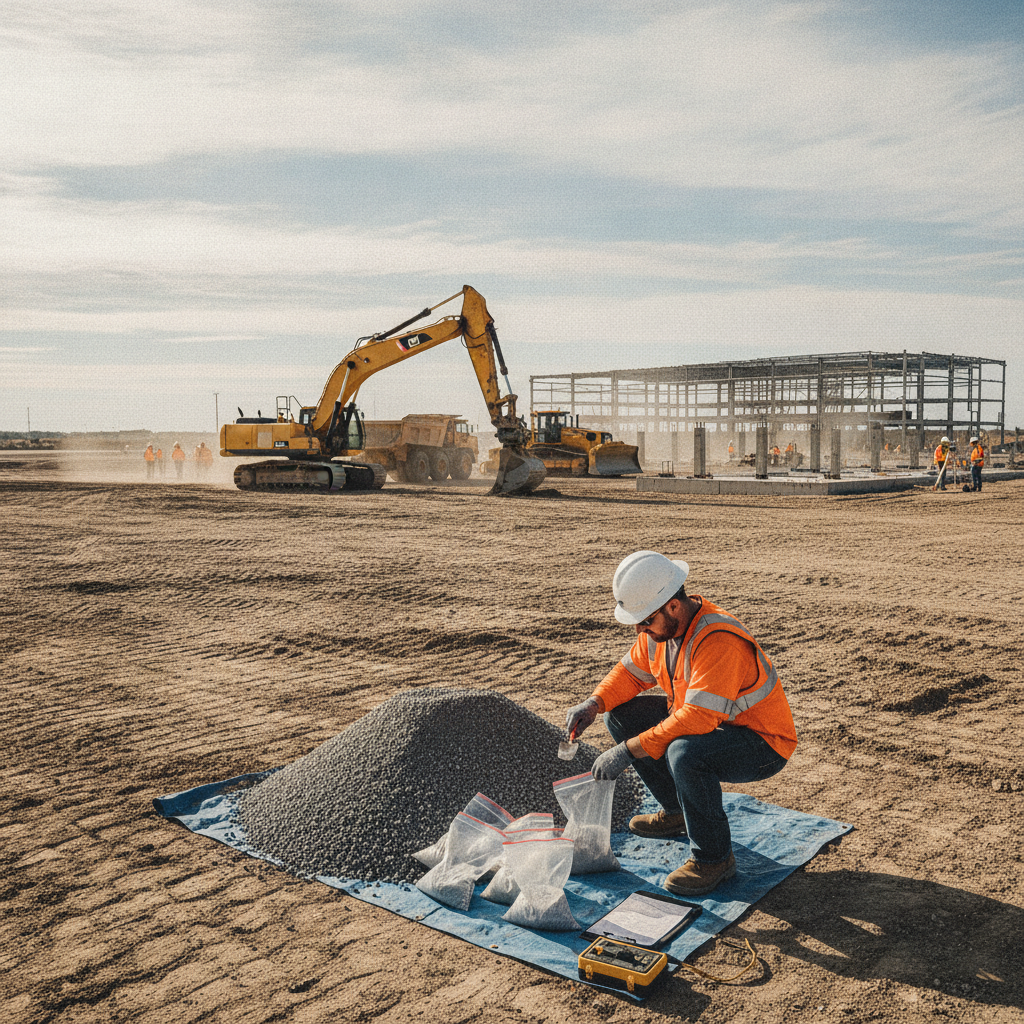
Distinguishing Structural Fill from Non-Structural Fill
The first and most fundamental distinction in any earthwork plan is between structural and non-structural fill. Structural fill is an engineered material placed and compacted to support building foundations, floor slabs, roadways, and underground utilities. Its properties are rigorously defined in the project specifications to ensure it provides the required load-bearing capacity and predictable performance under load. The primary goal of structural fill is to minimize post-construction settlement, particularly differential settlement, which can cause severe structural damage. In contrast, non-structural fill is used in areas where there are no superimposed loads, such as landscape berms, swales, or general site grading outside of building and pavement areas. While it still must meet certain criteria to prevent erosion and ensure proper drainage design, the specifications are far less stringent. Using non-structural material in a structural area is a recipe for failure. A clear earthwork plan, developed by a qualified civil engineering firm near me, will delineate these zones precisely, ensuring the right material is used in the right place and preventing costly construction errors.
Key Geotechnical Properties: Gradation and Plasticity
Fill Material Acceptance Criteria for Data Center Projects
| Parameter | Typical Structural Fill Requirement | Non-Structural / Landscape Fill | Rationale / Engineering Impact |
|---|---|---|---|
| Percent Fines (Passing #200 Sieve) | 5% - 15% | Less than 40% | Controls moisture sensitivity and potential for settlement. Too many fines can lead to instability when wet. |
| Plasticity Index (PI) | Non-Plastic (NP) to 6 | Less than 20 | Minimizes shrink-swell potential, which is critical for foundation and slab stability in Florida's climate. |
| Maximum Particle Size | 3 inches | 6 inches | Ensures uniform compaction and prevents large voids or hard points that could damage utilities or cause differential settlement. |
| Organic Content | Less than 1% by weight | Less than 5% by weight | Prevents long-term settlement and void creation as organic materials decompose over time. |
| Compaction Requirement | 98% of Modified Proctor (ASTM D1557) | 90% of Standard Proctor (ASTM D698) | Achieves a dense, stable mass with high bearing capacity to support heavy foundation and equipment loads without movement. |
| Deleterious Materials | Zero tolerance for debris, trash, etc. | Minimal, non-hazardous materials | Ensures the fill is a predictable, engineered material free from contaminants that could create weak zones or environmental issues. |
Two of the most important properties determined during a Geotechnical soil report are gradation and plasticity. Gradation, determined via a sieve analysis, refers to the distribution of different particle sizes within a soil sample. A well-graded material, containing a balanced mix of sand, gravel, and fines, typically compacts more efficiently to a dense, stable state. Poorly-graded soils, such as those with a narrow range of particle sizes, can be less stable and more difficult to compact effectively. Plasticity, measured by Atterberg limits, describes how a soil behaves with varying moisture content. The Plasticity Index (PI) is a critical value; soils with a high PI (typically clays) can shrink and swell significantly with changes in moisture, a major concern in Florida’s wet and dry seasons. For data center foundations that demand stability, specifications almost always require a low-plasticity or non-plastic fill material. A thorough geotechnical investigation is non-negotiable for identifying these properties in both on-site and potential import soils.
On-Site Material Reuse vs. Imported Borrow Sources
A key decision in the site development plan is whether to reuse excavated on-site material or import fill from an off-site borrow source. Reusing on-site soils can offer significant cost savings by reducing material purchase and hauling expenses, leading to a more balanced earthwork project. However, this is only viable if the on-site material meets the stringent requirements for structural fill after being tested. Often, native Florida soils contain organics or have high plasticity, rendering them unsuitable for use under foundations without costly modification. Importing fill from a pre-approved borrow source provides greater certainty and consistency. The material is selected specifically for its desirable engineering properties. Before any material is brought to the site, a Geotechnical engineer must visit the borrow pit, obtain representative samples, and perform laboratory testing to confirm compliance with project specifications. This borrow source approval process is a critical quality control step that prevents the delivery of unsuitable materials and the massive schedule delays and cost overruns that would follow.
Moisture Content and Compaction: The Proctor Test Explained
Achieving proper compaction is impossible without controlling the soil’s moisture content. The relationship between density, moisture, and compactive effort is defined by the Proctor test (ASTM D698 for Standard Proctor, D1557 for Modified Proctor). This laboratory test determines the optimum moisture content at which a specific soil type will achieve its maximum dry density under a specified compactive effort. The Modified Proctor is typically used for data center projects due to the higher compactive effort it simulates, which is more representative of modern heavy compaction equipment. On-site, quality control technicians use tools like a nuclear density gauge to perform field tests, verifying that the contractor is achieving the required percentage of the maximum dry density (e.g., 95% or 98% of the Modified Proctor value). If the fill is too dry, it won’t compact properly; if it’s too wet, the equipment may sink, and the target density will be unattainable. This rigorous process of compaction testing ensures the entire structural fill mass behaves as a single, stable unit.
Identifying and Mitigating Deleterious and Organic Content
The presence of unwanted materials in fill can severely compromise its performance. Organic content, such as topsoil, roots, and stumps, is a major concern. As organic matter decomposes over time, it creates voids within the fill mass, leading to unpredictable settlement and loss of support. This is why the initial site clearing and topsoil stripping phase is so critical; it removes this problematic layer before any structural fill is placed. Specifications will always place a strict, low limit on the allowable percentage of organic material. Deleterious materials include construction debris (wood, metal, concrete), oversized rocks, and certain minerals that can break down or react chemically. These items create voids, weak zones, and potential hard points that can cause differential settlement. A robust quality control program includes visual inspection of all fill material as it is delivered and placed, ensuring that stockpiles are clean and that any contaminated loads are rejected before they are incorporated into the building pad or other structural areas.
The Borrow Source Approval Process
Before a single truckload of imported fill arrives, a systematic borrow source approval process must be completed. This is a critical risk management step managed by the project’s Civil Engineer near me and geotechnical team. The process begins with the earthwork contractor identifying one or more potential borrow pits. The project’s Geotechnical engineer then visits each proposed site to visually assess the material and the pit’s operations for consistency. Representative samples are collected from the proposed excavation areas within the pit and transported to a certified lab for a full suite of tests: gradation, plasticity index (PI), moisture-density relationship (Proctor), and checks for deleterious content. If the results meet all project specifications, the source is formally approved. This pre-qualification ensures a consistent supply of suitable material, protects the project from costly rework, and forms a key part of the documentation required for permit submittals and quality assurance records.
RSP Engineers’ Approach to Fill Material Management
At RSP Engineers, we integrate fill material evaluation directly into our comprehensive site engineering services. Our process is designed to be proactive, identifying and mitigating risks long before construction begins. We begin with a thorough pre-design Geotechnical investigation to fully characterize on-site soils and groundwater conditions. This data informs our civil engineering design and allows us to develop a precise earthwork specification tailored to the data center’s specific foundation loads and performance requirements. Our approach emphasizes a clear strategy for material handling. We evaluate the feasibility of on-site reuse, developing plans for segregating and stockpiling suitable soils to maximize cost efficiency. For imported materials, we manage a rigorous borrow source testing and approval protocol. During construction, our team provides dedicated Construction Management Services, overseeing the placement and compaction of fill, reviewing field density test reports, and ensuring strict adherence to the project specifications. This hands-on approach ensures the earthwork foundation is as robust and reliable as the facility it supports.
Common Issues and Pitfalls in Fill Evaluation
Even with a solid plan, several common issues can arise during data center earthwork. An insufficient initial Geotechnical soil report can fail to identify problematic soil strata, leading to unexpected conditions and change orders during excavation. Another frequent issue is a contractor attempting to use unapproved on-site material to save costs, which can introduce organics or high-plasticity clays into structural zones. This must be caught early by diligent on-site observation and testing. Material variability from the borrow source is another significant risk. A pit may contain different soil types at different depths, and the material delivered in week ten might not match the sample approved in week one. This necessitates ongoing visual inspection and periodic re-testing of imported fill. Finally, Florida’s weather can wreak havoc on earthwork operations. Heavy rains can saturate stockpiles and placed fill, making it impossible to achieve the required compaction until the material dries to within its acceptable moisture range, potentially causing significant schedule delays.
Partner with RSP Engineers for Your Mission-Critical Site Development
Ensuring the long-term stability of your data center starts from the ground up. The complexities of fill material evaluation, geotechnical coordination, and quality control demand an experienced engineering partner. RSP Engineers provides comprehensive site development Orlando services, guiding clients from initial due diligence and site plan design through permitting and construction. Our team of Florida Licensed Engineers has the expertise to develop robust earthwork specifications and manage the construction process to mitigate risks and protect your investment. Don’t leave the foundation of your project to chance. Contact RSP Engineers today to discuss how our civil engineering and construction administration expertise can ensure your mission-critical facility is built on a solid, reliable, and expertly engineered foundation.
Conclusion: The Foundation of a Successful Data Center Project
Ultimately, fill material for a data center is not a simple commodity; it is a critical, engineered component of the facility’s structure. A successful project hinges on a deep understanding of geotechnical principles, a rigorous process for material testing and approval, and diligent construction administration. By prioritizing a robust geotechnical evaluation and strictly enforcing material specifications, developers can avoid the long-term perils of foundation issues and differential settlement. Investing in proper earthwork planning and quality control is one of the most effective forms of risk management in site development. It ensures predictability, enhances structural integrity, and provides the stable base necessary for the decades of operational performance expected from a mission-critical data center.
FAQs
-
The primary difference is the compactive effort used. The Modified Proctor test uses a heavier hammer and a greater drop height, imparting more energy into the soil sample. This simulates modern, heavy compaction equipment and typically results in a higher maximum dry density and a slightly lower optimum moisture content. It is the standard for projects with heavy loads like data centers.
-
A low or non-plastic (NP) fill material is stable regardless of moisture changes. High-plasticity soils, like many clays, swell when they get wet and shrink when they dry. This movement can cause foundations and slabs to heave and settle, cracking concrete and misaligning sensitive equipment. Using a low-PI structural fill eliminates this significant long-term risk.
-
In some cases, blending different on-site soils or mixing them with an amendment (like sand or lime) can improve their properties to meet structural fill specifications. However, this is a complex operation that requires extensive laboratory testing to develop the right mix design and a very high level of quality control in the field to ensure a homogenous blend. It is often less costly and risky to import a known, high-quality material.