
Data Center Fast-Track Permitting
Learn proven strategies to accelerate data center permitting nationwide. Our guide covers early engagement, phased permits, and parallel reviews to keep your mission-critical project on schedule.
The Strategic Imperative of Early Agency Engagement
The single most effective strategy for accelerating any complex permitting effort is initiating dialogue with regulatory agencies long before a formal application is submitted. Pre-application meetings with local planning, zoning, and public works departments, as well as state environmental agencies, provide an invaluable opportunity to introduce the project, understand agency priorities, and identify potential red flags. This early engagement helps build a collaborative relationship with reviewers and allows the design team to address major concerns—such as zoning compliance, traffic impacts, or environmental constraints—before they result in costly redesigns and review cycle delays. During these meetings, the goal is to gain clarity on submittal requirements, preferred formats, and specific interpretations of local codes. This proactive approach minimizes surprises during the formal agency review process. By understanding the specific concerns of each reviewing body, the site development plan can be tailored to meet or exceed their standards from the outset, demonstrating a commitment to partnership and significantly improving the chances of a smoother, faster approval.
Phased Permitting for Early Site Mobilization
Comparison of Permitting Acceleration Strategies
| Strategy | Key Benefit | Implementation Considerations | Potential Risks |
|---|---|---|---|
| Early Agency Engagement | Identifies fatal flaws early; builds collaborative tone. | Requires a well-prepared preliminary concept and clear project goals. | Informal feedback may change once formal review begins. |
| Phased Permitting | Allows construction to start months earlier. | Requires clear scope definition for each permit phase and tight coordination. | Design changes in later phases can impact already-built site work. |
| Parallel Review Process | Compresses overall review timeline by weeks or months. | Demands exceptional project management and document control. | Risk of conflicting comments from different agencies requiring reconciliation. |
| High-Quality First Submittal | Minimizes review cycles and costly delays. | Requires more upfront investment in engineering and due diligence. | No guarantee of first-pass approval, but dramatically increases the odds. |
| By-Right Zoning Pathway | Most predictable and fastest entitlement route. | Limits site selection to appropriately zoned parcels, which may be scarce. | Zoning code may still contain nuanced requirements that can cause delays. |
| Expedited / Third-Party Review | Guaranteed faster review timeline. | Incurs additional project costs (fees to agency or third-party firm). | Availability varies by jurisdiction; does not guarantee approval, only speed of review. |
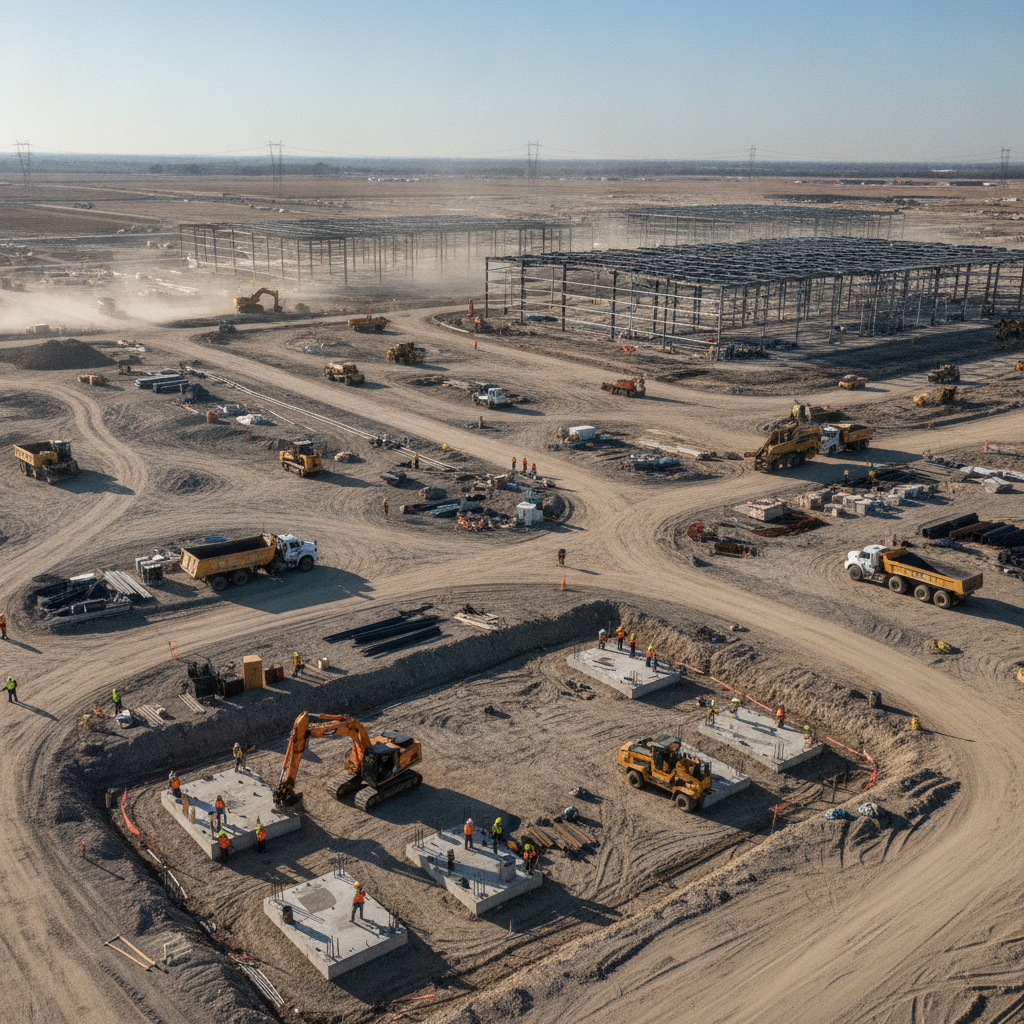
Waiting for a full building permit before mobilizing any construction activity can add months to a project timeline. A phased permitting strategy decouples early site work from the final building design, allowing construction to begin concurrently with the final architectural and structural plan review. This typically involves securing an early site work permit or a series of permits for activities like clearing, grading, erosion control installation, and underground utility construction. This approach gets heavy equipment on site sooner, enabling critical path earthwork and infrastructure installation to proceed while the vertical construction plans are finalized. Successfully implementing a phased approach requires careful coordination and a deep understanding of local regulations. Permitting requirements vary by jurisdiction, and every project team should confirm the applicable standards with the local, state, regional, and federal authorities that hold review authority over the site. A well-defined phased permitting plan, clearly outlining the scope of each permit, is essential for both regulatory approval and effective construction administration. This strategy is fundamental to any aggressive land development schedule for mission-critical facilities.
Leveraging Parallel Review Processes
A traditional, serial review process—where an application is reviewed by one agency after another—is inherently slow. A parallel review strategy, in contrast, involves submitting permit applications to multiple agencies simultaneously. For a data center, this could mean the site plan is under review by the local planning department at the same time the stormwater management plan is with the environmental agency and the utility connection plans are with the respective service providers. This concurrent review process compresses the overall timeline significantly. Executing a parallel review requires a highly organized project team and robust document control. The civil engineering consultant must ensure that all submittals are consistent and that any design revisions prompted by one agency’s comments are immediately incorporated and distributed to all other reviewing agencies. While more intensive to manage, this approach avoids the cumulative delays of a one-by-one review and is a hallmark of efficient permit submittals and proactive project management.
The Critical Role of a Complete and Defensible First Submittal
The fastest way to get a permit approved is to submit a comprehensive, accurate, and well-documented application the first time. Multiple rounds of comments and revisions are the primary cause of permitting delays. A complete submittal package anticipates reviewer questions and provides clear, defensible engineering solutions. For a data center, this includes not just the site plans but also detailed supporting documents such as a robust stormwater management report, a thorough traffic impact analysis, a comprehensive drainage design, and detailed plans for utility coordination. Investing time and resources up front to ensure first submittal quality pays significant dividends. This means performing thorough due diligence, using precise calculations, and clearly demonstrating how the design complies with all applicable codes and regulations. A submittal that is easy for a plan reviewer to understand and approve is one that will move through the system quickly, avoiding the dreaded cycle of ‘revise and resubmit’ that can derail a project’s schedule.
Navigating Zoning and Entitlement Pathways
The underlying zoning of a property is a critical factor in the permitting timeline. A site that is already zoned for data center use, known as by-right development, offers the most direct and predictable path to approval. Projects on these sites can proceed directly to site plan and building permit review. However, many prime locations may require a rezoning, a conditional use permit, or other entitlements, which can add significant time and uncertainty to the process. These processes often involve public hearings and discretionary approvals, making them less predictable. An effective fast-track strategy involves identifying sites with favorable zoning compliance from the start. In some cases, jurisdictions may have specific economic development zones or technology overlays designed to attract mission-critical facilities with streamlined review processes. A thorough zoning analysis during the due diligence phase is essential to understanding the entitlement risks and timeline implications, allowing developers to make informed decisions and pursue the most efficient land use regulations pathway.
Expedited and Third-Party Plan Review Options
Many jurisdictions, recognizing the economic importance of large-scale projects, offer formal programs to accelerate the review process. An expedited review, often available for an additional fee, places the project at the front of the queue for review by agency staff. This can shave weeks or even months off the standard review timeline. It is a direct and effective tool for projects where time is the most critical factor. Another powerful option available in some areas is third-party review. This allows the applicant to hire a certified, independent engineering firm to conduct the plan review on behalf of the jurisdiction. These private firms are often more responsive and can turn around comments faster than overburdened public agencies. This approach helps ensure building code compliance and can significantly compress the plan check phase, allowing the project to move toward permit issuance much more quickly.
How RSP Engineers Manages the Fast-Track Process
At RSP Engineers, our approach to fast-track permitting is built on a foundation of proactive strategy and relentless execution. We begin every mission-critical project by front-loading the due diligence process to identify all potential regulatory hurdles. From there, we develop a master permitting strategy and timeline, creating a detailed matrix that tracks every required approval from every local, state, and federal agency. This becomes our roadmap for the entire process. Our project managers serve as the single point of contact, orchestrating a seamless flow of information between the client, the design team, and dozens of agency reviewers. We champion the parallel review process, managing complex submittals to ensure consistency and rapid response to comments. By combining deep technical expertise in civil engineering with a strategic understanding of the regulatory landscape, we transform the permitting process into a competitive advantage for our clients, ensuring predictable timelines for their most critical investments.
Common Pitfalls in Data Center Permitting
Even with the best strategy, several common issues can derail a data center’s permitting schedule. One of the most significant is underestimating utility capacity requirements. Securing commitments for the immense power, water, and fiber optic infrastructure a data center needs can be a long-lead-time process that must begin at project inception. Similarly, the late discovery of environmental permitting constraints, such as jurisdictional wetlands or habitats for protected species, can trigger lengthy federal and state reviews under programs like the Clean Water Act or the Endangered Species Act. Other frequent pitfalls include an incomplete traffic impact analysis that fails to satisfy public works requirements, leading to demands for off-site roadway improvements. Inadequate geotechnical investigations can also cause significant delays if poor soil conditions necessitate a late-stage foundation redesign. Finally, failing to anticipate and address potential community concerns regarding noise, traffic, or water usage can lead to opposition during public hearings, complicating the entitlement process. A thorough due diligence process is the best defense against these and other unforeseen site constraints.
Partner with RSP Engineers for Your Mission-Critical Project
Navigating the complexities of data center development requires a partner with proven experience in large-scale site development and strategic permitting. The team at RSP Engineers specializes in managing the entire lifecycle of mission-critical projects, from initial due diligence and zoning analysis to final construction administration. We excel at complex utility coordination, innovative stormwater management design, and proactive agency negotiation. Our goal is to provide the certainty and predictability you need to deliver your project on time and on budget. Contact us today to discuss how our civil engineering expertise can accelerate your next data center development.
Conclusion
In conclusion, accelerating data center permitting is an exercise in strategic project management. Success hinges on early and continuous engagement with regulatory agencies, the use of smart strategies like phased permitting and parallel reviews, and an unwavering commitment to quality in all submittals. By viewing the regulatory process as a critical part of the project plan rather than an obstacle, developers can achieve the speed-to-market necessary to succeed in this competitive industry. Partnering with an experienced civil engineering firm is essential to navigating this landscape and ensuring your fast-track permitting strategy for your site development project is both aggressive and achievable.
FAQs
-
The most common causes are incomplete initial permit submittals that trigger multiple review cycles and the late discovery of major utility coordination issues, particularly securing adequate power capacity. Both can be mitigated with thorough upfront due diligence and engineering.
-
In many cases, yes. A phased permitting strategy allows you to obtain early permits for site work like grading and underground utilities while the main building permit is still under review. The scope of work allowed under these early permits is strictly defined and must be followed.
-
A third-party review allows a developer to hire a jurisdiction-approved private engineering firm to perform the technical review of plans for building code compliance. This firm acts on behalf of the agency, often providing a more responsive and faster review. The final permit is still issued by the public authority.