
Data Center Environmental Resource Permits (ERP)
A technical guide for data center developers on securing Environmental Resource Permits (ERP) in Florida. Learn about stormwater, wetland impacts, and WMD review.
The ERP Framework for Mission-Critical Facilities
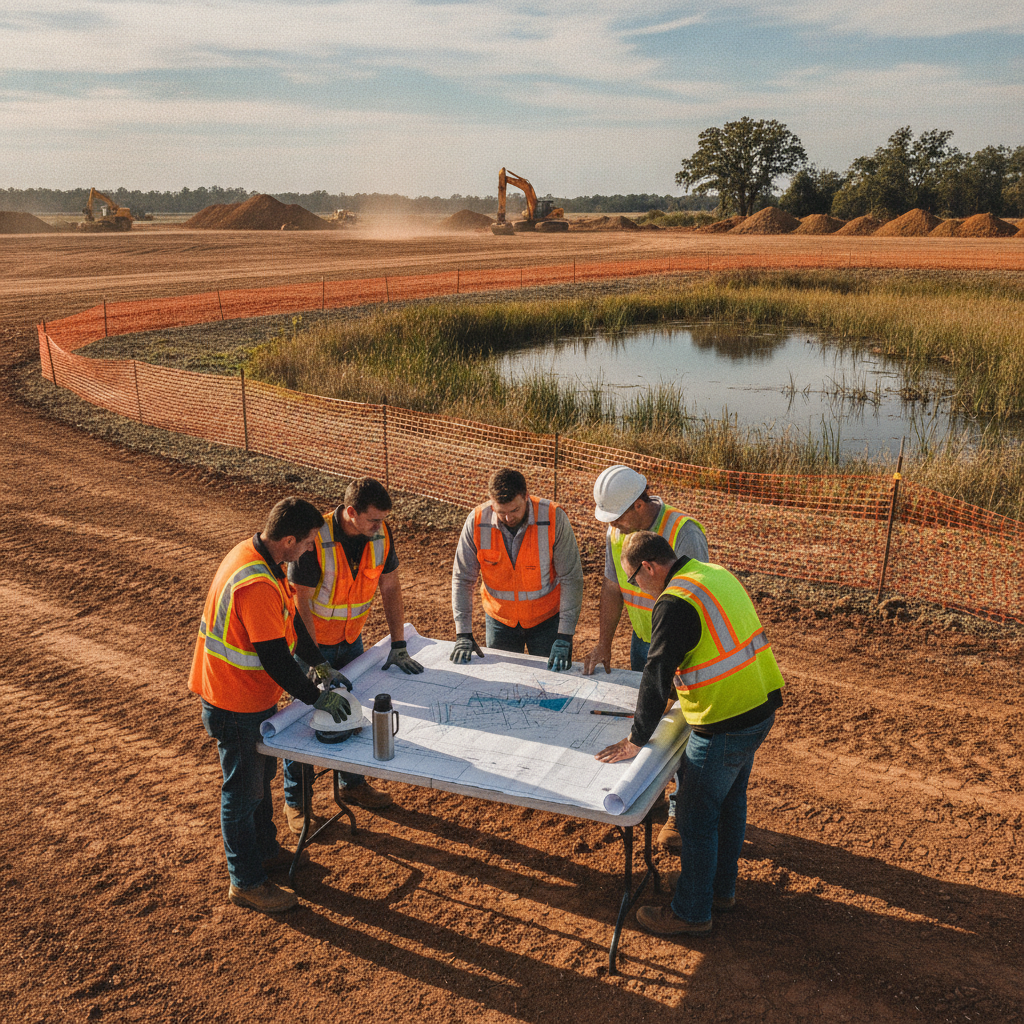
An Environmental Resource Permit is a consolidated permit that addresses two primary areas of state regulatory concern: stormwater management and environmental impacts to wetlands and other surface waters. For a mission-critical facility like a data center, where uptime and operational security are paramount, the ERP provides the regulatory certainty needed to proceed with construction. The reviewing agency, typically the local WMD (such as the South Florida Water Management District or the St. Johns River Water Management District), scrutinizes the project to ensure it will not cause adverse water quality, flooding, or environmental impacts. The permit application requires a certified design from a Professional Engineer demonstrating compliance with all applicable criteria. This includes detailed hydrologic and hydraulic modeling to prove the proposed drainage design can safely collect, treat, and discharge stormwater without harming downstream properties or natural systems. It also involves a thorough environmental assessment to identify and quantify any proposed impacts to wetlands, which must then be avoided, minimized, or mitigated according to a strict regulatory hierarchy.
Stormwater Management Design for High-Impervious Sites
ERP Application Focus: Data Center vs. Standard Commercial Site
| Component | Standard Commercial Focus | Data Center Critical Focus |
|---|---|---|
| Stormwater Model | Demonstrate compliance with standard pre-vs-post discharge rates and water quality treatment volumes. | In-depth modeling of extreme storm events (e.g., 100-year), ensuring zero flooding of critical infrastructure and demonstrating resilience. Analysis of phased build-outs. |
| Floodplain Analysis | Compensate for any floodplain encroachment on a volume-for-volume basis. | Meticulous floodplain compensation calculations with a factor of safety. Proving the data hall's finished floor is significantly above the Design Flood Elevation (DFE). |
| Wetland Mitigation | Avoid/minimize impacts where feasible; purchase mitigation bank credits for unavoidable impacts. | Rigorous alternatives analysis to justify impacts. Higher scrutiny on secondary impacts due to site-wide hydrologic changes. Securing mitigation credits early is critical. |
| Utility Coordination | Standard coordination for water, sewer, and power connections. | Extensive coordination for multiple, redundant high-capacity power feeds and fiber optic duct banks. Ensuring utility routes do not conflict with stormwater ponds or critical conveyance swales. |
| Construction Sequencing | Standard Erosion and Sediment Control Plan (ESCP). | Detailed phasing plans within the ERP to allow for early site work while subsequent phases are finalized. Robust dewatering plans and ESCP to protect sensitive areas during mass grading. |
| Security & Access | Standard access roads and perimeter fencing. | Design must integrate anti-climb fencing, secure access points, and vehicle-rated barriers without obstructing emergency access or critical stormwater flow paths. |
Data centers are characterized by extremely high percentages of impervious coverage. This fundamentally alters the site’s hydrology, preventing rainwater from infiltrating the ground and converting it almost entirely into surface runoff. A robust stormwater management system is therefore a non-negotiable component of the site plan design. The design must address both water quantity (flood control) and water quality (pollutant removal) to meet stringent WMD and FDEP criteria. For water quantity, the system must typically attenuate post-development runoff rates to pre-development levels for various storm events (e.g., the 25-year, 24-hour storm). This is usually achieved with large wet detention or dry retention ponds. For a data center, ensuring the finished floor elevation is well above the 100-year flood elevation, including considerations for pond staging, is a critical design constraint. Water quality treatment is also required, often through systems that promote the settling and biological uptake of pollutants before discharge. The entire system must be supported by a detailed drainage design report, which forms a cornerstone of the ERP submittal.
Wetland Delineation and Impact Permitting
Large, undeveloped tracts in Florida frequently contain jurisdictional wetlands. The first step in the ERP process is to have a qualified environmental scientist perform a formal wetland delineation to establish the precise boundaries of these systems. This boundary line is then typically verified by the reviewing agency. The site development plan must be designed around these constraints, following the state’s mitigation hierarchy: avoid, minimize, and only then, mitigate for unavoidable impacts. If wetland impacts are unavoidable to achieve the project’s purpose, the developer must provide mitigation, usually by purchasing credits from a permitted mitigation bank. This process can be costly and requires careful negotiation and documentation within the ERP application. The application must also assess potential secondary impacts, such as how changes in site hydrology might affect adjacent, non-impacted wetlands. This environmental component is often coordinated with federal permitting from the U.S. Army Corps of Engineers (ACOE).
The ERP Application and Submittal Package
A complete ERP application is a substantial technical document that leaves no room for ambiguity. A deficient package can lead to multiple rounds of Requests for Additional Information (RAIs), causing significant project delays. Key components of the submittal package include the official application forms, detailed construction plans prepared by Florida Licensed Engineers, a comprehensive stormwater management report with all supporting calculations, and an environmental report detailing wetland boundaries, proposed impacts, and the mitigation plan. Other essential elements include proof of property ownership, soil boring data or a Geotechnical soil report, and documentation of any required off-site easements for drainage or utilities. A pre-application meeting with the WMD or FDEP staff is highly recommended for complex projects like data centers. This meeting allows the design team to present the conceptual site plan design, identify potential regulatory hurdles early, and establish a clear line of communication with the permit reviewers.
Water Management District (WMD) and FDEP Review Process
Once the ERP application is submitted, the clock starts on the agency’s review timeline. The WMD or FDEP staff performs a detailed review of the engineering plans, drainage calculations, and environmental assessments for zoning compliance and adherence to state regulations. Within 30 days, the agency will either deem the application complete or issue an RAI, which formally requests clarification, corrections, or additional data. Responding to RAIs thoroughly and accurately is critical to keeping the permit on track. Common RAIs for data center projects often focus on the assumptions used in the stormwater model, the demonstration of adequate flood protection for critical infrastructure, justification for wetland impact levels, and analysis of potential off-site drainage impacts. The role of the Professional Engineer is to provide clear, defensible responses that satisfy the agency’s concerns. This back-and-forth process continues until all regulatory requirements are met, culminating in the issuance of the ERP.
Coordinating ERP with Federal and Local Permitting
The state ERP is a major milestone, but it doesn’t exist in a vacuum. For sites with impacts to federal jurisdictional wetlands, a separate permit from the U.S. Army Corps of Engineers (ACOE) is required under Section 404 of the Clean Water Act. The state and federal permitting processes often run concurrently, and information shared with one agency is typically shared with the other. A coordinated strategy is essential to ensure consistency between the state and federal applications, particularly regarding the wetland impact analysis and mitigation plan. Simultaneously, the project must secure local government approvals, such as site plan approval, platting, and building permits. The approved ERP is almost always a prerequisite for obtaining these local development orders. Effective utility coordination with power, water, sewer, and fiber providers must also be integrated into the overall site plan to avoid conflicts with the permitted stormwater management system.
RSP Engineers’ Approach to ERP Permitting for Data Centers
At RSP Engineers, we approach ERP permitting for mission-critical facilities with a strategic, proactive methodology designed to minimize delays and regulatory risk. Our process is built on decades of experience as a leading Florida civil engineering firm near me. We begin with comprehensive due diligence and site feasibility studies, identifying potential red flags like extensive wetlands or floodplain issues before significant capital is invested. This allows our clients to make informed decisions from day one. Our design phase integrates the site plan design with the drainage design and environmental constraints, ensuring the layout is efficient, compliant, and constructible. We facilitate and lead pre-application meetings with regulatory agencies to build consensus and clarify expectations. Our submittal packages are meticulously prepared to be clear, complete, and defensible, anticipating reviewer questions to minimize the likelihood of RAIs. Should an RAI be issued, our team of Civil Engineers provides prompt, technically sound responses to keep the project moving toward permit issuance and successful site development.
Common Pitfalls in Data Center ERP Applications
Even sophisticated developers can encounter pitfalls during the ERP process. One of the most common issues is underestimating the timeline and cost associated with wetland mitigation. Failing to secure mitigation bank credits early can halt a project. Another frequent problem is an inadequate floodplain analysis, where the compensation provided is insufficient or improperly located, triggering significant agency pushback. Developers may also overlook the need for off-site easements for drainage or utility improvements, discovering the issue late in the process. Finally, a lack of integrated design can create major conflicts. For example, a planned route for a redundant power duct bank may conflict with the location of a critical stormwater conveyance swale or a conservation easement. Resolving these issues post-submittal requires costly redesign and extends the permitting timeline. Proactive utility coordination and a holistic approach to site development are essential to avoid these preventable setbacks.
Your Partner for Mission-Critical Site Development in Florida
Securing an Environmental Resource Permit for a data center in Florida is a complex, high-stakes process that demands technical excellence and regulatory expertise. Missteps can lead to costly delays that jeopardize project viability. RSP Engineers provides the expert guidance needed to navigate this landscape with confidence. Our team specializes in site development, stormwater management, and agency permitting for complex commercial and industrial projects across the state. We partner with you from initial due diligence through final construction to ensure your project is built on a foundation of sound engineering and regulatory compliance. Contact us today to discuss your project’s specific needs and learn how our site engineering services can help you achieve your development goals.
Conclusion
The Environmental Resource Permit is the gateway to successful data center development in Florida. It is a comprehensive regulatory approval that requires a sophisticated, integrated approach to civil engineering, environmental science, and project management. By focusing on a robust stormwater management strategy, a clear plan for addressing wetland impacts, and proactive agency coordination, developers can navigate the permitting process efficiently. Partnering with an experienced engineering firm that understands the unique demands of mission-critical facilities is the most critical investment you can make in your project’s success.
FAQs
-
The timeline can vary significantly based on project complexity, agency workload, and the quality of the submittal. For a complex data center site with wetland impacts, the process from application submittal to permit issuance can take anywhere from 6 to 12 months, or longer if significant RAIs or design changes are required. Early engagement with your civil engineering team is key.
-
An Individual ERP is the standard permit that provides construction authorization for a fully engineered project. A Conceptual Agency Action (or Conceptual ERP) is an optional, preliminary approval for a master plan. It provides a level of certainty on major issues like wetland impact limits and stormwater management strategy before the developer invests in detailed construction drawings.
-
Yes, phasing is common for large data center campuses. The ERP can be structured to permit the master infrastructure (like the main stormwater ponds) and Phase 1 initially, with subsequent phases approved as modifications or separate permits. This requires a clear and well-documented master drainage design to be approved upfront.