
Data Center Environmental Approvals
A guide to critical environmental approvals for data center development, including wetlands, endangered species, air permits, and stormwater. Learn how to de-risk your project.
The Critical Role of Early Environmental Due Diligence
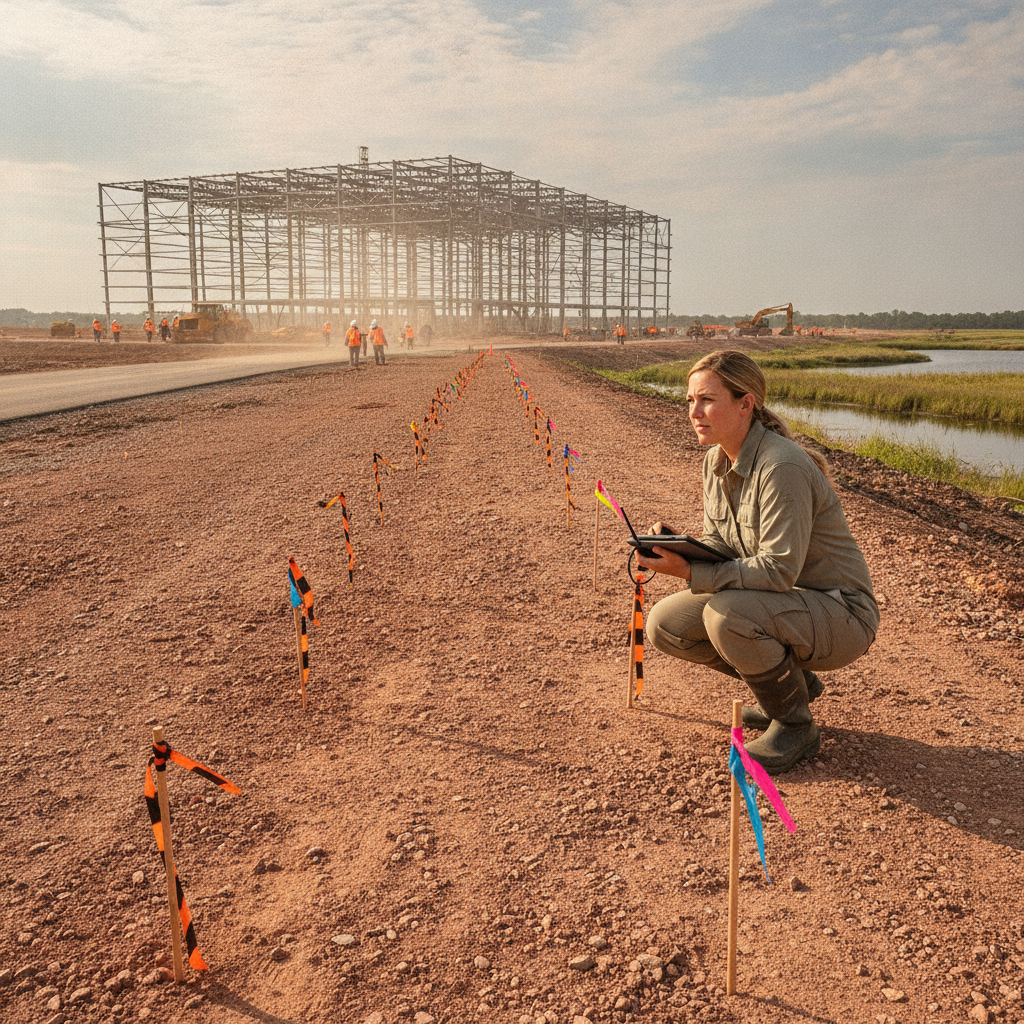
Environmental due diligence should be a Day One activity, concurrent with initial site feasibility studies. Identifying environmental constraints early in the process allows the project team to make informed decisions about site viability and layout. Discovering a jurisdictional wetland or critical habitat for an endangered species after the preliminary Site plan design is complete can force a total redesign, impacting everything from building placement to utility routing and access road alignment. This is where experienced Civil Engineers and environmental scientists provide immense value. An initial desktop analysis, followed by on-site reconnaissance, can flag potential issues related to wetlands, floodplains, protected species, and cultural resources. This early intelligence informs the project’s risk profile and allows for the development of a comprehensive permitting strategy. By understanding the potential environmental hurdles upfront, developers can build realistic timelines, budget accurately for necessary surveys and mitigation, and design a site layout that minimizes impacts, streamlining the path to final approval. This proactive stance is far superior to reacting to agency comments or stop-work orders deep into the design process.
Wetlands Delineation and Permitting under the Clean Water Act
Key Environmental Review Triggers for Data Center Sites
| Environmental Concern | Primary Federal Nexus | Typical Assessment / Deliverable | Potential Site Impact |
|---|---|---|---|
| Jurisdictional Wetlands & Waters | Clean Water Act (Section 404) | Wetland Delineation Report; USACE Permit Application | Site layout constraints, avoidance areas, costly mitigation requirements. |
| Threatened & Endangered Species | Endangered Species Act (ESA) | Habitat Assessment; Biological Survey; USFWS Consultation | Development restrictions, conservation easements, seasonal construction limits. |
| Cultural & Historical Resources | National Historic Preservation Act (Section 106) | Phase I Archaeological Survey; SHPO Consultation | Site avoidance, data recovery excavations, construction monitoring. |
| Air Emissions (Generators) | Clean Air Act | Air Quality Permit Application; Emissions Modeling | Limits on generator testing hours, specific fuel requirements, stack height rules. |
| Stormwater Runoff | Clean Water Act (NPDES) | Stormwater Pollution Prevention Plan (SWPPP); Drainage Report | Significant land dedication for ponds, complex drainage infrastructure. |
| Floodplain Encroachment | National Flood Insurance Program (NFIP) | FEMA Floodplain Analysis; Hydraulic Modeling | Elevated building pads, compensatory storage requirements, access limitations. |
One of the most common environmental considerations for large, undeveloped sites is the presence of jurisdictional wetlands and other waters protected under the federal Clean Water Act (CWA). Identifying these features requires a formal wetlands delineation performed by a qualified environmental scientist. This process establishes the precise boundaries of regulated areas, which are then subject to verification by the U.S. Army Corps of Engineers (USACE) or a delegated state agency. Any proposed impacts, such as filling a wetland to construct a building pad or access road, will likely require a Section 404 permit from the USACE. The permitting process for wetland impacts can be lengthy and complex, often requiring a detailed alternatives analysis and a mitigation plan to offset the proposed environmental losses. Mitigation may involve purchasing credits from an approved mitigation bank, restoring or enhancing wetlands elsewhere, or preserving existing high-quality habitats. Permitting requirements vary by jurisdiction, and every project team should confirm the applicable standards with the local, state, regional, and federal authorities that hold review authority over the site. Early delineation is crucial for designing a site layout that first avoids and then minimizes wetland impacts, which is the most efficient path through the agency review process.
Endangered Species and Critical Habitat Assessments
The Endangered Species Act (ESA) provides federal protection for threatened and endangered species and their designated critical habitats. Before development can proceed, a thorough habitat assessment is often necessary to determine if a proposed data center site could impact protected species. This process typically begins with a database review to identify species known to occur in the project’s vicinity, followed by field surveys conducted by biologists during the appropriate season to look for the species or signs of their presence. If protected species or critical habitat are found, consultation with the U.S. Fish and Wildlife Service (USFWS) is required. This consultation can result in a range of outcomes, from implementing specific conservation measures to avoid impacts, to significant site layout modifications or even the need for an Incidental Take Permit with a corresponding Habitat Conservation Plan. Proactively addressing these potential constraints is vital, as late discovery can halt a project and trigger a complex and time-consuming regulatory process.
Cultural and Archaeological Resource Surveys
Sites slated for development may also contain significant historical or archaeological resources protected by the National Historic Preservation Act (NHPA). A cultural resources survey is often required, particularly when a federal permit (like a USACE Section 404 permit) is needed, which triggers a Section 106 review. This process begins with a Phase I survey, involving background research and a field inspection to identify any surface artifacts or features of potential historical significance. If the Phase I survey identifies potential resources, further investigation (Phase II) may be required to determine the significance of the findings. In rare cases where a significant site cannot be avoided, a Phase III data recovery or mitigation plan may be necessary. Integrating these surveys into the early stages of site development planning helps avoid unexpected discoveries during construction that could lead to costly work stoppages and project delays while the appropriate agencies are consulted.
Air Quality Permitting for Backup Power Generation
Data centers require an immense and uninterrupted power supply, making on-site backup generators a non-negotiable component of their infrastructure. These large, typically diesel-fueled generators are considered stationary sources of air pollution and are regulated under the Clean Air Act. Consequently, a project will likely need an air quality permit from the state or local environmental agency before construction and operation. The permitting process involves quantifying potential emissions of pollutants like nitrogen oxides (NOx), carbon monoxide (CO), and particulate matter. This often requires emissions modeling to demonstrate that the facility will not violate national or local air quality standards. The permit will establish operational limits, such as the maximum number of hours the generators can run for testing and maintenance each year. Securing this permit is a critical step for ensuring operational readiness and building code compliance.
Stormwater Management and NPDES Compliance
The vast rooftops, parking lots, and access roads of a data center create massive areas of impervious surfaces. This prevents rainwater from infiltrating into the ground, increasing the volume and velocity of stormwater runoff. Under the Clean Water Act, construction activities that disturb one or more acres of land require a National Pollutant Discharge Elimination System (NPDES) permit for stormwater discharges. This requires the development and implementation of a Stormwater Pollution Prevention Plan (SWPPP). The SWPPP is a critical document that outlines the erosion and sediment control measures to be used during construction, such as silt fences, inlet protection, and stabilized construction entrances. It also details the permanent post-construction stormwater management system, which may include detention or retention ponds, infiltration basins, or other green infrastructure designed to manage runoff quality and quantity. A robust drainage design is fundamental to achieving NPDES compliance and protecting downstream water quality.
How RSP Engineers Integrates Environmental Strategy
At RSP Engineers, we believe a successful data center project depends on the seamless integration of civil engineering, environmental science, and permitting strategy from day one. Our process begins with a thorough feasibility analysis that identifies both engineering and environmental constraints. We bring our team of Civil Engineers, environmental partners, and permitting specialists to the table during the earliest stages of site selection to provide a holistic view of a property’s development potential. This integrated approach allows us to craft a Site plan design that is both functional and permittable. By collaborating closely, our teams ensure that utility corridors avoid sensitive habitats, stormwater ponds are sized and located in compliance with regulations, and building pads are situated to minimize wetland impacts. As one of the leading Civil Engineering firms in the nation, we manage the entire lifecycle, from initial due diligence and agency coordination to final permit submittals and construction administration, de-risking the project and providing our clients with a clear and predictable path to completion.
Common Pitfalls in Data Center Environmental Permitting
Even with careful planning, data center projects can encounter environmental hurdles. One of the most common issues is the late discovery of jurisdictional wetlands or protected species, often because initial due diligence was too superficial. This can force a project back to the drawing board, causing significant schedule delays and budget overruns. Another frequent pitfall is underestimating agency review timelines; securing federal permits can take a year or more, a factor that must be built into the master project schedule. Failing to budget adequately for environmental mitigation is another critical error. The cost of purchasing wetland mitigation credits or funding habitat conservation can be substantial. Finally, developers often face challenges when utility routes—for power, water, or fiber—cross environmental features on or off the primary site. This requires a separate layer of utility coordination and permitting that must be managed concurrently with the main site approvals to avoid creating a bottleneck for the entire project.
Your Partner for Mission-Critical Site Development
Navigating the complex web of environmental regulations for a data center project requires specialized expertise and a proactive, strategic approach. The team at RSP Engineers provides the integrated site development services necessary to guide your project from initial concept to final construction. We specialize in complex land development challenges, including comprehensive environmental permitting, robust stormwater management design, and meticulous utility coordination. Our goal is to de-risk your investment, streamline approvals, and deliver a project that is compliant, on schedule, and on budget. Contact us today to discuss how our civil engineering and permitting experts can support your next mission-critical facility.
Conclusion
Environmental approvals are not a final hurdle in data center development; they are a foundational component of a sound project strategy. From wetlands and endangered species to air quality and stormwater management, each regulatory requirement presents a unique challenge that can impact site design, budget, and schedule. By prioritizing early and thorough due diligence and partnering with an experienced civil engineering firm, developers can navigate the permitting landscape effectively. This proactive planning transforms regulatory compliance from a potential obstacle into a predictable part of a successful site development process, ensuring these critical infrastructure projects are delivered efficiently and responsibly.
FAQs
-
Environmental due diligence should begin as soon as a site is identified and before any significant capital is invested. An initial desktop screening and site reconnaissance should be part of the earliest site selection feasibility analysis to identify potential red flags that could impact project viability, schedule, or budget.
-
If a threatened or endangered species is found, the project will require consultation with the U. S. Fish and Wildlife Service and potentially a state wildlife agency. The goal is to first avoid and minimize impacts to the species and its habitat. This may involve modifying the Site plan design, observing seasonal construction restrictions, or developing a formal Habitat Conservation Plan and obtaining an Incidental Take Permit if impacts are unavoidable.
-
Yes, and this is the recommended strategy. The various permit tracks—local land use, state environmental, and federal—should be pursued in parallel whenever possible. A coordinated effort led by an experienced civil engineering team ensures that information is shared between review agencies and that the design evolves to meet all requirements simultaneously, which is the most efficient path to receiving all necessary approvals.