
Data Center Drainage Value Engineering
Discover how value engineering for data center drainage systems can optimize costs, maximize buildable area, and ensure performance. Learn from RSP Engineers.
Identifying the True Cost Drivers in Data Center Stormwater Systems
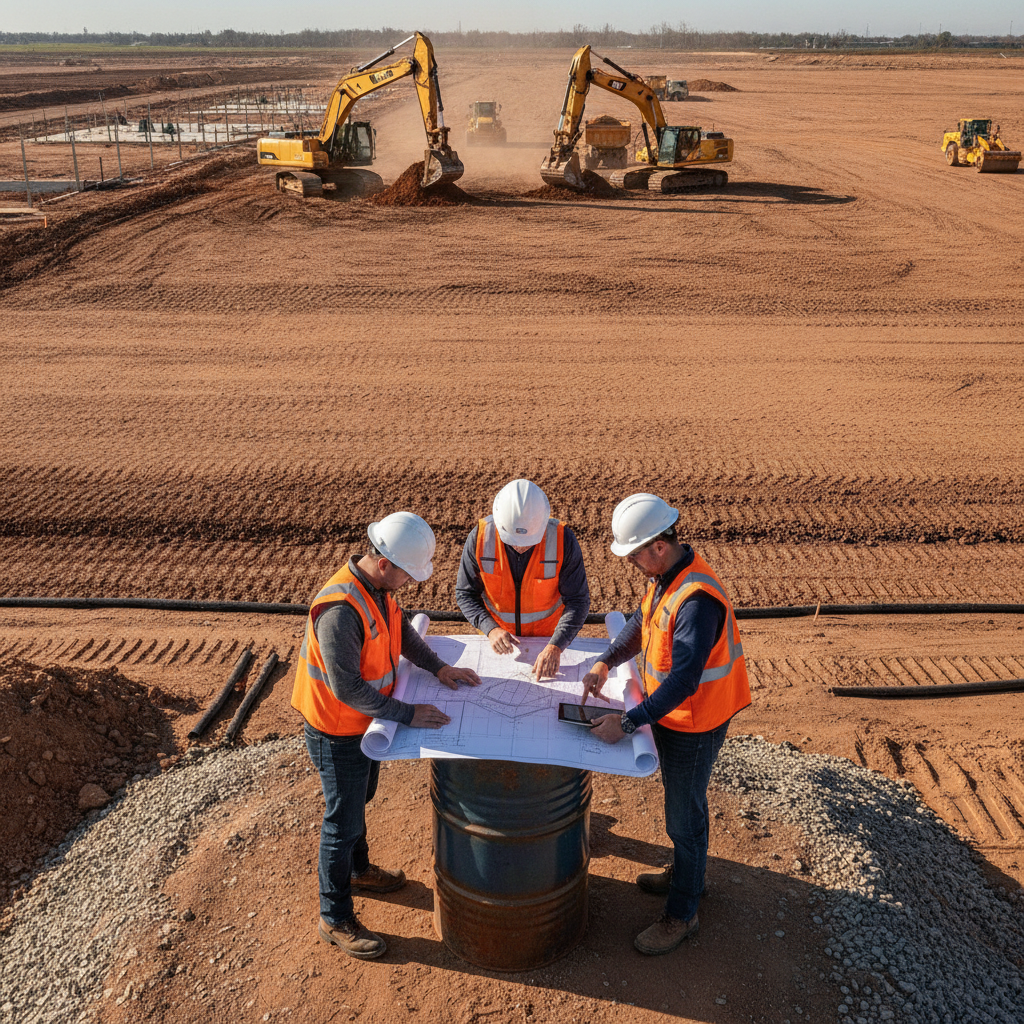
A successful value engineering analysis begins by looking beyond the line items for pipe and inlets. The most substantial costs in a data center drainage system are often hidden within broader construction activities. The primary driver is typically mass earthwork. The sheer volume of soil that must be moved, graded, and compacted for massive building pads and parking areas directly impacts drainage costs. Deeper pipe networks require wider, more extensive, and often slower trenching operations, which can have cascading effects on the project schedule. Another major factor is the construction of large stormwater management structures, such as concrete vaults, complex outlet control structures, and water quality treatment units. These components involve significant material, labor, and excavation costs. Furthermore, the geotechnical conditions of a site can introduce unforeseen expenses. Poor soil stability may necessitate costly dewatering, shoring, or soil stabilization measures for deep utility trenches. Finally, the opportunity cost of land is paramount. A surface retention pond, while cost-effective per cubic foot of storage, consumes valuable real estate that could otherwise be used for facility expansion, cooling infrastructure, or other revenue-generating purposes. A thorough VE process quantifies these interconnected costs to identify the most effective optimization strategies.
Strategic Grading and Earthwork Optimization
Comparison of Drainage System Value Engineering Strategies
| Strategy | Primary Cost Impact | Key Considerations & Risks |
|---|---|---|
| Optimized Grading & Earthwork Balancing | Reduces excavation, backfill, and soil import/export costs. | Requires early integration with architectural and utility plans. Risk of creating ADA compliance issues if not carefully managed. |
| Underground vs. Surface Storage | Trades higher capital cost (underground) for increased buildable area and land value. | Underground systems have higher long-term maintenance costs and require careful structural design for overlying loads. |
| Pipe Material Selection (RCP vs. HDPE) | Impacts material cost, installation speed, and required equipment. | Decision depends on loading, soil corrosivity, and local agency preference. Improper selection can affect long-term durability. |
| Phased Storage Implementation | Defers capital expenditure by building storage capacity only as needed for each campus phase. | Requires a robust master plan and upfront permitting with the water management district to approve the phased approach. |
| Inlet and Structure Spacing | Optimizing spacing reduces the total number of costly structures (manholes, inlets). | Must still meet hydraulic requirements for surface runoff capture and avoid excessive ponding. Subject to municipal code limitations. |
The most impactful value engineering decisions are often made before a single pipe is specified. A strategic site grading plan is the foundation of an efficient drainage system. By carefully analyzing the existing topography, our Civil Engineers can design a grading scheme that minimizes the depth of the entire storm sewer network. Shaving even a foot or two off the average pipe depth can lead to exponential savings in excavation, backfill, and dewatering costs, especially across a large campus. This process involves a delicate balance. The goal is to create positive drainage away from the building pads while minimizing the overall volume of earth moved. A well-designed plan strives for a balanced site, where the amount of cut (soil removed) is roughly equal to the amount of fill (soil needed), eliminating the significant expense of importing or exporting material. This optimization of the earthwork budget is a core tenet of efficient site development. The grading plan must also seamlessly integrate with other site constraints, such as establishing the building’s finished floor elevation (FFE), ensuring ADA compliance for pedestrian routes, and coordinating with other underground utility depths.
Surface Ponds vs. Underground Storage: A Land Use Trade-Off
One of the most critical decisions in data center site development is how and where to store the required volume of stormwater runoff. The choice between traditional surface ponds and modern underground storage systems represents a fundamental trade-off between upfront capital cost and long-term land value. Surface retention or detention ponds are generally the least expensive option in terms of pure construction cost per cubic foot of storage. However, they consume a significant footprint, reducing the buildable area available for the data center itself or future phases. Underground storage systems—such as precast concrete vaults, modular plastic chambers, or oversized pipe galleries—offer a compelling alternative. While the material and installation costs are substantially higher, they preserve the entire surface for development. For high-value land or sites with tight space constraints, the ability to build over the storage system can provide a clear return on investment by enabling a larger facility, more parking, or space for critical cooling equipment. The decision requires a detailed financial analysis that weighs the higher capital expenditure of underground systems against the long-term revenue potential of the reclaimed land, a key part of the land development pro-forma.
Pipe Material and Sizing Analysis: Beyond Cost-Per-Foot
Choosing the right pipe material is more nuanced than simply comparing the cost per linear foot of Reinforced Concrete Pipe (RCP) versus High-Density Polyethylene (HDPE). Each material has distinct advantages that impact the total installed cost and long-term performance. RCP is rigid, extremely durable, and often preferred under heavy loads like roadways. HDPE is lightweight, flexible, and comes in longer sections, which can significantly speed up installation and reduce the number of joints, a potential source of infiltration or exfiltration. The lighter weight of HDPE can reduce the size of machinery needed and shorten trench-open times, contributing to overall project savings. Beyond material selection, precise hydraulic modeling is essential for value engineering. Over-sizing pipes “just to be safe” is a common practice that adds unnecessary cost. Sophisticated software allows engineers to optimize pipe diameters and slopes to meet the required capacity for design storm events without excessive overbuilding. This rigorous drainage design process ensures the system is both efficient and compliant with municipal and water management district standards. The analysis must also consider factors like minimum cover requirements and potential conflicts with other utilities, which can influence both material choice and sizing.
Phased Stormwater Infrastructure for Campus Buildouts
Data center campuses are rarely built all at once; they typically expand in phases over several years. The stormwater management system should be designed with this modular growth in mind. A forward-thinking approach involves creating a master drainage plan that accommodates the entire campus at full buildout but allows for infrastructure to be constructed incrementally. This prevents the massive upfront capital expenditure of building a system sized for a future that is years away. This strategy involves designing the main conveyance lines and the ultimate outfall to handle the total future flow, but constructing storage elements—such as pond cells or underground vaults—on a phased basis. This requires meticulous planning and, crucially, early coordination with permitting agencies like Water Management Districts (WMDs). The master plan must be clearly articulated in the permit submittals, demonstrating how each phase remains compliant and how the system will function cohesively upon completion. This approach aligns infrastructure spending with revenue generation, a key goal for any developer.
Navigating Permitting Risks with Value-Engineered Designs
It is critical to understand that value engineering is not synonymous with cutting corners. Any design modification, no matter how cost-effective, must be fully compliant with all applicable local, state, and federal regulations. An experienced civil engineering firm ensures that VE strategies do not introduce permitting risks that could lead to costly delays and redesigns. A design that saves money on construction but gets stuck in agency review for months is a net loss. To mitigate this risk, every VE decision must be supported by robust engineering calculations, hydraulic models, and clear documentation. When submitting to agencies like the Department of Environmental Protection (DEP) or a WMD, the permit submittal package should proactively address how the optimized design continues to meet all standards for water quality treatment, flood prevention, and peak flow attenuation. Engaging with agency staff early in the design process can help secure buy-in for innovative or alternative approaches, ensuring a smoother path to permit approval.
The RSP Engineers Approach to Drainage Value Engineering
At RSP Engineers, our process is collaborative and data-driven. We begin by engaging with the client, architect, and construction manager in the earliest stages of project planning. This allows us to integrate value engineering principles directly into the initial site plan design. Our approach includes: Integrated Site Modeling: We use advanced 3D modeling software to analyze grading, drainage, and utility networks simultaneously. This allows us to visualize complex interactions and identify optimization opportunities that are invisible on 2D plans. Scenario Analysis: We model multiple drainage design scenarios, comparing the total lifecycle costs of different strategies (e.g., pond vs. underground vault, RCP vs. HDPE) to provide clients with clear, data-backed choices. Constructability Reviews: Our team includes engineers with field experience who review designs for practicality. We identify potential construction bottlenecks or installation challenges before they result in costly change orders. Proactive Permit Strategy: We prepare comprehensive permit submittal packages that clearly justify our design approach, reducing review comments and accelerating approval timelines.
Common Pitfalls in Data Center Drainage VE
While the potential benefits of value engineering are significant, several common pitfalls can undermine the effort. One major issue is overly aggressive grading that inadvertently creates challenges with ADA compliance on pedestrian routes or results in conflicts with the required depths for gravity-fed sanitary sewer or other utilities. Another is underestimating the long-term inspection and maintenance costs associated with complex underground storage systems, which can negate upfront savings. Perhaps the most critical error is failing to secure buy-in from regulatory agencies early in the process. Proposing a novel design late in the game can be met with skepticism and lead to significant redesign requests during the formal agency review. Finally, value engineering must never compromise the system’s resilience. For a mission-critical facility, a drainage system failure during an extreme storm event is not an option, so all optimizations must maintain or enhance the site’s ability to manage severe weather.
Partner with RSP for Optimized Data Center Site Development
Successfully value engineering a data center’s drainage system requires a partner who understands the nuances of mission-critical facilities and the complexities of regulatory landscape. RSP Engineers brings decades of experience to the table, helping clients navigate the critical balance between cost, performance, and compliance. Our team provides expert guidance on every aspect of your project, from initial feasibility and site development planning to detailed stormwater management design and navigating the permitting process. Let us help you maximize the value of your investment.
Conclusion: Strategic Design for a Resilient Future
Value engineering in data center drainage is far more than a cost-cutting exercise; it is a strategic process that enhances project value from the ground up. By focusing on high-impact areas like earthwork, land use, and material selection, developers can achieve significant savings while building a more efficient and resilient site. An intelligent drainage design, supported by thorough engineering and a proactive approach to regulatory compliance, ensures that the final infrastructure not only meets the technical demands of a mission-critical facility but also maximizes the overall site utility and return on investment.
FAQs
-
Value engineering should begin during the conceptual or schematic design phase. The greatest opportunities for cost savings, particularly through earthwork optimization and strategic site layout, are available before key design decisions are locked in. Addressing VE early maximizes its impact and minimizes the potential for costly redesigns.
-
Absolutely. One of the primary benefits of using strategies like underground stormwater management is the ability to reclaim valuable surface area. This can allow for a larger building footprint, more space for essential cooling infrastructure, or additional parking, directly increasing the site’s revenue-generating potential and overall utility.
-
Not necessarily. While the design and review may be more detailed, regulatory agencies in Florida are very familiar with underground systems. A well-prepared permit submittal from an experienced engineering firm, complete with clear calculations and maintenance plans, can navigate the permitting process smoothly. The key is thorough documentation and demonstrating full compliance with all water quality and quantity rules.