
Data Center Drainage Cost Estimating Guide
A practical guide for data center developers on estimating drainage and stormwater management costs. Learn about key cost drivers, permitting, and common pitfalls.
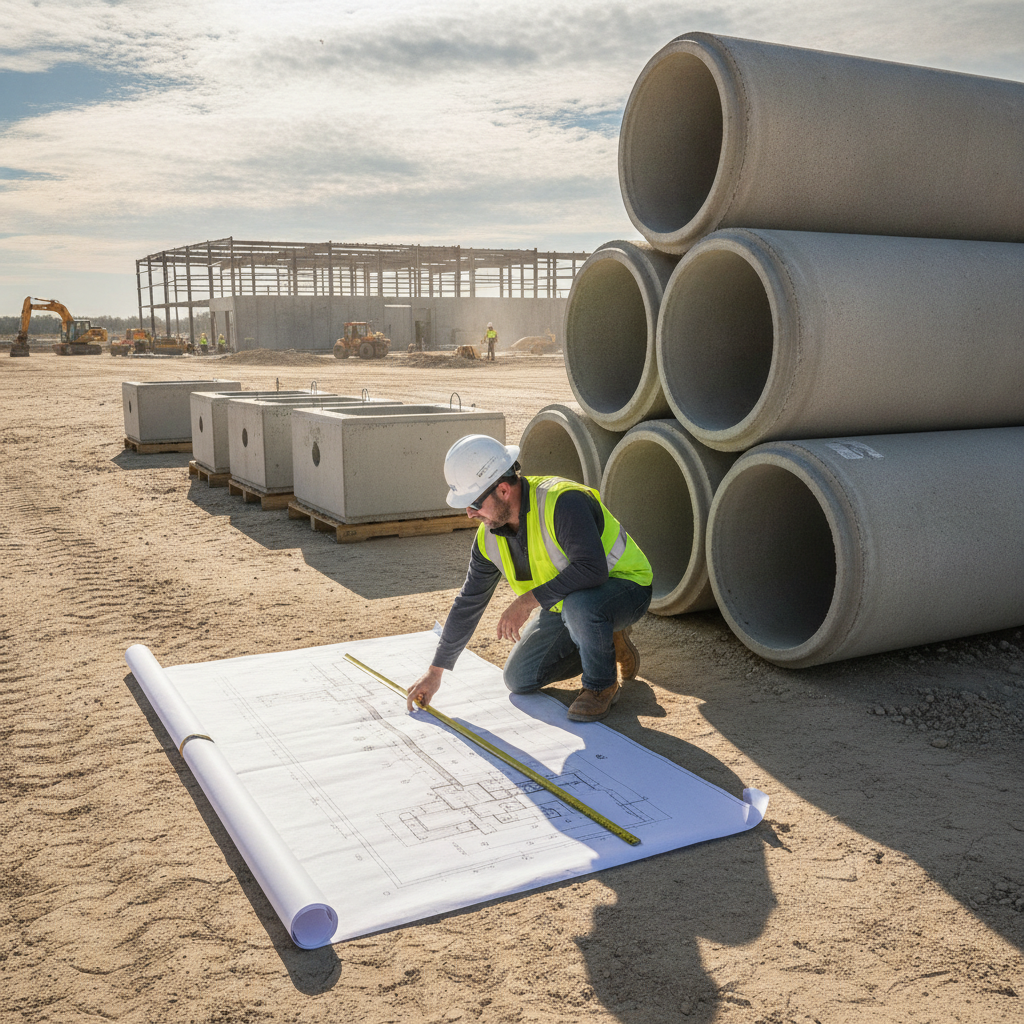
Key Cost Drivers: Earthwork and Storage Volume
The foundation of any drainage cost estimate is earthwork. The sheer volume of soil that must be moved, graded, and compacted directly correlates with cost. For data centers, which often require massive, perfectly flat building pads, mass grading is a substantial line item. The primary drivers here are the existing topography versus the proposed final elevations. A site requiring significant cut-and-fill operations will have much higher costs than a naturally flat one. Equally important is the required stormwater storage volume, dictated by local and state regulations, such as those from Water Management Districts. This volume is a function of the project’s impervious area (roofs, parking lots, roadways) and the design storm event (e.g., a 25-year, 72-hour storm). The larger the impervious footprint, the more storage is needed, which in turn requires more excavation for a surface pond or more expensive structures for an underground system. The site’s soil characteristics, identified through a Geotechnical soil report, also play a critical role, as sandy soils may allow for exfiltration, reducing the required storage volume, while heavy clay soils will not.
Pipe and Structure Unit Cost Analysis
Stormwater Detention System Cost Comparison
| Cost Component | Surface Detention (Pond) | Underground Detention System |
|---|---|---|
| Land Consumption | High (significant surface footprint) | Very Low (installed under parking lots or green space) |
| Initial Capital Cost | Low to Moderate (primarily earthwork) | High to Very High (materials, complex installation) |
| Earthwork & Grading | High volume of excavation and fill for pond creation. | High volume of deep, precise excavation and backfill. |
| Material Costs | Minimal (sod, liner if needed, control structure). | Substantial (large pipes, vaults, chambers, filter fabric). |
| Installation Complexity | Relatively simple; standard heavy equipment. | Complex; requires specialized crews, dewatering, and careful assembly. |
| Long-Term Maintenance | Regular mowing, sediment removal, bank stabilization. | Requires confined-space entry for inspection and jetting to remove sediment. |
| Permitting Considerations | Straightforward review by agencies. | May require more detailed structural and maintenance plan submittals. |
Beyond bulk earthwork, the conveyance system—the network of pipes and structures that moves water across the site—represents a major cost category. The cost is not as simple as price-per-foot of pipe. Key variables include material type (e.g., Reinforced Concrete Pipe vs. High-Density Polyethylene), pipe diameter, and trench depth. Deeper trenches require more extensive excavation, shoring for safety, and dewatering, especially in high water table environment. These factors can cause the installed cost of a drainage design to escalate quickly. Precast concrete structures, such as curb inlets, manholes, and control structures, are priced per unit, but their cost is influenced by size, depth, and complexity. A simple inlet is far less expensive than a large, multi-chambered water quality structure designed to meet stringent environmental permitting requirements. Accurate quantity takeoffs from a detailed site plan design are essential for budgeting these components effectively. Labor for installation, bedding material, and backfill must also be carefully calculated for each linear foot of pipe and each individual structure.
Underground vs. Surface Detention: A Cost-Benefit Breakdown
A critical decision impacting both cost and land use is the choice between surface and underground stormwater detention. Surface detention (wet or dry ponds) is the traditional approach. Its primary cost is in the earthwork required for excavation and the value of the land it occupies. For sprawling data center campuses, dedicating several acres to a pond can be a significant opportunity cost, as that land could otherwise be used for future expansion or support facilities. Underground detention systems, using large-diameter pipes, concrete vaults, or modular plastic chambers, preserve valuable surface real estate for development. However, their upfront capital cost is substantially higher. These systems require extensive excavation, complex installation, and specialized materials. The decision often hinges on a land development pro forma analysis: is the value of the usable land gained greater than the premium paid for the underground system? This trade-off is central to optimizing the site layout and maximizing return on investment for high-value commercial properties like data centers.
Erosion and Sediment Control (ESC) Budgeting
Often underestimated, the costs associated with Erosion and Sediment Control (ESC) are non-negotiable and heavily enforced. During construction, every data center site must comply with National Pollutant Discharge Elimination System (NPDES) permit requirements. This involves implementing a Stormwater Pollution Prevention Plan (SWPPP) that details measures to prevent soil from leaving the site and polluting downstream water bodies. Budget line items must include the installation and maintenance of silt fences, floating turbidity barriers in adjacent waterways, stabilized construction entrances, and temporary seeding or mulching. The cost is not a one-time expense; these systems require regular inspection (especially after rain events) and maintenance throughout the entire construction period. Failure to properly budget for and maintain ESC measures can lead to stop-work orders and significant fines from regulatory agencies, making it a critical component of risk management in any site development cost estimate.
The Critical Role of Permitting and Agency Fees
No drainage system can be built in without navigating a complex web of regulatory approvals. The associated fees are a hard cost that must be included in any preliminary budget. Key agencies include the local municipality (city or county), the regional Water Management District (WMD), and often the Department of Environmental Protection (DEP). Each agency has its own application fee schedule, which can be based on project size, impervious area, or the complexity of the permit submittals. Beyond the application fees themselves, the agency review process can indirectly impact costs. Lengthy review cycles can delay project timelines, leading to increased carrying costs. Furthermore, agency comments may require design revisions, such as adding a water quality treatment train or increasing storage volume, which directly translates to higher construction costs. Engaging a civil engineering firm near me with deep experience in local zoning compliance and agency relationships is crucial for anticipating these requirements and streamlining the approval process.
Factoring in Contingency, Escalation, and Long-Lead Items
A responsible cost estimate is never just the sum of its parts. A construction contingency, typically ranging from 10% to 15% of the total construction cost, is essential to cover unforeseen conditions. This could include encountering unexpected rock during excavation, the need for extensive dewatering due to seasonal water table fluctuations, or resolving unforeseen utility coordination conflicts. Material cost escalation is another critical factor, especially in a volatile market. The price of concrete, steel, and petroleum-based products like HDPE pipe can change between the time of estimate and the time of purchase. Prudent estimators build in an escalation factor based on market trends. Finally, long-lead items, such as large custom control structures or specialized water quality units, must be identified early. Delays in procuring these items can disrupt the entire construction schedule, creating costly ripple effects. Planning for these variables separates a preliminary guess from a reliable financial tool.
How RSP Engineers Develops Reliable Cost Opinions
At RSP Engineers, our approach to cost estimating is rooted in a rigorous, multi-stage process designed to provide clarity and confidence. We begin with a thorough due diligence and conceptual design phase, identifying major constraints like wetlands, easements, and utility conflicts that drive foundational costs. This allows for a high-level Opinion of Probable Cost (OPC) early in the project lifecycle. As the design progresses, we perform detailed quantity takeoffs from our civil engineering plans. We don’t rely on generic assumptions; we calculate the actual cubic yards of earthwork, linear feet of pipe by size and type, and the number of required structures. We then apply current, market-tested unit costs sourced from recent projects and relationships with local contractors. This detailed methodology minimizes surprises and provides our clients with a financial tool they can use for pro forma analysis, securing financing, and negotiating construction contracts. Our goal is to de-risk the site development process from the very beginning.
Common Pitfalls in Data Center Drainage Estimating
Even experienced developers can be caught off guard by hidden drainage costs. One of the most common errors is underestimating dewatering requirements. Managing groundwater during deep excavations for underground vaults or lift stations can be a massive and costly undertaking. Another frequent oversight is failing to account for unsuitable soils, which may require expensive removal and replacement with engineered fill to support structures and pavements. Utility conflicts are another major source of budget-busting change orders. A drainage design that conflicts with existing water, sewer, fiber, or gas lines requires costly redesign and relocation efforts. Finally, overlooking the cost of off-site improvements, such as upgrading a downstream municipal culvert or extending an outfall pipe, can be a significant unbudgeted expense. A thorough due diligence process, including comprehensive utility research and geotechnical investigation, is the best defense against these common pitfalls.
Your Partner in Mission-Critical Site Development
Estimating drainage costs for a data center is a complex exercise with significant financial implications. Getting it right requires a deep understanding of unique environmental conditions, regulatory landscape, and construction market. At RSP Engineers, we specialize in site development for mission-critical facilities. Our team provides detailed cost opinions, value engineering, and expert navigation of the permitting process to ensure your project is built on a solid and predictable financial foundation. We manage everything from initial due diligence and utility coordination to final construction administration.
Conclusion
A precise and comprehensive drainage cost estimate is not a luxury; it’s a fundamental requirement for successful data center development. By carefully analyzing earthwork volumes, conveyance systems, detention strategies, and soft costs like permitting, developers can avoid costly surprises and ensure project profitability. Partnering with an experienced civil engineering firm that understands the nuances of stormwater management and mission-critical design is the most effective way to mitigate risk and deliver a resilient, compliant, and cost-effective site.
FAQs
-
High water table significantly increases costs related to any deep excavation. It necessitates active dewatering systems (pumps and well points) during the installation of deep pipes, underground detention vaults, and pump stations. This not only adds direct costs for equipment and labor but can also slow down the construction schedule.
-
This varies widely based on the method. A surface pond might range from $2-$5 per cubic foot of storage, dominated by earthwork costs. An underground detention system can be much higher, from $15-$30+ per cubic foot, depending on the system type (e. g. , CMP, concrete vaults, plastic chambers) and site constraints like depth and dewatering.
-
Permitting fees are set by individual agencies. A municipality might charge based on the total project construction value, while a Water Management District fee is often calculated based on the total acreage of the site development or the number of proposed drainage basins. This lack of a standardized structure means fees must be researched for each specific project location.