
Data Center Pond Maintenance Best Practices
A guide for data center operators on essential stormwater pond maintenance. Learn best practices for sediment control, erosion repair, and regulatory compliance from RSP Engineers.
Sediment Accumulation and Forebay Management
Data center campuses are characterized by vast impervious surfaces, including large building footprints, access roads, and parking areas. During a storm, these surfaces generate significant runoff that carries sediment, debris, and pollutants into the stormwater system. Over time, this sediment settles in the pond, reducing its effective storage volume and impairing its ability to treat water quality and attenuate peak flows. This gradual loss of capacity can compromise the entire stormwater management system, increasing flood risk on a site where any inundation is unacceptable. To combat this, many modern pond designs incorporate a sediment forebay—a smaller, deeper pool located at the inflow point. The forebay is engineered to slow incoming water, allowing the majority of heavy sediment to settle out before it reaches the main body of the pond. Managing the forebay is the most cost-effective way to handle sediment. Regular inspections should monitor sediment depth, and a forebay cleanout should be scheduled when accumulation reaches a predetermined threshold, typically 50% of its design depth. This targeted dredging is far less disruptive and expensive than a full-pond cleanout, which is a major capital project. Proper sediment control is fundamental to long-term system performance.
Embankment Integrity and Vegetation Control
Data Center Pond Maintenance Schedule and Triggers
| Maintenance Task | Recommended Frequency | Key Triggers for Action | Consequence of Neglect |
|---|---|---|---|
| Trash Rack & Orifice Clearing | Monthly & After Storms >1" | Visible debris accumulation; slow pond drawdown | Outlet blockage, pond overtopping, localized flooding of critical equipment |
| Embankment Mowing & Vegetation Control | Quarterly to Monthly (Growing Season) | Grass height exceeds 12"; woody vegetation appears | Slope erosion, embankment instability, obstructed visual inspection |
| Sediment Depth Monitoring (Forebay) | Annually | Sediment fills >50% of forebay design depth | Reduced storage volume, pollutant bypass to main pond, costly full-pond dredging |
| Erosion Inspection & Spot Repair | Quarterly & After Major Storms | Visible rills, gullies, or bare soil on slopes or at outfalls | Slope failure, loss of structural integrity, permit non-compliance |
| Structural & Safety Inspection | Annually | Damaged fence, inoperable gate, missing signs, concrete spalling | Public safety hazard, increased liability, regulatory violations |
| Invasive Aquatic Vegetation Treatment | Semi-Annually or As Needed | Invasive species cover >15% of pond surface or littoral zone | Obstructed flow, reduced storage, poor water quality, mosquito breeding |
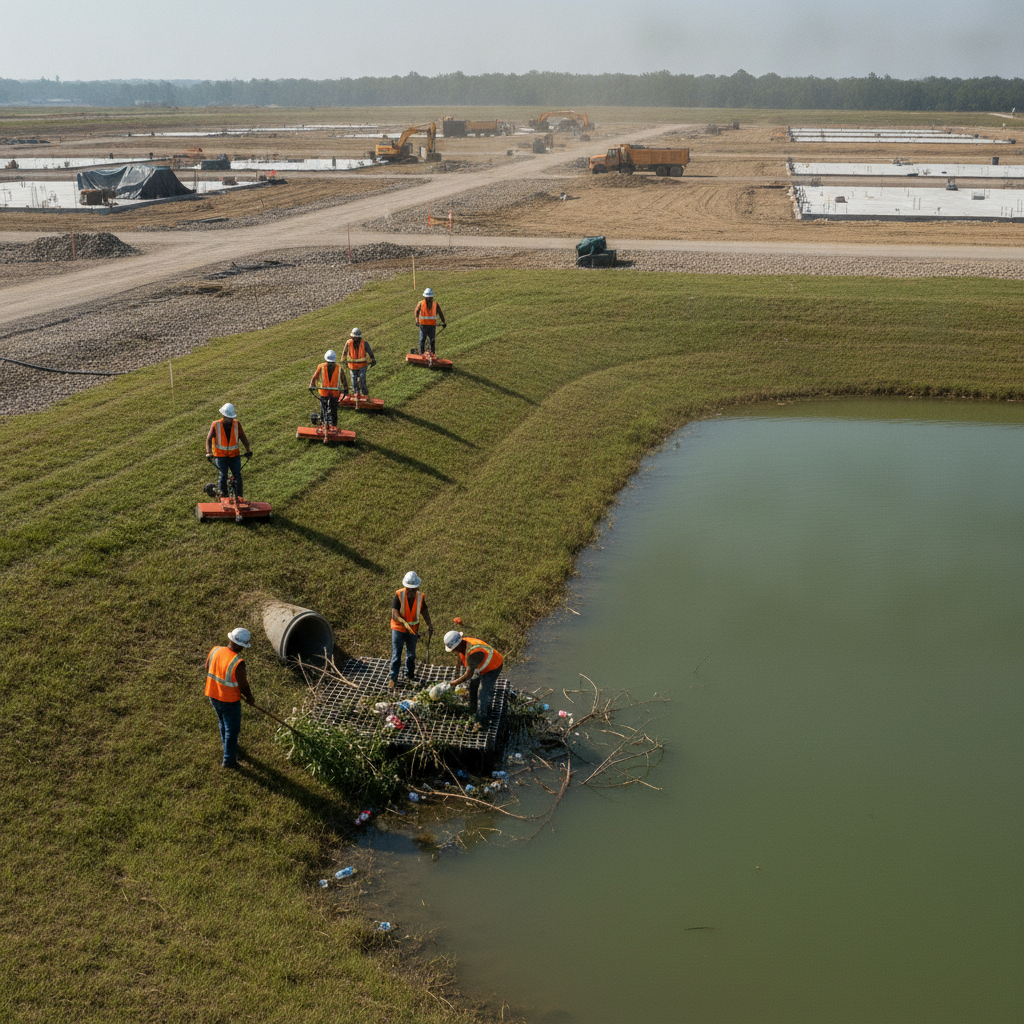
The earthen embankments of a stormwater pond are structural dams, and their integrity is critical to site safety. Proper vegetation is the first line of defense against erosion. A healthy, dense cover of turfgrass helps stabilize the soil and prevent scouring during heavy rain. However, improper vegetation, such as deep-rooted trees or invasive woody species, can compromise the embankment’s structural integrity by creating pathways for water seepage. Routine mowing is essential not only for aesthetics but to prevent this undesirable growth and allow for clear visual inspection of the slopes. Regular inspections should identify and address issues like animal burrows, ruts from mowing equipment, or signs of sloughing and slope instability. Any bare patches should be promptly re-sodded or seeded to re-establish cover. For a data center, where adjacent infrastructure is highly sensitive, a breach is not an option. A disciplined approach to vegetation management and embankment inspection is a key part of the site’s overall physical security and operational continuity plan, directly supporting the initial site development goals.
Control Structure and Trash Rack Maintenance
The heart of a detention pond’s hydraulic function is its outlet control structure. This engineered system, typically consisting of a weir, orifice, and skimmer, is precisely designed to regulate the rate of stormwater discharge. If this outlet becomes clogged with trash, vegetation, or other debris, the pond cannot drain as intended. This can cause the water level to rise above its design elevation, potentially overtopping the embankment and flooding critical infrastructure like generators, fuel tanks, or electrical switchgear. The trash rack is a simple but vital component that protects the orifice and weir from large debris. It requires frequent inspection and cleaning, especially after significant storm events. Facility staff should have a clear protocol for safely removing accumulated debris to ensure the outlet remains unobstructed. Maintaining the hydraulic performance of the control structure is a simple, low-cost task that prevents catastrophic failures. Neglecting it directly undermines the entire purpose of the multi-million-dollar stormwater management system.
Proactive Erosion Repair and Stabilization
Erosion is a constant threat to any earthen structure. On a stormwater pond, it most commonly occurs at points of concentrated flow, such as pipe outfalls, emergency spillways, and along the shoreline where wave action occurs. Small rills and gullies may seem minor, but they can quickly expand and threaten the structural integrity of an embankment or compromise the pond’s geometry. A proactive maintenance program identifies and repairs these issues before they escalate. Effective repair strategies depend on the location and severity of the erosion. Minor issues can often be fixed by regrading and sodding. More persistent problem areas may require engineered solutions like installing riprap (articulated concrete blocks or stone), turf reinforcement mats (TRMs), or other hardened linings. Addressing erosion is a critical aspect of site development maintenance. It ensures the long-term stability of the drainage design and prevents costly, large-scale failures that could disrupt data center operations.
Nuisance Species and Water Quality Management
A stormwater pond is a dynamic ecosystem that requires management. Left unchecked, invasive aquatic vegetation like cattails, torpedo grass, or hydrilla can quickly overtake a pond. This overgrowth can obstruct flow paths to the outlet structure, reduce open water storage, and create stagnant areas ideal for mosquito breeding. A comprehensive maintenance plan must include a strategy for routine invasive species control, often involving licensed professionals for targeted herbicide application. Beyond vegetation, managing water quality is crucial for compliance and aesthetics. Stagnant, nutrient-rich water can lead to algae blooms, unpleasant odors, and other issues. Design features like littoral shelves planted with beneficial native vegetation can help absorb nutrients. In some cases, aeration systems may be necessary to improve dissolved oxygen levels and prevent stagnation. Proper management of the pond’s biological health is essential for meeting water quality standards stipulated in the original permits and for being a good corporate neighbor.
Safety Inspections and Regulatory Compliance
Operating a stormwater pond carries significant legal and safety responsibilities. Ponds are an attractive nuisance and a potential safety hazard. Regular inspections must verify that all safety measures are intact, including perimeter fencing, access gates with locks, and appropriate warning signage. For larger ponds that meet certain size or height criteria, formal dam safety inspections may be required by the state or local Water Management District. These inspections must be performed by a qualified Professional Engineer. Furthermore, the stormwater management system was permitted based on a specific set of engineering plans. Any unapproved modification or degradation due to lack of maintenance can result in a violation of the site’s Environmental Resource Permit (ERP). Maintaining detailed records of all inspections, maintenance activities, and repairs is critical. This documentation provides proof of due diligence during an agency review and protects the owner from potential fines and liability.
RSP Engineers’ Approach to Stormwater System Lifecycle Management
At RSP Engineers, we view stormwater management as a full-lifecycle responsibility that extends beyond the initial design and permitting. Our approach is to provide data center clients with the tools and expertise needed for long-term operational success. We integrate maintenance and compliance planning directly into our site development process, ensuring that facility managers are equipped for success from day one. Our process includes a thorough review of the project’s as-built surveys and original permitting documents to establish a baseline for performance. From there, we develop a customized maintenance plan and inspection checklist tailored to the specific features of your site. For facilities with existing issues, our civil engineers conduct detailed assessments to diagnose the root cause of problems like erosion or poor drainage. We then design practical, cost-effective remediation plans and can assist with the permit submittals required to implement them, ensuring your facility remains compliant and resilient.
Common Pitfalls in Data Center Pond Maintenance
Even with a plan, several common mistakes can undermine a data center’s stormwater maintenance program. The most frequent is simply deferred maintenance, where ponds are treated as static landscape features until a major failure occurs. Another pitfall is using improper equipment; for example, running heavy mowers on saturated embankments can cause severe rutting and compaction, which damages the turf and leads to erosion. Misunderstanding regulatory requirements is also common, such as performing unapproved modifications to an outlet structure, which constitutes a serious permit violation. Finally, ignoring minor issues like small erosion channels or a partially clogged low-flow orifice can allow them to escalate into expensive, system-wide problems that require emergency intervention.
Partner with RSP Engineers for Mission-Critical Site Engineering
Your data center’s operational resilience depends on flawless performance from all supporting infrastructure. Don’t let deferred stormwater maintenance introduce an unnecessary and avoidable point of failure. A proactive management strategy is essential for protecting your assets, ensuring compliance, and maintaining uptime. Contact RSP Engineers today to develop a comprehensive maintenance and compliance plan for your facility. Our team provides expert stormwater management, permitting support, and site engineering services to protect your mission-critical investment. We help you move from a reactive to a proactive posture, safeguarding your operations against the risks of infrastructure neglect.
Conclusion: Proactive Maintenance as an Uptime Strategy
Ultimately, stormwater pond maintenance for a data center is not a matter of landscaping—it is a critical uptime strategy. These systems are engineered assets that require the same level of professional oversight as the mechanical and electrical systems inside the building. By implementing a program of regular inspections, scheduled maintenance, and prompt repairs, operators can ensure regulatory compliance and protect their campus from flooding. A well-maintained stormwater management system is a direct reflection of a facility’s commitment to operational excellence and a fundamental component of the original civil engineering design’s intent.
FAQs
-
We recommend informal visual inspections on a monthly basis and after every major storm event to check for debris and immediate issues. A formal, documented inspection conducted by a qualified individual should occur at least annually to assess structural integrity, sediment levels, and overall system health to ensure ongoing ERP compliance.
-
A forebay cleanout is a routine maintenance activity triggered when sediment fills approximately half of the forebay’s volume. A full pond dredging is a major capital project required only when widespread sediment accumulation significantly reduces the pond’s required treatment volume or permanent pool, a situation that proactive forebay maintenance is designed to prevent.
-
Yes, in nearly all jurisdictions, the property owner is responsible for preventing their stormwater ponds from becoming a public health nuisance. This involves ensuring proper drainage design to eliminate stagnant water, managing vegetation, and sometimes using approved larvicides. Compliance with local health department codes is mandatory.