
Data Center Cultural Resource Reviews
A guide for data center developers on navigating cultural resource reviews, including Section 106, SHPO consultation, and archaeological surveys, to ensure successful site development and permitting i
The Regulatory Framework: Section 106 of the NHPA
The primary driver for most cultural resource reviews is Section 106 of the National Historic Preservation Act (NHPA) of 1966. This federal regulation requires federal agencies to consider the effects of their undertakings on historic properties. A data center project, even if privately funded, often triggers a Section 106 review through a federal nexus. This can include requiring a permit from the U.S. Army Corps of Engineers for wetland impacts, receiving federal funding or loans, or being sited on federal land. The process requires consultation with the State Historic Preservation Officer (SHPO) and potentially with Tribal Historic Preservation Officers (THPOs) if the project falls within areas of tribal interest. The first step in the process is defining the Area of Potential Effects (APE), which encompasses not only the direct project footprint but also any areas that might be indirectly affected by visual or audible changes. For a data center, this could include the building site, access roads, utility corridors, and stormwater ponds. The goal of the Section 106 process is not necessarily to prevent development but to ensure that historical and cultural resources are considered, and to avoid, minimize, or mitigate any adverse effects. Failure to properly navigate this framework can halt permit submittals and jeopardize the entire project schedule.
Phase I: Archival Research and Records Review
Key Stages of a Section 106 Cultural Resource Review
| Review Stage | Key Activities | Impact on Data Center Site Plan | Typical Timeline |
|---|---|---|---|
| Phase IA: Records Review | Archival research, historic map analysis, review of state archaeological site files. | Informs initial site feasibility and flags high-risk areas for avoidance in early layouts. | 2-4 weeks |
| Phase IB: Field Survey | Systematic shovel testing, pedestrian survey, artifact identification and documentation. | Determines presence/absence of sites; findings can force adjustments to grading plans or stormwater management features. | 3-6 weeks (fieldwork dependent) |
| Phase II: Site Evaluation | Intensive testing of identified sites to determine significance and National Register eligibility. | Defines boundaries of significant sites that must be avoided or mitigated, heavily influencing final site plan design. | 4-8 weeks |
| Phase III: Data Recovery/Mitigation | Full-scale excavation and data recovery for sites that will be adversely affected. | A significant undertaking that must be completed before construction can begin in that area. | 2-6+ months |
| Agency & Tribal Consultation | Ongoing communication, report submittals, and meetings with SHPO and THPOs. | Feedback can require design changes; concurrence is required for federal permitting. | Ongoing throughout the project |
Before any shovels hit the ground, a comprehensive archival research and records review is conducted. This desktop analysis, often called a Phase IA investigation, is a critical due diligence step that informs the strategy for fieldwork. The goal is to understand the project area’s known and potential cultural sensitivity. This involves a deep dive into state archaeological site files, historic property inventories, old maps, aerial photographs, and local historical documents. This research helps identify any previously recorded archaeological sites or historic structures within or near the APE. This initial step is invaluable for early-stage site selection and feasibility analysis. If the records review reveals high archaeological potential—for example, proximity to a historic settlement or a previously identified Native American site—the project team can anticipate the need for more intensive fieldwork. Integrating these findings early allows the civil engineering team to consider potential layout adjustments before significant design capital is expended. This proactive approach minimizes surprises and helps create a more predictable permitting timeline.
Phase I Fieldwork: Archaeological Surveys and Shovel Testing
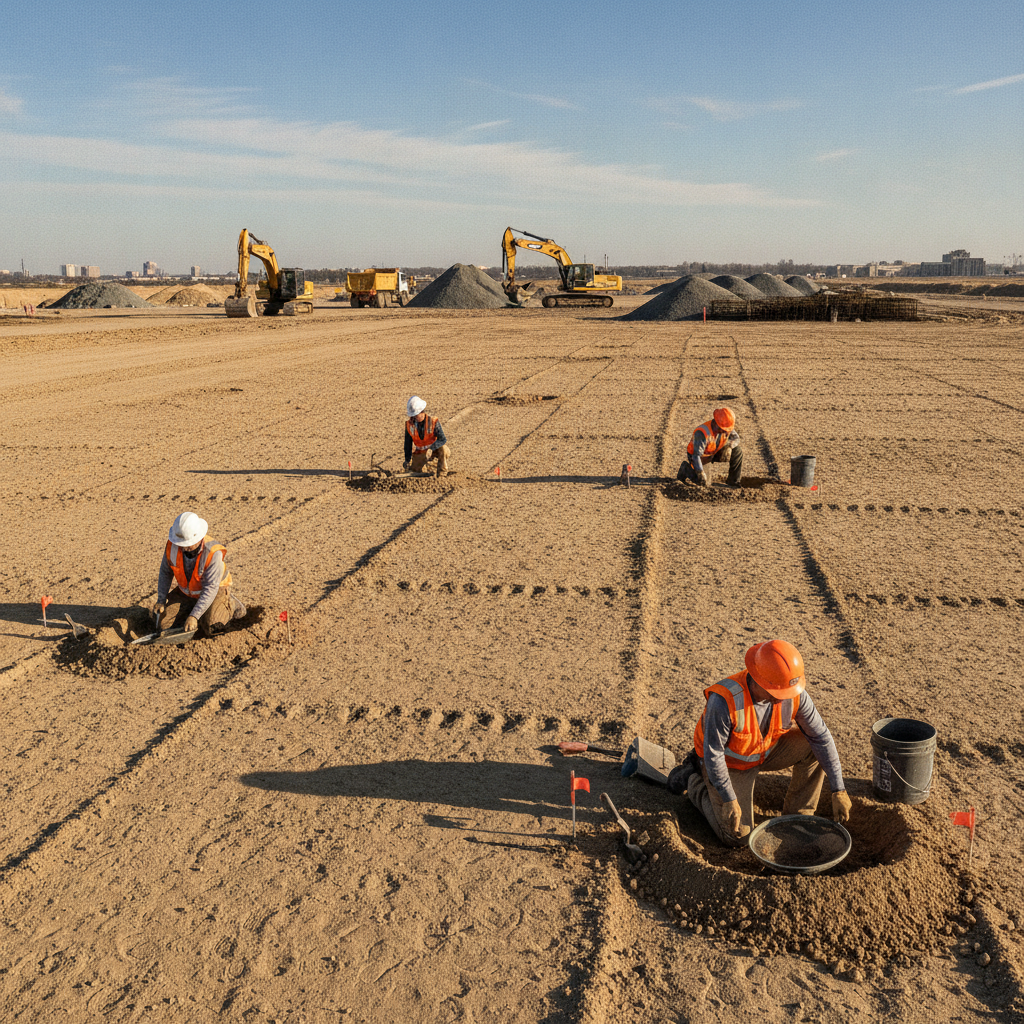
Following the records review, the process moves to on-the-ground fieldwork, known as a Phase IB archaeological survey. The primary method for this investigation is systematic shovel testing. Archaeologists establish a grid across the project area and excavate small, standardized shovel test pits (STPs) at regular intervals. The soil from each pit is carefully screened to search for artifacts, such as pottery sherds, stone tools, or historic glass. The location, depth, and contents of each test are meticulously documented. In areas with high visibility, a pedestrian survey may also be conducted to look for surface artifacts. The data gathered from the Phase I fieldwork determines whether potentially significant cultural resources are present. If the survey yields no artifacts or cultural features, the archaeologist can often recommend a finding of “no historic properties affected,” which can conclude the Section 106 process for archaeology. However, if artifacts are found, their density and context will determine the need for further investigation. This fieldwork is a crucial step in the land development process, providing tangible data that regulators require to make informed decisions about the project’s potential impact.
Assessing Historic Structures and the Built Environment
Cultural resource reviews are not limited to buried archaeological sites. They also include an assessment of the built environment, which encompasses standing structures like buildings, bridges, and other features. Typically, structures over 50 years of age within the APE must be evaluated for their potential eligibility for the National Register of Historic Places. This involves documenting the structure’s architecture, history, and integrity. The evaluation considers criteria such as the property’s association with significant historical events or persons, or its embodiment of a particular architectural style. For data center projects, which often require large, undeveloped parcels, this may seem less relevant. However, rural sites can contain old farmsteads, barns, or other historic structures. The presence of an eligible historic structure can create significant site constraints. The project may need to be redesigned to avoid impacting the structure and its setting, or mitigation measures may be required. This architectural survey component is a key part of the overall assessment and must be integrated into the comprehensive site plan design.
Tribal and SHPO Coordination: The Consultation Process
A cornerstone of the Section 106 process is formal consultation. The lead federal agency is officially responsible for consulting with the SHPO and any relevant Native American tribes, but the applicant’s project team is deeply involved in providing information and responding to feedback. The SHPO consultation process involves submitting technical reports detailing the findings of the Phase I investigations and recommending a course of action. The SHPO reviews the report and concurs or disagrees with the findings, a critical step for securing project permits. Simultaneously, tribal consultation is initiated with THPOs or other designated tribal representatives. This is a government-to-government consultation, but it is vital for the project team to understand tribal concerns, which may include traditional cultural properties or sacred sites not identified through conventional archaeological methods. Early and respectful engagement is key to building trust and avoiding conflicts that can lead to significant permitting delays. Successful agency review depends on thorough documentation and a transparent consultation process.
Handling Discoveries: From Artifacts to Human Remains
Even with thorough upfront investigation, there is always a possibility of an inadvertent discovery during construction. Project plans must include a clear protocol for what to do if potential cultural materials or human remains are unearthed. The standard procedure is to immediately halt all ground-disturbing activities in the vicinity of the find, secure the area, and notify the project archaeologist and relevant state agencies. In Florida, the discovery of human remains triggers specific legal requirements under Chapter 872, Florida Statutes, requiring notification of law enforcement and the state archaeologist. If a significant archaeological site is identified that cannot be avoided, a Phase II investigation may be required to determine its eligibility for the National Register. If it is deemed eligible, a Phase III data recovery or mitigation plan is developed. This can involve intensive excavation to recover important data before construction proceeds. These mitigation efforts must be factored into the project’s budget and schedule, underscoring the importance of this work during the construction administration phase.
RSP Engineers’ Approach to Integrating Cultural Reviews
At RSP Engineers, we view cultural resource management as an integral part of our comprehensive site development services, not as a separate, disconnected task. We proactively manage this process by partnering with pre-qualified archaeological consultants who have extensive experience in Florida. Our role is to serve as the central coordinator, ensuring that the cultural resource assessment is seamlessly integrated with all other aspects of the project, from initial due diligence to final permitting. This includes aligning the archaeological fieldwork schedule with the geotechnical engineering investigation to optimize time on site. Our team ensures that findings from the cultural resource reports are translated into actionable design considerations for the civil engineering plans. If a sensitive area is identified, we work with the client and the project team to revise the site layout, adjust the drainage design, or modify utility corridors to avoid impacts. By managing the timeline and facilitating communication between the client, archaeologists, and regulatory agencies, we streamline the agency review process and help keep the project on its critical path to construction.
Common Pitfalls in Data Center Cultural Resource Assessments
Several common issues can derail a data center project’s cultural resource review process. One of the most frequent is starting the process too late. Waiting until the final design is complete to begin the assessment leaves no flexibility to accommodate findings without costly redesigns and schedule delays. Another pitfall is underestimating the timeline for SHPO consultation and tribal review, which can take significantly longer than anticipated, especially if findings are complex. This can create a major bottleneck in the overall permitting schedule. Unexpected discoveries during construction are another major risk, often resulting from an inadequate Phase I survey or a failure to have a clear discovery plan in place. Finally, clients may underestimate the potential costs associated with mitigation or data recovery if a significant site cannot be avoided. Proactive planning, managed by an experienced civil engineering firm, is the best way to mitigate these risks and ensure that cultural resource compliance does not become a source of project disruption.
Secure Your Project’s Timeline. Partner with RSP Engineers.
Navigating the complexities of cultural resource reviews requires foresight, expertise, and seamless coordination. At RSP Engineers, we integrate these critical assessments into our comprehensive site development and permitting strategies for mission-critical facilities. Our experienced team manages the entire process, from selecting qualified archaeological partners to negotiating with regulatory agencies, ensuring your project stays on schedule and on budget. Don’t let unforeseen regulatory hurdles delay your next data center project. Contact us today to discuss how we can de-risk your land development process, manage complex agency review, and streamline your path to a successful groundbreaking.
Conclusion
For data center developers, a cultural resource review is a non-negotiable part of the pre-construction process. Approaching it proactively as a key component of due diligence, rather than a bureaucratic checkbox, is essential for success. By understanding the requirements of Section 106, engaging in early and transparent SHPO consultation, and integrating findings into the civil engineering design from the outset, developers can mitigate risks, avoid costly delays, and demonstrate responsible stewardship. Ultimately, a well-managed cultural resource strategy is fundamental to a predictable and successful site development project.
Related RSP Engineers Articles
The Developer’s Guide to Florida Stormwater Permitting Utility Coordination for Large-Scale Industrial Sites Mastering Zoning and Land Use Entitlements in Florida
FAQs
-
A Section 106 review is triggered by a “federal undertaking. ” For a private data center, this most commonly occurs when the project requires a federal permit, such as a Clean Water Act Section 404 permit from the U. S. Army Corps of Engineers for impacts to wetlands or other waters of the U. S. It can also be triggered by the use of federal funding, loans, or the project’s location on federal land.
-
The timeline varies significantly based on project size and complexity. A Phase IA records review may take a few weeks. A Phase IB field survey can take several weeks to a month or more, depending on terrain and crew size. The most significant variable is the agency review and consultation period, which can add months to the schedule, especially if significant resources are found and mitigation is required.
-
It is extremely rare for a cultural resource finding to halt a project entirely. The goal of the NHPA is to mitigate adverse effects, not to stop development. More commonly, a finding will require project modifications. This could involve redesigning the site plan design to create an avoidance area, or, if avoidance is not possible, undertaking archaeological data recovery to preserve the information from the site before construction.