
Data Center Cooling Water Supply Requirements
A technical guide for data center developers on engineering cooling water supply, including make-up rates, storage, redundancy, utility coordination, and permitting.
Understanding Water Demand: Evaporative Cooling vs. Alternative Systems
The primary driver of water consumption in many data centers is evaporative cooling, typically accomplished using cooling towers. This process dissipates heat by evaporating a portion of the circulating water. The evaporated water, known as ‘drift’ and ‘evaporation loss,’ must be constantly replenished with ‘make-up’ water from a utility source. The efficiency of this system is a critical factor in the facility’s overall water footprint and operational cost. A qualified Professional Engineer is essential for accurately modeling this demand. However, not all cooling systems are created equal. Air-cooled chillers, which use fans to reject heat to the atmosphere, consume negligible amounts of water but often have a higher energy footprint and may be less effective in hot climates. Hybrid adiabatic systems use a fine mist of water to pre-cool the air entering the cooling coils, reducing water use compared to traditional towers. Furthermore, direct-to-chip liquid cooling is gaining traction for high-performance computing, which can significantly alter the facility’s water demand profile. The choice of cooling technology is a foundational decision that dictates the entire utility coordination and site development strategy.
Calculating Make-Up Water, Cycles of Concentration, and Blowdown
Comparison of Cooling System Water Requirements
| Cooling Technology | Typical Water Demand Profile | Key Civil/Utility Considerations | Primary Permitting Focus |
|---|---|---|---|
| Evaporative Cooling (Towers) | High (continuous make-up) | Large diameter water mains, on-site storage tanks, robust wastewater discharge piping. | Water use permit, industrial wastewater discharge permit, chemical storage compliance. |
| Air-Cooled Chillers | Very Low (none for cooling) | Minimal water/sewer demand; focus is on electrical capacity and acoustic performance. | Electrical permits, noise ordinance compliance. |
| Adiabatic Cooling | Low to Medium (intermittent) | Requires a reliable water source but with lower volume than towers; smaller pipe sizes. | Water connection permit, potential for simplified discharge requirements. |
| Direct Liquid Cooling (DLC) | Low (for secondary loop) | Often uses a closed loop with a secondary water-based heat rejection system (CDU). Lower overall site water demand. | Depends on heat rejection method; may still require a discharge permit if a cooling tower is used. |
| Hybrid Systems | Variable (mode-dependent) | Requires infrastructure for both wet and dry modes; complex control systems and utility planning. | Permitting must account for maximum potential water use and discharge scenarios. |
A precise calculation of water demand begins with understanding the relationship between three key variables: make-up, cycles of concentration (COC), and blowdown. Make-up is the water added to the system to replace losses. As water evaporates, dissolved minerals like calcium and magnesium are left behind, increasing their concentration in the remaining water. The ‘cycles of concentration’ is a ratio that measures how concentrated these minerals are compared to the fresh make-up water. To prevent scaling and equipment damage, this concentration must be controlled. This control is achieved through ‘blowdown’ (or ‘bleed-off’), which is the process of intentionally draining a portion of the highly concentrated water and replacing it with fresh make-up water. A higher COC means the system is more water-efficient, as less water is discharged as blowdown for every gallon evaporated. However, achieving a high COC depends heavily on the quality of the source water and the effectiveness of the on-site water treatment. The drainage design must account for the volume and discharge point of this blowdown water, which is considered an industrial wastewater stream and is subject to stringent regulatory oversight.
Water Quality and On-Site Treatment Requirements
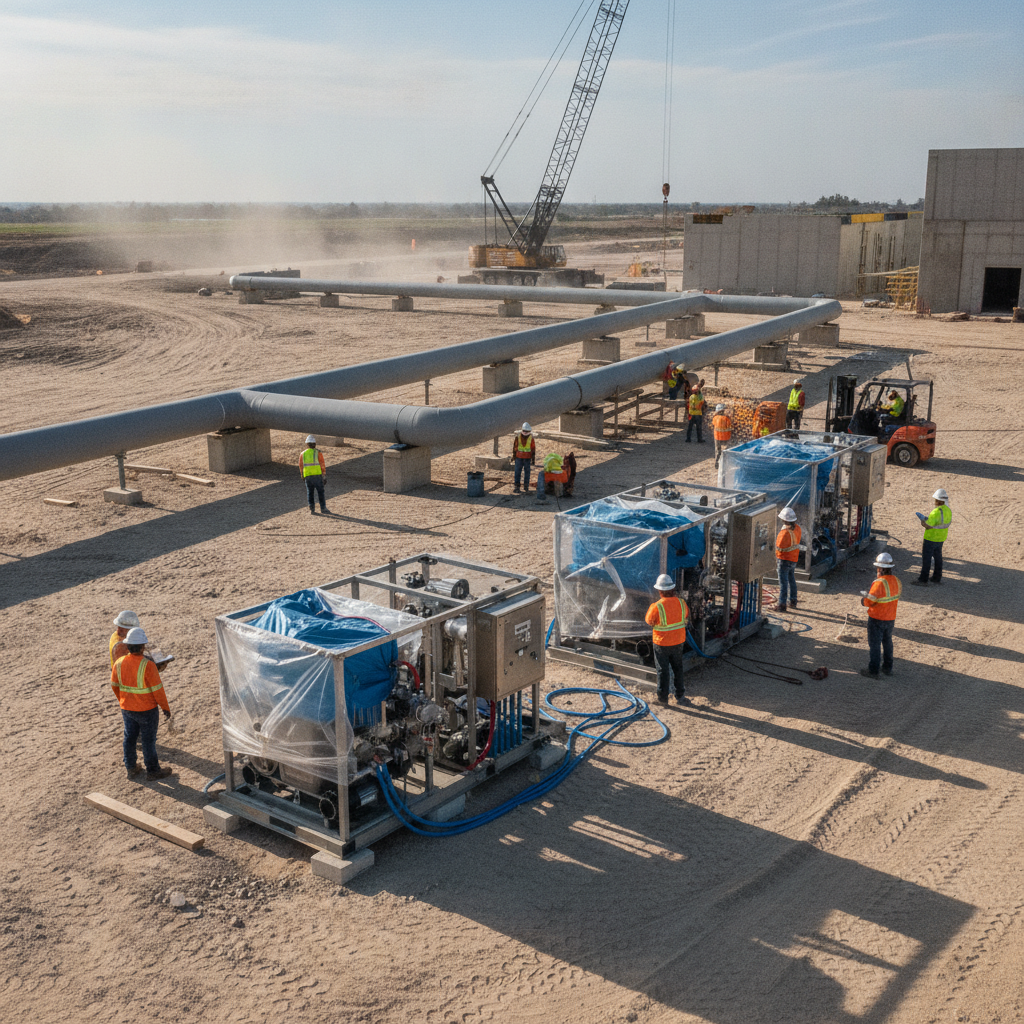
The quality of the source water is a critical design parameter that directly impacts cooling system efficiency, equipment longevity, and operational costs. Raw water from a utility provider contains varying levels of total dissolved solids (TDS), hardness, silica, chlorides, and biological contaminants. Without proper management, these constituents can lead to scale formation, corrosion, and biofouling within pipes, heat exchangers, and cooling towers, severely degrading performance and leading to costly downtime. This is where our site engineering services become critical. Consequently, nearly all large-scale data centers require a sophisticated on-site water treatment system. This may include filtration, water softening, reverse osmosis (RO), and chemical dosing systems to control pH, inhibit corrosion, and prevent biological growth. The design of this system is a collaborative effort between the civil engineering team, mechanical engineers, and water treatment specialists. The civil engineer is responsible for integrating the physical footprint of the treatment skids, chemical storage tanks, and associated piping into the overall site plan design and ensuring compliance with all environmental and safety regulations.
Ensuring Supply Resiliency: On-Site Storage and Redundancy
For a mission-critical facility, an interruption in the cooling water supply is a catastrophic failure. Therefore, designing for resiliency is non-negotiable. The primary strategy for mitigating the risk of a municipal supply disruption—whether from a water main break, pump failure, or emergency rationing—is the inclusion of on-site water storage. This typically takes the form of large, ground-level or elevated storage tanks sized to provide a specific duration of ‘ride-through’ capability, often ranging from 24 to 72 hours of full-load operation. The civil engineering design for these tanks involves significant structural and geotechnical considerations, including foundation design, seismic bracing, and overflow management. Redundancy is another cornerstone of resilient design. Whenever feasible, securing two independent water feeds from the public utility, ideally from different parts of the water distribution grid, provides a secondary layer of protection. This level of utility coordination requires early and persistent engagement with the utility provider to identify connection points and negotiate service agreements. The overall goal is to eliminate single points of failure in the water supply chain.
Navigating Utility Coordination and Permitting Pathways
Securing adequate water and sewer capacity is one of the most challenging and long-lead-time items in data center development. The process begins with a formal capacity request to the local water and wastewater utilities. This request must be supported by detailed demand calculations from the engineering team. The utility will then conduct its own analysis to determine if sufficient capacity exists in its treatment plants and distribution/collection networks. If capacity is limited, significant and costly off-site utility upgrades may be required, impacting project timelines and budgets. Beyond capacity, a host of permits are required for new connections. Permitting requirements vary by jurisdiction, and every project team should confirm the applicable standards with the local, state, regional, and federal authorities that hold review authority over the site. This often involves separate permit submittals for potable water, fire protection, sanitary sewer, and industrial wastewater discharge. The agency review process can be complex, requiring detailed engineering plans, hydraulic modeling, and compliance with numerous technical standards. Early engagement with a knowledgeable Civil Engineer near me can streamline this process and mitigate potential delays.
Wastewater Discharge and Pretreatment Compliance
The blowdown water from cooling towers cannot simply be discharged into the nearest storm drain. It is classified as industrial wastewater due to its high concentration of minerals and the presence of water treatment chemicals. As such, its disposal is regulated under the federal Clean Water Act and administered through National Pollutant Discharge Elimination System (NPDES) permits and local pretreatment programs. The project’s stormwater management plan must be carefully segregated from the industrial discharge system. Discharging to a municipal sanitary sewer system is the most common disposal method. However, the local sewer authority will impose strict limits on the temperature, pH, flow rate, and chemical composition of the discharged water to protect its collection system and treatment plant processes. This often necessitates a dedicated pretreatment system for the blowdown stream to cool the water and neutralize chemicals before it leaves the site. Achieving zoning compliance and securing a discharge permit requires comprehensive sampling, analysis, and a detailed operational plan, making it a critical path item in the project schedule.
The RSP Engineers Approach to Water Supply Planning
At RSP Engineers, we approach data center water supply with a comprehensive, risk-mitigation mindset. Our process begins during the earliest stages of site selection and due diligence, where we conduct feasibility studies to assess utility availability and identify potential constraints. We believe that a proactive approach to utility coordination is essential for project success. Our team of experienced Civil engineers develops detailed water demand models based on the proposed cooling technology and operational parameters. We then lead the negotiations with utility providers to secure the necessary capacity and service agreements. We manage the entire permitting process, from initial application to final approval, ensuring that our site plan design and supporting documentation meet all regulatory requirements. During construction, our Construction Management Services provide oversight to ensure that all water and wastewater infrastructure is installed correctly and commissioned according to the design specifications.
Common Challenges in Data Center Water Sourcing
Even with careful planning, data center water projects can encounter significant hurdles. One of the most common issues is a mismatch between the project’s demand and the local utility’s available capacity, leading to costly and time-consuming off-site improvements. Another frequent challenge is navigating the complex and often lengthy agency review cycles for water use and discharge permits, which can vary significantly between different jurisdictions. Water quality issues are also a common pitfall. Failing to adequately test the source water and design an appropriate treatment system can lead to premature equipment failure and operational inefficiencies. Finally, underestimating the need for on-site storage and redundancy can leave a facility vulnerable to service interruptions, jeopardizing its mission-critical uptime guarantee. Overcoming these challenges requires the expertise of seasoned Civil Engineering firms with a deep understanding of both the technical and regulatory landscape.
Partner with RSP for Your Mission-Critical Utility Design
Successfully navigating the complexities of data center water supply requires a partner with specialized expertise and a proven track record. RSP Engineers provides comprehensive site engineering services tailored to the unique demands of mission-critical facilities. Our team excels at complex utility coordination, strategic permitting, and the resilient design of water and wastewater infrastructure. From initial feasibility studies to final construction administration, we ensure your project’s critical systems are reliable, compliant, and built for the future. Contact us to discuss how we can support your next data center development.
Conclusion: Integrating Water Strategy into Site Selection
In the world of data center development, water is a critical resource that directly impacts a project’s viability, sustainability, and long-term operational success. A successful water supply strategy is not merely a mechanical or plumbing issue; it is a foundational element of site development that requires expert civil engineering, proactive utility coordination, and a deep understanding of the regulatory landscape. By addressing water demand, quality, resiliency, and permitting early in the planning process, developers can mitigate risks, control costs, and ensure the long-term reliability of their mission-critical infrastructure.
FAQs
-
The amount of on-site storage is determined by the facility’s risk tolerance and operational requirements. A common target is 24 to 48 hours of water supply at the maximum anticipated cooling load. This calculation requires a detailed analysis of the cooling system’s water demand, which is a core component of the civil engineering design process.
-
The biggest challenge is often demonstrating to the utility provider and regulatory agencies that sufficient infrastructure capacity exists to support the project’s large and continuous demand without negatively impacting other users. This requires robust hydraulic modeling and a clear utility coordination strategy, especially in water-scarce regions.
-
Yes, using reclaimed or non-potable water is an increasingly popular and sustainable option. However, it requires a more extensive on-site water treatment system to handle potentially higher levels of solids and contaminants. It also involves a separate set of permits and coordination with the reclaimed water provider.