
Data Center Construction Quality Assurance
A deep dive into civil engineering quality assurance (QA) and quality control (QC) for data center construction, covering materials testing, inspections, and documentation.
The Critical Distinction: Quality Assurance (QA) vs. Quality Control (QC)
Understanding the difference between Quality Assurance and Quality Control is fundamental to managing a successful construction project. While often used interchangeably, they represent two distinct functions. Quality Assurance (QA) is a proactive, process-oriented approach focused on preventing defects. It involves establishing a comprehensive system of procedures, standards, and documentation before and during construction to ensure quality is built into the project from the start. This includes everything from qualifying contractors to defining testing protocols in the project specifications. Quality Control (QC), on the other hand, is a reactive, product-oriented approach focused on identifying defects. QC involves the hands-on inspections, materials testing, and verifications performed in the field to confirm that the work conforms to the approved plans and specifications. QA defines the standards for a quality concrete pour, while QC is the act of testing that specific pour to ensure it meets those standards. For a data center, a seamless integration of both QA and QC is essential for mitigating risk and ensuring long-term site development success.
Submittal and Shop Drawing Review: The First Line of Defense
Key QA/QC Activities in Data Center Site Construction
| Activity/System | Key Verification Metric | Consequence of Failure |
|---|---|---|
| Earthwork & Subgrade | Compaction (e.g., 95% Standard Proctor) | Foundation settlement, pavement failure, structural damage |
| Underground Utilities | Location, elevation, slope, and material type | Utility clashes, insufficient gravity flow, premature failure, costly repairs |
| Stormwater System | Pipe slope, structure elevations, material integrity | Site flooding, erosion, regulatory non-compliance, damage to infrastructure |
| Concrete Foundations & Slabs | Compressive strength (psi), rebar placement, dimensions | Structural failure, cracking, reduced load capacity, equipment damage |
| Asphalt Paving | Thickness, compaction density, and smoothness | Premature rutting, cracking, potholing, increased maintenance costs |
| Site Grading & Drainage | Surface elevations and slope percentages | Poor drainage, standing water, erosion, non-compliance with ADA requirements |
Before the first piece of equipment arrives on site, the quality management process begins in the office with a meticulous review of contractor submittals. This critical QA step involves the civil engineering team cross-referencing material data sheets, product specifications, and manufacturer details against the project’s design requirements. For a data center, this includes verifying that the proposed storm drain pipes have the correct material classification and load rating, that utility conduit meets specifications for encasement, and that precast concrete structures match the approved site plan design. The shop drawing review process is equally important. Contractors create detailed drawings for fabricated components like custom drainage structures or structural steel elements. The engineer of record must review these drawings to confirm they align with the overall design intent, fit within the site geometry, and meet all structural and performance criteria. Catching a discrepancy at this stage prevents costly rework, material waste, and schedule delays in the field.
Geotechnical and Earthwork Verification
Data centers are incredibly heavy structures with massive foundation loads and stringent settlement tolerances. The integrity of the entire facility depends on the stability of the underlying earthwork. The QA/QC process for soils begins with the recommendations in the Geotechnical soil report. During construction, QC activities are paramount. Field technicians perform regular compaction testing using methods like nuclear density gauges to verify that each lift of fill meets the specified percentage of its maximum dry density (proctor value). This verification ensures a stable subgrade for foundations, slabs, and pavements, preventing future settlement that could compromise structural integrity or sensitive equipment. The civil engineer’s role includes reviewing these test reports, observing proof-rolling operations, and confirming that the contractor is properly managing subgrade preparation. This rigorous oversight of Geotechnical Engineering principles ensures the site’s foundation is solid and capable of supporting the mission-critical infrastructure for decades.
Materials Testing for Concrete and Asphalt
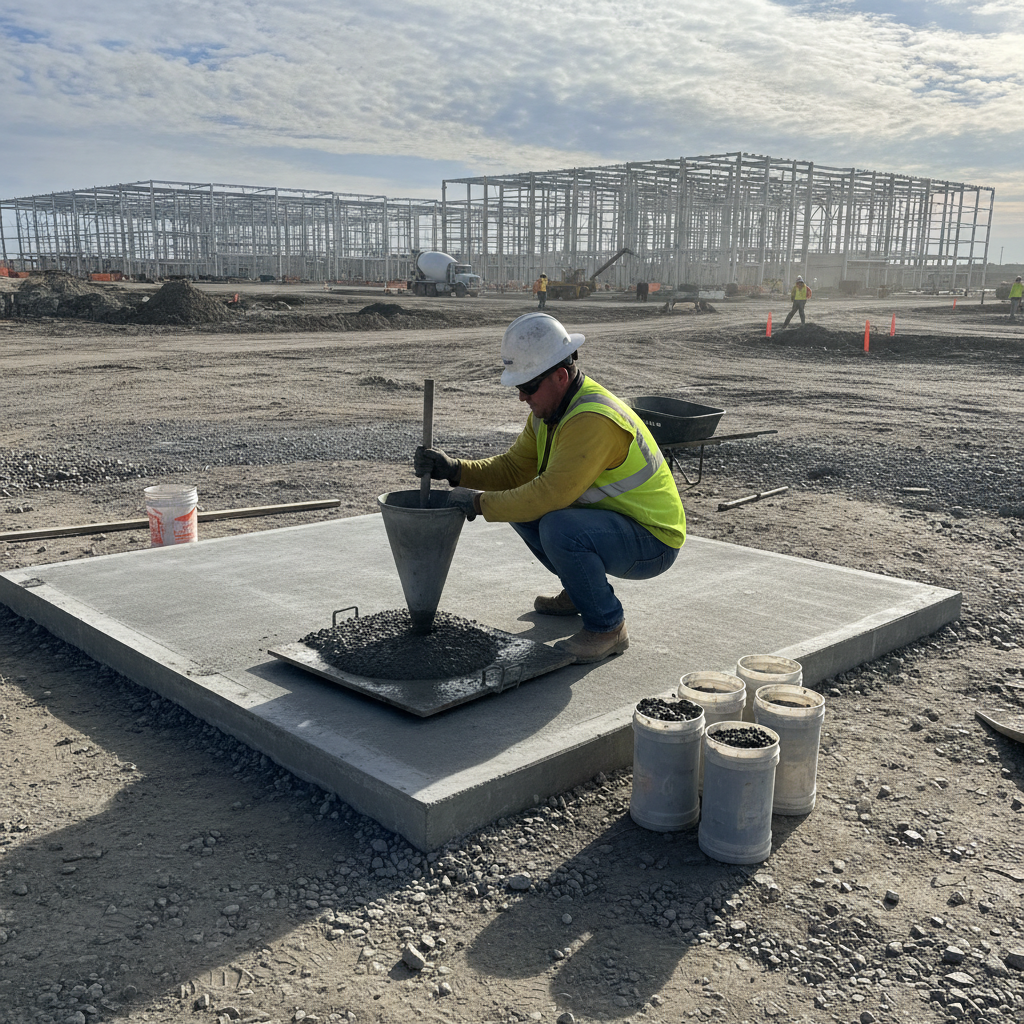
Concrete and asphalt are the workhorse materials of any data center site, forming everything from equipment pads and foundations to access roads and parking lots. Their durability is non-negotiable. For concrete, QC involves a series of field and lab tests. Technicians on site perform slump tests to check workability, test for air entrainment, and check temperature to ensure proper curing conditions. Most importantly, they cast concrete cylinders from each pour, which are then cured and broken in a lab at specific intervals (typically 7, 14, and 28 days) to verify the specified compressive strength has been achieved. For asphalt paving, QC includes taking core samples from the newly placed pavement to test for thickness and density. The asphalt paving mix design itself is verified against project specifications to ensure the right blend of aggregate and binder is used for the anticipated traffic loads. This rigorous materials testing program provides documented proof that the materials used on site meet the engineering standards required for a high-reliability facility.
Independent Inspections and Regulatory Compliance
Many aspects of data center construction require special inspections by certified, independent third-party agencies. These inspections are often mandated by the international building code and the local authority having jurisdiction to ensure public safety and structural integrity. Common special inspections on a data center site include continuous observation of reinforced concrete placement, verification of soil compaction, and inspection of structural welding. These inspectors act as an impartial set of eyes, providing another layer of quality verification. The documentation from these inspections is critical for obtaining the final Certificate of Occupancy. Inspection requirements and certification standards vary by jurisdiction, and the project team must confirm all applicable protocols with the local, state, and federal authorities overseeing the project. Proper management of these inspections is a key component of achieving building code compliance and navigating the complex world of permit submittals and agency sign-offs.
Survey Verification and As-Built Accuracy
Precision is paramount in data center construction. The QA/QC process relies heavily on survey verification to ensure everything is built in the right place, both horizontally and vertically. Throughout construction, surveyors confirm the location and elevation of critical infrastructure, including underground utility lines, foundation corners, roadway alignments, and finished site grades. This process of maintaining horizontal and vertical control prevents costly conflicts, such as a stormwater pipe clashing with a telecommunications duct bank. At the conclusion of the project, the contractor provides a final set of as-built surveys. These drawings document the final, constructed location of all site features, especially underground utilities. Accurate as-builts are invaluable for the facility’s long-term management, maintenance, and future expansion planning. Diligent utility coordination and survey verification during construction ensure these final documents are a true and reliable record of the completed work.
The RSP Engineers Approach to Quality Management
At RSP Engineers, we integrate quality management into every phase of a project. Our approach to construction administration is proactive, not reactive. We begin by developing a clear and comprehensive set of specifications that define the quality standards and testing requirements for the project. During construction, our team provides diligent oversight, including thorough review of submittals and shop drawings, timely responses to contractor Requests for Information (RFIs), and regular site observation visits. We act as the owner’s representative, coordinating with the contractor and third-party testing agencies to ensure the QA/QC plan is executed effectively. Our field representatives document progress and issues through detailed site observation reports, creating a clear record of the construction process. This hands-on approach helps identify potential issues before they become significant problems, safeguarding the project’s budget, schedule, and, most importantly, its final quality.
Common QA/QC Challenges and Corrective Actions
Even on the best-managed projects, issues can arise. A failed concrete cylinder break, a subgrade that won’t achieve compaction, or an incorrectly installed utility line are all common challenges. The key is to have a formal process for addressing them. When a deficiency is identified, the engineer will typically issue a Non-Conformance Report (NCR). This formal document details the issue, references the specific plan or specification requirement that was not met, and requires the contractor to propose a solution. The proposed corrective action plan is then reviewed by the engineering team to ensure it adequately resolves the issue without compromising the project’s integrity. For example, a low-strength concrete pour might require removal and replacement, or it might be acceptable if further structural analysis proves it can still meet design loads. Documenting this process is crucial for the project record and for resolving potential disputes, minimizing schedule impacts through swift and decisive action.
Partner with RSP for Mission-Critical Project Success
Ensuring the quality and reliability of your data center starts with a solid foundation and a meticulously executed site development plan. The complexities of construction administration, materials verification, and regulatory compliance demand an experienced engineering partner. RSP Engineers provides comprehensive site engineering services, from initial design and permitting through final construction closeout. Our team is dedicated to implementing rigorous QA/QC protocols that protect your investment and ensure your mission-critical facility is built to last. Contact us to discuss how we can bring certainty and quality to your next project.
Conclusion: Building a Foundation of Trust and Reliability
A comprehensive quality assurance and quality control program is not an expense on a data center project; it is an essential investment in its long-term success. By systematically verifying every aspect of the civil and site construction, from soil compaction to concrete strength, project owners can mitigate significant risks and ensure the physical infrastructure is as robust as the digital systems it supports. This disciplined approach, led by a knowledgeable civil engineering partner, builds a foundation of trust and delivers a long-term asset value that meets the uncompromising demands of the digital age.
FAQs
-
Typically, the project owner is responsible for hiring and paying for the third-party materials testing agency and special inspectors. This maintains the inspector’s independence from the contractor, ensuring impartial results. The contractor is then responsible for coordinating with the testing agency and may be responsible for the cost of re-testing if initial tests fail.
-
A Non-Conformance Report (NCR) is a formal quality control document used to record work that fails to meet project specifications. The engineer or inspector issues the NCR, and the contractor must propose a corrective action. This could involve repairing the work, replacing it, or providing engineering analysis to accept it as-is. The NCR is not closed until the resolution is approved and documented.
-
The civil engineer’s role is primarily Quality Assurance (QA)—they set the standards in the plans and specifications and provide oversight to ensure the process is followed. The contractor is primarily responsible for Quality Control (QC)—they perform the day-to-day work and are responsible for their own internal checks and inspections to ensure their work meets the engineer’s standards.