
Data Center Building Permit Process
A comprehensive guide to the data center building permit process. Learn about phased permitting, MEP reviews, deferred submittals, and how to accelerate your project schedule.
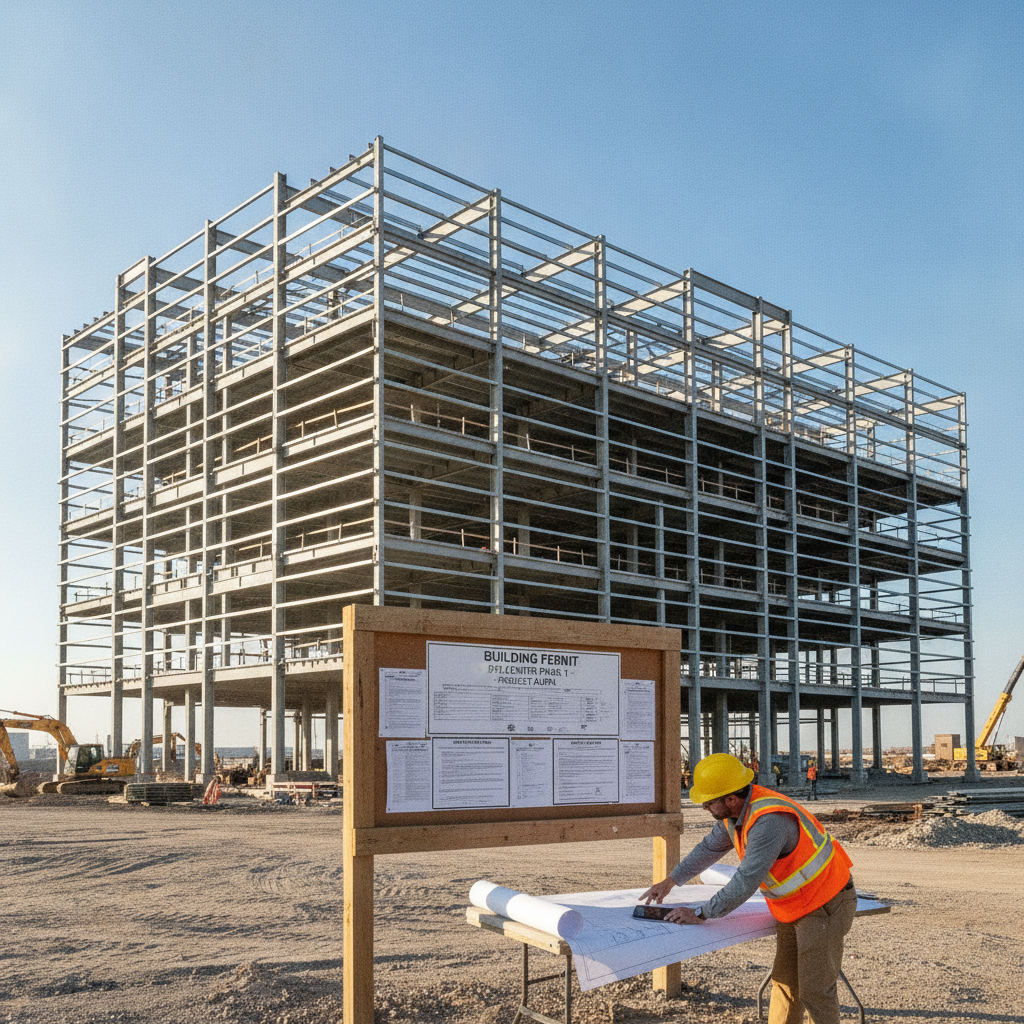
Foundational Site Development and Entitlement Permits
Before any vertical construction can begin, the project site itself must be fully entitled and prepared. This initial phase focuses on securing the necessary approvals for land development activities. Key components include achieving zoning compliance, which ensures the proposed data center use is permitted on the property, and obtaining a site plan approval. The site plan design addresses critical elements like access, parking, building placement, landscaping, and, most importantly, stormwater management. The environmental permitting at this stage can be extensive. Depending on the site’s characteristics, this may involve federal-level reviews under programs like the Clean Water Act for impacts to wetlands or the National Pollutant Discharge Elimination System (NPDES) for construction stormwater runoff. Permitting requirements vary by jurisdiction, and every project team should confirm the applicable standards with the local, state, regional, and federal authorities that hold review authority over the site. A thorough due diligence process led by a qualified civil engineering firm is crucial to identify all required agency review processes upfront.
Phased Permitting Strategy for Speed to Market
Key Permit Types in Data Center Construction
| Permit Phase | Key Disciplines Involved | Typical Review Focus | Impact on Schedule |
|---|---|---|---|
| Early Site Work / Grading Permit | Civil Engineering, Geotechnical Engineering | Erosion control, stormwater management, grading, NPDES compliance, tree removal. | Allows earthwork and underground utility installation to begin, de-risking the schedule. |
| Foundation-Only Permit | Structural Engineering, Geotechnical | Foundation design, rebar placement, concrete specifications, soil bearing capacity. | Enables vertical construction to start while superstructure design is finalized. |
| Core & Shell Permit | Architecture, Structural, Civil, MEP | Building code compliance, life safety, structural integrity, ADA compliance, energy code. | Authorizes construction of the main building envelope and structural frame. |
| MEP Systems Permit | Mechanical, Electrical, Plumbing Engineers | Power distribution, cooling capacity, equipment specifications, code compliance. | Often the longest lead-time review due to system complexity; critical for interior fit-out. |
| Fire Protection System Permit | Fire Protection Engineer, Architect | Sprinkler design, alarm systems, suppression agent, compliance with fire codes. | Required for life safety; approval is mandatory before installing systems. |
| Certificate of Occupancy (CO) | All Disciplines, Contractor | Final inspections, completion of all permitted work, life safety system testing. | The final approval required to legally occupy and operate the facility. |
The core principle for accelerating data center construction is phased permitting. This strategy involves submitting separate permit applications for distinct scopes of work, allowing construction to commence on approved phases while later phases are still under design or review. For a fast-track project, waiting for a single, all-encompassing building permit is not a viable option. A typical phased approach begins with an early site work or grading permit, which allows for earthwork, utility installation, and the construction of access roads and stormwater ponds. Following the site work permit, a foundation-only permit is often pursued. This allows contractors to pour concrete slabs and foundations, getting the project out of the ground while the structural steel and building envelope details are finalized for the subsequent core and shell permit submittal. This strategic sequencing is a cornerstone of modern construction management services for data centers, as it directly protects the critical path of the project schedule. Each phase requires a meticulously prepared permit submittal package with detailed plans and calculations specific to that scope of work.
Core and Shell Building Permit Submittals
The core and shell building permit is a major milestone that authorizes the construction of the main building structure. This package is a coordinated effort between the architect, structural engineer, and civil engineer. It includes architectural drawings showing floor plans and elevations, structural plans for the steel or concrete frame, and civil drawings detailing final grading, on-site utilities, and fire access. The review by the authority having jurisdiction focuses on compliance with the governing building code, life safety requirements, and structural integrity. A critical component of this submittal is ensuring compliance with accessibility standards, such as the Americans with Disabilities Act (ADA). Even for a facility with limited public access, ADA compliance for employee areas is mandatory. The civil engineering plans must demonstrate proper accessible routes from parking areas to the building entrance. Any discrepancies or incomplete information in the core and shell package can trigger extensive review comments, halting progress and jeopardizing the project timeline.
MEP and Fire Protection System Reviews
The Mechanical, Electrical, and Plumbing (MEP) systems are the heart of any data center, and their permit review is correspondingly intense. The electrical plans detail the high-capacity power distribution from the utility service entrance to the server racks, including transformers, switchgear, and uninterruptible power supply (UPS) systems. Mechanical plans focus on the massive cooling and HVAC systems required to dissipate heat generated by IT equipment. Plumbing plans cover everything from domestic water to specialized drainage for cooling systems. Fire protection is another critical review area. Data centers often utilize advanced fire suppression systems, such as pre-action sprinklers or clean agent systems, which require specialized review and approval from the local fire marshal. The sheer scale and complexity of these systems mean that the MEP permit review is often the most time-consuming part of the process. Close coordination between the MEP engineers and other disciplines is essential to ensure a smooth review and avoid costly redesigns.
Managing Deferred Submittals for Critical Equipment
Many pieces of major data center equipment, such as large generators, chillers, or custom air handling units, are not fully designed when the primary building permit is submitted. In these cases, jurisdictions often allow for deferred submittals. This process allows the main permit to be issued with the condition that the detailed engineering plans, calculations, and product specifications for this specific equipment will be submitted for review and approval at a later date, typically before the equipment is installed. Managing deferred submittals is a critical task in project management. The project team must track each deferred item, ensure the vendor provides the required engineering data in a timely manner, and submit it to the building department for a separate review. Failure to gain approval for a deferred submittal can prevent the installation of critical equipment, creating a major bottleneck in the construction sequence. A Professional Engineer must often stamp the submittal documents, certifying their compliance with project specifications and applicable codes.
The Inspection Process and Certificate of Occupancy
A building permit is not the end of the regulatory process; it is the permission to start work that will be inspected. Throughout construction, local inspectors will visit the site to verify that work is being performed according to the approved plans and code. These inspections happen at key milestones: foundation, structural framing, MEP rough-in, fire system installation, and more. Failed inspections result in stop-work orders until the deficiencies are corrected, causing significant delays. The final step is obtaining the Certificate of Occupancy (CO). The CO is issued only after all construction work is complete, all required inspections have been passed, all life safety systems have been tested and approved, and all conditions of the permits have been met. The CO is the official document that allows the owner to legally occupy the building and, in the case of a data center, bring the facility online. Without it, the multi-million dollar investment cannot begin generating revenue.
RSP’s Approach to Data Center Permitting
At RSP Engineers, we understand that a successful data center project requires a permit strategy that is as robust as its engineering design. Our approach is built on proactive engagement and meticulous preparation. We begin by conducting thorough due diligence to identify all jurisdictional requirements and potential constraints. We then collaborate with the client and design team to develop a tailored phased permitting strategy that aligns with the project’s critical path. Our team of experienced engineers prepares comprehensive and clear permit submittal packages designed to streamline the agency review process. We manage communications with regulatory agencies, respond to comments efficiently, and track all milestones from initial application to the final Certificate of Occupancy. By integrating our civil engineering and permitting expertise early in the project lifecycle, we help our clients navigate the complexities of land development and achieve their speed-to-market goals.
Common Pitfalls in Data Center Permitting
Even with a solid plan, several common issues can derail a data center permitting effort. One of the most frequent is inadequate utility coordination. Data centers require immense power and water, and securing commitments and permits from utility providers can be a lengthy process that must start early. Another pitfall is underestimating agency review timelines, which can vary significantly between jurisdictions and are often longer for complex projects like data centers. Scope creep or design changes made after a permit has been submitted can also cause major disruptions. Any significant change may require a plan revision and re-review, effectively resetting the clock on the approval process. Finally, incomplete submittal packages with missing information or conflicting details are a primary cause of initial rejection or a long list of review comments. This highlights the importance of a rigorous quality control process by the lead design professional before any package is submitted.
Partner with RSP Engineers for Your Mission-Critical Project
The path to a fully operational data center is paved with complex regulatory hurdles. Successfully navigating the building permit process requires deep technical expertise and a strategic, forward-thinking approach. The team at RSP Engineers provides the expert civil engineering, land development, and permitting services needed to get your project entitled, designed, and approved efficiently. From initial site plan design and utility coordination to managing phased submittals and securing final occupancy, we are your trusted partner in mission-critical development. Contact us today to discuss how we can help protect your project schedule and budget.
Conclusion
The data center building permit process is a marathon, not a sprint. Its complexity demands a sophisticated strategy that prioritizes phased permitting, proactive agency communication, and seamless coordination among all design disciplines. By understanding the key stages, from initial site entitlements and stormwater management approvals to intricate MEP reviews and final inspections, developers can mitigate risk and achieve the speed to market that is paramount in the digital infrastructure industry. Ultimately, a well-executed permitting plan is as critical to a data center’s success as its power and cooling systems.
FAQs
-
The timeline varies widely based on project complexity and local review cycles, but it can range from 6 to 18 months or more from initial submittal to receiving all necessary permits for full build-out. A phased permitting strategy is essential to allow construction to start sooner.
-
Incomplete or uncoordinated construction documents are a primary cause. Specifically, conflicts between the massive MEP system requirements and the architectural or structural plans often lead to extensive review comments and delays. Inadequate upfront utility coordination is another major factor.
-
Yes, this is the primary benefit of a phased permitting strategy. By obtaining an early site work or foundation permit, you can begin construction on those scopes of work while the more complex building permit for the superstructure and interior systems is still under review.