
Data Center Agency Review Process
A guide for data center developers on navigating the complex agency review process. Learn about submittal packages, concurrent reviews, and how expert civil engineering streamlines permitting.
The Initial Submittal: Assembling a Comprehensive Review Package
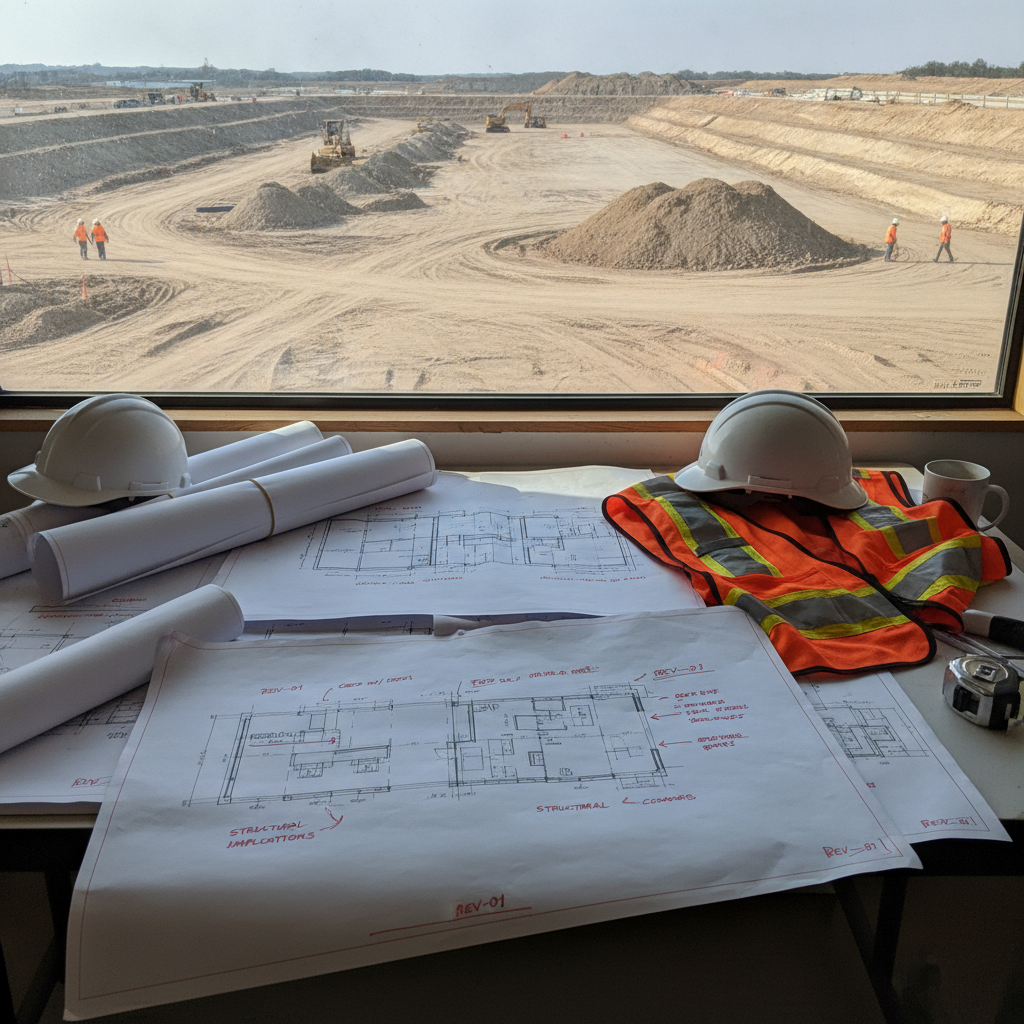
The first interaction with a regulatory agency is the formal submittal of the project’s design documents. This is far more than just a set of drawings; it’s a comprehensive package that must demonstrate full compliance with all applicable codes and regulations. A robust submittal for a data center typically includes detailed civil engineering plans covering grading, drainage design, utilities, and erosion control. It is accompanied by a stormwater management report, a traffic impact analysis, geotechnical reports, and environmental assessments. The goal is to provide reviewers with everything they need to make an informed decision without issuing a lengthy request for additional information. Preparing a complete and accurate package is the single most effective way to minimize review cycles. Each document must be internally consistent and aligned with the overall site development plan. For example, the grading plan must match the calculations in the stormwater report, and the utility plan must reflect the capacity requirements confirmed in preliminary coordination. Permitting requirements vary by jurisdiction, and every project team should confirm the applicable standards with the local, state, regional, and federal authorities that hold review authority over the site. A seasoned Professional Engineer ensures this package is not only technically sound but also formatted and organized precisely to meet agency intake requirements.
Intake and Completeness Checks: The First Hurdle
Key Review Disciplines for Data Center Site Plans
| Discipline/Department | Key Review Focus | Common Comments/Issues |
|---|---|---|
| Planning & Zoning | Compliance with land use, setbacks, building height, landscaping, and architectural standards. | Incorrect zoning calculations, insufficient landscape buffering, non-compliant signage or lighting plans. |
| Public Works/Engineering | Stormwater management (quality and quantity), grading, erosion control, floodplain compliance, and public road improvements. | Undersized detention ponds, inadequate erosion control measures, conflicts with public right-of-way. |
| Environmental Protection | Wetland and habitat impacts, water quality, tree preservation, and compliance with federal regulations (NPDES, ESA). | Incomplete wetland delineation, lack of species survey, insufficient stormwater treatment design. |
| Utility Provider (Power) | Capacity availability, substation location, easement requirements, and reliability/redundancy planning. | Underestimated load demand, insufficient space for on-site substations, conflicts with required easements. |
| Fire Marshal/Emergency Services | Fire truck access road geometry (width, turning radii), fire hydrant spacing and flow, and emergency generator placement. | Dead-end access roads exceeding length limits, inadequate turning radii for ladder trucks, hydrant placement conflicts. |
Once the package is submitted, it doesn’t immediately go to a technical reviewer. The first stop is an administrative intake or completeness check. At this stage, agency staff verify that all required components are present, application fees have been paid, and all forms are correctly filled out and signed. This is a pass/fail test. An application deemed incomplete is typically rejected and returned to the applicant, effectively stopping the review clock before it even starts. This can result in weeks of delay while the package is corrected and resubmitted. Common reasons for failing a completeness check include missing reports, unsigned plans, incorrect fee calculations, or failure to include a required pre-application meeting summary. This administrative step underscores the importance of meticulous preparation. A thorough quality control process by the lead civil engineering consultant is essential to ensure the package passes this first gatekeeper. This includes cross-referencing the submittal against the agency’s official checklist and confirming all zoning compliance documentation is in order before the package ever leaves the office.
Concurrent Departmental Reviews: The Multi-Agency Gauntlet
After passing the completeness check, the project is formally entered into the review system. The lead agency, often a planning or building department, distributes the plans and reports to various other departments and agencies for concurrent review. Each entity examines the project through the lens of its specific regulatory authority. This multi-disciplinary review is a critical phase where the technical merits of the site development plan are scrutinized from all angles. A typical data center project will undergo review by a host of departments, including: Public Works/Engineering: Reviews grading, drainage, stormwater management, and public infrastructure impacts like roads and sidewalks. Transportation/Traffic: Analyzes the traffic impact study and proposed access points for operational and construction traffic. Environmental Protection: Scrutinizes impacts on wetlands, protected species, and water quality, often coordinating on federal permits like NPDES for construction stormwater runoff. Utilities Department: Reviews plans for water, sewer, and reclaimed water connections, ensuring sufficient capacity and compliance with infrastructure standards. Fire Marshal/Emergency Services: Checks for adequate fire access roads, hydrant placement, and emergency vehicle maneuverability. Effective utility coordination and clear, defensible engineering calculations are paramount during this stage to satisfy the diverse requirements of each reviewer.
The Comment and Resubmittal Cycle: Addressing Agency Feedback
It is rare for a complex project like a data center to receive approval after the first review. More commonly, the applicant receives a consolidated set of comments from all reviewing departments. These comments can range from minor requests for clarification to significant demands for redesign. The project team’s response to these comments is a critical determinant of the project’s timeline. A successful response involves a detailed, point-by-point letter addressing each comment, accompanied by revised plans and reports that clearly show how the comment has been resolved. This resubmittal initiates a new review cycle. The goal is to address all comments so thoroughly that the second review is the final one. Vague or incomplete responses can trigger additional rounds of comments, adding months to the schedule. This is where the expertise of a civil engineering firm shines. They can interpret technical comments, negotiate reasonable solutions with agency staff, and manage the revision process efficiently. Clear communication and a collaborative, non-adversarial approach with reviewers are key to navigating the agency review process and securing timely approvals.
Utility Coordination and Capacity Confirmation
Data centers are defined by their immense power and cooling demands, which translates to extraordinary utility requirements. The utility coordination process is one of the most critical and longest lead-time items in data center development. This process runs parallel to the primary land use and site plan review but is deeply interconnected. Securing a commitment from the power provider to serve the site with the required megawatts—often involving new substations or transmission lines—is a project in itself. Similarly, water for cooling systems and sanitary sewer service must be confirmed. Agencies will require formal capacity confirmation letters from the utility providers as a condition of site plan design approval. The civil engineer is responsible for preparing detailed utility plans, calculating demand loads, and leading the technical discussions with power, water, and fiber providers. Failure to secure these commitments early can halt the entire permitting process, as no jurisdiction will approve a project that lacks viable utility service.
Environmental and Federal Permitting Triggers
Beyond local and state regulations, many data center sites trigger federal review requirements. The presence of jurisdictional wetlands, for instance, requires a permit from the U.S. Army Corps of Engineers under Section 404 of the Clean Water Act. If the site provides habitat for federally listed threatened or endangered species, consultation with the U.S. Fish and Wildlife Service is necessary. Projects located within a FEMA-mapped floodplain will face stringent development restrictions and require specific hydrologic and hydraulic modeling to demonstrate compliance. These federal permitting processes are separate from, but often run concurrently with, local reviews. They have their own timelines, public notice requirements, and technical standards. An experienced civil engineering consultant will identify these potential triggers during initial due diligence and develop a strategy to integrate federal permitting into the overall project schedule. Proactively addressing these elements prevents last-minute surprises that can derail a project on the cusp of approval.
RSP Engineers’ Proactive Approach to Agency Reviews
At RSP Engineers, we view the agency review process not as a hurdle, but as a strategic phase of the project that can be managed for efficiency and predictability. Our approach is founded on proactive communication and technical excellence. We begin with pre-application meetings with agency staff to identify key issues and establish a clear roadmap for approval. Our submittal packages are meticulously assembled and undergo a rigorous internal quality control review to ensure they are complete and clear, minimizing the potential for first-round rejections. Our team includes dedicated permit coordinators who serve as a single point of contact, managing communication with all reviewing agencies and tracking progress against established timelines. We leverage our deep experience in land development and utility coordination to anticipate reviewer comments and address them preemptively in our designs. This proactive stance reduces review cycles, accelerates approval timelines, and provides our clients with the certainty they need to move forward with confidence.
Common Pitfalls in the Data Center Permitting Process
Even with careful planning, data center projects can encounter significant hurdles during agency review. One of the most common pitfalls is underestimating the lead time for high-capacity utility service, particularly for power. Another frequent issue is an inadequate traffic impact analysis that fails to account for both construction and operational traffic, leading to extensive redesign requests for access points and off-site improvements. Incomplete or flawed stormwater management models are also a major source of comments, often requiring significant rework of grading and pond designs. Finally, a lack of early and continuous engagement with agency reviewers can lead to misunderstandings and delays. Assuming a design that works in one jurisdiction will be accepted in another is a frequent mistake. A successful project requires a tailored approach that respects the specific codes and priorities of the reviewing authorities, guided by a knowledgeable civil engineering partner.
Streamline Your Data Center Development with RSP Engineers
Navigating the complexities of the data center agency review process requires more than just technical design; it demands strategic project management, deep regulatory knowledge, and proactive communication. RSP Engineers provides the expert guidance needed to successfully steer your mission-critical project through every stage of permitting. Our team specializes in comprehensive site development services, from initial due diligence and zoning compliance to final construction administration. We excel at managing complex agency review cycles and ensuring your project stays on schedule. Contact us today to discuss how we can support your next data center development.
Conclusion: A Strategic Approach to Data Center Permitting
The agency review process is a critical path item for any data center development. Success depends on a strategic approach that prioritizes a complete and technically sound initial submittal, proactive communication with reviewers, and expert management of the comment and resubmittal cycle. By understanding the process and partnering with an experienced civil engineering firm, developers can mitigate risk, avoid unnecessary delays, and accelerate their speed to market. A well-managed permitting strategy is the foundation upon which a successful data center project is built, ensuring that the final facility meets all building code compliance and operational goals.
FAQs
-
Timelines vary significantly based on project complexity and the jurisdiction’s review capacity, but a typical range is 6 to 18 months from initial submittal to final site plan approval. This does not include long-lead-time items like federal environmental permits or major off-site utility coordination, which can extend the schedule.
-
The most common reasons are administrative incompleteness (missing forms or fees) and significant technical deficiencies in the stormwater management report or traffic analysis. These core documents receive the highest level of scrutiny, and errors or omissions almost always trigger a rejection or a major comment letter.
-
This is a common challenge. The best approach is to facilitate a meeting or conference call with the conflicting reviewers, mediated by the lead civil engineering consultant. The goal is to understand the regulatory basis for each comment and collaboratively find a design solution that satisfies the requirements of both agencies.