
Cooling Tower Foundation Design for Data Center Campuses
A technical guide for data center developers on designing robust cooling tower foundations. Learn about dynamic loads, geotechnical analysis, vibration isolation, and structural requirements.
Understanding the Unique Load Profile of Cooling Towers
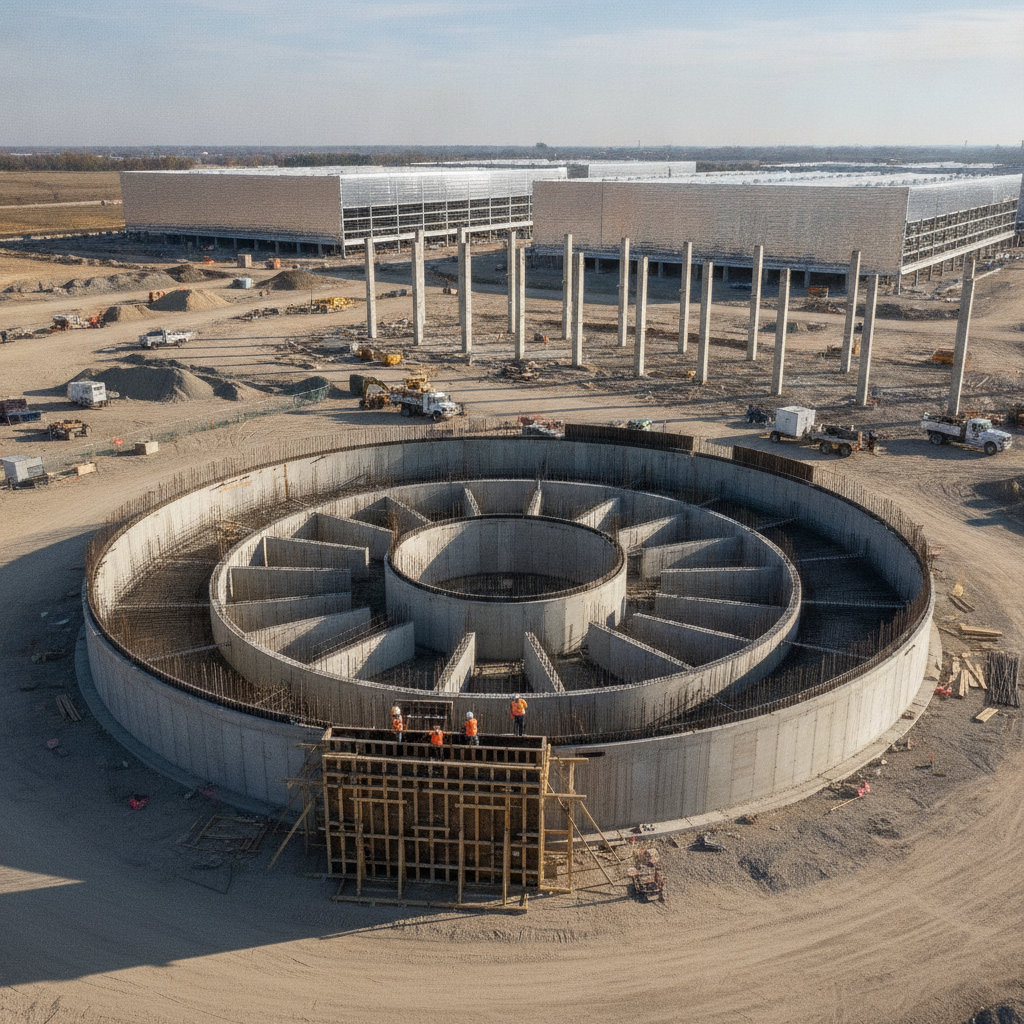
The first step in designing a robust foundation is to fully characterize all the loads it must resist. Cooling towers impose a unique combination of static and dynamic forces that are more complex than those of a typical building structure. The structural engineer of record must work closely with the equipment manufacturer to obtain precise load data. Key considerations include the tower’s dead load, the substantial operating weight when filled with water, and the dynamic loads generated by motors and fans. The operating weight, which includes thousands of gallons of water, is often the primary design driver for the foundation’s size and reinforcement. However, the dynamic loads from the large rotating fans introduce vibrations that can cause structural fatigue or resonance if not properly managed. This requires a dynamic analysis to ensure the foundation’s natural frequency does not align with the operating frequency of the fans. Furthermore, the design must account for transient loads such as those experienced during equipment startup, shutdown, and maintenance activities.
Geotechnical Investigation and Site Suitability
Key Design Parameters for Cooling Tower Foundations
| Parameter | Design Consideration | Potential Impact if Mishandled |
|---|---|---|
| Operating Weight | Total weight of the tower structure plus water at maximum capacity. Governs foundation size and soil bearing pressure. | Excessive or differential settlement, foundation cracking, strain on connected piping. |
| Dynamic Fan Loads | Vibrational forces from motors and fans. Requires dynamic analysis to avoid resonance with the foundation structure. | Structural fatigue, amplification of vibration, damage to equipment, and noise transmission. |
| Wind and Seismic Loads | Uplift, overturning, and lateral forces based on local code requirements and site-specific conditions. | Foundation failure, equipment dislodging or overturning, catastrophic damage during a storm or seismic event. |
| Soil Bearing Capacity | The maximum pressure the soil can safely support, as determined by a Geotechnical soil report. | Foundation settlement, structural instability, or the need for a more expensive deep foundation system. |
| Piping Connections | Location, size, and support for large-diameter piping. Requires flexible connectors to accommodate movement. | Pipe strain, nozzle damage, leaks, and costly foundation modifications if penetrations are not pre-planned. |
| Waterproofing & Containment | Design of the basin as a water-retaining structure with robust waterproofing details and joint seals. | Water leaks, chemical loss, soil erosion under the foundation, and premature concrete deterioration. |
A cooling tower foundation is only as strong as the ground beneath it. A comprehensive Geotechnical soil report is a non-negotiable prerequisite for design. This investigation, typically involving a series of soil boring test procedures and laboratory analysis, determines the site’s soil stratigraphy, bearing capacity, and potential for settlement. For heavy, vibration-sensitive structures like cooling towers, understanding long-term and differential settlement is critical to prevent stress on the structure and connected piping. The findings of the Geotechnical engineer directly influence the foundation type. In areas with strong, stable soils, a shallow mat foundation may suffice. In contrast, sites with poor soil conditions might require deep foundations such as piles or caissons to transfer loads to a more competent bearing stratum. It is important to note that code requirements for geotechnical investigations and foundation design standards vary by jurisdiction, and every project team must confirm the applicable criteria with the local, state, and federal authorities that hold review authority over the site. This ensures the site plan design is compliant from the ground up.
Structural Design for Dynamic and Environmental Forces
The structural design of the foundation must translate the geotechnical data and equipment loads into a constructible and resilient system. This involves detailed analysis based on model building codes and standards like the International Building Code (IBC), ASCE 7 for minimum design loads, and ACI 318 for structural concrete. The design must rigorously account for wind loads, which can exert significant uplift and overturning forces on the tall, open structure of a cooling tower, especially when it is empty and lightweight during construction or maintenance. In regions prone to seismic activity, seismic design becomes a primary concern. The foundation and anchorage must be designed to resist lateral forces and prevent equipment from shifting or overturning during an earthquake. The structural system, whether it’s a reinforced concrete mat, a grid of piers and beams, or a pile-supported cap, must provide a rigid base that distributes all static, dynamic, and environmental loads safely into the ground without exceeding the soil’s bearing capacity or causing unacceptable settlement.
Basin Design, Containment, and Waterproofing
Most cooling towers include an integrated basin to hold and collect water. This basin is a critical component that requires careful structural design and detailing. It must be designed as a water-retaining structure, often referred to as environmental concrete, with stringent requirements for reinforcement, joint design, and concrete quality to prevent cracking and leaks. A leak in the basin can lead to water loss, chemical treatment imbalances, and potential damage to surrounding equipment or subgrade soils. Effective waterproofing is paramount. This can involve integral waterproofing admixtures in the concrete mix, applied membrane systems, and carefully detailed waterstops at all construction joints and pipe penetrations. The basin slab must also be sloped to low points for complete drainage during cleaning and maintenance. The foundation design must fully support this basin structure, accounting for the hydrostatic pressure of the water and ensuring a stable, monolithic system.
Vibration Isolation and Acoustic Control
The constant operation of large fans and motors in cooling towers generates significant vibration and noise. If not properly isolated, this vibration can travel through the foundation and the ground into the main data center building, potentially affecting sensitive servers and support equipment. A key element of the foundation design is the integration of a vibration isolation system. This is typically achieved by installing the cooling tower on spring isolators or high-deflection elastomeric pads placed between the equipment support points and the concrete foundation. The foundation itself must be designed with sufficient mass and stiffness to serve as an effective inertia base, which helps dampen vibrations before they can propagate. This aspect of the design requires close utility coordination between the mechanical, structural, and acoustic engineers to select the appropriate isolation scheme and ensure it is compatible with the foundation structure.
Piping and Utility Integration
A cooling tower foundation does not exist in isolation. It is a hub for large-diameter condenser water piping, makeup water lines, electrical conduits for motors and controls, and drainage systems. The foundation design must accommodate these utilities with properly located openings, sleeves, and blockouts. A failure to coordinate these elements early can lead to costly and time-consuming field modifications, such as core drilling through a heavily reinforced foundation. A critical detail is the use of flexible pipe connectors where piping attaches to the cooling tower. These connectors absorb differential movement between the foundation and the piping system, which can result from thermal expansion, settlement, or vibration. Without them, the rigid piping could impose significant stress on the equipment nozzles, leading to leaks or connection failure. The civil engineering design must ensure that all underground utilities are routed to avoid conflicts with foundation elements like piers or grade beams.
RSP Engineers’ Approach to Foundation Design and Integration
At RSP Engineers, we approach cooling tower foundation design as an integrated process, not a standalone task. Our process begins with a thorough review of the project requirements, including the data center’s operational needs, the selected equipment specifications, and the site-specific geotechnical report. We facilitate close collaboration between our Civil Engineers, the project’s structural and mechanical engineers, and the equipment vendor to ensure all loads, connection points, and isolation requirements are clearly defined from the outset. Our team leverages advanced modeling tools to integrate the foundation design with the overall site plan design, identifying and resolving potential conflicts with underground utilities, grading, and stormwater systems early in the process. We provide comprehensive site engineering services that include detailed construction documents, specifications for concrete and waterproofing, and critical support during the permit submittals and construction phases. This proactive and collaborative approach minimizes risk and ensures the final installation is robust, reliable, and built to last.
Common Pitfalls in Cooling Tower Foundation Projects
Even with careful planning, several common issues can arise. One of the most frequent is an inadequate or misinterpreted Geotechnical soil report, leading to an under-designed foundation that experiences settlement. Another is failing to account for the full range of dynamic loads, resulting in unexpected vibration issues after startup. Poorly detailed waterproofing and waterstops are a common source of leaks that are difficult and expensive to repair once the tower is operational. Other pitfalls include overlooking maintenance access requirements in the layout, creating safety hazards and complicating routine service. Finally, a lack of coordination between the civil engineering team and the structural engineer can lead to clashes between foundation elements and critical site utilities. Avoiding these issues requires experienced oversight and a commitment to integrated design from the project’s inception.
Partner with RSP Engineers for Your Mission-Critical Infrastructure
Designing and executing a cooling tower foundation for a data center campus requires a deep understanding of complex structural, geotechnical, and mechanical interactions. The stakes are too high for a one-size-fits-all approach. The team at RSP Engineers provides the expert civil engineering, site development, and permitting coordination needed to navigate these challenges successfully. We collaborate with your design team to deliver integrated, resilient, and cost-effective foundation solutions that protect your critical assets. Contact us today to discuss your next mission-critical project.
Conclusion: A Foundation for Reliability
The foundation of a cooling tower is a direct investment in the reliability and uptime of a data center. A design that properly addresses the unique combination of static weight, dynamic vibration, and environmental forces provides the stable platform necessary for long-term, trouble-free operation. By prioritizing a thorough Geotechnical Engineering investigation, integrated multi-disciplinary design, and meticulous attention to details like waterproofing and vibration isolation, developers can build a foundation that truly supports their mission-critical goals. This level of diligence is a hallmark of professional civil engineering practice.
FAQs
-
Differential settlement occurs when one part of a foundation settles more than another. For a large, monolithic structure like a cooling tower foundation, this can induce significant stress, potentially leading to concrete cracking, basin leaks, and severe strain on the large, rigid pipes connected to the equipment. A proper Geotechnical Engineering investigation and foundation design are essential to minimize this risk.
-
Dynamic loads are addressed through a dynamic analysis, where the foundation’s natural frequency is calculated and compared to the operating frequencies of the fans. The goal is to ensure these frequencies are sufficiently separated to prevent resonance. The design often incorporates a massive concrete inertia base to absorb and dampen vibrations, along with mechanical vibration isolation systems like springs or pads.
-
The most critical items are the accurate transfer of all equipment load data (weight, center of gravity, anchor bolt locations), the precise location and size of all piping and conduit penetrations through the foundation, and the specification and placement of vibration isolation pads or springs. Early and continuous communication is key to avoiding conflicts and redesigns.