
Chiller Foundation Design for Data Center Plants
A comprehensive guide to chiller foundation design for data centers, covering structural loads, vibration isolation, seismic anchorage, and drainage. Learn best practices from RSP Engineers.
Understanding Structural Loads and Weight Distribution
The first step in any foundation design is a thorough analysis of the loads it must support. For chillers, this involves both static and dynamic loads. The static load is the equipment’s operating weight, including the chiller unit itself, water, refrigerant, and any associated piping and accessories. This information is typically provided by the manufacturer on equipment data sheets. The dynamic loads are generated by the rotating components within the chiller, such as compressors and pumps, creating vibrations and cyclical forces that the foundation must safely absorb and dissipate. A critical aspect of the design is understanding how these loads are transferred to the foundation. Chillers are supported on specific mounting feet, creating concentrated point loads that must be managed by the foundation’s structural system. The structural engineer uses this data to design a reinforced concrete pad that distributes these concentrated forces over a wider area, preventing over-stressing of the underlying soil. The foundation’s thickness, dimensions, and reinforcement are all directly influenced by the magnitude and location of these loads, as well as the soil’s bearing capacity as determined by a comprehensive Geotechnical soil report.
Housekeeping Pads and Reinforcement Design
Chiller Foundation Design Parameter Comparison
| Design Parameter | Key Consideration | Primary Engineering Discipline |
|---|---|---|
| Static & Dynamic Loads | Equipment operating weight, internal rotating forces, and point load distribution. | Structural & Mechanical Engineering |
| Vibration Isolation | Selection of isolators (neoprene, spring, inertia base) to prevent vibration transmission to the structure. | Structural & Mechanical Engineering |
| Seismic Anchorage | Calculation of lateral forces and design of anchor bolts to meet building code requirements. | Structural Engineering |
| Drainage & Containment | Sloping of pad, placement of drains, and inclusion of containment curbs for spills. | Civil & Mechanical Engineering |
| Geotechnical Interaction | Soil bearing capacity, potential for settlement, and recommendations from the Geotechnical soil report. | Geotechnical Engineering & Structural Engineering |
| Maintenance Clearances | Providing adequate space for routine service, including major repairs like heat exchanger tube pulls. | Mechanical Engineering & Architecture |
Chiller foundations are often constructed as housekeeping pads, which are raised concrete slabs that sit on top of the main structural floor or foundation. These pads serve several important functions: they elevate the equipment to protect it from water or spills on the floor, provide a defined and level mounting surface, and help contain minor leaks. The design of the housekeeping pad itself is a crucial element of the overall site plan design for the mechanical room or central plant. The pad’s reinforcement, typically a grid of steel rebar, is engineered to handle the specific load profile of the chiller. The structural engineer calculates the required size, spacing, and placement of the rebar to control cracking and provide the necessary tensile strength to resist bending forces. The design must adhere to established industry standards, such as the American Concrete Institute’s ACI 318, to ensure safety and durability. The concrete mix itself is also specified to meet strength requirements and withstand the industrial environment, ensuring the foundation provides a stable platform for the life of the equipment.
Vibration Isolation and Acoustic Control
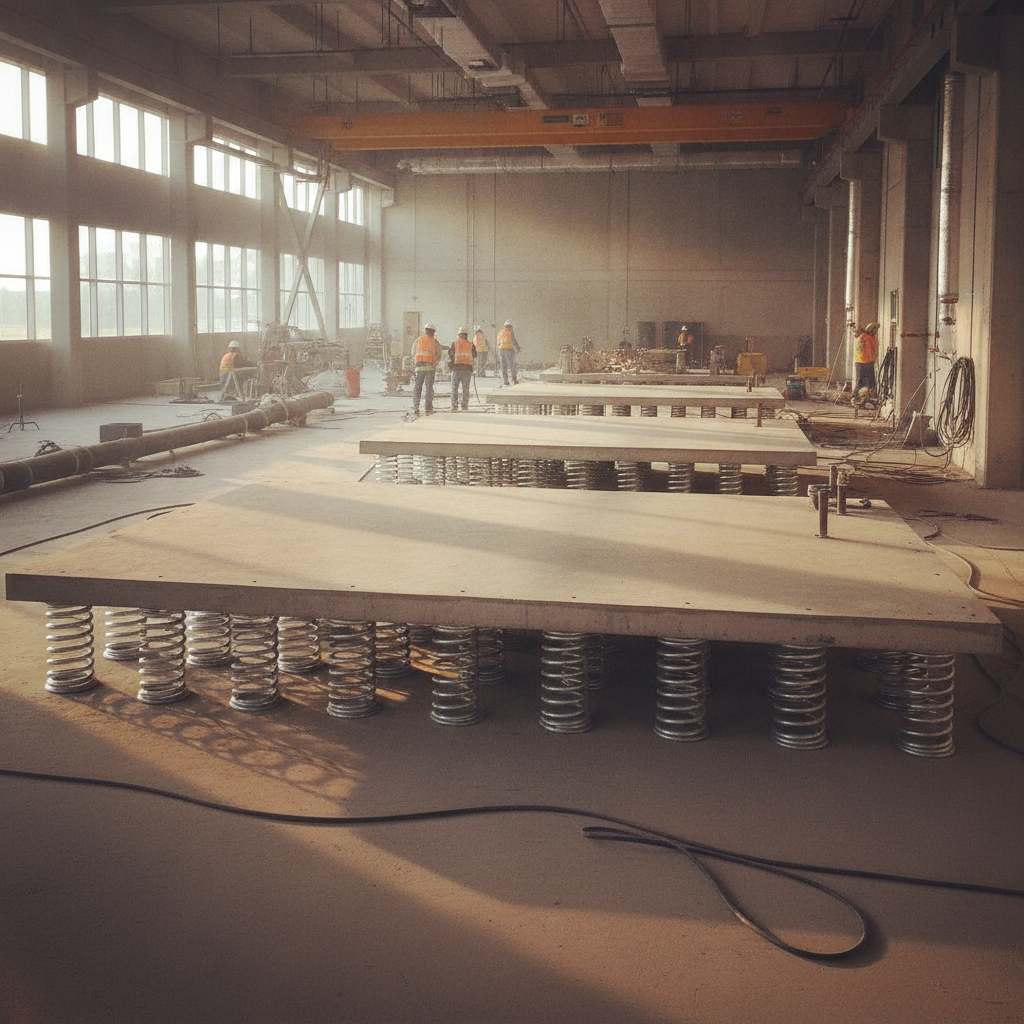
Data centers are sensitive environments where excessive vibration can potentially impact the performance and longevity of IT hardware. Chillers are a significant source of vibration, and isolating these dynamic forces is a primary function of the foundation system. A vibration isolation strategy is essential to prevent the transmission of mechanical energy from the chiller into the building structure. This is a key responsibility for the project’s Professional Engineer. Isolation is typically achieved by installing specialized mounts between the chiller feet and the concrete foundation. These can range from simple elastomeric (neoprene) pads for smaller equipment to more complex spring isolators for heavy, high-vibration machinery. For the most sensitive applications, an inertia base—a larger, heavier concrete mass supported on isolators—may be designed. The inertia base increases the total mass of the system, which lowers the center of gravity and dampens vibration more effectively. The selection of the appropriate isolation system depends on the chiller’s operating frequencies, the structural characteristics of the building, and the allowable vibration limits for the facility.
Seismic Anchorage and Lateral Force Resistance
In addition to vertical gravity loads, chiller foundations must be designed to resist significant lateral forces from events like earthquakes. Securing heavy equipment is a life-safety and operational-resilience requirement governed by building codes. The design of seismic anchorage ensures that the chiller remains in place and functional after a seismic event, preventing catastrophic failure, broken piping, and potential refrigerant leaks. The structural engineer calculates the seismic forces based on the equipment’s weight, its location within the building, and the site’s seismic design category as defined by model codes like ASCE 7. Anchorage systems typically consist of heavy-duty anchor bolts cast into the concrete foundation or installed post-construction. These bolts must be properly sized, embedded, and spaced to transfer the calculated lateral forces into the reinforced concrete pad and, ultimately, into the building’s main structure. Permitting requirements for seismic design and anchorage vary by jurisdiction, and every project team should confirm the applicable standards with the local, state, regional, and federal authorities that hold review authority over the site. Proper documentation and calculations are essential for achieving building code compliance and passing agency review during the permitting process.
Drainage, Containment, and Environmental Considerations
Chiller systems contain large volumes of water, glycol, and refrigerant oil, making proper drainage and containment critical design elements. The foundation area must be designed to manage condensation, leaks from pipe flanges, and potential spills during maintenance. This is an important part of the overall drainage design and stormwater management plan for the facility. A failure to account for fluids can lead to slip hazards, equipment corrosion, and environmental compliance issues. Best practices include sloping the housekeeping pad surface to a low point and incorporating trench drains or floor drains connected to an appropriate disposal system. For systems containing oil or other regulated substances, a containment curb is often required around the perimeter of the pad. This curb creates a basin capable of holding the entire volume of fluid in the event of a major leak, preventing it from spreading. These design features must be coordinated with the facility’s plumbing and environmental compliance plans to ensure safe and responsible operation.
Precision Alignment and Construction Tolerances
Large rotating equipment like centrifugal chillers requires extremely precise alignment between the motor and compressor to operate efficiently and avoid premature wear on bearings and couplings. This operational requirement translates directly into strict construction tolerances for the foundation. The concrete housekeeping pad must be constructed to be perfectly level and flat to provide a reliable base for equipment setting and alignment. This is a critical component of successful construction administration. Achieving these tight tolerances requires careful quality control during the concrete pour and finishing process. Specifications should clearly define the required flatness and levelness (F-numbers). Contractors may use laser screeds and meticulous hand-finishing techniques to meet these standards. After the concrete has cured, the surface is often surveyed to verify compliance before the chiller is lifted into place. Any deviation beyond the specified tolerance may require expensive remediation, such as grinding the concrete surface or using precision grout and shims to level the equipment.
Clearance Requirements for Maintenance and Operations
A functional foundation design extends beyond structural requirements to include operational and maintenance needs. The layout of the chiller pad must provide adequate clearance around the equipment for routine service and major repairs. One of the most significant considerations is the space required for a “tube pull,” which involves removing the long heat exchanger tubes for cleaning or replacement. This can require a clear, unobstructed distance equal to the length of the chiller itself. The design team, including the Civil Engineer near me, architect, and mechanical engineer, must collaborate to ensure these clearances are maintained in the final facility layout. This includes accounting for overhead obstructions like piping, ductwork, and cable trays, as well as providing clear pathways for moving parts and equipment. Failure to plan for maintenance access can turn routine service into a logistical nightmare, increasing costs and downtime for the data center.
Our Approach to Chiller Foundation Engineering
At RSP Engineers, our process begins with a collaborative review of the project requirements. We work closely with the client, the mechanical engineer, and the equipment vendor to obtain detailed chiller submittals and load data. Our team thoroughly analyzes the project’s Geotechnical soil report to understand the subsurface conditions that will influence the foundation design. This initial due diligence is a hallmark of leading Civil Engineering firms and is crucial for mitigating risks related to settlement or bearing capacity failure. Using this data, our structural engineers perform detailed calculations and create sophisticated models to design a foundation that is both robust and cost-effective. We produce comprehensive construction documents that clearly specify concrete strength, reinforcement details, anchor bolt layouts, and critical construction tolerances. During construction, we offer Construction Management Services and administration support, reviewing submittals and responding to contractor inquiries to ensure the final product is built exactly as designed. Our goal is to provide a seamless process from design through commissioning, delivering a foundation that guarantees long-term performance for your mission-critical facility.
Common Issues in Chiller Foundation Projects
Even with careful planning, several common issues can arise during the design and construction of chiller foundations. One of the most frequent problems is an inadequate Geotechnical Engineering investigation, which can lead to incorrect assumptions about soil capacity and result in foundation settlement over time. Another pitfall is the incorrect selection or installation of vibration isolators, which can fail to control vibrations or, in some cases, even amplify them. Poor coordination between disciplines is another major source of problems. For example, if maintenance clearances are not accounted for in the architectural and structural plans, it can make servicing the chiller nearly impossible. Similarly, neglecting to integrate drainage and containment features can lead to safety hazards and compliance violations. Finally, insufficient detail in construction drawings regarding anchorage or reinforcement can trigger extensive comments during the agency review phase of permitting, causing costly project delays.
Partner with RSP Engineers for Your Mission-Critical Facility
A reliable data center starts from the ground up. Ensuring your chiller foundation is properly engineered is a critical investment in your facility’s uptime and resilience. The team at RSP Engineers provides the expert structural and civil engineering services needed to navigate the complexities of mission-critical projects. We specialize in comprehensive site development, from initial due diligence and permitting to final construction. Contact us today to discuss how our expertise in foundation design, utility coordination, and structural analysis can support your next data center project.
Conclusion: A Foundation for Uptime and Reliability
The design of a chiller foundation for a data center is a specialized engineering task that demands precision and a multidisciplinary perspective. It goes far beyond simply pouring a slab of concrete. A successful design integrates a deep understanding of structural engineering principles, Geotechnical Engineering data, and the specific operational demands of the equipment. By carefully considering factors like load distribution, vibration isolation, seismic resilience, and maintenance access, project teams can deliver a foundation that ensures the long-term reliability and performance of the entire cooling system. Ultimately, a robust foundation is a direct investment in the data center’s most valuable asset: its uptime.
FAQs
-
A housekeeping pad is a raised concrete pad designed to elevate equipment and provide a level mounting surface. An inertia base is a much larger and heavier concrete block, often supported on spring isolators, that is specifically designed to add mass to the system to dampen significant vibration and resist dynamic forces from the equipment.
-
The Geotechnical soil report is critical. It provides the allowable soil bearing capacity, which dictates the required size of the foundation to safely spread the chiller’s weight without causing excessive settlement. It also provides recommendations regarding soil preparation, potential for soil movement, and the design of the underlying subgrade, which are all essential for a stable foundation design.
-
Data centers contain sensitive electronic equipment, such as hard disk drives and servers, that can be susceptible to damage or performance degradation from prolonged exposure to structural vibration. Effective vibration isolation at the source—the chiller—is essential to protect these assets, ensure data integrity, and maintain a suitable working environment for personnel.