
Construction Materials Testing for Data Center Projects
A comprehensive guide to construction materials testing for data center projects, covering soil, concrete, steel, and asphalt. Learn how RSP Engineers ensures quality and compliance.
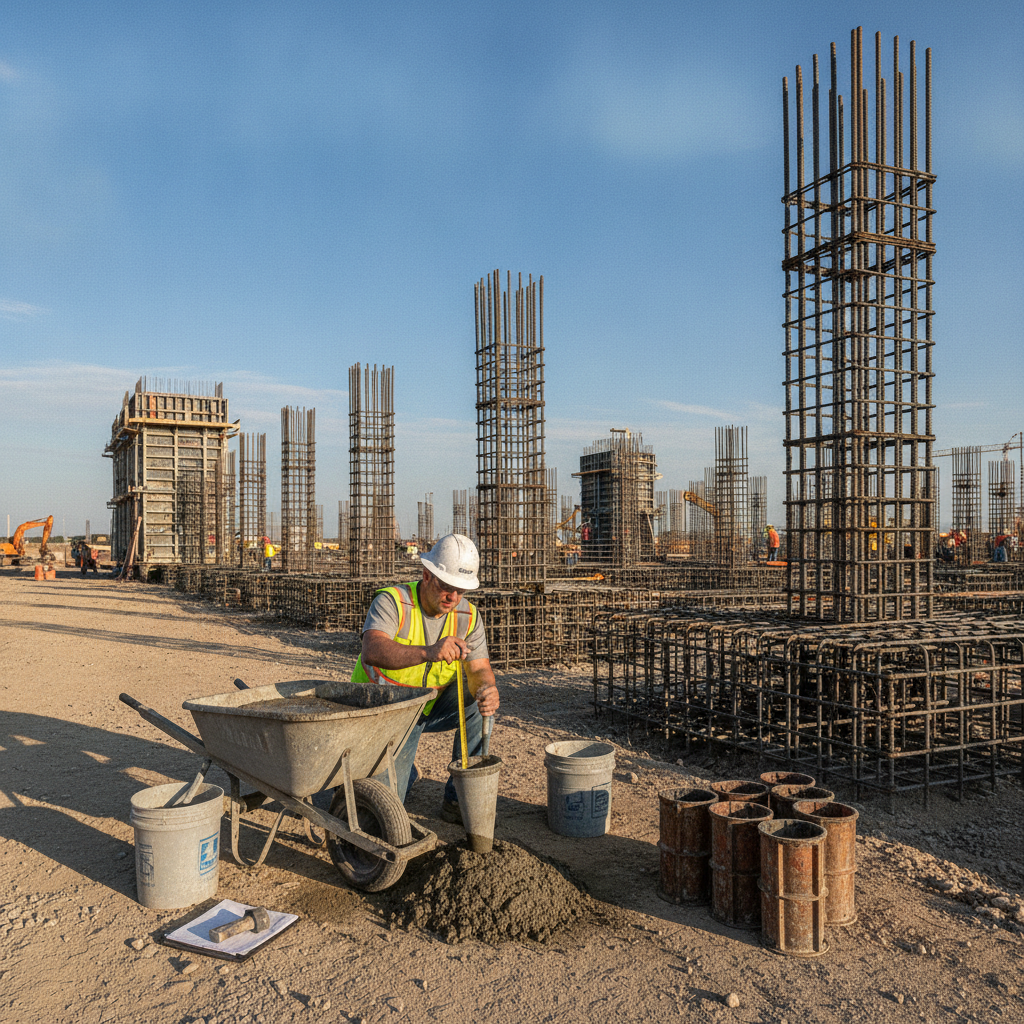
The Foundation of Reliability: Geotechnical and Earthwork Testing
The performance of a data center’s massive foundations and sensitive slab-on-grade floors depends entirely on the stability of the underlying soils. The site development process often involves significant cut-and-fill operations to create a level building pad. Verifying the quality of this earthwork is the first critical step in the materials testing program. Technicians perform field density testing using methods like nuclear density gauges or sand cone tests to confirm that engineered fill is placed and compacted to the project’s specifications, typically 95% to 98% of the maximum dry density determined by a laboratory Proctor test. This process is crucial for preventing future settlement, which could compromise structural elements, utility connections, and sensitive equipment. The testing frequency is established by the Geotechnical engineer and is typically based on the volume of fill placed or the surface area covered. Proper earthwork testing ensures that the building pad, utility trenches, and pavement subgrades provide a stable, unyielding foundation for the entire life of the facility.
Ensuring Structural Integrity with Concrete Quality Control
Common Materials Testing Frequencies for Data Center Sites
| Material / System | Test Type | Typical Frequency / Criteria |
|---|---|---|
| Engineered Fill (Building Pad) | Field Density Test (Nuclear Gauge) | 1 test per 2,000 sq. ft. per 12-inch lift |
| Utility Trench Backfill | Field Density Test (Nuclear Gauge) | 1 test per 200 linear ft. per 12-inch lift |
| Concrete (Foundations/Slabs) | Slump, Air, Temp, Cylinders | 1 set of tests per 50 cubic yards or per day's pour |
| Reinforcing Steel | Pre-Pour Visual Inspection | 100% inspection prior to each concrete placement |
| Structural Steel Bolting | High-Strength Bolt Inspection | Observation of pre-installation verification and routine installation per code |
| Asphalt Pavement | Density and Thickness Cores | 1 set of cores per 500 tons of mix or per day's paving lot |
Concrete is the primary structural material in most data centers, used for foundations, slabs, tilt-up walls, and equipment pads. Its strength and durability are not guaranteed; they must be verified through a systematic testing regimen. During concrete placement, certified technicians perform a series of field tests, including the slump test to measure consistency and workability, and air content tests to ensure durability in freeze-thaw environments. The most critical test involves casting concrete test cylinders from each batch for laboratory analysis. These cylinders are cured under controlled conditions and subjected to compressive strength tests at specific intervals, typically at 7 and 28 days. The results confirm whether the concrete has achieved its specified design strength (e.g., 4,000 psi), which is essential for decisions like stripping formwork or applying loads. The requirements for testing, including when special inspections are mandated for concrete work, can vary by jurisdiction, and every project team should confirm the applicable standards with the local, state, regional, and federal authorities that hold review authority over the site. A failure to meet design strength can lead to costly and schedule-disrupting investigations and remediation.
Reinforcing and Structural Steel Special Inspections
The tensile strength of concrete structures is provided by embedded reinforcing steel (rebar). Before any concrete is poured, inspectors must verify that the rebar is the correct size, grade, and spacing, and that it has the proper clearance (cover) from the edge of the formwork, all in accordance with the structural drawings. This is a mandatory special inspection item under most building codes, as improper rebar placement can severely compromise the structure’s load-bearing capacity. For the steel superstructure, special inspections extend to the verification of high-strength bolting, ensuring bolts are properly tensioned using methods like turn-of-nut or direct tension indicators. Welded connections also undergo rigorous inspection, often involving visual inspection (VT) and non-destructive testing (NDT) methods like ultrasonic (UT) or magnetic particle (MT) testing to identify any hidden defects. This comprehensive structural steel inspection program provides documented proof that the building’s frame is assembled to meet all engineering and code requirements.
Pavement Systems: Asphalt and Aggregate Base Course Testing
While not part of the main building structure, the pavement systems for access roads, fire lanes, and parking areas are critical for facility operations and emergency access. The materials testing program for pavements begins with the aggregate base course, where technicians verify its thickness and compaction level. This ensures a stable platform for the final asphalt layers and prevents premature pavement failure like rutting or alligator cracking. During asphalt paving, quality control is paramount. Technicians monitor the temperature of the asphalt mix upon delivery and placement to ensure it is within the specified range for optimal compaction. After paving, asphalt density testing is performed on cores extracted from the new pavement. These cores are also used to verify that the installed thickness meets the drainage design and structural requirements. The results of these tests are crucial for accepting the work from the contractor and ensuring a durable, long-lasting pavement surface.
Table: Common Materials Testing Frequencies for Data Center Sites
Material / System Test Type Typical Frequency / Criteria Engineered Fill (Building Pad) Field Density Test (Nuclear Gauge) 1 test per 2,000 sq. ft. per 12-inch lift Utility Trench Backfill Field Density Test (Nuclear Gauge) 1 test per 200 linear ft. per 12-inch lift Concrete (Foundations/Slabs) Slump, Air, Temp, Cylinders 1 set of tests per 50 cubic yards or per day’s pour Reinforcing Steel Pre-Pour Visual Inspection 100% inspection prior to each concrete placement Structural Steel Bolting High-Strength Bolt Inspection Observation of pre-installation verification and routine installation per code Asphalt Pavement Density and Thickness Cores 1 set of cores per 500 tons of mix or per day’s paving lot
The Role of Laboratory Accreditation and Certified Technicians
The validity of a materials testing program hinges on the credibility of the people and facilities performing the tests. It is essential to engage a testing firm whose laboratory is accredited by a recognized authority, such as the AASHTO Materials Reference Laboratory (AMRL) or the Cement and Concrete Reference Laboratory (CCRL). This accreditation signifies that the lab has the proper equipment, procedures, and quality management system to produce accurate and defensible test results. This is a key part of the overall civil engineering process. Equally important, the field technicians collecting samples and performing on-site tests must hold relevant certifications from organizations like the American Concrete Institute (ACI) or the National Institute for Certification in Engineering Technologies (NICET). These certifications demonstrate proficiency in standardized test methods (e.g., ASTM standards). Using an accredited lab and certified technicians ensures that the entire quality assurance and quality control process is robust, reliable, and can withstand scrutiny from building officials and other stakeholders.
RSP Engineers’ Approach to Materials Testing Management
At RSP Engineers, we view materials testing not as a separate activity, but as an integrated component of our Construction Management Services. Our process begins during the design phase, where we work with the Geotechnical engineer and structural engineer to define the scope, testing frequencies, and acceptance criteria in the project specifications. This proactive approach ensures clarity and eliminates ambiguity before construction begins. During construction, our role is one of oversight and coordination. We assist the owner in procuring a qualified and independent testing agency and serve as the central point of communication. Our team reviews all field and laboratory reports to verify building code compliance and adherence to the design. If non-conforming results arise, we facilitate a rapid response, bringing together the contractor, testing agency, and design team to diagnose the issue and implement a corrective action plan, minimizing impacts on the project schedule and budget.
Navigating Common Materials Testing Challenges
Even with a well-planned program, challenges can arise. A common issue is a failed 28-day concrete cylinder break, which may not indicate a catastrophic failure but requires immediate investigation. This could involve non-destructive testing of the in-place concrete or coring for further analysis. Another frequent challenge is achieving specified compaction in difficult soil types or during inclement weather, often requiring adjustments to moisture content or placement techniques. Documentation is another potential pitfall. Incomplete or poorly organized testing reports can create significant delays during project closeout when the building official requests the final special inspections report. Proactive management of this documentation throughout the project is essential. Resolving these issues requires a collaborative approach, guided by experienced Civil Engineers who can interpret the technical data and recommend practical solutions that maintain both quality and project momentum.
Partner with RSP Engineers for Mission-Critical Quality Assurance
Ensuring the structural integrity of your data center investment requires diligent oversight and technical expertise. The team at RSP Engineers provides comprehensive site engineering services to manage your project’s materials testing and special inspections program. We help you navigate complex code requirements, review permit submittals, and ensure that all quality control documentation is in place for a smooth project closeout. Don’t leave the physical foundation of your digital infrastructure to chance.
Conclusion: Building Confidence Through Verified Quality
A rigorous, well-documented construction materials testing program is an indispensable component of any data center development. It provides the objective evidence needed to confirm that every element, from the soil subgrade to the steel frame, complies with the project’s demanding engineering standards. This proactive approach to quality assurance minimizes risks, prevents costly rework, and is fundamental to achieving project closeout. By partnering with an experienced civil engineering firm, developers can ensure their facility is built on a foundation of verified quality, ready to support mission-critical operations for decades to come.
FAQs
-
Special inspections are a specific set of quality control inspections and tests required by the International Building Code (IBC) for critical structural materials and systems. They must be performed by an approved agency and are intended to verify that work is performed in accordance with the approved plans and specifications. Examples include concrete placement, structural welding, and high-strength bolting.
-
Testing frequencies are typically established by the project’s Geotechnical engineer and structural engineer based on building code requirements, industry standards (like ACI or ASTM), and the specific risks associated with the project. The goal is to obtain a statistically representative sample of the materials being placed to ensure consistent quality control.
-
A failed test triggers a non-conformance report. The first step is to verify the test result and investigate the cause. Depending on the failure, the solution could range from minor remediation to the complete removal and replacement of the non-conforming material. The Professional Engineer of record is typically involved in evaluating the significance of the failure and approving the corrective action.