
Coastal Erosion and Its Impact on Florida Civil Site Plans
A guide for Florida developers on how coastal erosion affects civil site plans, including permitting, shoreline stabilization, and stormwater management challenges. Learn how RSP Engineers navigates t
Understanding Florida’s Coastal Regulatory Framework
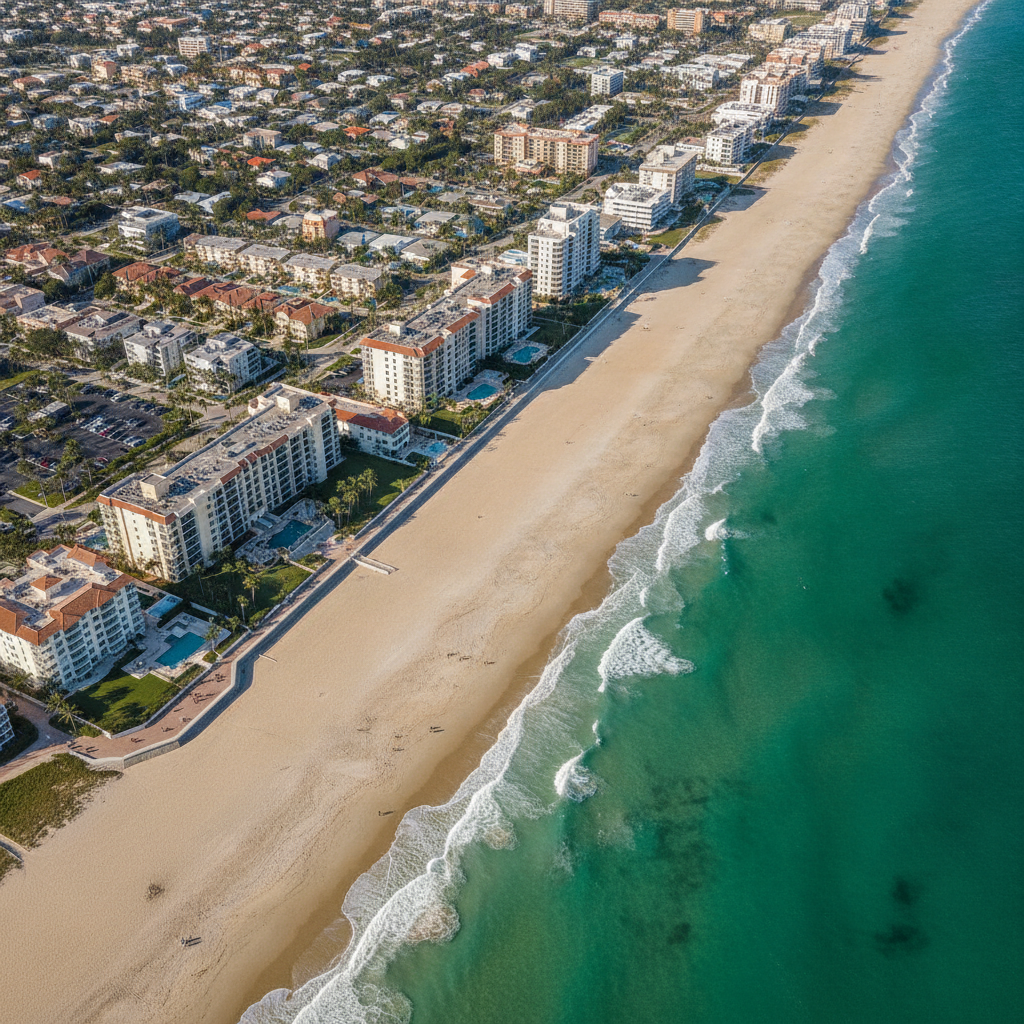
Navigating the regulatory landscape is the first and most critical step in any coastal development project. The primary authority in Florida is the Department of Environmental Protection (FDEP), which administers the Coastal Construction Control Line (CCCL) program. The CCCL defines the portion of the beach-dune system that is subject to the most severe fluctuations based on a 100-year storm event. Any construction seaward of this line requires a highly specialized and rigorous permitting process. Beyond the FDEP, local municipalities and water management districts have their own setback requirements, zoning ordinances, and environmental protection rules. A comprehensive civil engineering analysis must harmonize these overlapping jurisdictions. This includes identifying all applicable setbacks from the mean high-water line, dune crests, and coastal wetlands. Failure to properly identify and address these regulatory boundaries during the initial site plan design phase can lead to significant delays, costly redesigns, and potential project denial.
Site Investigation and Geotechnical Analysis for Coastal Properties
Comparison of Shoreline Stabilization Techniques
| Technique | Primary Application | Permitting Complexity | Key Design Consideration |
|---|---|---|---|
| Seawalls (Vertical Armoring) | High-energy coastlines where space is limited and maximum protection is required for upland structures. | Very High. Often requires demonstrating no other feasible alternative and proving no adverse downdrift impacts. | Foundation depth, material selection (corrosion resistance), and managing wave overtopping through proper cap design. |
| Revetments (Sloped Armoring) | Protecting slopes and bluffs from wave action; dissipates wave energy more effectively than vertical walls. | High. Generally viewed more favorably by agencies than seawalls but still requires extensive environmental review. | Armor stone size and gradation, filter fabric layer to prevent soil loss, and toe design to prevent undermining. |
| Living Shorelines | Low-to-moderate energy environments; uses natural materials like oyster reefs, mangroves, and salt marshes. | Moderate to High. Often encouraged by agencies but requires specific site conditions to be successful. | Site-specific hydrology, wave energy analysis, and selection of appropriate native plant and animal species. |
| Beach Nourishment | Restoring a wide, sandy beach to serve as a natural buffer against storms. Often a large-scale, publicly funded project. | Extremely High. Involves extensive environmental impact studies, sediment sourcing (sand compatibility), and inter-agency coordination. | Sediment grain size compatibility, project length and volume, and long-term monitoring and maintenance plan. |
| Geotextile Tubes | Submerged or exposed sand-filled tubes used to create breakwaters or dune cores. | High. Requires detailed analysis of hydrodynamic impacts and potential for scour around the structures. | Tube material durability, fill material specifications, and anchoring system design to ensure stability. |
A standard site investigation is insufficient for coastal properties. The unique soil conditions and hydrodynamic forces necessitate a specialized approach. A thorough analysis begins with engaging a qualified Geotechnical engineer to perform detailed site-specific investigations. This typically includes conducting a soil boring test to determine the composition and stability of the underlying soil strata, which is often composed of sand, silt, and organic materials with a high water table. The resulting geotechnical soil report is a cornerstone document that informs critical design decisions. It provides data on soil bearing capacity, potential for liquefaction, and recommendations for foundation design, such as deep piles or mat foundations. Furthermore, the investigation must include a historical analysis of shoreline changes and erosion rates. This data, often sourced from the Florida Department of Environmental Protection or local surveys, is essential for predicting future shoreline positions and establishing safe, sustainable construction setbacks. This level of due diligence is a hallmark of experienced Civil Engineering Firms.
Integrating Shoreline Stabilization into Site Design
For many coastal sites, some form of shoreline stabilization is necessary to protect the proposed development and ensure its longevity. The selection of an appropriate method is a complex decision that balances structural integrity, environmental impact, cost, and permitting feasibility. The design cannot be done in a vacuum; it must consider the potential for adverse impacts on adjacent properties, such as downdrift erosion, a major concern for regulatory agencies. Common approaches range from ‘hard’ armoring like seawalls and revetments to ‘soft’ solutions like beach nourishment and living shorelines. Hard structures provide a high level of protection but can sometimes exacerbate erosion elsewhere. Soft solutions are often preferred from an environmental standpoint but may require ongoing maintenance. The final selection is integrated directly into the civil site plan, detailing the structure’s location, materials, and tie-ins to existing landforms. This requires close collaboration between the Professional Engineer and coastal engineering specialists.
Stormwater Management Challenges in Coastal Environments
Coastal properties present formidable challenges for stormwater management. The combination of a high groundwater table, sandy soils with high permeability, and the proximity to sensitive saltwater bodies requires a sophisticated drainage design. Traditional detention ponds are often infeasible due to the lack of vertical separation from the water table. Instead, designs frequently rely on exfiltration trench systems, permeable pavement, and shallow vegetated swales to promote infiltration and water quality treatment. Another critical consideration is managing the final discharge point. Direct discharge into coastal waters is heavily regulated to prevent pollution and erosion. The drainage design must ensure that runoff is treated to state standards and discharged in a manner that mimics natural sheet flow, preventing concentrated flows that could create new erosion channels. This often involves complex hydraulic modeling to ensure the system functions correctly during extreme rainfall events, which are common in Florida, without negatively impacting the fragile coastal ecosystem.
Utility Coordination and Infrastructure Resilience
The corrosive, high-energy coastal environment poses a significant threat to essential infrastructure. Effective utility coordination is paramount and must focus on long-term resilience. Underground utilities, including water mains, sanitary sewers, and communication lines, are vulnerable to being exposed and damaged by erosion. The site plan design must specify appropriate burial depths and locations set back from actively eroding areas. In many cases, this means routing utilities along roadways or further inland rather than along the most direct path. Material selection is also critical. Ductile iron pipes may require specialized coatings or cathodic protection to prevent corrosion from saltwater exposure. In some cases, non-corrosive materials like PVC or HDPE are specified. For above-ground infrastructure like electrical transformers and HVAC units, the site plan must show them placed on elevated platforms compliant with FEMA flood elevation requirements. This proactive approach to utility coordination ensures service continuity and minimizes costly repairs after a storm event.
Setback Requirements and Zoning Compliance
Coastal zoning compliance is far more restrictive than for inland properties. As previously mentioned, the FDEP’s Coastal Construction Control Line (CCCL) is often the most significant controlling factor, but local zoning codes impose additional layers of restrictions. These typically include setbacks from the dune crest, the mean high-water line, and coastal conservation areas. These multiple, often overlapping, setback lines dramatically influence the buildable area of a property. A key task for the Civil Engineer near me is to perform a detailed setback analysis and depict all constraint lines on the site plan. This visual representation is crucial for the architectural design process, as it defines the building envelope. In some cases, the combined setbacks can make a proposed development unfeasible without seeking a variance. The variance process requires a compelling justification, detailed exhibits, and expert testimony, making upfront analysis and strategic site plan design essential for project success.
RSP Engineers’ Approach to Coastal Site Development
At RSP Engineers, we approach coastal projects with a methodology founded on foresight and technical rigor. Our process begins with comprehensive due diligence, including a deep dive into historical erosion data, a thorough review of CCCL and local zoning maps, and early coordination with regulatory agencies. We believe in a collaborative, integrated design team, working alongside coastal engineers, environmental scientists, and surveyors to create a holistic and resilient site plan. Our team excels at proactive agency coordination, initiating pre-application meetings with the FDEP and local municipalities to identify potential hurdles early in the process. This allows us to develop a clear and defensible permitting strategy. We specialize in designing innovative stormwater management systems tailored to the unique constraints of coastal sites and providing robust utility coordination to ensure long-term infrastructure resilience. Our goal is to deliver a project that not only meets our client’s vision but also stands resilient against the challenges of Florida’s dynamic coastline.
Common Issues and Pitfalls in Coastal Projects
Even well-planned coastal projects can encounter significant challenges. One of the most common pitfalls is underestimating the timeline and complexity of the FDEP permitting process, especially for work seaward of the CCCL. Another issue is failing to adequately plan for future sea-level rise, leading to a design that may be compliant today but vulnerable in the future. This can impact the project’s long-term value and insurability. Design and construction errors can also have severe consequences. Improperly designed shoreline protection can fail or, worse, cause accelerated erosion on neighboring properties, leading to litigation. Value engineering critical components, such as specifying less corrosion-resistant materials for utilities or reducing foundation pile depths, can save money upfront but result in catastrophic failures and far greater costs down the road. A thorough construction administration phase is vital to ensure the design is implemented correctly.
Partner with Florida’s Coastal Engineering Experts
Developing on Florida’s coast requires more than just a standard set of plans; it demands a deep understanding of coastal processes, a resilient design philosophy, and expert navigation of a complex regulatory environment. The team at RSP Engineers provides the specialized site engineering services needed to bring your coastal project to life. We are adept at managing the intricacies of FDEP permitting, designing innovative and effective stormwater management systems, and ensuring robust utility coordination for long-term success. Don’t let the challenges of coastal erosion jeopardize your investment. Contact RSP Engineers today to discuss how our expertise can ensure your project is built to last.
Building Resiliently on Florida’s Coastline
In conclusion, coastal erosion is an undeniable force that must be a central consideration in every Florida coastal development. A successful project hinges on a comprehensive civil site plan that is informed by detailed geotechnical and coastal analysis, adheres to a complex web of regulations, and incorporates resilient infrastructure. From shoreline stabilization to specialized stormwater management and robust foundation design, every element must work in concert to mitigate risk. Partnering with an experienced civil engineering firm that specializes in the coastal environment is not a luxury; it is a necessity. By embracing a proactive, technically sound approach to site development, we can create projects that are not only profitable and beautiful but also sustainable and resilient for generations to come.
FAQs
-
The Coastal Construction Control Line (CCCL) is a line determined by the FDEP that defines the area most vulnerable to the effects of a 100-year storm. Any construction seaward of the CCCL is subject to a stringent state-level permitting process designed to protect the beach-dune system and ensure structures can withstand coastal forces. Its location is a primary constraint on any coastal site plan design.
-
While a seawall may seem like a straightforward solution, it is one of the most difficult structures to get permitted. You must demonstrate to the FDEP that your property is vulnerable to erosion, that less impactful ‘soft’ solutions are not feasible, and that the wall will not cause adverse environmental or physical impacts to adjacent properties. The permitting process is extensive.
-
A high groundwater table, typical in coastal Florida, severely limits the use of traditional deep wet detention ponds for stormwater management. It reduces the available soil volume for infiltration and can cause systems to fail. Your drainage design must instead rely on shallow systems like exfiltration trenches, swales, and permeable pavements that function effectively with minimal separation from groundwater.