
Civil Engineering Strategies for Flood-Resilient Data Centers
Explore key civil engineering strategies for designing flood-resilient data centers, from site selection and stormwater management to utility hardening and permitting. Learn how to protect mission-cri
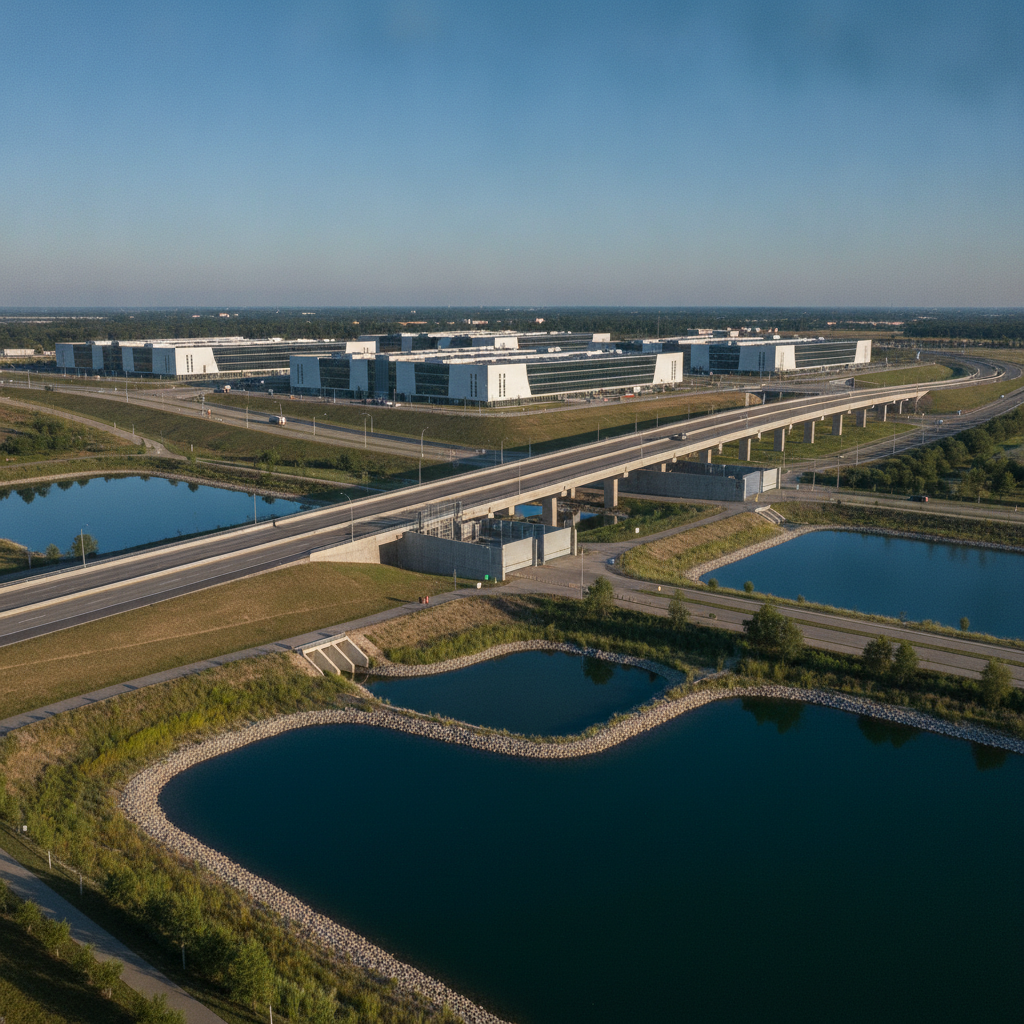
Foundational Site Selection and Flood Risk Analysis
The first and most critical decision is where to build. A thorough due diligence process, led by experienced Civil Engineers, is essential to identify and quantify flood risks. This analysis goes far beyond a simple check of FEMA Flood Insurance Rate Maps (FIRMs). While FIRMs are a crucial starting point for identifying Special Flood Hazard Areas (SFHAs), a comprehensive assessment also incorporates localized rainfall data, historical flood records, and forward-looking climate models that project future storm intensity and sea-level rise. Our engineers evaluate not only riverine and coastal floodplains but also localized flooding potential from intense rainfall overwhelming existing infrastructure. We analyze upstream and downstream conditions to understand how changes in the surrounding watershed could impact the site. Permitting requirements vary by jurisdiction, and every project team should confirm the applicable standards with the local, state, regional, and federal authorities that hold review authority over the site. This initial agency review establishes the baseline regulatory requirements and informs the entire design and permitting strategy, ensuring no surprises down the road.
Establishing Resilient Site Elevations and Grading
Comparison of Flood Resilience Strategies
| Strategy | Primary Goal | Key Civil Engineering Considerations | Impact on Operations |
|---|---|---|---|
| Elevated Building & Equipment Pads | Keep critical assets vertically separated from floodwaters. | Establish a conservative Design Flood Elevation (DFE) plus freeboard; requires significant earthwork and structural foundation design. | Prevents direct water damage to servers, electrical gear, and cooling systems, ensuring core function continuity. |
| Redundant & Hardened Utilities | Ensure continuous power, data, and water/sewer service. | Multiple, geographically separate feeds; watertight conduits; concrete encasement; elevated connection points. | Minimizes risk of service interruption, which is the most common cause of data center downtime during regional events. |
| High-Capacity Stormwater System | Manage extreme on-site rainfall without overwhelming the site. | Modeling for high-intensity, long-duration storms; oversized pipes and ponds; redundant outlets and emergency spillways. | Prevents localized site flooding that could disrupt logistics, damage ancillary equipment, and compromise access. |
| All-Weather Access Roads | Maintain site access for staff, fuel deliveries, and emergency services. | Elevate roadways above DFE; design culverts that won't wash out; ensure stable road base in saturated conditions. | Guarantees that personnel and critical supplies can reach the facility during and after a flood event. |
| Engineered Overland Flow Paths | Provide a failsafe for runoff if the primary drainage system is exceeded. | Strategic site grading to direct excess water to non-critical areas and away from buildings and utilities. | Acts as a safety valve, preventing catastrophic water buildup against structures if primary systems are blocked or overwhelmed. |
| Geotechnical Ground Improvements | Ensure foundation and site stability in saturated soil conditions. | Deep soil mixing, aggregate piers, or other techniques to improve soil strength and prevent settlement or slope failure. | Protects the structural integrity of the entire facility, preventing long-term damage that could result from flood-weakened soils. |
Once a site is selected, the next line of defense is vertical elevation. The core principle is to elevate all critical infrastructure above the calculated Design Flood Elevation (DFE). The DFE is often the 100-year or 500-year flood elevation plus an additional height margin known as “freeboard.” For mission-critical facilities like data centers, a conservative freeboard of several feet is standard practice. This ensures that finished floor elevations (FFEs) for buildings and mounting pads for essential equipment (generators, transformers, cooling units) are safely above even extreme floodwaters. Strategic site grading is equally important. The overall site plan design must direct surface water away from buildings and critical infrastructure. This involves creating subtle slopes, swales, and channels that collect and convey stormwater to designated management areas. Proper grading prevents ponding near foundations and ensures that even if a primary drainage system is overwhelmed, an overland flow path exists to safely route excess water away from the facility. This proactive approach to site development is fundamental to achieving building code compliance and long-term operational security.
Designing Robust Stormwater Management and Conveyance Systems
A data center campus generates a significant amount of impervious surface area (roofs, parking lots, roadways), which increases stormwater runoff. A resilient stormwater management system is designed not for a typical rainstorm, but for an extreme event. This requires sophisticated hydrologic and hydraulic modeling to design conveyance systems—pipes, culverts, and channels—that can handle immense volumes of water. The design often incorporates both detention (temporarily holding water) and retention (holding water until it infiltrates or evaporates) basins. Redundancy is a key concept in resilient drainage design. The system should have multiple outlets and emergency overflow spillways. If one component becomes blocked or fails, the system can still function. The goal of the civil engineering design is to manage the full spectrum of storm events, ensuring that permit submittals to regulatory agencies demonstrate a comprehensive and robust plan for protecting both the site and downstream properties from increased runoff.
Hardening Critical Utility and Access Infrastructure
A data center is useless without power, fiber, and water. These lifelines are often buried and can be highly vulnerable to flooding. A key resilience strategy is robust utility coordination and hardening. This includes specifying watertight conduits, encasing critical lines in concrete where they cross drainage features, and sealing all utility penetrations into the building well above the DFE. Whenever possible, redundant utility feeds should be brought to the site from different directions and via protected corridors. Access is another critical utility. Primary and emergency access roads must be designed to remain passable during a major flood event. This may require elevating roadways, designing flood-proof culverts, and ensuring that emergency services can always reach the site. As a leading civil engineering firm near me, we provide comprehensive site engineering services that include detailed plans for utility and access resilience, which are then overseen during construction administration to ensure proper implementation.
Integrating Geotechnical Engineering for Site Stability
Flood resilience extends below the ground surface. Prolonged soil saturation during a flood can dramatically decrease soil strength, leading to foundation settlement, retaining wall failure, or slope instability. Geotechnical Engineering is a critical component of the design process. A comprehensive Geotechnical soil report, based on extensive soil boring test data, provides the necessary information to design stable foundations and earthwork that can withstand flood conditions. The Geotechnical engineer will provide recommendations for soil compaction, potential ground improvements, and foundation systems appropriate for the site’s specific soil profile and anticipated moisture levels. This analysis ensures that the massive weight of the data center and its supporting infrastructure remains stable, even when the surrounding ground is saturated. A proper Soil Test and subsequent engineering analysis prevent catastrophic structural failures that could otherwise occur during a major flood.
Navigating the Permitting and Regulatory Landscape
Building a flood-resilient data center requires navigating a complex web of local, state, and federal regulations. The permitting process often involves multiple agencies with authority over floodplain management, stormwater discharge (NPDES), and environmental impacts (such as wetlands under the Clean Water Act). Demonstrating compliance requires meticulous documentation and sophisticated engineering analysis. Regulators will closely scrutinize the project’s impact on flood storage and conveyance, as well as the adequacy of its proposed resilience measures. A proactive strategy involves early engagement with these agencies to understand their concerns and build consensus around the design. Successful zoning compliance and permit acquisition depend on a design that is not only technically sound but also clearly and defensibly presented to all reviewing authorities. This is where the expertise of experienced Civil Engineering firms becomes invaluable in managing the agency review process.
Our Process: A Holistic Approach to Data Center Resilience
At RSP Engineers, we approach data center resilience as an integrated, lifecycle process. Our methodology ensures that flood protection is woven into the project from day one. Due Diligence and Risk Assessment: We begin with a deep-dive analysis of all potential flood risks, using advanced modeling and comprehensive data to inform site selection and establish design criteria. Integrated Site Design: Our team collaborates closely with architects, MEP engineers, and geotechnical experts to create a cohesive site plan design where grading, drainage, utilities, and structures work in concert. Proactive Permitting Strategy: We manage the entire permitting process, from initial agency consultations to final approvals, ensuring our robust engineering solutions meet and exceed regulatory standards. Value-Driven Engineering: We focus on solutions that provide the highest level of protection efficiently, helping clients make informed decisions about where to invest in resilience. Construction Administration: We remain engaged during construction, providing oversight to ensure that the design’s critical resilience features are built exactly as specified, from foundation depths to final utility coordination.
Common Issues in Flood-Resilient Design
Even with the best intentions, projects can fall short if they don’t account for common pitfalls. Key issues to avoid include: Over-reliance on historical data: Designing for past storms is insufficient; the design must account for future, more intense rainfall patterns. Ignoring localized drainage: Focusing only on mapped regional floodplains while neglecting the site’s immediate topographical challenges can lead to self-inflicted flooding. Value engineering critical features: Cutting costs by reducing freeboard, eliminating utility redundancy, or shrinking stormwater ponds can create vulnerabilities that negate the entire resilience strategy. Neglecting secondary access: A single point of access is a single point of failure. If the primary road floods, the facility becomes an isolated island. Failing to protect penetrations: A building can be elevated correctly, but if utility conduits entering below the flood level are not sealed, water will find a way in.
Your Partner in Mission-Critical Site Development
Designing and permitting a flood-resilient data center demands specialized expertise and a forward-thinking approach. The complexities of hydrology, regulatory compliance, and mission-critical infrastructure require a seasoned engineering partner. RSP Engineers provides the comprehensive site development, stormwater management, and permitting services needed to protect your investment. Our team is ready to help you navigate the challenges of your next project, from initial due diligence to final construction. Contact us today to discuss how we can build resilience into your facility from the ground up.
Conclusion
Flood resilience for data centers is not a single feature but a comprehensive system achieved through expert civil engineering. It begins with intelligent site selection and is built upon layers of protection, including conservative elevations, robust stormwater management, and hardened infrastructure. By investing in a proactive and integrated design strategy, developers can significantly reduce the risk of catastrophic downtime. Ultimately, a resilient site is the physical foundation that guarantees digital continuity, a goal that requires a deep partnership with a qualified Professional Engineer and design team.
FAQs
-
Freeboard is a safety factor expressed in feet, representing the vertical distance that a structure is elevated above the calculated base flood elevation. For a mission-critical facility, significant freeboard is essential to provide a buffer against uncertainties in flood modeling, wave action, and future increases in flood heights, ensuring the finished floor elevation remains dry.
-
Engineers increasingly use forward-looking climate data, such as updated precipitation frequency estimates from sources like NOAA Atlas 14, rather than relying solely on historical rainfall records. This involves adjusting design storm depths and intensities to model a future where extreme weather events are more common, leading to more conservative and resilient drainage design.
-
Not necessarily. Groundwater levels rise during a flood, which can infiltrate underground conduits and vaults if they are not properly waterproofed. A resilient design requires specifying watertight conduits, sealing all joints, and ensuring manholes and access points are elevated and sealed to prevent inundation. Effective utility coordination is key to implementing these details.