
Case Study: Civil Engineering for a 1.5 MW to 10 MW Data Center Expansion in Massachusetts
A case study on the civil engineering, permitting, and site development challenges of expanding a data center from 1.5 MW to 10 MW in Massachusetts. Learn how RSP Engineers addressed power, stormwater
Project Overview
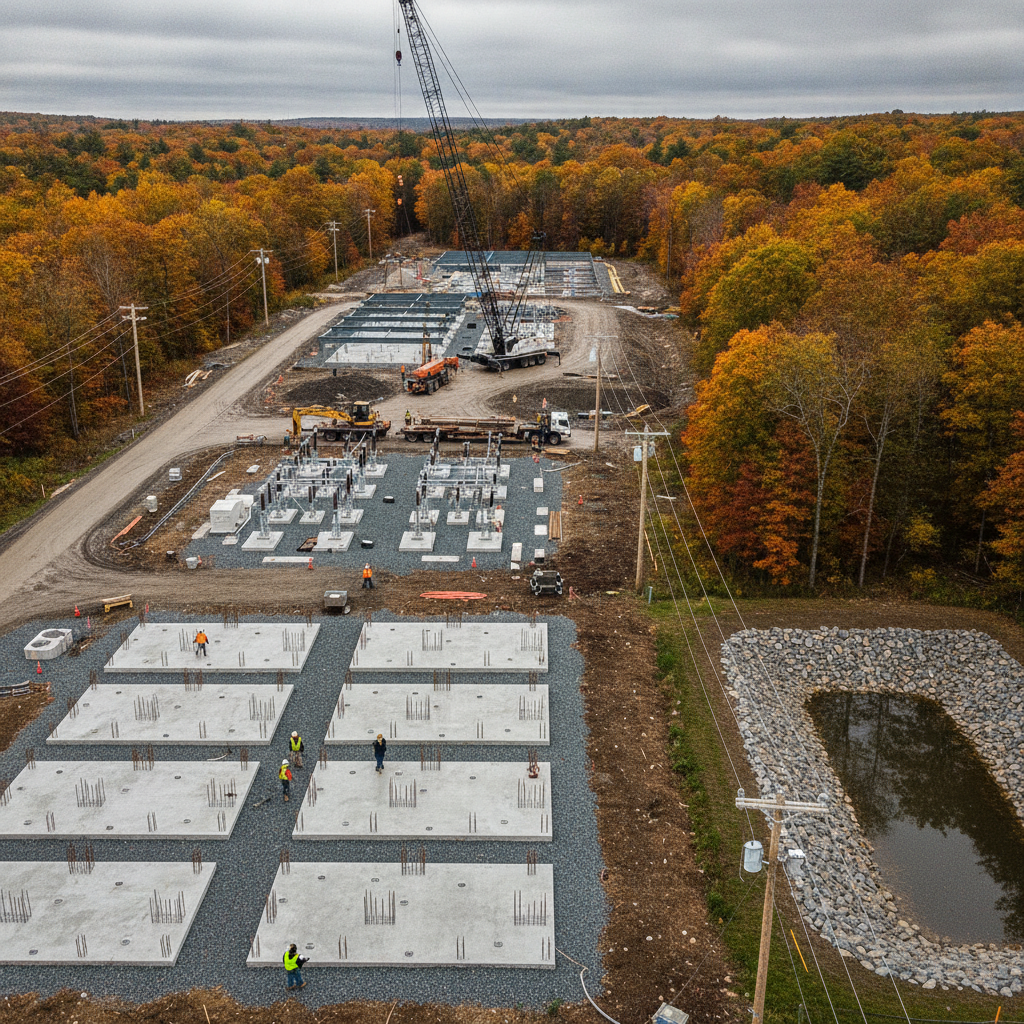
The project’s objective was to significantly increase the critical power capacity of an operational data center to meet growing market demand. The owner recognized that expanding from 1.5 MW to 10 MW was not merely an addition but a fundamental transformation of the site’s infrastructure. The existing civil engineering and utility systems were designed for the original, smaller load. A 6.7x increase in capacity would stress every component, from the electrical substation to the stormwater management ponds. RSP Engineers was tasked with conducting a full site development assessment to identify all potential constraints and design viable solutions. The goal was to create a clear, actionable roadmap for the expansion that would support the owner’s aggressive timeline while ensuring safety, compliance, and operational continuity. Our work involved a holistic review of all site systems to ensure they could support the new operational demands, from power delivery and backup generation to emergency vehicle access and environmental compliance.
Site and Regulatory Context
Project at a Glance
| Category | Details |
|---|---|
| Location | Massachusetts |
| Client / Owner Type | Data Center Operator |
| Project Type | Mission-Critical Facility Expansion |
| Scale | Expansion from 1.5 MW to 10 MW critical capacity |
| RSP Engineers Scope | Full Civil Engineering Assessment and Site Plan Preparation |
| Key Deliverables | Site Access Plans, Fire Protection Plan, Site Plans |
The project is located at an existing data center campus in Massachusetts, operating within a regulatory framework typical for industrial and high-tech facilities. The expansion required a careful review of local zoning ordinances, building codes, and environmental regulations governing land development. Key considerations included impervious surface limits, stormwater management standards, utility easement requirements, and fire department access codes. The site’s existing permits had to be re-evaluated in the context of the significantly larger operational footprint. Navigating the approval process for a mission-critical facility expansion requires a deep understanding of the applicable codes and standards. Permitting requirements vary by jurisdiction, and every project team should confirm the applicable standards with the local, state, regional, and federal authorities that hold review authority over the site. For this project, RSP Engineers focused on developing a site plan design that proactively addressed compliance issues related to zoning compliance, environmental impact, and public safety, streamlining the path to securing the necessary permit submittals.
Engineering Challenges
The primary engineering challenge was retrofitting a site to handle a massive increase in operational intensity. The original drainage design and utility infrastructure were simply not sized for a 10 MW load. This created a cascade of interconnected problems that required a coordinated civil engineering solution. For example, adding more power required a larger electrical substation and numerous backup generators, which in turn created a larger physical footprint, increased impervious area, and generated more stormwater runoff. Key challenges included confirming sufficient capacity from the local utility provider, siting a large new generator yard with associated fuel storage, and designing an upgraded stormwater management system to handle the additional runoff. Furthermore, the project logistics were complex, requiring detailed planning for construction traffic, laydown areas, and crane access for delivering heavy equipment like transformers and generators without disrupting the existing data center’s operations. Every design decision had to balance technical requirements with the need for building code compliance and operational resilience.
RSP Engineers’ Scope of Services
To address these challenges, RSP Engineers delivered a comprehensive package of site engineering services. Our scope was designed to provide the owner with a clear and complete picture of the site’s capabilities and the necessary upgrades. The key deliverables included: Full Civil Engineering Assessment: A holistic evaluation of all site systems, including stormwater, traffic, power availability, utility coordination, substation capacity, generator placement, fire protection, and overall land development compliance. Site Access Plans: Detailed plans illustrating safe and efficient circulation routes for construction vehicles, heavy equipment delivery, and ongoing operational traffic, ensuring compliance with local and state transportation standards. Fire Protection Plan: A comprehensive plan demonstrating adequate fire apparatus access around the expanded facility and new equipment yards, developed in coordination with fire code requirements to ensure emergency responder safety. Site Plans: A complete set of construction documents for the site development work, including grading, drainage, utilities, erosion control, and site layout, forming the basis for permitting and construction.
Technical Highlights
Our assessment and design work focused on several critical areas to de-risk the project and ensure a successful expansion. Power Availability and Substation Capacity A 10 MW critical load requires a tremendous amount of reliable power. Our first step was a deep dive into utility coordination with the electrical provider to confirm that the local grid and existing substation could support the new demand. This involved analyzing existing infrastructure, identifying necessary upgrades, and planning for new service connections and potential substation expansion on-site, a critical path item for the entire project schedule. Generator Yard and Fuel Storage Siting Backup power is non-negotiable. The expansion required a significant increase in the number of generators, which necessitated a large, dedicated generator yard. Our civil engineering team evaluated optimal locations based on factors like noise mitigation, fuel delivery access, electrical conduit routing, and separation from the main building for fire safety. We also designed the layout for bulk fuel storage tanks, including containment systems to meet environmental regulations. Stormwater and Impervious-Area Impacts Adding buildings, generator pads, and access roads increases the amount of impervious surface, which in turn increases the volume and rate of stormwater runoff. We performed detailed hydrologic and hydraulic modeling to design an expanded stormwater management system. This included upgrading existing basins and conveyance systems to meet regulatory requirements for water quality and quantity control, preventing downstream flooding and ensuring environmental zoning compliance. Site Access, Circulation and Equipment Delivery Routes The project’s success depended on the ability to safely deliver and install massive equipment, including generators, transformers, and switchgear. Our team developed detailed site access and circulation plans, analyzing turning radii for oversized trucks and identifying suitable laydown and staging areas for cranes. This logistical planning was crucial for minimizing disruption to the live data center and ensuring a safe construction environment. Fire Protection and Apparatus Access With more equipment and a larger building footprint, ensuring adequate fire protection and emergency access was paramount. We developed a comprehensive fire protection plan that included clearly marked fire apparatus access roads around the entire expanded facility. This site plan design was carefully coordinated with the project’s fire protection engineer and local fire code officials to guarantee that emergency vehicles could reach any part of the site unimpeded. Land Development Compliance Review Finally, we conducted a thorough land development compliance review, cross-referencing the proposed expansion plans against all applicable zoning ordinances, setback requirements, and land use regulations. This proactive review identified potential compliance issues early, allowing for design adjustments before formal permit submittals. This step is critical for avoiding costly delays during the agency review process.
What This Means for Similar Projects
This Massachusetts data center expansion serves as a powerful example for any developer or owner planning a significant capacity upgrade at an existing facility. The primary lesson is the critical importance of a comprehensive, upfront civil engineering assessment. Attempting to scale mission-critical infrastructure without a holistic site-level strategy invites delays, budget overruns, and significant regulatory hurdles. For owners of similar facilities nationwide, the key takeaway is to treat the site as an integrated system. Power, water, drainage, and access are not separate problems; they are interconnected components that must be analyzed and designed together. Engaging a qualified Civil Engineer near me early in the planning process allows your team to identify fatal flaws and hidden constraints before significant capital is invested. This proactive approach to site development is the most effective way to de-risk a project and ensure its ultimate success.
Partner with RSP Engineers
Executing a complex data center expansion requires an engineering partner with deep expertise in mission-critical facilities. RSP Engineers provides the comprehensive site engineering services needed to navigate the challenges of power density, regulatory compliance, and logistical complexity. Our team excels at utility coordination, stormwater management design, and securing permitting approvals for the most demanding projects. If you are planning a new data center or expanding an existing facility, contact RSP Engineers today. We can help you develop a clear, actionable site development strategy that aligns with your technical requirements, budget, and schedule, ensuring your project is built on a solid foundation.
Conclusion
In conclusion, the successful expansion of the Massachusetts data center from 1.5 MW to 10 MW demonstrates the pivotal role of integrated civil engineering. By systematically assessing and designing solutions for power, stormwater, site access, and regulatory compliance, RSP Engineers provided the owner with a clear path forward. This case study underscores that for mission-critical projects, proactive site development and thorough utility coordination are not just best practices—they are essential for achieving operational certainty and long-term success.
FAQs
-
You should engage a civil engineer as early as possible, ideally during the feasibility and conceptual design phase. Early involvement allows the engineer to perform due diligence, identify major site constraints like utility capacity or stormwater management limitations, and inform the overall project layout and budget before significant design decisions are made.
-
Utility capacity is often the most significant unforeseen challenge. A project can be completely derailed if the local electrical grid cannot support the new load or if water and sewer infrastructure is inadequate. Thorough utility coordination and capacity analysis at the very beginning of a project are critical to avoid costly surprises.
-
Expanding an existing, operational site presents unique challenges. The primary goal is to complete construction without disrupting ongoing operations. This requires careful phasing, logistical planning for construction traffic, and managing tie-ins to live utility systems. There are also more constraints from existing infrastructure, easements, and established drainage design patterns.