
A Day in the Life of a Florida Civil Project Engineer
Explore a typical day for a civil project engineer at a Florida engineering firm. Learn about site visits, design, permitting, and client coordination at RSP Engineers.
Morning Kick-off: Pre-Construction Site Visit and Field Observations
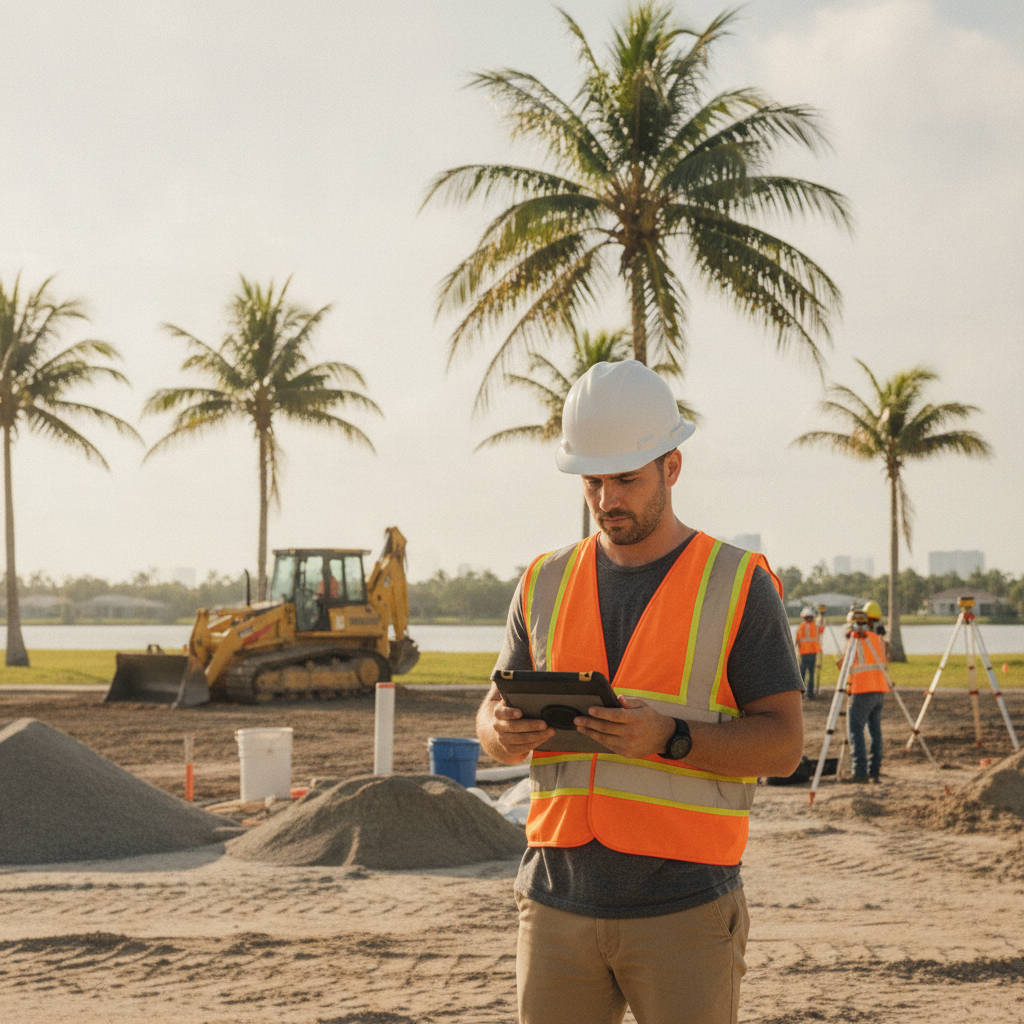
The day often begins not at a desk, but on-site with steel-toed boots on the ground. An early morning visit to an active construction project is crucial for monitoring progress and addressing issues before they escalate. Today’s visit is to a multifamily development in its early stages. The primary task is to verify that the initial earthwork and installation of erosion control measures, like silt fences and turbidity barriers, align with the approved site plan design. This isn’t just a casual walkthrough; it’s a critical step in construction administration. Using a tablet loaded with the latest plan set, the project engineer documents observations, takes progress photos, and compares the contractor’s work against the design specifications. Are the storm drain inlets protected? Is the temporary construction entrance holding up? Are the initial grade elevations correct? These details are vital for ensuring proper drainage design functionality and preventing environmental compliance issues. This field presence allows for immediate coordination with the site superintendent, clarifying plan details and making real-time decisions that keep the project on schedule and aligned with the permitting requirements.
Mid-Morning: Design and Calculation in AutoCAD Civil 3D
Mapping the Project Engineer's Day: Key Tasks and Deliverables
| Time of Day | Primary Activity | Key Focus Areas & Technical Terms |
|---|---|---|
| Early Morning (7-9 AM) | Construction Site Visit | Field observations, construction administration, erosion control verification, contractor coordination. |
| Mid-Morning (9-11 AM) | CAD Design & Calculations | AutoCAD Civil 3D, drainage design, grading plans, utility modeling, stormwater calculations. |
| Late Morning (11 AM - 1 PM) | Permitting & Agency Response | Responding to reviewer comments, zoning compliance checks, updating permit applications, coordinating with agencies. |
| Early Afternoon (1-3 PM) | Sub-Consultant & Client Coordination | Reviewing survey data, interpreting Geotechnical soil report, client updates, project scheduling. |
| Late Afternoon (3-5 PM) | Internal QA/QC Review | Plan set review, ensuring ADA compliance, checking calculations, verifying adherence to Florida Building Code. |
Back in the office, the focus shifts from the field to the digital drawing board. The morning’s site observations might trigger minor revisions to the plans. The core of this time block is dedicated to detailed design work using software like AutoCAD Civil 3D. For a different project—a new commercial retail center—this involves finalizing the stormwater management system. This includes modeling pipe networks, calculating detention pond volumes, and ensuring the overall drainage design meets the stringent criteria of the local Water Management District and municipal codes. This is where deep technical knowledge is applied. The engineer models water flow, designs pipe sizes and slopes, and ensures the proposed infrastructure can handle a 25-year or 100-year storm event as required. This phase also involves intensive utility coordination, mapping out existing water, sewer, and power lines and designing new connections without conflicts. Every line drawn and calculation made has real-world implications for cost, constructability, and long-term performance, making precision and adherence to the Florida Building Code paramount.
Agency Coordination: Responding to Permitting Review Comments
No land development project in Florida moves forward without approvals from multiple government agencies. A significant part of a project engineer’s day is dedicated to navigating the permitting process. This afternoon, a set of review comments has arrived from the county on a permit submittal for a single-family subdivision. The comments range from requests for additional cross-sections on the roadway plans to questions about the fire flow calculations for the proposed water main. The engineer meticulously reviews each comment, cross-references it with the submitted plans and reports, and formulates a clear, technical response. This often involves collaborating with other team members, such as the traffic engineer or landscape architect. The goal is to provide the agency reviewer with the exact information they need to grant approval, which may require revising drawings, updating calculations, or writing a detailed response letter. Effective communication and a thorough understanding of zoning compliance and local ordinances are essential to prevent delays in the agency review cycle.
Lunchtime Collaboration: Coordinating with Sub-Consultants
Projects are a team sport, and the project engineer is the quarterback. A working lunch is scheduled with the project’s surveyor and Geotechnical engineer. The surveyor provides an updated topographic survey that reflects recent changes on an adjacent property, which could impact the site’s grading and drainage design. The discussion ensures the latest data is incorporated into the civil plans. Simultaneously, the Geotechnical engineer discusses the findings of a recent Soil boring test. The Geotechnical soil report indicates a high water table in one area of the site, which will affect the design of the building foundations and the exfiltration trench for the stormwater management system. This collaborative session is vital for integrating specialized expertise into the overall site development plan, ensuring a holistic and technically sound design that anticipates and mitigates potential construction issues.
Afternoon Focus: Client Communication and Project Management
Technical skills are only half the equation. The other half is effective communication and project management. A scheduled call with the client for the multifamily project provides an update on the morning’s site visit and the status of the permit submittals. The client has questions about the project timeline and the potential for value engineering to reduce infrastructure costs. The project engineer explains the technical constraints and opportunities in clear, understandable terms. Following the call, the engineer updates the project schedule and budget tracking documents. This administrative work is critical for keeping the project on track and ensuring transparency with the client. Managing expectations, documenting decisions, and providing regular, clear updates are key responsibilities that build trust and contribute to a successful project outcome. This is a core function of the Professional Engineer leading the project.
Late Afternoon: Quality Assurance and Plan Set Review
Before any plan set is issued for permitting or construction, it must undergo a rigorous internal quality assurance/quality control (QA/QC) review. The project engineer prepares a draft set of construction documents for a senior engineer to review. This peer review process is a cornerstone of professional practice, designed to catch errors, identify potential constructability issues, and ensure the design meets the highest standards of care. The senior engineer provides feedback on everything from pipe material callouts to ensuring all details for ADA compliance, such as sidewalk ramp slopes and accessible parking spaces, are correctly shown. This collaborative review ensures the final documents are complete, coordinated, and compliant with all applicable regulations, including the Florida Building Code. This step minimizes the risk of costly changes during construction and reduces the number of comments received during agency review.
How RSP Engineers Empowers Our Project Engineers
At RSP Engineers, we understand that the success of our projects hinges on the capabilities of our project engineers. We foster an environment of mentorship and continuous learning, pairing junior engineers with senior staff to provide guidance through complex design and permitting challenges. Our firm invests in cutting-edge technology, from advanced design software to field equipment, enabling our team to work efficiently and accurately. Our process emphasizes a proactive and collaborative approach. Project engineers are empowered to lead coordination meetings, communicate directly with clients and agencies, and take ownership of their projects. This structure ensures that every aspect of a project, from the initial feasibility study to the final construction administration phase, is managed by a dedicated professional who understands the project’s goals and technical details inside and out. This is the standard we uphold as one of the leading Civil Engineering Firms in Florida.
Navigating Common Challenges in Florida Land Development
The life of a project engineer is also about problem-solving. Common challenges in Florida include discovering muck or unsuitable soils not identified in the initial Geotechnical Engineering report, which can require costly remediation. Another frequent issue is uncovering unrecorded utilities during excavation, demanding immediate redesign and utility coordination to avoid project delays. We also often encounter shifting regulatory goalposts, where a municipality updates its land development code mid-project, forcing adjustments to the stormwater management or landscaping plans. A project engineer must be adaptable and resourceful. The ability to quickly assess a new problem, develop a technically sound solution, and communicate the implications to the client and contractor is a critical skill. Successfully navigating these hurdles is what separates experienced Civil Engineers from the rest and is a hallmark of our team’s approach to every project.
Partner with RSP’s Expert Project Engineering Team
A successful land development project requires more than just a set of plans; it requires a dedicated engineering partner who can manage the intricate details from start to finish. The project engineers at RSP Engineers are equipped with the technical expertise and practical field experience to guide your project through every phase. Whether you need assistance with initial due diligence, navigating complex permitting, or require comprehensive site engineering services and construction administration, our team is ready to help you achieve your goals. Contact us today to discuss your next project in Florida.
The Project Engineer: The Engine of Successful Site Development
As this day-in-the-life illustrates, the role of a civil project engineer is multifaceted and essential. They are designers, communicators, problem-solvers, and coordinators who ensure a client’s vision is realized in a way that is safe, compliant, and efficient. The successful execution of a site development project relies on their ability to manage technical details while never losing sight of the big picture. At RSP Engineers, we are proud of the central role our project engineers play in building the communities where we live and work, turning complex challenges into successful, tangible outcomes through expert civil engineering and diligent permitting navigation.
FAQs
-
While there is overlap, a Project Engineer is typically more involved in the day-to-day technical design, calculations, and plan production. A Project Manager may focus more on high-level client relations, contract management, and overall project financials. At many firms, including ours, a Project Engineer often grows into a Project Manager role, blending deep technical expertise with broader management responsibilities like construction administration.
-
The ratio varies significantly by project phase. During the initial design and permitting stages, an engineer might be in the office 90% of the time. However, once construction begins, that can shift to 25-50% of their time being spent on-site performing inspections, answering contractor questions, and ensuring the work conforms to the approved site plan design.
-
Proficiency in AutoCAD Civil 3D is non-negotiable for design and drafting. For stormwater management and hydrology, software like ICPR (Interconnected Pond Routing Model) or other hydraulic modeling programs are essential for navigating Florida’s complex drainage requirements. Project management software and standard office suites are also used daily for communication and documentation.