
Case Study: Navigating Urban Drainage Design for a Florida Boutique Hotel
A detailed civil engineering case study on solving complex stormwater and drainage challenges for a boutique hotel on a tight urban site in Florida. Learn about our approach.
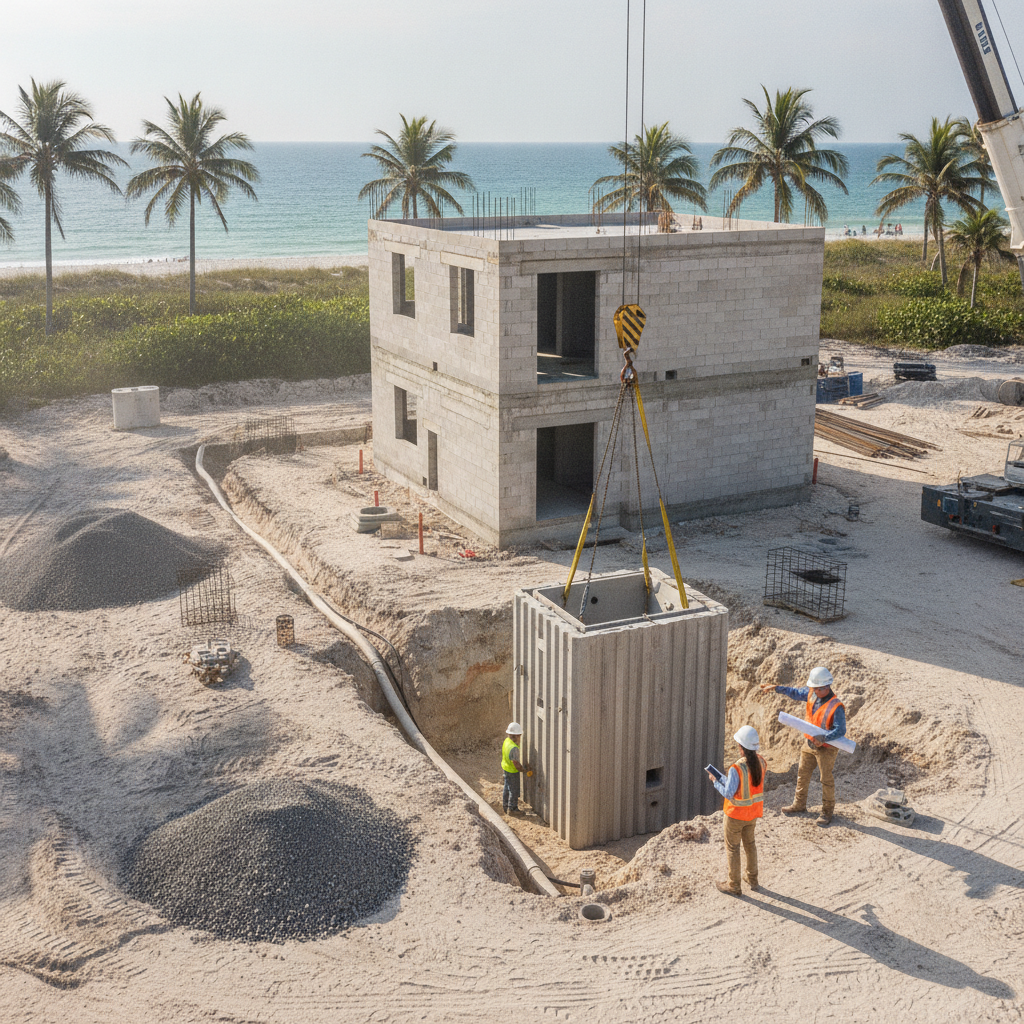
Initial Site Assessment: Uncovering Critical Constraints
The project began with a thorough due diligence and site assessment phase. The proposed site was a small, underutilized parcel in a dense urban core, surrounded by existing commercial and residential structures. Our initial investigation immediately identified several critical constraints that would dictate the entire site development strategy. The most significant was the lack of physical space for conventional stormwater management systems like surface retention or detention ponds. Furthermore, a preliminary Geotechnical Engineering investigation revealed a high seasonal water table and soil conditions that required careful consideration for any subsurface structures. These findings were compounded by regulatory hurdles. The site was subject to stringent local and state regulations governing stormwater quantity control and water quality treatment. Any new development would be required to treat runoff to specific standards before discharge into the municipal system. This initial phase was crucial for establishing a realistic design path and managing client expectations, highlighting the need for a non-traditional drainage design from the outset. Our role as the Civil Engineer near me for this project was to find a viable path forward.
Stormwater Management Strategy for a Zero-Lot-Line Development
Site Constraints vs. Engineered Drainage Solutions
| Constraint | Engineering Challenge | RSP Engineers' Solution |
|---|---|---|
| Zero-Lot-Line / Limited Surface Area | No space for traditional retention/detention ponds. | Designed a high-capacity underground stormwater storage vault beneath the parking lot to maximize usable land. |
| High Seasonal Water Table | Risk of groundwater infiltration and reduced exfiltration capacity. | Lined the lower portion of the vault to prevent infiltration and elevated the exfiltration trench to maintain separation from the water table. |
| Stringent Water Quality Regulations (FDEP/WMD) | Runoff must be treated for nutrients, oils, and sediments before discharge. | Implemented a treatment train approach with upstream baffle boxes and an integrated exfiltration system for natural filtration. |
| Proximity to Existing Structures | Excavation for the underground system could destabilize adjacent foundations. | Specified shoring and bracing requirements in the construction plans and coordinated with a Geotechnical engineer for monitoring. |
| Connection to Aging Municipal Storm Sewer | Limited capacity in the existing downstream system; risk of causing flooding. | Designed a custom outlet control structure to throttle discharge rates to pre-development levels, verified with hydraulic modeling. |
| Complex Underground Utilities | High potential for conflicts with existing water, sewer, gas, and communication lines. | Conducted extensive SUE investigation and proactive utility coordination to design around existing infrastructure, preventing costly relocations. |
With surface ponds off the table, the strategy shifted entirely to subsurface solutions. The core objective was to meet the pre-development versus post-development runoff requirements mandated by the local Water Management District (WMD). This meant the drainage design had to capture, treat, and control the release of stormwater generated by the new impervious surfaces—roof, parking, and hardscape—all within the property lines. Our team focused on a multi-faceted approach to maximize the use of the limited space. The primary component of our strategy was an underground stormwater storage system. This involves using large, engineered structures (vaults or chamber systems) buried beneath parking areas or landscaped zones to hold stormwater runoff. This approach preserves valuable surface area for the hotel’s programmatic needs, such as parking, guest amenities, and fire access. The design also incorporated permeable pavers in pedestrian areas and strategically placed trench drains to efficiently capture sheet flow, ensuring the stormwater management system was both effective and integrated seamlessly into the site’s aesthetic.
Designing for Water Quality: Meeting FDEP and WMD Requirements
In Florida, controlling the volume of stormwater is only half the battle; treating it is equally important. Runoff from urban sites often carries pollutants like oils, heavy metals, and nutrients. Our design had to incorporate a treatment train to meet strict Florida Department of Environmental Protection (FDEP) and WMD water quality standards. The first stage of treatment involved baffle boxes and other proprietary pre-treatment devices installed upstream of the main storage system. These devices are designed to capture gross pollutants, sediment, and hydrocarbons before they enter the primary system. The second stage of treatment was integrated into the underground exfiltration system itself. By designing the system to allow a portion of the collected water to percolate into the surrounding soil (where hydrogeological conditions permit), we utilized the natural filtration properties of the soil. This approach not only helps recharge the local aquifer but also provides a significant level of nutrient removal. This dual-purpose design was a key element in securing permitting approval, demonstrating a sophisticated understanding of Florida’s environmental regulations and zoning compliance.
Utility Coordination and Connection to Municipal Systems
A major risk on any urban infill project is navigating the web of existing underground utilities. Our team initiated comprehensive utility coordination early in the design process. This involved extensive records research, engaging a Subsurface Utility Engineering (SUE) firm to locate and map existing lines, and holding regular meetings with municipal utility providers. The goal was to design the new water, sewer, and drainage connections without creating conflicts with existing gas, electric, and communication lines. This proactive approach prevents costly delays and change orders during construction. The point of connection to the municipal storm sewer system presented its own challenge. The existing system was decades old and had limited capacity. Our drainage design had to prove, through detailed hydraulic modeling, that our post-development discharge rate would not negatively impact the downstream system. The design of the control structure at the outfall was critical, using weirs and orifices to throttle the release of water from our underground vault to a rate at or below the pre-development condition. This demonstrated responsible site engineering services and was a key point of negotiation with the city’s engineering department.
The Engineering Solution: Underground Exfiltration and Storage Systems
The final engineered solution was a custom-designed underground stormwater vault combined with an exfiltration trench. The vault, constructed from precast concrete sections, was sized to store the required volume of runoff for the design storm event (e.g., the 25-year, 24-hour storm). It was located directly beneath the main guest parking area to maximize land use. The system was designed to be fully enclosed, preventing mosquito breeding and eliminating the safety hazards associated with open ponds. Connected to this vault was an exfiltration system—a series of perforated pipes embedded in a clean aggregate trench. This component was designed to handle the ‘first flush’ of runoff, which carries the highest pollutant load, and allow it to percolate into the ground for water quality treatment. The combination of storage and exfiltration provided the necessary water quantity control and quality treatment in a compact footprint. This integrated system represented a significant feat of civil engineering, tailored specifically to the site’s unique geological and spatial constraints.
Permitting Pathway: Navigating Agency Review for a Complex Site
Securing permits for a complex urban project requires a clear and defensible engineering design. Our permit submittals to the city, county, and WMD were comprehensive, including detailed drainage calculations, hydraulic models, a stormwater pollution prevention plan (SWPPP), and utility connection plans. Because we had anticipated the agencies’ primary concerns—downstream impacts, water quality, and maintenance—our initial submittal was robust and addressed these issues proactively. We provided a detailed operations and maintenance plan for the underground system, a crucial component for gaining agency trust and approval. The agency review process involved several rounds of comments, which is standard for a project of this complexity. Our team’s responsive communication and willingness to provide supplementary calculations and design revisions were key to keeping the project on track. Ultimately, the thoroughness of the initial site plan design and the proactive coordination with reviewers resulted in the successful issuance of all necessary land development and environmental permits, allowing the project to move into the construction phase.
Our Process for Complex Urban Drainage
At RSP Engineers, our approach to challenging sites like this boutique hotel is systematic and proactive. It begins with intensive due diligence to identify every constraint and opportunity. We then move to conceptual design, where we model multiple scenarios to find the most efficient and cost-effective solution. This is followed by detailed engineering, where every component is precisely designed and specified. Throughout this process, we maintain open communication with the client and constant coordination with regulatory agencies. This ensures our permit submittals are not just technically sound but also aligned with reviewer expectations, streamlining the path to approval and construction.
Common Issues in Urban Stormwater Projects
Even with meticulous planning, urban infill projects can encounter unforeseen issues. The most common is discovering unmapped utilities during excavation, which requires immediate redesign and coordination. Another frequent challenge is dealing with contaminated soils from previous site uses, which can trigger additional environmental regulations and disposal costs. During construction, managing dewatering on sites with a high water table is a significant concern, requiring a carefully engineered plan to avoid impacting adjacent properties. Finally, construction sequencing in a tight space is a logistical puzzle that requires close collaboration between the civil engineer, the contractor, and the owner to ensure the stormwater management system is installed correctly without compromising other site work.
Your Partner for Complex Florida Site Development
Navigating the complexities of urban infill and redevelopment in Florida requires specialized expertise. The success of this boutique hotel project hinged on an innovative approach to stormwater management and a deep understanding of the state’s regulatory landscape. If your project faces challenges with tight site constraints, complex utility coordination, or difficult permitting requirements, RSP Engineers has the experience to deliver effective solutions. Our team of Florida Licensed Engineers is ready to guide your project from initial concept to final certification.
Conclusion
This case study demonstrates that even the most constrained urban sites can be successfully developed with the right engineering strategy. By leveraging an underground storage and exfiltration system, our team met all regulatory requirements for stormwater management while preserving the maximum land value for the client. This project is a testament to the power of creative drainage design and proactive civil engineering in overcoming the unique challenges of Florida’s development environment and achieving project success.
FAQs
-
The location and depth of an underground vault must be carefully coordinated with the structural engineer. The system is typically placed to avoid conflicts with building foundations and their zones of influence. A geotechnical investigation is essential to ensure the soil can support both the foundation and the stormwater structure without adverse settlement.
-
Maintenance is critical for ensuring long-term performance. It typically involves annual inspections and periodic cleaning of pre-treatment devices and sediment removal from the vault floor. We provide clients with a detailed Operations & Maintenance Manual as part of the permitting process to ensure compliance and system longevity.
-
Yes, but it requires a sophisticated drainage design. The key is to demonstrate through hydraulic modeling that your project’s post-development discharge rate is less than or equal to the pre-development rate. This is achieved with on-site storage and a precisely engineered outlet control structure that restricts flow during major storm events.