
Typical Permit Review Timeline in Miami-Dade
Explore the comprehensive permit review process in Miami-Dade County for commercial and residential projects, including timelines, department reviews, and strategies to expedite approvals.
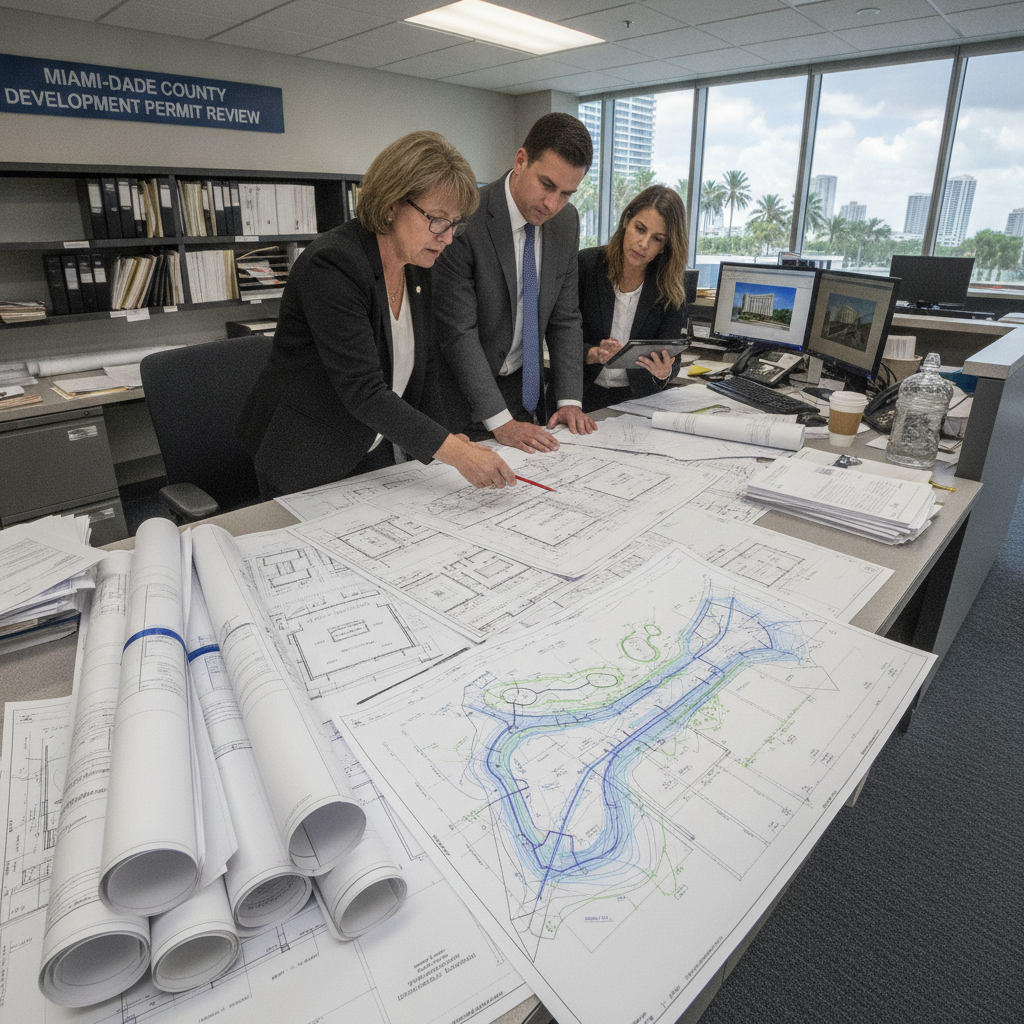
Pre-Application Planning
The pre-application planning phase is essential for identifying potential challenges and aligning project goals with county regulations. Engaging with civil engineering firms early can help streamline the process by addressing zoning compliance, stormwater management, and utility coordination requirements upfront. During this stage, developers should gather all necessary documentation, including site plans, environmental assessments, and preliminary design concepts. This proactive approach can significantly reduce the likelihood of delays during the formal review process.
Initial Permit Submission
Typical Review Durations by Major Permit Type and Review Stage
| Permit Type | Initial Review Duration | Resubmittal Review Duration |
|---|---|---|
| Commercial Development | 4-6 weeks | 2-3 weeks |
| Residential Development | 3-5 weeks | 1-2 weeks |
| Environmental Permits | 6-8 weeks | 3-4 weeks |
| Utility Coordination | 2-4 weeks | 1-2 weeks |
| Stormwater Management | 4-6 weeks | 2-3 weeks |
The initial permit submission marks the official start of the review process. Applicants must ensure that all required documents are complete and accurate to avoid unnecessary setbacks. Key documents typically include site plan design, drainage calculations, and environmental impact statements. Submitting a comprehensive package that addresses all relevant zoning compliance and stormwater management criteria is crucial for a smooth review. Incomplete submissions often lead to additional review cycles, prolonging the timeline.
Department Reviews
Once submitted, the application undergoes a series of departmental reviews. In Miami-Dade, this includes evaluations by the Department of Environmental Resources Management (DERM), Public Works, and other relevant agencies. Each department assesses specific aspects such as drainage design, utility impacts, and environmental compliance. Understanding the focus of each department can help applicants prepare targeted responses to potential review comments, facilitating a more efficient approval process.
Review Cycles and Comments
During the review cycles, departments may issue comments or requests for additional information. These comments often pertain to technical details such as stormwater drainage calculations, utility coordination, and compliance with the Florida Building Code. Timely and thorough responses to these comments are critical. Engaging with a licensed engineer near me can provide the technical expertise needed to address complex issues and avoid further delays.
Resubmittals and Permit Approval
After addressing review comments, applicants may need to resubmit revised documents. The efficiency of this stage depends on the quality of the initial submission and the responsiveness to departmental feedback. Once all departments have approved the application, the permit is issued. This final step signifies that the project complies with all relevant regulations and is ready for construction.
Strategies to Accelerate Approvals
To expedite the permit approval process, consider the following strategies: Engage with civil engineering firms early to ensure compliance with all technical requirements. Submit complete and accurate documentation to minimize review cycles. Maintain open communication with review departments to address comments promptly. Utilize professional engineer services for complex technical issues.
Common Causes of Delays
Several factors can contribute to delays in the permit review process, including: Incomplete or inaccurate submissions. Failure to address review comments adequately. Complex environmental or stormwater management issues. Coordination challenges with utility providers.
Contact RSP Engineers
For expert guidance on navigating the Miami-Dade permit review process, contact RSP Engineers. Our team of Florida Licensed Engineers specializes in stormwater management, utility coordination, and comprehensive site development services. Let us help you achieve timely permit approvals for your project.
Conclusion
Successfully navigating the permit review process in Miami-Dade County requires a thorough understanding of departmental requirements and strategic planning. By engaging with experienced civil engineers and submitting complete documentation, developers can minimize delays and achieve timely approvals. Understanding the roles of key agencies like DERM and maintaining open communication throughout the process are essential for success.
FAQs
-
The Miami-Dade Department of Environmental Resources Management (DERM) evaluates environmental compliance, including stormwater management and drainage design, to ensure projects meet county standards.
-
Engaging with a licensed engineer near me and submitting complete documentation can help expedite the process by reducing the need for multiple review cycles.
-
Common reasons include incomplete submissions, non-compliance with zoning regulations, and inadequate responses to review comments.