
Structural Anchorage of Data Center Equipment
A technical guide to structural anchorage for data center equipment. Learn about seismic and wind forces, anchor selection, special inspection, and code compliance for mission-critical facilities.
Understanding Design Forces on Nonstructural Components
The design of equipment anchorage begins with a thorough analysis of the forces it must resist. Model building codes, with ASCE 7 (Minimum Design Loads and Associated Criteria for Buildings and Other Structures) being the national standard, provide detailed methodologies for calculating these forces. The two primary environmental loads to consider are seismic forces and wind forces. For equipment located inside a building, seismic loads typically govern, while rooftop equipment must be designed for both seismic and significant wind uplift and shear. Seismic design forces for nonstructural components are not simply a fraction of the building’s overall seismic load. They are determined by a specific formula that accounts for the component’s weight, its location within the building (forces are amplified at higher elevations), site-specific ground motion parameters, and a component importance factor (Ip). For data centers, where equipment is essential for the facility’s function, this importance factor is typically elevated, resulting in a more robust and conservative anchorage design. A qualified Professional Engineer must perform these calculations to ensure building code compliance.
Rigid vs. Isolated Mounting Systems: A Strategic Tradeoff
Anchorage System Comparison for Critical Equipment
| Anchorage Method | Ideal Application | Key Design Considerations | Inspection Requirement |
|---|---|---|---|
| Cast-in-Place Anchor Bolts | Heavy, static equipment (generators, chillers, large transformers) with a fixed location. | Requires precise layout coordination before concrete pour. High capacity but zero post-pour flexibility. | Standard inspection of placement before concrete encapsulation. |
| Expansion Anchors (Post-Installed Mechanical) | Medium-duty equipment, structural and nonstructural attachments where speed is a factor. | Must be seismically qualified. Performance is sensitive to hole size, cleaning, and torque. Not ideal for vibratory loads. | Special Inspection is typically required for seismic and life-safety applications. |
| Adhesive Anchors (Post-Installed Chemical) | High-load applications, close edge/spacing conditions, securing rebar. Excellent for resisting vibration. | Must be seismically qualified. Performance is highly dependent on proper hole cleaning, temperature, and cure time. | Special Inspection is almost always required for seismic and overhead applications. |
| Base Isolation System | Extremely sensitive server racks or entire floor systems where operational continuity is the absolute priority. | High cost. Requires significant displacement clearance and fully flexible utility connections. Complex analysis needed. | Requires specialized inspection of isolator installation and functional testing. |
| Vibration Isolators (Non-Seismic) | Equipment that generates operational vibration (pumps, fans) in non-seismic applications. | Designed for vibration, not lateral seismic or wind loads. Must NOT be used for seismic restraint unless specifically designed and rated for it. | Standard installation verification. Not a substitute for a seismic system. |
Once design forces are established, the engineering team must select an appropriate mounting strategy. The two primary approaches are rigid anchorage and base isolation. A rigid anchorage system directly fastens the equipment to the structural slab or foundation, transferring seismic and wind forces directly into the building structure. This is the most common and cost-effective method for many types of equipment, relying on anchor bolts, welds, or clips to create a stiff, unyielding connection. Conversely, a base isolation system decouples the equipment from the building’s movement during a seismic event. These systems use specialized bearings or springs that absorb and dissipate seismic energy, allowing the structure to move while the equipment remains relatively stationary. While more expensive and complex to design and install, base isolation can dramatically reduce the accelerations experienced by sensitive electronics. The choice between rigid and isolated systems is a critical decision involving cost, equipment sensitivity, and the project’s overall performance goals. It also has major implications for utility coordination, as connections to isolated equipment require flexible couplings.
Anchor Selection and Embedment in Concrete Structures
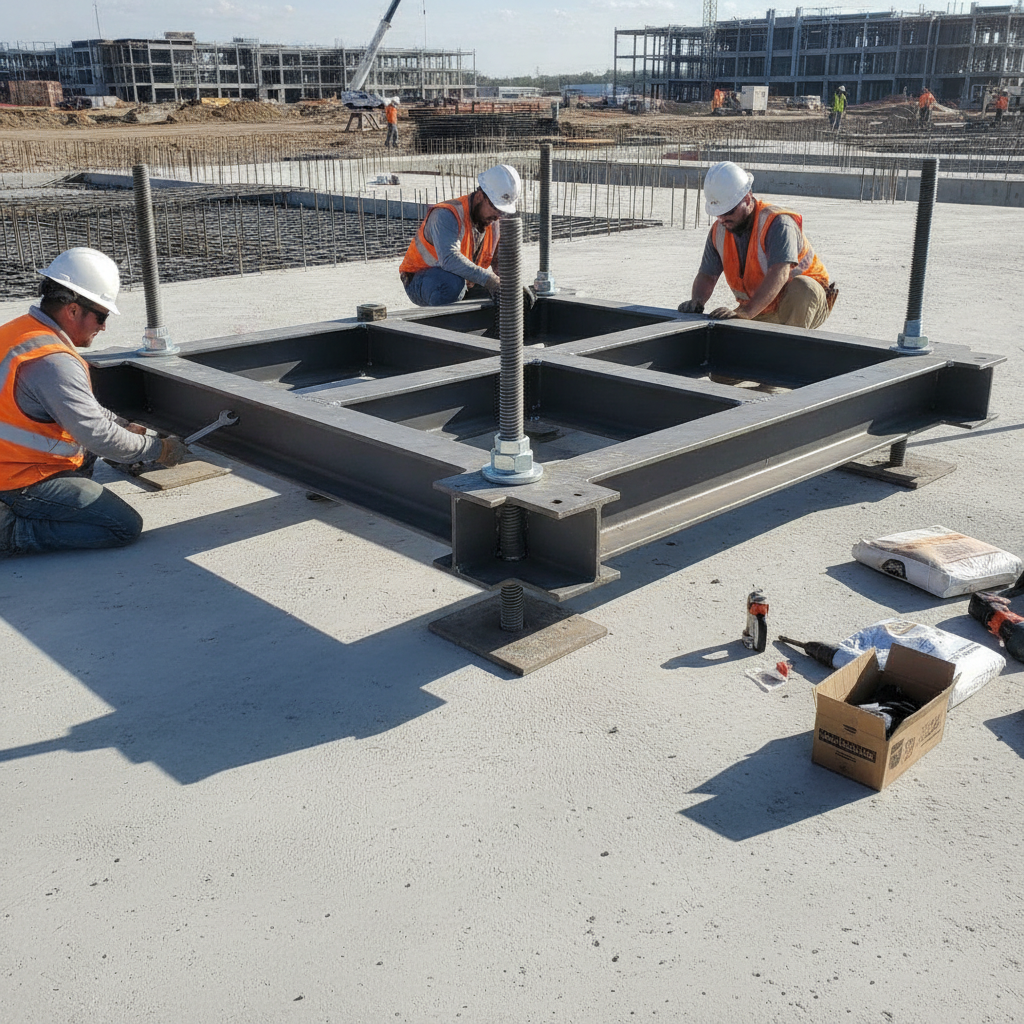
The physical connection between the equipment and the structure is most often made with anchors embedded in concrete. These fall into two main categories: cast-in-place and post-installed. Cast-in-place anchors, such as headed studs or J-bolts, are set in the concrete formwork before the pour, creating an incredibly strong, monolithic connection. They are ideal for heavy equipment with well-defined footprints, like generators or large chillers, but offer little flexibility if equipment layouts change. Post-installed anchors are installed into hardened concrete, offering much greater flexibility. They include mechanical anchors (e.g., expansion anchors, screw anchors) and adhesive anchors (e.g., epoxy or vinylester systems). The selection of a post-installed anchor is a complex engineering decision governed by standards like ACI 318 (Building Code Requirements for Structural Concrete). Key design factors include the required tensile and shear capacity, concrete strength, embedment depth, proximity to concrete edges (edge distance), and spacing between adjacent anchors. Using the wrong anchor type or miscalculating these parameters can lead to connection failure.
The Critical Role of Post-Installed Anchor Qualification and Special Inspection
Not all post-installed anchors are created equal, especially in applications resisting seismic loads. Model building codes require that anchors used to resist earthquake forces be pre-qualified through rigorous testing for performance under cyclic loading and in cracked concrete conditions. The manufacturer’s engineering data will specify if an anchor is rated for these demanding applications. Simply selecting an anchor from a hardware supplier without verifying its seismic qualifications is a significant risk and a code violation. Furthermore, the performance of post-installed anchors is highly dependent on correct installation. To ensure compliance, building codes mandate special inspection by a certified inspector for most seismic anchorage applications. The inspector verifies the hole drilling method, hole cleaning procedures, anchor type, embedment depth, and tightening torque (for mechanical anchors). This third-party verification is a critical quality assurance step in the construction administration phase. Requirements for special inspection programs and their implementation vary by jurisdiction, and every project team should confirm the applicable standards with the local, state, regional, and federal authorities that hold review authority over the site.
Ensuring Utility Resilience with Flexible Connections
An anchored piece of equipment is only as resilient as its utility connections. During a seismic event, a building and its rigidly anchored components may move several inches. If electrical conduits, data cables, and cooling pipes are rigidly connected, this differential movement can cause them to shear off, severing critical services. This is a common and often overlooked point of failure in mission-critical facilities. To prevent this, engineers must specify flexible connections and couplings where utilities cross seismic joints or connect to equipment. This is especially critical for equipment on base isolation systems, which are designed to move independently of the structure. Proper utility coordination between structural, mechanical, and electrical disciplines is essential to ensure these flexible connections are included in the design, correctly specified, and properly installed. This coordination is a hallmark of well-executed site engineering services.
Certification Requirements for Designated Seismic Systems
Certain types of equipment, classified as designated seismic systems, are subject to even more stringent requirements. These systems are those that are essential for life safety and must remain functional after an earthquake, such as fire sprinkler systems, emergency lighting, and fire alarm systems. In many high-seismic regions, the equipment itself, along with its components and supports, must be certified through shake-table testing or analytical methods to prove it can withstand seismic forces without failing. This certification requirement extends beyond simple anchorage. The internal components of the equipment must be robust enough to handle the accelerations. Project teams must ensure that specified equipment carries the necessary seismic certification. This often requires early coordination with equipment manufacturers and vendors during the procurement process to verify that the supplied units meet the project’s specific seismic design criteria and the requirements of the authority having jurisdiction.
RSP’s Integrated Approach to Equipment Anchorage Design
At RSP Engineers, we recognize that equipment anchorage is an integrated discipline, not an isolated task. Our approach begins during the initial phases of site plan design and facility layout, where we collaborate with the entire project team—architects, MEP engineers, and vendors—to ensure anchorage requirements are a core part of the design. We believe a proactive strategy prevents costly retrofits and change orders during construction. Our process involves a detailed review of equipment submittals, precise calculation of seismic and wind loads, and the development of clear, constructible anchorage details. As one of the leading Civil Engineering firms, we bridge the gap between the building structure, the site, and the equipment it supports. During the construction phase, our team provides robust construction administration services, coordinating with contractors and special inspectors to ensure that the design intent is executed flawlessly in the field, safeguarding the owner’s investment and the facility’s long-term resilience.
Common Issues in Equipment Anchorage and How to Avoid Them
Despite its importance, equipment anchorage is prone to several common and costly errors. One of the most frequent issues is a disconnect between the structural drawings and the final equipment provided. The structural engineer may design anchorage for a specific model, only for a different one with a different footprint or weight to be substituted during procurement. This requires immediate redesign and can cause schedule delays. Improper installation of post-installed anchors is another major point of failure. This can range from using the wrong drill bit size and failing to clean the hole of dust and debris (critical for adhesive anchors) to over-torquing or under-torquing mechanical anchors. These errors, which can drastically reduce anchor capacity, are precisely what the special inspection process is designed to prevent. Finally, neglecting flexible utility connections remains a persistent oversight that can render a perfectly anchored piece of equipment useless after an event.
Partner with RSP Engineers for Resilient Infrastructure
Ensuring the resilience of your mission-critical facility requires a deep understanding of structural dynamics, code requirements, and interdisciplinary coordination. The team at RSP Engineers provides the expert guidance needed to navigate the complexities of equipment anchorage, from initial permitting and design to final inspection. We offer comprehensive site engineering services, structural design coordination, and diligent construction administration to protect your assets and ensure operational continuity.
Conclusion
The structural anchorage of equipment is a critical, code-mandated discipline that is fundamental to the resilience of any data center. A successful design relies on accurate load calculation, appropriate system selection, and meticulous attention to detail in anchor specification. The process must be integrated across all engineering disciplines and verified through a robust quality assurance program, including mandatory special inspection. By treating equipment anchorage as a primary design consideration, facility owners can significantly reduce the risk of downtime and protect their investment against seismic and wind hazards.
FAQs
-
Structural components are elements that are part of the building’s main force-resisting system, such as columns, beams, braces, and foundations. Nonstructural components are all other elements, including the architectural, mechanical, and electrical systems attached to the structure. In a data center, this includes servers, CRAC units, UPS systems, generators, and cable trays.
-
The component importance factor (Ip) is used in seismic calculations to increase the design force for components that are required for life safety or are essential for the continuous operation of a facility. For data centers, an Ip greater than 1. 0 is used for critical equipment to ensure it remains functional after an earthquake, reflecting its high value and importance to the business.
-
No. Only anchors that have undergone rigorous testing for performance under simulated earthquake conditions (cyclic loading) are approved for use in seismic applications. This is a critical specification. The product’s technical data sheet and approval listings must be checked to confirm it is qualified for the project’s specific seismic design category.