
Seismic Design of Data Center Buildings
A technical guide to the seismic design of data center buildings, covering risk categories, lateral systems, nonstructural bracing, and drift limits for mission-critical facilities.
Defining Seismic Risk: Site Classification and Ground Motion Parameters
The foundation of any seismic design begins, quite literally, with the ground itself. A comprehensive geotechnical investigation is the first and most critical step in understanding a site’s seismic risk. This investigation determines the Site Class, typically ranging from A (hard rock) to F (soils requiring site-specific evaluation), which characterizes the soil profile’s ability to amplify or dampen seismic waves. A detailed geotechnical soil report provides the essential data for this classification. Engineers use this Site Class in conjunction with mapped spectral response acceleration parameters (Ss and S1) derived from national seismic hazard models. These parameters represent the expected ground motion at the site for different earthquake return periods. The combination of soil conditions and regional seismicity allows the engineering team to calculate the site-specific design spectral response acceleration parameters (SDS and SD1). These values form the basis of the seismic forces that the building and its components must be designed to resist, directly influencing every subsequent aspect of the structural design and analysis.
Establishing Performance Objectives: Risk Category and Seismic Design Category
Comparison of Common Seismic Lateral Systems for Data Centers
| System Type | Key Advantages | Design Considerations | Typical Application |
|---|---|---|---|
| Special Steel Moment Frame | Architectural flexibility with open floor plans. High ductility and energy dissipation. | Can be more flexible, requiring larger members to control drift. Connection detailing is complex. | Facilities where open, unobstructed server halls are a primary design driver. |
| Special Concentrically Braced Frame (SCBF) | High stiffness and strength, very efficient for controlling drift. Relatively economical. | Brace locations can constrain interior layout and utility routing. Connections require careful detailing for ductility. | Common in low- to mid-rise data centers where the structural grid can accommodate brace lines. |
| Eccentrically Braced Frame (EBF) | Excellent combination of high stiffness and very high ductility. Links are designed to yield and absorb energy. | More complex to design and fabricate than SCBFs. Link beam detailing is critical. | High-performance option for facilities in areas of very high seismicity requiring maximum resilience. |
| Special Reinforced Concrete Shear Wall | Very high stiffness and strength, excellent for controlling drift. Provides inherent fire resistance and acoustic separation. | Wall locations are fixed and can impact architectural planning. Heavy, which increases foundation loads. | Often used for core areas, exterior walls, or as part of a dual system in hybrid data center designs. |
| Dual System (e.g., Moment Frame + Shear Wall) | Combines the benefits of two different systems, offering redundancy and optimized performance. | Analysis is more complex, requiring careful distribution of lateral loads between the systems. | Large or complex data center campuses where different parts of the structure have different functional requirements. |
Not all buildings are created equal, and their importance dictates their required performance during an earthquake. Data centers, which house essential services and infrastructure, are typically classified as Risk Category IV facilities under modern building codes. This designation as an essential facility means the structure must be designed to remain operational following a major seismic event. This higher standard ensures that critical data and services remain available when they are needed most. The building’s Risk Category, combined with the calculated ground motion parameters, determines its Seismic Design Category (SDC). The SDC, which ranges from A (very low seismic risk) to F (very high seismic risk), dictates the specific analysis procedures, design limitations, and detailing requirements for the structure. Permitting requirements and applicable design standards vary by jurisdiction, and every project team must confirm the governing codes and performance objectives with the local, state, regional, and federal authorities that hold review authority over the site. A higher SDC imposes more stringent requirements on the lateral force-resisting system, demanding greater ductility and robustness to ensure building code compliance.
Selecting and Detailing the Lateral Force-Resisting System
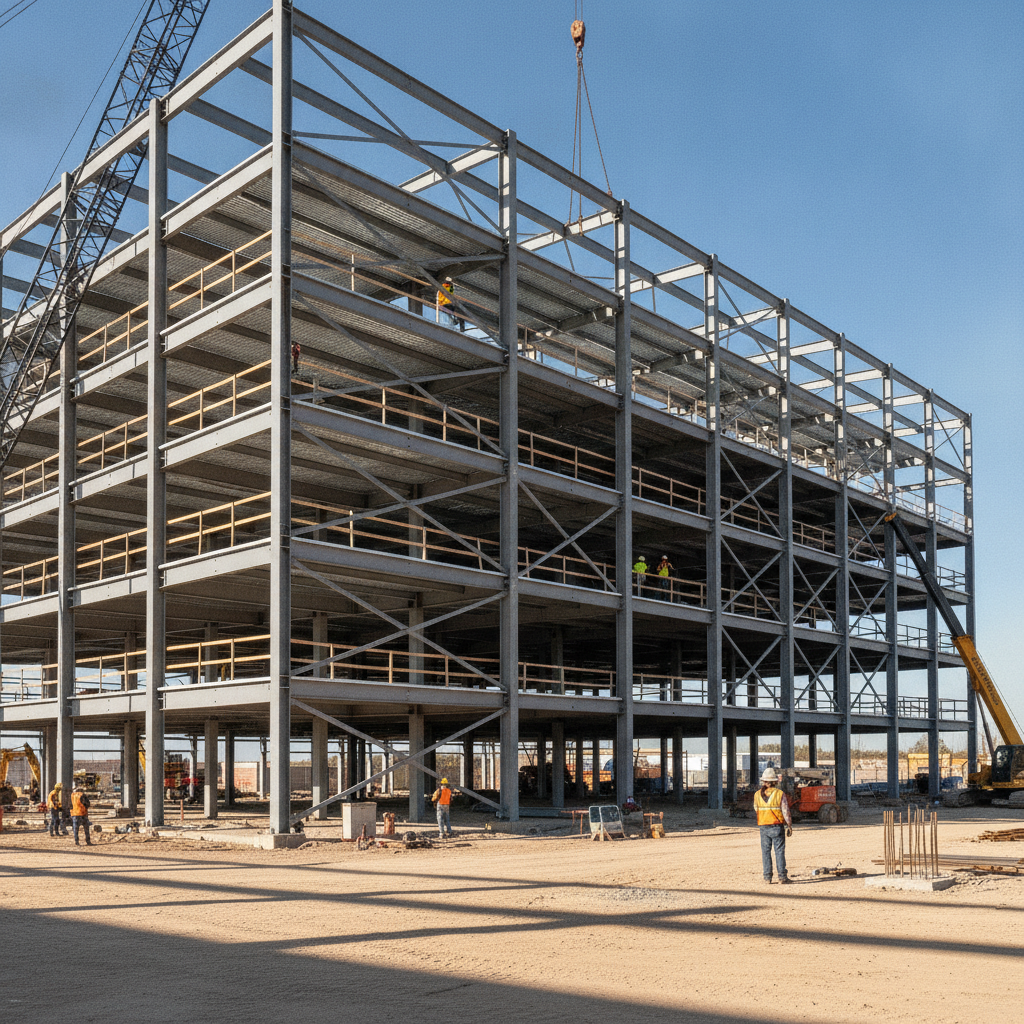
The building’s skeleton, or its lateral force-resisting system, is responsible for safely transferring seismic forces from the structure into the foundation. The selection of this system is one of the most significant decisions in the design process. Common systems used in data centers include special steel moment frames, concentrically or eccentrically braced frames, and special reinforced concrete shear walls. Each system offers a different balance of strength, stiffness, and ductility—the ability to deform without catastrophic failure. The choice of system depends heavily on the Seismic Design Category, building height, architectural layout, and cost. For instance, braced frames are often very stiff and efficient but may interfere with interior layouts, while moment frames offer more open floor plans but can be more flexible. Regardless of the system chosen, the detailing of connections is paramount. In high-seismic areas, these connections must be meticulously designed and constructed to accommodate large deformations and dissipate energy, preventing brittle failure and ensuring the integrity of the overall structural system.
Controlling Building Movement: Story Drift and P-Delta Effects
While strength is crucial, controlling movement is equally important in a data center. Story drift—the lateral displacement of one floor relative to the floor below—must be strictly limited. Excessive drift can damage nonstructural elements like walls, partitions, and, most critically, the server racks, cooling pipes, and electrical conduits that are the lifeblood of the facility. The allowable story drift limits for Risk Category IV facilities are significantly more stringent than for standard office buildings to protect these sensitive systems. Structural engineers must perform a detailed analysis to ensure these drift limits are met under the design-level earthquake. This analysis must also account for P-Delta effects, which are second-order effects where gravity loads acting on a laterally displaced structure create additional overturning moments. Ignoring these effects can lead to an underestimation of forces and displacements, potentially compromising the building’s stability. This requires sophisticated structural modeling and close utility coordination to ensure that pathways for critical services can accommodate the predicted building movements.
Beyond the Structure: Seismic Design of Nonstructural Components
A structurally sound building is useless if the equipment inside is destroyed. In many past earthquakes, the majority of financial losses and operational downtime in critical facilities stemmed from the failure of nonstructural components. This includes mechanical, electrical, and plumbing (MEP) systems, such as generators, cooling units, battery racks, transformers, and fire suppression piping, as well as the server racks themselves. Every critical component must be anchored or braced to resist seismic forces. This requires a coordinated nonstructural bracing design that is integrated with the architectural and MEP layouts. Flexible connections are essential for utilities that cross seismic separation joints between buildings or connect to vibration-isolated equipment. The design must ensure that these vital systems can move with the building without failing, a critical aspect of holistic site engineering services for mission-critical projects.
The RSP Engineers Approach to Seismic Resilience
At RSP Engineers, we approach data center seismic design as an integrated, multi-disciplinary process. Our methodology begins with a comprehensive site assessment, including a detailed Geotechnical Engineering investigation to accurately characterize seismic hazards. We work collaboratively with the owner, architect, and other engineering disciplines from the earliest stages of site plan design to establish clear performance objectives. Our team utilizes advanced structural analysis software to model building behavior and optimize the lateral force-resisting system for both safety and cost-effectiveness. We place a strong emphasis on the seismic design of nonstructural components, providing detailed specifications for anchorage and bracing to protect critical equipment. Throughout the permitting and construction phases, our experts provide oversight and construction administration to ensure that the design intent is fully realized, delivering a facility built for maximum uptime and resilience.
Common Challenges in Data Center Seismic Design
Even with a robust plan, data center projects face several common seismic design challenges. One of the most frequent is underestimating the scope and cost of nonstructural component bracing, which can lead to budget overruns and schedule delays if addressed late in the design process. Another is insufficient utility coordination, where clashes between structural elements and critical MEP pathways require costly redesigns. Value engineering, while important, can sometimes compromise seismic performance if not carefully managed. For example, reducing the robustness of connections or substituting less ductile systems to save initial costs can significantly increase the risk of damage and downtime. Finally, ensuring quality control during construction is essential. Improperly installed anchors, incorrect weld details, or other construction defects can undermine the performance of an otherwise excellent design, highlighting the need for a vigilant Professional Engineer providing oversight. Frequently Asked Questions (FAQ) What is a Risk Category IV facility? A Risk Category IV facility is designated by building codes as an essential facility, critical for public welfare. This includes hospitals, fire stations, and, increasingly, data centers. These structures are designed to a higher standard of performance, with the expectation that they remain safe and operational after a major design-level event like an earthquake. Why are story drift limits so important for data centers? Strict story drift limits are critical to protect the nonstructural systems within a data center. Excessive lateral movement can damage server racks, break connections on cooling and power lines, and compromise fire suppression systems. By limiting drift, the structural design ensures the operational integrity of the equipment, which is the primary purpose of the facility. Does the seismic design affect the civil engineering and site plan? Yes, absolutely. The seismic design is closely linked to the civil engineering work. The geotechnical investigation, a core civil discipline, provides the foundational data for seismic calculations. Furthermore, requirements for utility connections, such as providing flexible couplings where they enter the building, are a key part of the site plan design and require close coordination between structural and civil teams. How are existing data centers assessed for seismic vulnerability? Assessing an existing facility involves a seismic vulnerability assessment, often following standards like ASCE 41. This process includes reviewing original construction documents, performing on-site inspections to verify conditions, and conducting a detailed structural analysis based on current seismic hazard levels. The assessment identifies deficiencies in the lateral system, connections, and nonstructural bracing, forming the basis for a seismic retrofit strategy. What is the role of the geotechnical engineer in seismic design? The Geotechnical engineer plays a foundational role. They perform the soil boring test and other analyses to classify the site, determine the potential for soil liquefaction, and provide the site-specific ground motion parameters used by the structural engineer. Their geotechnical soil report is a critical document that influences the entire seismic design process, from foundation design to the calculation of seismic forces.
Partner with RSP Engineers for Mission-Critical Resilience
Navigating the complexities of data center seismic design requires specialized expertise and a forward-thinking approach. The team at RSP Engineers provides the comprehensive site engineering services needed to bring mission-critical projects from concept to completion. We manage every aspect of the process, from initial land development feasibility and zoning compliance to detailed engineering design and navigating the permitting process. Contact us today to discuss how we can ensure your next data center project is built for resilience and long-term operational success.
Conclusion
The seismic design of data center buildings is a sophisticated engineering challenge where the stakes are incredibly high. It demands a holistic perspective that integrates Geotechnical Engineering, advanced structural analysis, and meticulous attention to nonstructural components. By prioritizing resilience from day one and selecting the right engineering partners, developers can protect their investment and ensure their facilities provide the uninterrupted service that our digital world depends on. A successful project hinges on a deep understanding of seismic principles, robust utility coordination, and a commitment to quality throughout the design and construction administration phases.
FAQs
-
Seismic Design of Data Center Buildings requires careful planning, qualified engineering, and compliance with the applicable codes and permits.
-
Getting Seismic Design of Data Center Buildings right protects safety, supports regulatory compliance, and avoids costly redesigns or delays.
-
RSP Engineers provides licensed expertise and end-to-end support for Seismic Design of Data Center Buildings, from early planning through permitting.