
Standard Penetration Testing for Data Center Projects
A technical guide to Standard Penetration Testing (SPT) for data center projects. Learn how SPT blow counts, sampling, and geotechnical reports inform foundation design and mitigate risk.
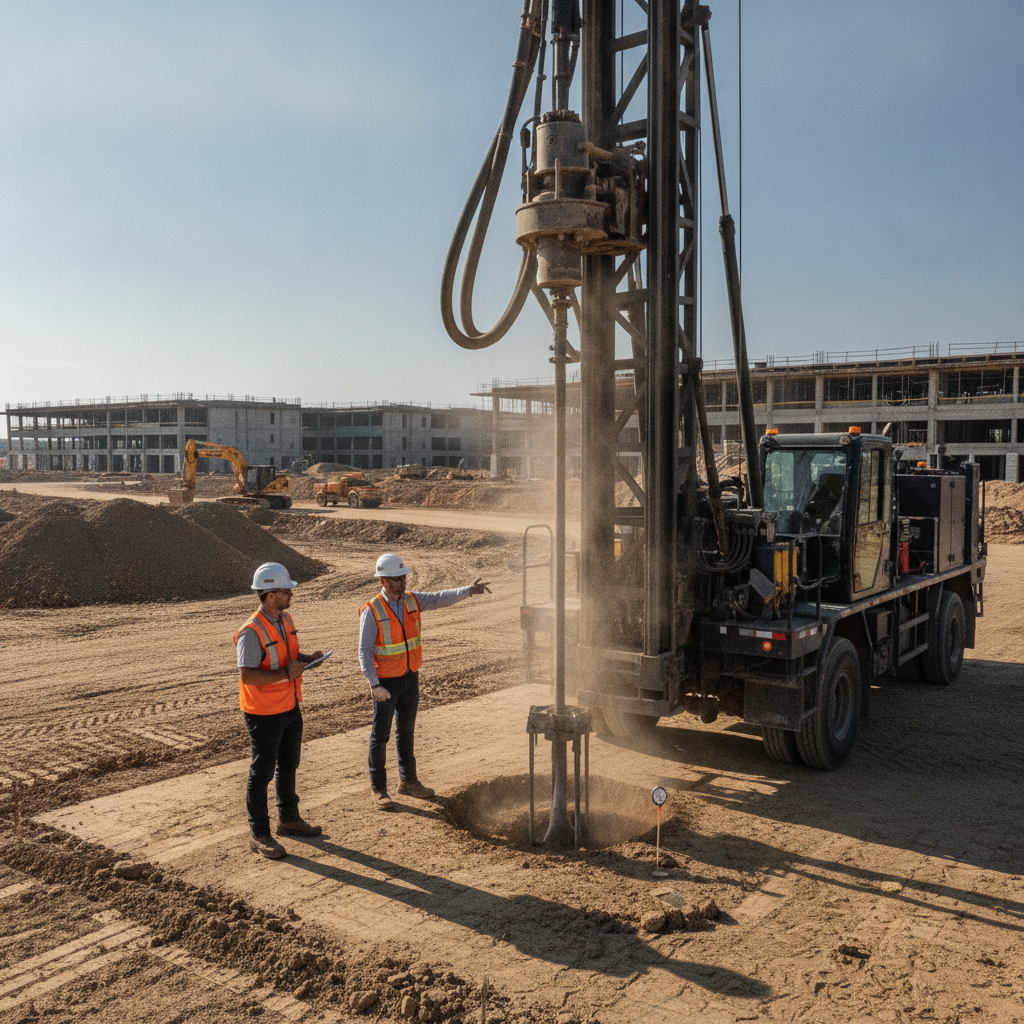
The Standard Penetration Test (SPT) Procedure Explained
The Standard Penetration Test, governed by ASTM D1586, is a widely used in-situ dynamic penetration test designed to provide information on the geotechnical properties of soil. The procedure is straightforward but requires precision. A borehole is advanced to a desired depth, and a standard split-spoon sampler is lowered to the bottom. A 140-pound hammer is then dropped from a height of 30 inches, driving the sampler into the soil. The core measurement of the SPT is the blow count, or ‘N-value’. This is the number of hammer blows required to drive the sampler a total of 18 inches. The count is recorded for each 6-inch interval, and the N-value is the sum of the blows for the second and third intervals (from 6 to 18 inches). This value provides a direct measure of the soil’s resistance to penetration, which a qualified Geotechnical engineer can then correlate to critical engineering properties. The entire process ensures that the site development plan is based on reliable subsurface data.
From Raw Blow Counts to Engineering Parameters
SPT N-Value Correlation Table for Foundation Analysis
| Corrected N-Value ((N1)60) | Soil Type | Consistency / Relative Density | General Foundation Implications |
|---|---|---|---|
| 0 - 2 | Cohesive (Clay/Silt) | Very Soft | Unsuitable for shallow foundations without significant soil improvement. Deep foundations likely required. |
| 2 - 4 | Cohesive (Clay/Silt) | Soft | Low bearing capacity. High potential for settlement. Ground improvement or deep foundations are typically necessary. |
| 4 - 8 | Cohesive (Clay/Silt) | Medium Stiff | May be suitable for lightly loaded shallow foundations, but settlement analysis is critical. |
| 8 - 15 | Cohesive (Clay/Silt) | Stiff | Generally adequate for shallow foundations for moderate loads. Settlement should be checked. |
| 4 - 10 | Granular (Sand/Gravel) | Loose | Low bearing capacity. High liquefaction potential in seismic areas. Requires densification or deep foundations. |
| 10 - 30 | Granular (Sand/Gravel) | Medium Dense | Good bearing capacity for shallow foundations. Settlement is often the controlling design factor. |
| 30 - 50 | Granular (Sand/Gravel) | Dense | High bearing capacity. Generally low settlement potential. Excellent foundation support. |
| > 50 | Granular (Sand/Gravel) | Very Dense | Excellent bearing capacity. Often indicates refusal on rock or very dense material. |
A raw N-value from the field is only the starting point. To be useful for engineering analysis, it must be corrected for several factors. The most important correction is for hammer energy efficiency. Different drill rigs and hammer types deliver slightly different amounts of energy to the sampler. The raw N-value is adjusted to a standard 60% energy efficiency, resulting in the N60 value. This standardization allows for consistent comparison of results across different sites and equipment. Furthermore, the N60 value is often normalized for overburden pressure, which is the weight of the soil above the test depth. Deeper soils are more confined and will naturally show higher resistance. This correction results in the (N1)60 value, which represents the blow count as if it were measured at a standard effective overburden pressure. These corrected values are indispensable for empirical correlations used in foundation design and settlement analysis, forming the backbone of the geotechnical soil report.
Correlating SPT Data with Soil Properties for Foundation Design
The corrected (N1)60 value is a powerful tool for a Professional Engineer. It allows for the estimation of key soil parameters without extensive laboratory testing. For granular soils like sands and gravels, the N-value correlates directly to the relative density (how tightly packed the soil grains are) and the angle of internal friction. For cohesive soils like clays and silts, it provides an estimate of the undrained shear strength and consistency (from very soft to hard). This data is critical for determining the site’s bearing capacity—the soil’s ability to support the immense, concentrated loads of a data center. It also drives the prediction of foundation settlement, a crucial factor for sensitive equipment that cannot tolerate movement. While ASTM standards for testing are nationally recognized, the application of these results into local building code compliance and foundation design requirements can vary by jurisdiction. It is essential for the project team to confirm all geotechnical and structural design criteria with the authority having jurisdiction to ensure full compliance.
Sampling Intervals and Site Characterization Strategy
A successful geotechnical engineering investigation depends on a well-planned site characterization strategy. SPT borings are typically performed at regular intervals across the proposed building footprint and other critical areas like retention ponds and heavy equipment pads. A common sampling interval is continuous testing for the first 10-15 feet, followed by testing at 5-foot intervals thereafter. However, this can be adjusted by the field engineer based on observed changes in soil strata. The goal is to develop a comprehensive three-dimensional model of the subsurface. This model identifies the depth and thickness of different soil layers, locates the groundwater table, and determines the depth to bedrock or other competent bearing material. A detailed subsurface profile is essential for identifying potential risks, such as weak soil layers, undocumented fill, or perched water tables, that could compromise the site development and long-term performance of the facility. This information is meticulously documented in the final geotechnical soil report.
Limitations and Considerations for SPT in Geotechnical Investigations
While incredibly useful, the SPT has limitations. In soils containing significant gravel, cobbles, or boulders, the split-spoon sampler may be damaged or show artificially high blow counts as it strikes the coarse particles, a condition known as refusal. This can lead to a mischaracterization of the surrounding soil matrix. Conversely, in very soft, sensitive clays, the weight of the drill rods and hammer alone can push the sampler into the ground, resulting in an N-value of zero that doesn’t fully capture the soil’s properties. Experienced geotechnical professionals recognize these limitations and often supplement SPT with other in-situ tests, such as the Cone Penetration Test (CPT), or by obtaining high-quality undisturbed samples for laboratory testing. A comprehensive geotechnical investigation program leverages the strengths of multiple testing methods to build a reliable and accurate picture of the subsurface, ensuring the foundation design is both safe and economical.
How RSP Engineers Integrates SPT Data into Data Center Site Design
At RSP Engineers, we view the geotechnical investigation as the first step in a fully integrated design process. We collaborate closely with our trusted geotechnical engineering partners to define a testing program that specifically addresses the demands of a mission-critical facility. Once the SPT data and the final geotechnical soil report are delivered, our team of civil engineers translates those findings into actionable design decisions. This includes optimizing the site grading plan to balance earthwork and manage soil suitability for structural fill. We use the soil parameters to inform our stormwater management design, assessing infiltration rates for drainage systems. Most importantly, we work with the structural engineer to ensure the site plan design accommodates the recommended foundation system, whether it involves shallow spread footings, mat foundations, or deep piles. Our holistic approach ensures that subsurface conditions inform every aspect of the site engineering services we provide.
Common Challenges in Data Center Geotechnical Investigations
Even with careful planning, data center projects can encounter geotechnical challenges. One common issue is significant variability in subsurface conditions across a large site, requiring additional borings to delineate the boundaries of unsuitable soils. Another challenge is encountering an unexpectedly high groundwater table, which can complicate excavation and require dewatering systems during construction, impacting both schedule and budget. The geotechnical soil report may also identify risks like liquefiable soils in seismic regions or highly compressible clays that could lead to unacceptable long-term settlement. Addressing these issues early through robust geotechnical engineering and proactive design is key. Solutions may include ground improvement techniques like aggregate piers or deep soil mixing, or a shift to a more robust deep foundation system. Effectively navigating these challenges is a hallmark of experienced Civil Engineering firms. Frequently Asked Questions What is the difference between an SPT and a soil boring? A soil boring test is the process of drilling a hole into the ground to access subsurface materials. The Standard Penetration Test (SPT) is a specific test performed within that borehole at various depths to measure soil resistance and collect a disturbed sample for classification. How many SPT borings are needed for a data center site? The number and spacing of borings depend on the size of the facility footprint, the expected geological complexity of the site, and local building code requirements. A large, multi-building campus will require a more extensive investigation than a smaller, single-building site. A preliminary review by a Geotechnical engineer is needed to scope the investigation properly. Can SPT results affect my site’s stormwater management design? Absolutely. The soil samples collected during SPT are classified to determine their texture and properties. This information, combined with other tests, helps estimate the soil’s infiltration capacity, which is a critical parameter for designing effective and compliant stormwater management systems like infiltration basins or permeable pavements. What is a ‘refusal’ in an SPT test? Refusal occurs when the blow count reaches 50 blows within any 6-inch interval, or a total of 100 blows is reached. It indicates that the material is very dense or that the sampler has encountered rock, boulders, or another obstruction. The depth of refusal is a critical piece of information for foundation design. How does the geotechnical soil report influence construction costs? The geotechnical soil report has a direct and significant impact on construction costs. Its recommendations dictate the type of foundation required (e.g., less expensive shallow footings vs. more expensive deep piles), the amount of earthwork needed, whether native soils can be reused as structural fill, and if costly ground improvement techniques are necessary.
Partner with RSP Engineers for Your Mission-Critical Project
A successful data center project rests on a foundation of precise data and expert interpretation. Navigating the complexities of a geotechnical investigation and integrating the findings into a cohesive site design requires a specialized skill set. The team at RSP Engineers provides comprehensive site engineering services, from initial due diligence and master planning to final permitting and construction administration. We excel at translating complex geotechnical engineering data into practical, cost-effective solutions for site plan design that ensure the long-term stability and success of your mission-critical facility.
Conclusion
The Standard Penetration Test is more than a routine procedure; it is a fundamental risk mitigation tool in the development of data centers. By providing essential data on soil strength, density, and layering, SPT empowers engineers to execute a sound foundation design that can withstand the unique demands of these critical facilities. Investing in a thorough geotechnical engineering investigation, centered around reliable methods like SPT, is a direct investment in the operational uptime and long-term resilience of the project. It is a critical step in the overall site development process that should never be overlooked. Related Articles Planning a Geotechnical Investigation for a Data Center Coordinating Civil and Plumbing for Data Center Water Systems Fire Flow Planning and Water Supply for Data Center Developments
FAQs
-
Standard Penetration Testing for Data Center Projects requires careful planning, qualified engineering, and compliance with the applicable codes and permits.
-
Getting Standard Penetration Testing for Data Center Projects right protects safety, supports regulatory compliance, and avoids costly redesigns or delays.
-
RSP Engineers provides licensed expertise and end-to-end support for Standard Penetration Testing for Data Center Projects, from early planning through permitting.