
Special Inspections During Data Center Structural Construction
Learn about the critical role of special inspections in data center construction, from the Statement of Special Inspections to final reporting for the Certificate of Occupancy. A guide for developers
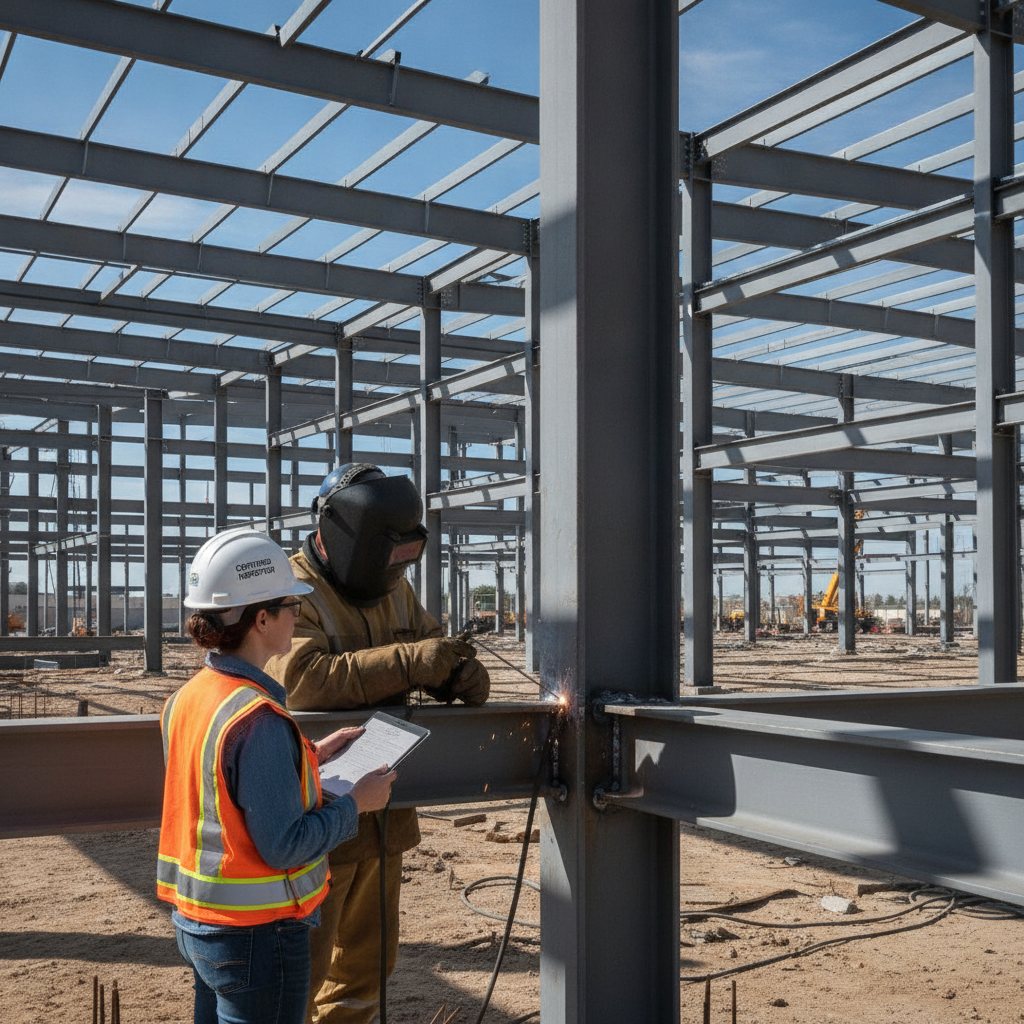
The Role of the Statement of Special Inspections (SSI)
The foundation of any effective special inspection program is the Statement of Special Inspections (SSI). This crucial document is prepared and sealed by the Structural Engineer of Record (SER) and serves as the official roadmap for all required inspections on a project. It is typically submitted to the building department along with the structural drawings as part of the initial permit submittals. The SSI is not a generic checklist; it is a project-specific document that details every type of work requiring inspection, the standards governing that work, and whether the inspection must be continuous or periodic. The SSI provides clarity for the owner, contractor, building official, and the special inspection agency. It explicitly lists the structural elements and materials that must be verified, such as concrete strength, reinforcing steel placement, structural steel welding, and high-strength bolting. By defining the scope upfront, the SSI ensures that all parties understand their responsibilities and that the project achieves full building code compliance. It is a living document that must be updated if the structural design changes during construction.
Key Categories of Required Special Inspections
Comparison Table: Common Special Inspection Tasks in Data Centers
| Inspection Category | Key Items to Verify | Typical Frequency | Common Standard Reference |
|---|---|---|---|
| Structural Steel – Welding | Welder certifications, welding procedures (WPS), joint preparation, visual inspection of finished welds, NDT as required. | Continuous for critical welds; Periodic for others. | AISC 360 / AWS D1.1 |
| Structural Steel – Bolting | Bolt grade/type, pre-installation verification, proper tightening method (e.g., turn-of-nut), faying surface condition. | Periodic | AISC 360 / RCSC |
| Reinforced Concrete | Rebar size, grade, spacing, cover; concrete mix design approval; sampling for strength tests; placement observation. | Periodic for rebar; Continuous for placement of high-strength mixes. | ACI 318 |
| Post-Installed Anchors | Hole diameter and depth, hole cleaning procedures, anchor type and embedment, installation torque/proof loading. | Continuous for critical adhesive anchors; Periodic for mechanical anchors. | ACI 318 / Manufacturer Specs |
| Soils and Subgrade Prep | Material type, lift thickness, moisture content, achievement of specified compaction percentage via field density tests. | Periodic | Project Geotechnical Report |
| Spray-Applied Fireproofing | Substrate cleanliness, material thickness and density, bond strength (adhesion/cohesion). | Periodic | AWCI / UL Design |
Special inspections cover a wide range of structural materials and systems, each with its own set of verification procedures and standards. For data centers, which often involve heavy steel frames and robust concrete foundations, several categories are almost always required. The specific requirements for inspections, tests, and frequencies vary by jurisdiction, and every project team must confirm the applicable standards with the local, state, regional, and federal authorities that hold review authority over the site, as well as the project’s adopted building code. Structural Steel: Welding and High-Strength Bolting The integrity of a steel-framed data center depends on the quality of its connections. Special inspectors verify that all structural welding is performed by certified welders according to approved procedures. They also conduct visual and, where required, non-destructive testing (NDT) of welds. For bolted connections, inspectors confirm that the correct grade of high-strength bolts is used, proper pre-tensioning procedures are followed, and connections are installed per the design drawings and industry standards like those from the American Institute of Steel Construction (AISC). Reinforced Concrete From foundations and slabs-on-grade to elevated equipment platforms, concrete is a fundamental material. Special inspections for concrete are comprehensive. They begin before placement, with verification of formwork and reinforcing steel size, grade, spacing, and clearance. During placement, inspectors sample fresh concrete to test for slump, air content, and temperature, and they cast cylinders for compressive strength testing. This ensures the final concrete mix design meets the specified strength and durability requirements outlined by standards like those from the American Concrete Institute (ACI). Soils and Foundations A data center’s performance starts from the ground up. The special inspection program often includes oversight of earthwork and foundations, guided by the project’s Geotechnical Engineering report. Inspectors verify soil compaction using field density tests to ensure the subgrade can support the structure. For deep foundations like piles or drilled piers, they monitor installation to confirm proper depth, alignment, and capacity. This work is critical for preventing differential settlement that could damage sensitive equipment and infrastructure.
Continuous vs. Periodic Inspection: Understanding the Difference
The Statement of Special Inspections will specify whether an activity requires ‘continuous’ or ‘periodic’ inspection. Understanding this distinction is key to managing project logistics and costs. Continuous inspection means the special inspector must be on-site observing the work for its entire duration. This is typically reserved for the most critical operations, such as the placement of high-strength concrete, welding of moment-frame connections, or tensioning of post-installed anchors in critical applications. In contrast, periodic inspection means the inspector visits the site at specific intervals to observe the work. Examples include verifying reinforcing steel placement before a concrete pour or checking a representative sample of bolted connections after they have been tightened. The determination of continuous versus periodic is based on the building code and the judgment of the Structural Engineer of Record, balancing the criticality of the task with practical considerations. The authority having jurisdiction has the final say on the required frequency.
Inspector Qualifications and Agency Accreditation
The value of a special inspection program hinges on the expertise and independence of the inspectors. Building codes mandate that special inspectors be qualified and employed by an accredited agency. Qualifications are typically demonstrated through certifications from recognized organizations like the International Code Council (ICC) for concrete and masonry or the American Welding Society (AWS) for a Certified Welding Inspector (CWI). The inspection agency itself should be an accredited testing laboratory, demonstrating its competence, impartiality, and quality management systems. The owner is typically responsible for hiring the special inspection agency directly. This creates a direct line of reporting and ensures the inspector’s independence from the contractor whose work is being inspected. This impartiality is fundamental to the program’s integrity and provides the owner and the Professional Engineer of record with confidence that the structure is being built to the specified quality standards.
The Discrepancy Reporting and Resolution Process
Even on the best-managed projects, issues will arise. A key function of the special inspector is to identify and document any work that does not conform to the approved plans and specifications. When a deficiency is found, the inspector issues a non-conformance report (NCR) or discrepancy notice. This formalizes the issue and initiates a resolution process. The report is distributed to the project team, including the owner, contractor, and engineer of record. The contractor is then responsible for proposing a corrective action. This proposed repair must be reviewed and approved by the Structural Engineer of Record to ensure it meets the original design intent. Once the repair is approved, the contractor performs the work, and the special inspector returns to verify that the correction has been properly implemented. This documented loop of identification, reporting, and discrepancy resolution is a vital part of construction administration and creates a clear record of quality control.
The Final Report and Certificate of Occupancy
The special inspection program culminates in a final report submitted to the building department. This comprehensive document, prepared by the special inspection agency, summarizes all inspections and tests performed throughout the project. It includes a statement confirming that, to the best of their knowledge and observation, the inspected work is in substantial compliance with the approved plans, specifications, and applicable codes. This final report of special inspections is a critical piece of documentation for project closeout. Most building departments will not issue a final Certificate of Occupancy (CO) until they have received and approved this report. It serves as the official verification that the building’s life-safety structural systems have been independently vetted and found to be compliant. For a data center developer, a missing or incomplete final report can delay facility commissioning and revenue generation, highlighting the importance of managing the program effectively from day one.
How RSP Engineers Manages the Special Inspection Program
At RSP Engineers, we understand that the special inspection program is an integral part of successful site development and construction. Our role extends beyond the initial design phase. We actively engage in the process by first preparing a clear and comprehensive Statement of Special Inspections. During construction, we provide robust Construction Management Services, which include reviewing inspector reports, providing timely engineering guidance on field issues, and designing effective resolutions for any identified discrepancies. Our proactive approach to construction administration helps bridge the gap between the design team, the contractor, and the inspection agency. We facilitate clear communication to ensure that non-conforming work is addressed swiftly and correctly, preventing minor issues from escalating into major project delays. We help our clients navigate the complexities of the inspection process, ensuring a smooth path toward receiving the final report and the all-important Certificate of Occupancy.
Common Issues and Pitfalls in Special Inspections
Several common issues can undermine a special inspection program and lead to project delays. An ambiguous or incomplete Statement of Special Inspections can cause confusion on-site about what needs to be inspected. Poor communication between the contractor’s superintendent and the special inspection agency can result in missed inspections, requiring costly and time-consuming rework or destructive testing to verify compliance. Furthermore, delayed reporting of discrepancies can slow down the resolution process, creating a backlog of issues that can impact the construction schedule. Another pitfall is failing to budget adequately for the full scope of required inspections. Developers should view special inspections not as a commodity service but as a critical risk management investment. Proactively managing the program, ensuring clear communication protocols, and addressing issues as they arise are key to avoiding these common problems and maintaining permit compliance throughout the build.
Partner with RSP for Mission-Critical Project Assurance
Navigating the complexities of data center construction requires a partner with deep expertise in all facets of design and construction oversight. At RSP Engineers, we provide comprehensive civil engineering and site development services tailored to mission-critical projects. Our team excels at managing the entire lifecycle, from initial site planning and permitting to providing detailed construction administration and ensuring your special inspection program is executed flawlessly. Contact us today to learn how we can help ensure the structural integrity and timely delivery of your next data center project.
Conclusion
The special inspection program is a non-negotiable component of data center construction, serving as the primary mechanism for structural quality assurance. It is mandated by law to protect public safety and is essential for the long-term reliability of these critical facilities. A well-defined Statement of Special Inspections, executed by qualified professionals and managed with proactive construction administration, is the best way to ensure building code compliance, mitigate risk, and deliver a structurally sound project ready for its Certificate of Occupancy.
FAQs
-
The property owner or the owner’s representative is typically responsible for hiring the special inspection agency. This is a building code requirement designed to ensure the agency is independent of the contractor performing the work, avoiding any potential conflicts of interest.
-
Municipal inspections are performed by the authority having jurisdiction (the city or county building department) at specific project milestones (e. g. , foundation, framing). They are typically brief spot-checks. Special inspections are much more detailed and are performed by an independent agency. They provide a higher level of quality assurance for specific structural materials and systems as outlined in the SSI.
-
Generally, no. The building code requires the special inspector to be independent of the contractor. While a contractor’s internal QC program is essential for their own quality management, it does not replace the requirement for an impartial, third-party special inspection agency hired by the owner.