
Data Center Utility Conflict Resolution During Construction
A guide for data center developers on how civil engineers resolve utility conflicts during construction, covering SUE, potholing, RFIs, and realignments to minimize schedule impact.
The High Stakes of Utility Conflicts in Data Center Projects
Data centers are uniquely dependent on robust, redundant utility infrastructure. Massive power feeds, high-capacity fiber optic lines, municipal water, and sanitary sewer services are the lifeblood of the facility. The sheer density of these underground systems creates a complex, three-dimensional puzzle. A conflict discovered during excavation can halt work, impact long-lead equipment delivery, and jeopardize the go-live date. The consequences extend beyond simple delays; they involve potential damage to existing active utilities, safety risks for construction crews, and the need for emergency utility coordination with providers. The financial implications are significant. Every day of delay on a data center project can represent millions in lost revenue or opportunity cost. Resolving a major conflict may require redesigning a critical utility corridor, which in turn impacts stormwater management plans, foundation designs, and even roadway engineering alignments. This ripple effect underscores the need for a civil engineering team that excels at proactive identification and rapid, technically sound resolution, ensuring the site development process remains on track.
Proactive Conflict Identification: The Role of Subsurface Utility Engineering (SUE)
Utility Conflict Resolution Methods: A Comparative Analysis
| Resolution Method | Primary Application | Typical Schedule Impact | Relative Cost Impact |
|---|---|---|---|
| Minor Field Adjustment | Resolving small vertical or horizontal conflicts (inches) where design tolerances permit. | Low (Hours to 1 Day) | Low |
| Potholing & Verification | Confirming utility location to validate a design or inform a minor adjustment. | Low to Moderate (1-3 Days) | Low to Moderate |
| Structural Mitigation (e.g., Concrete Encasement) | Protecting a utility when required separation cannot be achieved. | Moderate (3-7 Days) | Moderate |
| Utility Realignment (Proposed) | Rerouting a new utility around a well-documented existing obstacle. | Moderate (1-2 Weeks) | Moderate to High |
| Utility Relocation (Existing) | Moving an existing, active utility line. Requires extensive coordination with the utility owner. | High (Weeks to Months) | High |
| Full Redesign & Re-Permitting | Major conflicts requiring significant changes to the site plan, drainage, or grading. | Very High (Months) | Very High |
The most effective way to resolve a utility conflict is to prevent it from happening in the first place. This is the primary goal of Subsurface Utility Engineering (SUE), a specialized branch of engineering that involves managing risks associated with underground utilities. SUE goes far beyond simply calling 811 or reviewing old as-built drawings, which are often inaccurate or incomplete. It is a formal process that defines different Quality Levels (QL) of utility data, from QL-D (record research) to QL-A (locating a utility through non-destructive vacuum excavation, or potholing). For a data center project, a comprehensive SUE investigation is non-negotiable. It involves using geophysical techniques like ground-penetrating radar (GPR) and electromagnetic (EM) locating to identify the horizontal position of existing utilities (QL-B). This data is then surveyed and integrated into the project’s base files. The most critical step is achieving QL-A data at key crossing points through potholing, which physically exposes the utility to verify its exact horizontal and vertical location. This investment in upfront site engineering services provides the design team with reliable data, drastically reducing the likelihood of surprises during construction.
Initial Clash Detection: Integrating As-Builts and New Designs
Once SUE data and existing utility as-builts are collected, the critical task of digital clash detection begins. Using advanced civil design software, engineers overlay the proposed site plan design—including foundations, storm drains, fire protection lines, and electrical duct banks—onto the map of existing utilities. This digital environment allows for a 3D analysis of potential conflicts, identifying areas where new infrastructure is designed to occupy the same space as an existing pipe or conduit. This is a crucial step in the land development process. This analysis identifies not only direct physical clashes but also violations of required separation standards. Utility providers and local agencies mandate minimum vertical and horizontal clearances between different types of utilities (e.g., water lines and sewer lines, or power and communications). A thorough clash detection review, performed by an experienced Professional Engineer, flags these issues long before a shovel hits the ground, allowing for design adjustments during the permitting phase rather than costly field changes during construction.
Field Verification and Potholing: Establishing Ground Truth
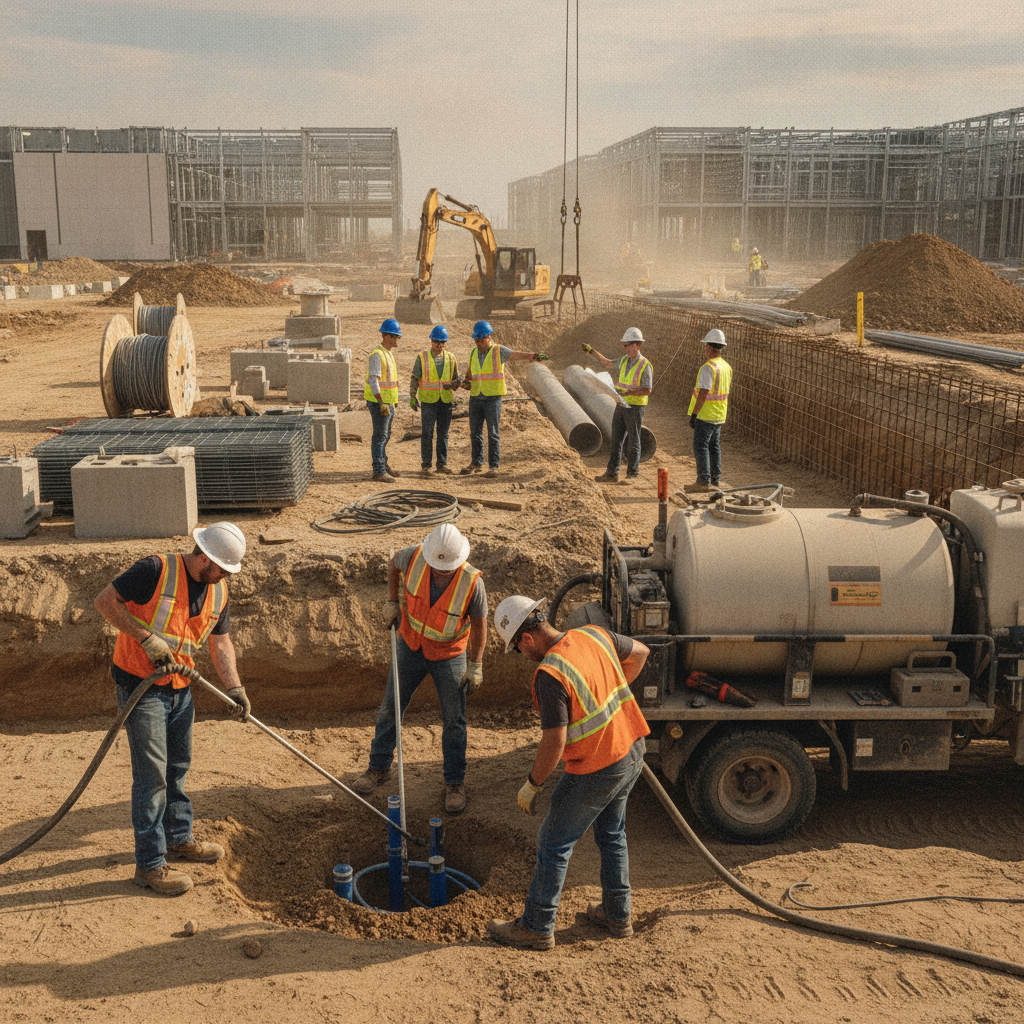
While digital clash detection is powerful, it is only as good as the data it uses. Field verification is essential to confirm the findings of the SUE investigation and resolve any remaining uncertainties. Potholing, or vacuum excavation, is the definitive method for establishing ground truth. This non-destructive technique uses pressurized air or water to loosen soil, which is then vacuumed into a debris tank, safely exposing the target utility without damaging it. The exposed utility’s material, size, depth, and precise location are documented by a surveyor. This process is strategically employed at critical junctures identified during the design phase, such as where a new 12-inch chilled water line must cross a sensitive fiber optic duct bank. By confirming the exact elevation of the existing fiber, the drainage design engineer can confidently set the profile of the new water line to ensure proper clearance. This targeted approach to field verification provides surgical certainty, preventing costly assumptions and enabling a more efficient construction sequence.
Navigating the RFI and Change Order Process
Even with the best planning, unforeseen conflicts can arise. When a conflict is discovered in the field, a formal communication process is initiated, typically through a Request for Information (RFI). The contractor submits an RFI to the engineering team, detailing the nature and location of the conflict. The civil engineering team must then act swiftly to analyze the issue, evaluate potential solutions, and provide a formal response with a clear, constructible direction. This process requires deep knowledge of Florida Building Code and local utility standards. The proposed solution may range from a minor field adjustment to a significant redesign. If the solution alters the original scope of work, a Change Order may be required to adjust the construction contract’s cost and/or schedule. Efficiently managing the RFI and Change Order process is critical to minimizing project disruption. This involves clear communication between the owner, contractor, and engineer, ensuring that all parties understand the technical constraints, cost implications, and impact on the critical path of the site development project.
Executing Utility Realignments and Field-Fit Solutions
The resolution provided in an RFI response typically falls into one of two categories: a field-fit adjustment or a utility realignment. A field-fit adjustment is a minor modification that can be implemented on-site without a formal redesign. This might involve slightly shifting the horizontal alignment of a new pipe within its trench or adjusting its vertical profile by a few inches to clear an obstruction, all while maintaining design integrity and required clearances. These are preferred for their minimal impact on schedule and budget. A utility realignment is a more significant change, requiring a portion of an existing or proposed utility to be rerouted. This is often necessary when a conflict cannot be resolved with a minor adjustment. A realignment requires careful design, coordination with the affected utility owner, and potentially new permitting or easements. The process involves detailed survey work, engineering design for the new alignment, and careful planning of the construction sequence to minimize service disruptions, a key part of construction administration.
RSP’s Approach to Proactive Utility Coordination
At RSP Engineers, we treat utility coordination as a foundational element of data center site design, not an afterthought. Our process begins during the due diligence phase, where we conduct thorough records research and identify major utility corridors and potential constraints. We advocate for and manage a comprehensive Subsurface Utility Engineering (SUE) program tailored to the project’s specific risks, ensuring that our design is based on verified data. Our engineers utilize 3D modeling for early clash detection, resolving potential issues on screen before they become problems in the field. During construction, our team provides responsive construction administration services. When an RFI regarding a utility conflict is received, we prioritize a rapid and practical response. We collaborate directly with the contractor and owner to evaluate options, considering constructability, cost, and schedule. Our deep experience with Florida’s utility providers and permitting agencies allows us to efficiently navigate the requirements for any necessary realignments or design modifications, keeping the project moving forward with minimal disruption.
Common Utility Conflicts and Their Root Causes
Understanding common conflicts helps in their prevention. A frequent issue is a discrepancy between record drawings (as-builts) and the actual field location of a utility; old pipes are rarely where the 30-year-old drawing says they are. Another common problem is undocumented or abandoned utilities left over from previous site uses, which can surprise excavation crews. In dense urban or previously developed areas, multiple generations of utilities can be layered on top of each other, creating a web of infrastructure that requires meticulous potholing to unravel. The root cause often traces back to insufficient upfront investigation. A project that relies solely on QL-D or QL-C utility data is accepting a high level of risk. Furthermore, a lack of coordination between different design disciplines (e.g., the electrical engineer designing a duct bank and the civil engineer designing a storm drain) can create internal conflicts. A robust quality control process, managed by a lead civil engineering firm, is essential to ensure all design components are fully integrated and free of conflicts before construction begins. Frequently Asked Questions (FAQ) How early in the data center design process should we begin Subsurface Utility Engineering (SUE)? SUE should begin as early as possible, ideally during the site feasibility or conceptual design phase. Early identification of major utility constraints through QL-B and targeted QL-A potholing can significantly influence the overall site plan design, including building placement, primary utility routing, and access road locations. Investing in SUE before committing to a final layout saves significant time and money. What is the difference between a utility conflict and a violation of separation standards? A direct utility conflict is when two utilities are designed to occupy the same physical space. A violation of separation standards occurs when two utilities are too close to each other, even if they aren’t touching. For example, regulations often require a minimum of 18 inches of vertical separation and 10 feet of horizontal separation between a water main and a sanitary sewer force main. Both issues must be resolved through proper utility coordination and design. Who is typically responsible for the cost of resolving a utility conflict discovered during construction? Responsibility can be complex and often depends on the contract and the root cause. If the conflict arises from inaccurate information provided by the owner (e.g., faulty survey data), the owner may be responsible. If it’s due to a contractor’s error, they may bear the cost. If it’s a true unforeseen condition, it’s often handled through a change order. Proactive civil engineering and SUE help minimize these unforeseen conditions and associated disputes. How do you coordinate with major utility providers like FPL or Duke Energy in Florida? Coordination is a formal, ongoing process. It involves early permit submittals, regular design review meetings, and adherence to their specific technical standards for clearances, materials, and construction methods. For a major data center, we establish a direct point of contact with the utility’s engineering department to facilitate reviews and approvals for any proposed work near their infrastructure, including necessary utility realignments. Can a utility conflict impact our stormwater management permit? Absolutely. If a utility realignment requires rerouting a major storm drain or shifting the location of an underground retention system, it can trigger the need for a permit modification with the Water Management District. Changes to grading to accommodate a new utility profile can also affect the site’s overall drainage design and require updates to the approved stormwater management plan.
Partner with RSP for Mission-Critical Site Development
Navigating the complexities of data center site development requires an engineering partner who anticipates challenges and solves them proactively. At RSP Engineers, we specialize in the rigorous utility coordination and site development services essential for mission-critical projects. Our team of experienced Florida Licensed Engineers provides comprehensive support, from initial due diligence and SUE management to final construction administration. Don’t let unforeseen utility conflicts jeopardize your project’s timeline and budget. Contact us today to discuss how our expert civil engineering services can ensure a smooth and successful project delivery.
Conclusion
In data center construction, successful utility conflict resolution is a direct result of proactive, detailed, and experienced civil engineering. By investing in comprehensive Subsurface Utility Engineering, performing rigorous digital clash detection, and establishing a clear process for managing RFIs, developers can transform a major project risk into a manageable variable. Ultimately, a well-executed utility coordination strategy is fundamental to delivering these complex, high-stakes facilities on time and within budget, ensuring the integrity of the critical infrastructure that powers our digital world.
FAQs
-
Resolving Utility Conflicts in Data Center Construction requires careful planning, qualified engineering, and compliance with the applicable codes and permits.
-
Getting Resolving Utility Conflicts in Data Center Construction right protects safety, supports regulatory compliance, and avoids costly redesigns or delays.
-
RSP Engineers provides licensed expertise and end-to-end support for Resolving Utility Conflicts in Data Center Construction, from early planning through permitting.