
Protected Species Reviews for Data Center Projects
A comprehensive guide for data center developers on navigating protected species reviews, including the Endangered Species Act, habitat assessments, agency consultation, and mitigation strategies to a
The Regulatory Framework: The Endangered Species Act and Beyond
The primary driver for protected species reviews in the United States is the federal Endangered Species Act (ESA). This powerful legislation prohibits the “take” of any listed species, which includes harming, harassing, or killing an animal, as well as significantly modifying its habitat. For data center projects, which often involve extensive clearing and grading, the potential for habitat modification is a primary concern. The ESA is administered by the U.S. Fish and Wildlife Service (USFWS) for terrestrial and freshwater species and the National Marine Fisheries Service (NMFS) for marine species. Beyond the ESA, other federal regulations like the Migratory Bird Treaty Act and the Bald and Golden Eagle Protection Act can impose significant restrictions on clearing activities, particularly during nesting seasons. Furthermore, many states have their own lists of threatened and endangered species, with regulations that can be even more stringent than federal requirements. These complex layers of regulation create a challenging compliance landscape. Permitting requirements vary by jurisdiction, and every project team should confirm the applicable standards with the local, state, regional, and federal authorities that hold review authority over the site. A thorough understanding of this framework is the first step in any successful land development project.
Initial Desktop Screening and Habitat Assessment
Comparison of Species Review Outcomes
| Outcome | Description | Impact on Data Center Project |
|---|---|---|
| No Species/Habitat Present | Desktop and field assessments conclude that no suitable habitat or listed species are present on the site. | Lowest risk. The project can proceed with standard clearing and construction permits without species-related constraints. |
| Habitat Present, Species Absent | Suitable habitat exists, but protocol-level surveys confirm the species is not currently using the site. | Low to moderate risk. May require documentation and agency concurrence. Future monitoring could be a condition of the permit. |
| Species Present (Avoidance Possible) | A listed species is found on-site, but its habitat can be avoided through careful site planning. | Moderate risk. Requires significant redesign of the site plan, establishing conservation buffers, and potentially deeding a portion of the site to a conservation easement. |
| Species Present (Impacts Unavoidable) | The species' location and habitat conflict directly with essential project infrastructure (e.g., the building pad, primary access). | High risk. Triggers formal consultation and requires a robust mitigation plan. Significant schedule delays are likely. |
| Incidental Take Permit Required | After formal consultation, the agency issues a permit allowing for a limited, unintentional "take" of the species in exchange for implementing significant conservation and mitigation measures. | Highest complexity. Involves long-term monitoring, off-site habitat creation, or purchasing credits from a conservation bank. Adds significant cost and time to the project. |
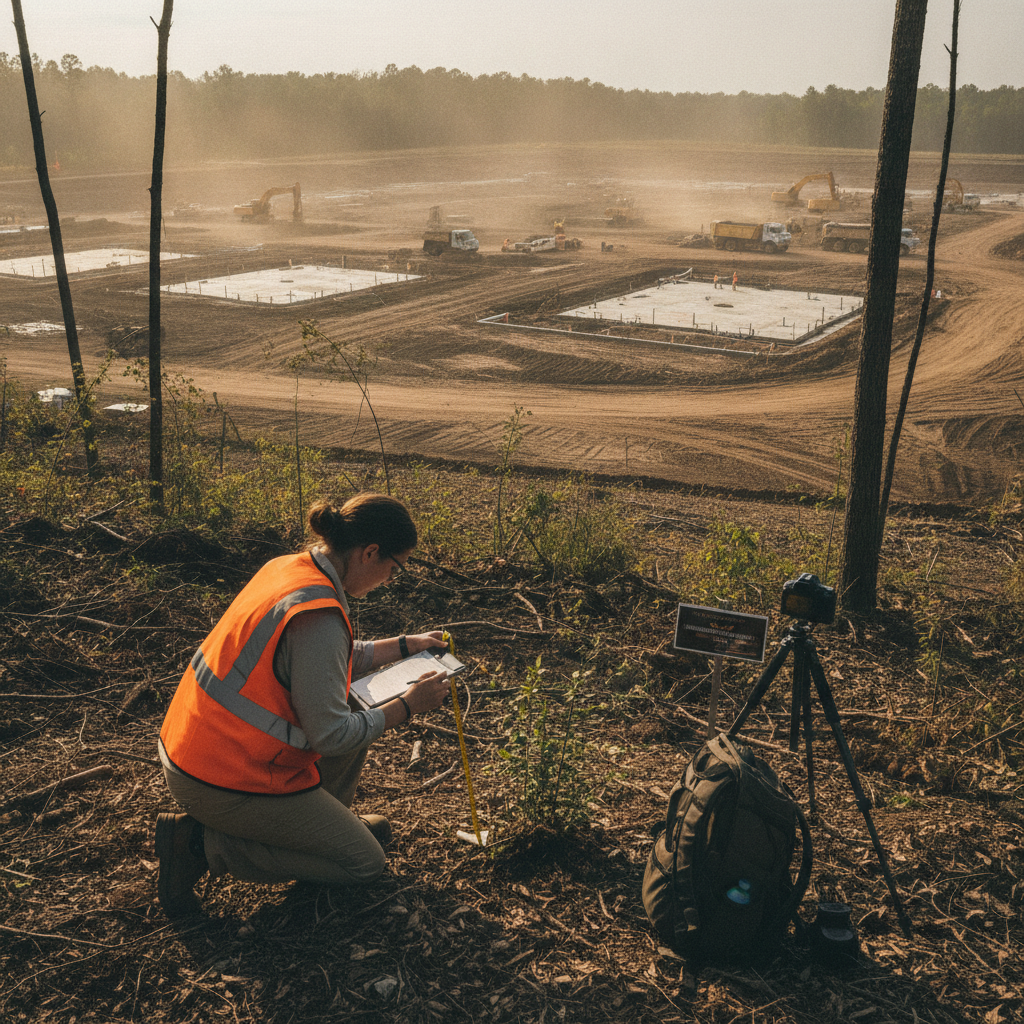
The protected species review process begins long before anyone steps onto the property. The initial phase is a desktop analysis, where environmental scientists and ecologists use a variety of resources to identify potential risks. This includes reviewing federal and state databases of known species occurrences, analyzing aerial photography and topographic maps to identify potential habitats, and examining soil surveys and wetland inventories. The USFWS Information for Planning and Consultation (IPaC) system is a key tool in this phase, providing a preliminary list of species that may be present in the project’s vicinity. If the desktop screening indicates the potential for suitable habitat, the next step is a physical habitat assessment. A qualified biologist will conduct a site visit to ground-truth the desktop findings. They will walk the property to characterize the ecological communities present (e.g., forests, wetlands, grasslands), identify specific habitat features (e.g., mature trees with cavities, rock outcroppings), and look for direct evidence of species presence. This assessment provides the critical data needed to determine if more intensive surveys are warranted, forming a crucial part of the overall site development due diligence.
Presence/Absence Surveys and Seasonal Constraints
When a habitat assessment confirms that a site contains suitable conditions for a listed species, the responsible agencies may require formal presence/absence surveys to determine if the species is actually using the site. These surveys are highly specialized and must be conducted by qualified biologists following agency-approved protocols. Methodologies can range from pedestrian transects for plants and reptiles to acoustic monitoring for bats or trapping for small mammals. A critical factor that often impacts project timelines is the existence of strict seasonal survey windows. Many species can only be reliably detected during specific times of the year, such as their breeding season, migration period, or flowering time. For example, surveys for a protected migratory bird might be limited to a few weeks in the spring. Missing this narrow window can result in a full one-year delay to the project schedule, a costly setback for any data center development. Early planning is essential to align the permitting timeline with these biological constraints.
Federal Nexus and Agency Consultation
The requirement for formal consultation with federal agencies like the USFWS is typically triggered by a federal nexus. This means the project requires a federal permit, receives federal funding, or occurs on federal land. For data center projects, the most common nexus is the need for a Clean Water Act Section 404 permit from the U.S. Army Corps of Engineers (USACE) for impacts to federally protected wetlands or streams. Once a nexus is established, the lead federal agency must consult with the USFWS to ensure its action will not jeopardize the continued existence of a listed species. This agency consultation process can be informal or formal. Informal consultation is a collaborative effort to determine if the project is likely to adversely affect a species. If it is, formal consultation is initiated, culminating in a Biological Opinion from the USFWS. This document details the project’s potential impacts and, if necessary, provides an Incidental Take Statement that allows for a certain level of impact under specified conservation measures. Navigating this process requires deep regulatory knowledge and strong relationships with agency staff, a key component of effective civil engineering consulting.
Mitigation Strategies and Conservation Measures
If protected species or their critical habitats are confirmed on a project site and cannot be avoided, a mitigation plan is required. The goal of mitigation is to offset the project’s adverse impacts. The strategies follow a general hierarchy: avoidance, minimization, and compensation. Avoidance is always the preferred option and involves redesigning the site plan design to completely steer clear of sensitive areas, often by establishing large protective buffers. When avoidance is not fully possible, minimization measures are implemented. This can include timing restrictions, such as prohibiting land clearing during a bird’s nesting season, or using specialized construction techniques to reduce noise and disturbance. If impacts remain after all avoidance and minimization efforts, compensatory mitigation is the final step. This typically involves purchasing credits from an approved conservation bank, which preserves or restores similar habitat off-site, or undertaking a permittee-responsible mitigation project. These measures are negotiated with the reviewing agencies and become legally binding conditions of the project’s permits.
The RSP Engineers Approach to Ecological Due Diligence
At RSP Engineers, we integrate environmental and ecological considerations at the earliest stages of site selection and project planning. Our approach to due diligence for data center projects involves a proactive strategy to identify and resolve potential protected species conflicts before they become critical-path delays. We collaborate with a network of highly qualified biologists and environmental scientists to conduct thorough desktop screenings and habitat assessments as part of our initial feasibility studies. By identifying these constraints early, we can guide the site plan design to avoid sensitive resources, saving clients from costly redesigns and protracted agency review cycles. Our team of Civil Engineers understands how ecological findings directly influence grading, drainage design, and utility routing. This integrated approach de-risks the permitting process, provides greater certainty for project schedules, and helps our clients make informed decisions about their investments.
Common Issues and Project Delays
Despite best efforts, several common issues can arise during the protected species review process, leading to significant project delays. The most damaging is the late discovery of a species after significant design work has been completed, or worse, during construction, which can trigger a stop-work order. Another frequent problem is underestimating the timeline for agency review and consultation; the formal consultation process can take many months, or even over a year, to complete. Failing to account for seasonal survey windows in the master project schedule is a classic pitfall that can force a one-year delay. Finally, developers may propose inadequate buffer zones or mitigation measures, leading to multiple rounds of agency comments and requests for additional information. Proactive planning and realistic scheduling, guided by an experienced civil engineering firm near me, are the best defenses against these common and costly issues. Frequently Asked Questions How early should we start a protected species review for a data center? A protected species review should begin during the initial site selection and due diligence phase, before land acquisition if possible. An early desktop screening can identify major red flags, and a preliminary habitat assessment can inform the initial site layout and feasibility analysis, preventing significant investment in a fatally flawed property. What is a “federal nexus” and why does it matter for my project? A federal nexus is a connection to a federal agency, typically through funding or the need for a federal permit. For most large land development projects, the nexus is the requirement for a Clean Water Act Section 404 permit to impact wetlands or streams. This nexus triggers a mandatory Endangered Species Act consultation, a formal process that significantly influences the project’s permitting timeline and requirements. Can a protected species finding completely stop a project? While rare, it is possible for a protected species issue to render a project economically or logistically infeasible. This typically occurs when a highly protected species occupies the only viable location for critical infrastructure on the site and no mitigation options are acceptable to the regulatory agencies. More commonly, a finding leads to significant project modifications, cost increases, and schedule delays rather than outright cancellation. What is an “incidental take permit”? An Incidental Take Permit (or an Incidental Take Statement as part of a Biological Opinion) is a legal authorization from a wildlife agency that allows a project to proceed even though it will result in a limited, unintentional “take” of a listed species. These permits are not granted easily and require the applicant to develop and fund a comprehensive Habitat Conservation Plan or mitigation strategy to offset the impacts and ensure the long-term survival of the species. How do species reviews interact with other civil engineering tasks? The findings of a protected species review directly impact core civil engineering work. The need for large conservation buffers can constrain the developable area, affecting the building footprint, parking layout, and stormwater management system. For example, a protected wetland buffer can limit locations for stormwater ponds or utility corridors. This makes early integration of ecological data into the site plan design absolutely essential.
Partner with RSP for Proactive Site Development
Navigating the complexities of protected species regulations requires a partner who understands both the ecological constraints and the engineering realities of large-scale site development. RSP Engineers provides integrated site engineering services that proactively address environmental challenges. Our team coordinates the critical path of permitting, utility coordination, and civil engineering design to deliver data center projects on time and on budget. We help clients identify and mitigate risks early, ensuring that environmental compliance is a streamlined part of the development process, not an obstacle to it. Don’t let an unforeseen environmental issue derail your next mission-critical project. Contact RSP Engineers today to discuss how our proactive due diligence and integrated design approach can safeguard your investment.
Conclusion
For data center developers, a protected species review is a non-negotiable component of comprehensive due diligence. The potential for project-altering discoveries necessitates an early and thorough assessment of any potential site. By understanding the regulatory framework, respecting seasonal constraints, and integrating ecological findings into the initial site plan, developers can transform a potential liability into a manageable risk. Proactive engagement with an experienced land development and engineering team is the most effective strategy for navigating these challenges and keeping a complex project on track.
FAQs
-
Protected Species Reviews for Data Center Projects requires careful planning, qualified engineering, and compliance with the applicable codes and permits.
-
Getting Protected Species Reviews for Data Center Projects right protects safety, supports regulatory compliance, and avoids costly redesigns or delays.
-
RSP Engineers provides licensed expertise and end-to-end support for Protected Species Reviews for Data Center Projects, from early planning through permitting.