
Phased Permitting Strategies for Florida Land Development
Explore phased permitting strategies for large-scale Florida land development. Learn how to manage risk, cash flow, and agency approvals for complex projects.
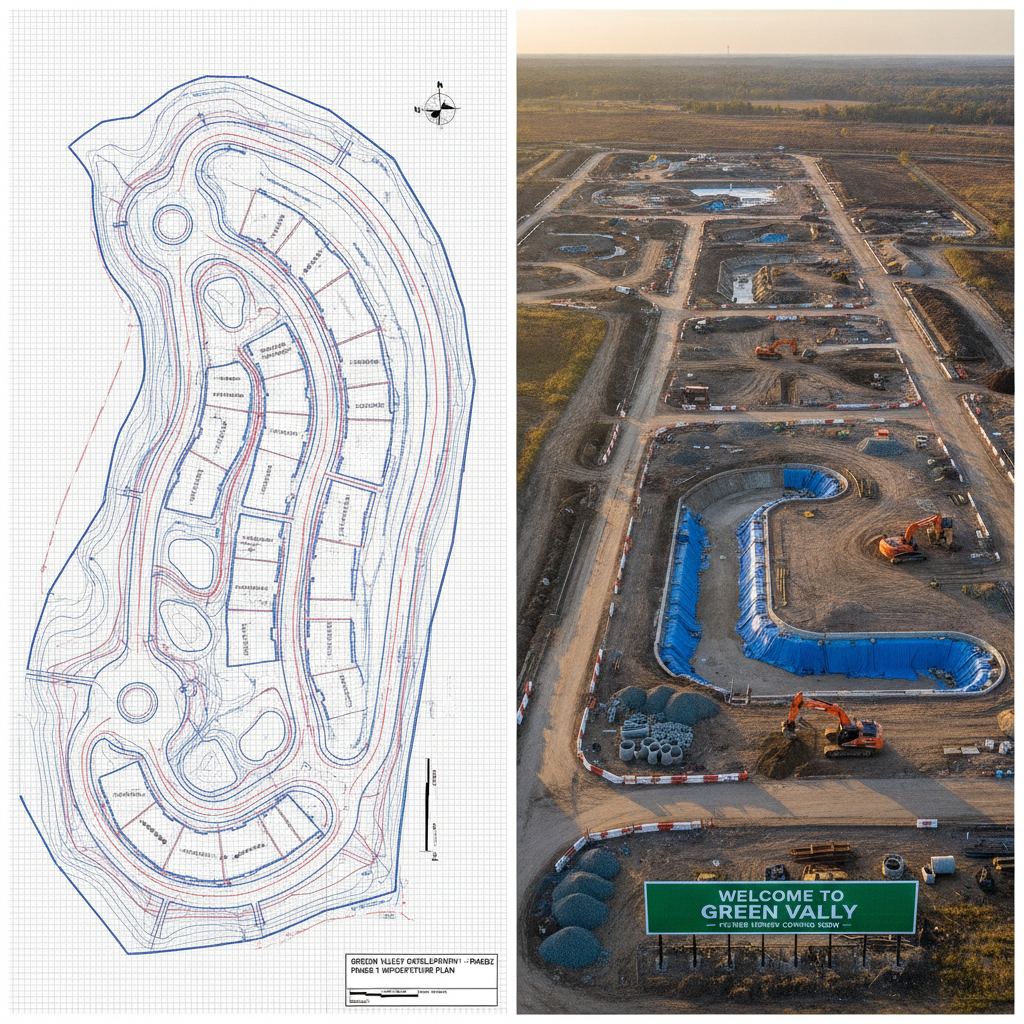
The Foundation: Master Planning and Entitlements
Before any phase-specific permits can be pursued, a comprehensive master plan is essential. This foundational stage involves securing the project’s overall entitlements, which grant the legal rights to develop the property for its intended use. The process begins with a thorough due diligence and feasibility study to confirm that the project vision aligns with local regulations. Key to this is ensuring the project meets all zoning compliance requirements and is consistent with the local government’s Comprehensive Plan and Future Land Use Map (FLUM). In many cases, this may require a rezoning application or a FLUM amendment, which are significant undertakings in themselves. The approved master site plan serves as the roadmap for the entire development, outlining the overall layout, major infrastructure corridors, conservation areas, and the general location of future phases. This high-level approval from the governing municipality provides the developer and their engineering team with the assurance needed to invest in the detailed design of Phase 1. Securing these initial entitlements is a critical risk mitigation step, as it confirms the viability of the entire project before substantial engineering and permitting fees for vertical construction are incurred. This master plan becomes the controlling document referenced in all subsequent permit submittals for individual phases.
Horizontal vs. Vertical Phasing: A Strategic Choice
Phased Permitting Decision Matrix: Key Considerations
| Factor | Single-Phase Approach (High Risk) | Phased Approach (Managed Risk) | Engineering Consideration |
|---|---|---|---|
| Capital Outlay | Requires full funding for all infrastructure upfront. | Spreads infrastructure costs over time, aligning with revenue. | Design must accommodate logical breakpoints for infrastructure extensions. |
| Market Adaptability | Locks in a single master plan; difficult to change. | Allows for design modifications in later phases to meet market shifts. | Master plan must be flexible enough to allow for future density or use changes. |
| Permitting Complexity | A single, massive permit application with extensive agency review. | Initial master permit followed by smaller, more focused phase permits. | Requires a robust master drainage plan and utility framework from the start. |
| Infrastructure Cost | Often requires oversizing utilities and roads for future capacity from day one. | Allows for 'just-in-time' construction of infrastructure as needed. | Utility coordination is critical to reserve future capacity without overbuilding. |
| Agency Review Timeline | Can be extremely long due to the project's overall size and complexity. | Master permit review is intensive, but subsequent phase reviews are often faster. | Clear delineation of phase boundaries and impacts is key for efficient agency review. |
| Financing | May be more difficult to secure financing for the entire project at once. | Easier to obtain financing for smaller, defined phases with clearer ROI timelines. | Engineering cost estimates must be broken down by phase to support loan draws. |
Phased permitting can be categorized into two primary strategies: horizontal and vertical. Horizontal phasing focuses on the site development and infrastructure. For a large residential subdivision, Phase 1 might include the mass grading for the entire site, the main entrance roadway, the primary utility trunk lines, and the master stormwater management system. Subsequent horizontal phases would involve extending these utilities and roads into new sections of the development. This approach allows the developer to prepare land and sell finished lots to builders sequentially. Vertical phasing, conversely, applies to the construction of the buildings themselves. This is common in large commercial or multifamily projects where a developer might get a foundation permit first, followed by a permit for the building shell, and finally, separate permits for the interior build-outs of tenant spaces. The choice between these strategies depends on the project type and market conditions. A successful large-scale project often employs a hybrid approach, coordinating the completion of horizontal development phases with the commencement of vertical construction to ensure a smooth, continuous workflow from raw land to finished product.
Navigating Stormwater Management in Phased Developments
In Florida, stormwater management is one of the most critical aspects of land development, governed by the state’s Water Management Districts (WMDs). For phased projects, developers typically seek a master Environmental Resource Permit (ERP) that covers the entire project’s stormwater design concept. This master permit establishes the overall drainage patterns, the location and size of major ponds or water control structures, and demonstrates that the completed project will meet all state and local water quality and quantity requirements. The master drainage plan is based on sophisticated stormwater modeling that accounts for the ultimate build-out condition. Once the master ERP is approved, subsequent construction activities for each phase are often authorized through minor modifications or letters of compliance, rather than entirely new permit applications. This streamlines the agency review process significantly. However, it requires careful planning to ensure that the initial phases of construction do not negatively impact drainage for future phases or adjacent properties. The design must ensure that each phase can function independently from a stormwater perspective while seamlessly integrating into the master system as the project progresses.
Utility Coordination and Capacity Planning for Future Growth
A phased development’s success hinges on robust utility coordination and long-term capacity planning. It is not enough to design utilities only for Phase 1. The civil engineering team must design and locate master infrastructure, such as primary water mains, force mains, and lift stations, to accommodate the total projected demand of the entire development at full build-out. This requires early and frequent communication with local utility providers to secure commitments and reserve the necessary capacity for water and wastewater services. Developers must obtain ‘will-serve’ letters from utility authorities, which confirm that the provider has adequate capacity to serve the project. For large projects, this often involves a capacity reservation agreement, which may require an upfront financial commitment. The master utility plan must be carefully staged to avoid oversizing infrastructure too early, which ties up capital, while also preventing a situation where future phases cannot be built because of inadequate downstream capacity. This strategic planning is a core component of a successful phased development strategy.
Permit Sequencing with Local, State, and Federal Agencies
A key benefit of phasing is the ability to strategically sequence permit submittals to various regulatory agencies. A typical sequence for a large project might begin with securing overarching approvals like a Development of Regional Impact (DRI) or a master plan approval from the local municipality. This is followed by the master Environmental Resource Permit (ERP) from the WMD and potentially permits from the Florida Department of Environmental Protection (FDEP) or the Army Corps of Engineers if wetlands are impacted. With these master permits in hand, the developer can then apply for more specific permits for Phase 1. These phase-specific permits often include a mass grading permit for the entire site, followed by a detailed site development permit for the Phase 1 infrastructure (roads, drainage, utilities). Only after this infrastructure is under construction would the developer or their builders apply for vertical construction permits based on the Florida Building Code. This tiered approach breaks down a daunting, multi-agency process into a logical series of milestones, making the agency review process more focused and manageable for each distinct scope of work.
Managing Construction Administration Across Multiple Phases
The role of the civil engineer doesn’t end when permits are issued. For phased projects, ongoing construction administration is crucial to ensure long-term success. The engineering firm must verify that the infrastructure for each phase is constructed in accordance with the permitted plans and specifications. This includes reviewing shop drawings, responding to contractor RFIs, and performing periodic site inspections to monitor progress and quality. A critical task is the preparation and submission of as-built surveys and certification documents upon the completion of each phase. These documents certify to the governing agencies that the work was completed as permitted, which is required to close out the construction permits and, in many cases, to receive certificates of occupancy for completed buildings. For a multi-phase project, maintaining meticulous records and ensuring seamless permit closeout for each phase is essential for avoiding delays and complications in subsequent phases.
The RSP Engineers Approach to Phased Development Strategy
At RSP Engineers, we view phased permitting as a core strategic tool for our developer clients. Our process begins with in-depth due diligence and master planning, where we work collaboratively to establish a clear vision and secure the necessary entitlements. We develop a comprehensive permitting strategy that identifies all required local, state, and federal approvals and creates a logical timeline for submissions. Our expertise in creating a flexible yet robust master site plan ensures that future phases can adapt to changing market conditions without requiring a complete redesign. Our team manages the entire lifecycle, from initial concept through final platting and permit closeout. We handle the complexities of multi-agency utility coordination, master stormwater modeling, and roadway design. During construction, our construction administration services provide the oversight needed to keep the project on track, ensuring each phase is built to specification and properly certified. This integrated approach transforms a potentially overwhelming process into a predictable, value-driven execution plan.
Common Pitfalls in Phased Permitting
While advantageous, phased permitting is not without its challenges. One of the most common pitfalls is an inadequate master plan that fails to properly account for the needs of future phases, leading to costly redesigns. Another frequent issue is underestimating the ultimate demand for utilities, resulting in a lack of capacity for later phases. Developers can also be caught off guard by changes in environmental regulations or local ordinances that come into effect between phases, requiring modifications to previously approved plans. Finally, poor coordination between the horizontal infrastructure construction and the vertical building schedule can lead to significant delays and budget overruns. Careful, forward-thinking engineering is the best defense against these potential issues.
Partner with RSP Engineers for Strategic Phased Permitting
Successfully executing a large-scale, phased development in Florida requires a civil engineering firm with deep regulatory knowledge and strategic foresight. RSP Engineers specializes in guiding developers through this complex process. We provide the expert analysis needed to create a viable and flexible master site plan, navigate multi-agency permitting, and manage the intricate demands of utility coordination. From initial concept to final certification, our team acts as your trusted partner, ensuring your project is positioned for success, one phase at a time. Contact us today to discuss your next land development project.
Conclusion: Building a Framework for Long-Term Success
Phased permitting is more than just an administrative process; it is a powerful business strategy that empowers Florida developers to manage risk, optimize capital, and respond to the market with agility. By investing in a comprehensive master plan and a thoughtful phasing strategy, developers can transform an overwhelming vision into a series of achievable, value-generating milestones. Success requires a deep understanding of stormwater management regulations, long-range utility coordination, and the nuances of multi-agency review. Partnering with experienced Civil Engineering Firms like RSP Engineers provides the technical expertise and strategic guidance necessary to build a framework for enduring success.
FAQs
-
Yes, this is a primary benefit of phasing. As long as the proposed changes are consistent with the overall entitlements and do not negatively impact the approved master drainage plan or other critical infrastructure, modifications can typically be submitted to the governing agencies for review and approval for future phases.
-
A master Environmental Resource Permit (ERP) establishes the design for the entire project’s stormwater system. For each construction phase, you typically submit a request for a minor modification or a notice of intent to the Water Management District, demonstrating that the specific phase construction conforms to the principles and design of the master permit.
-
This is a significant risk. In many jurisdictions, projects with an approved master plan or preliminary plat may have ‘vested rights,’ protecting them from certain new regulations for a specific period. It is crucial to understand the local land development code and work with legal counsel and your civil engineering team to secure these rights early in the process.