
Navigating the Rising Tide: Engineering Design for South Florida’s Tidal Flooding Challenges
A guide for developers on the critical civil engineering design adaptations required for tidal flooding in South Florida, covering stormwater, permitting, and site elevations.
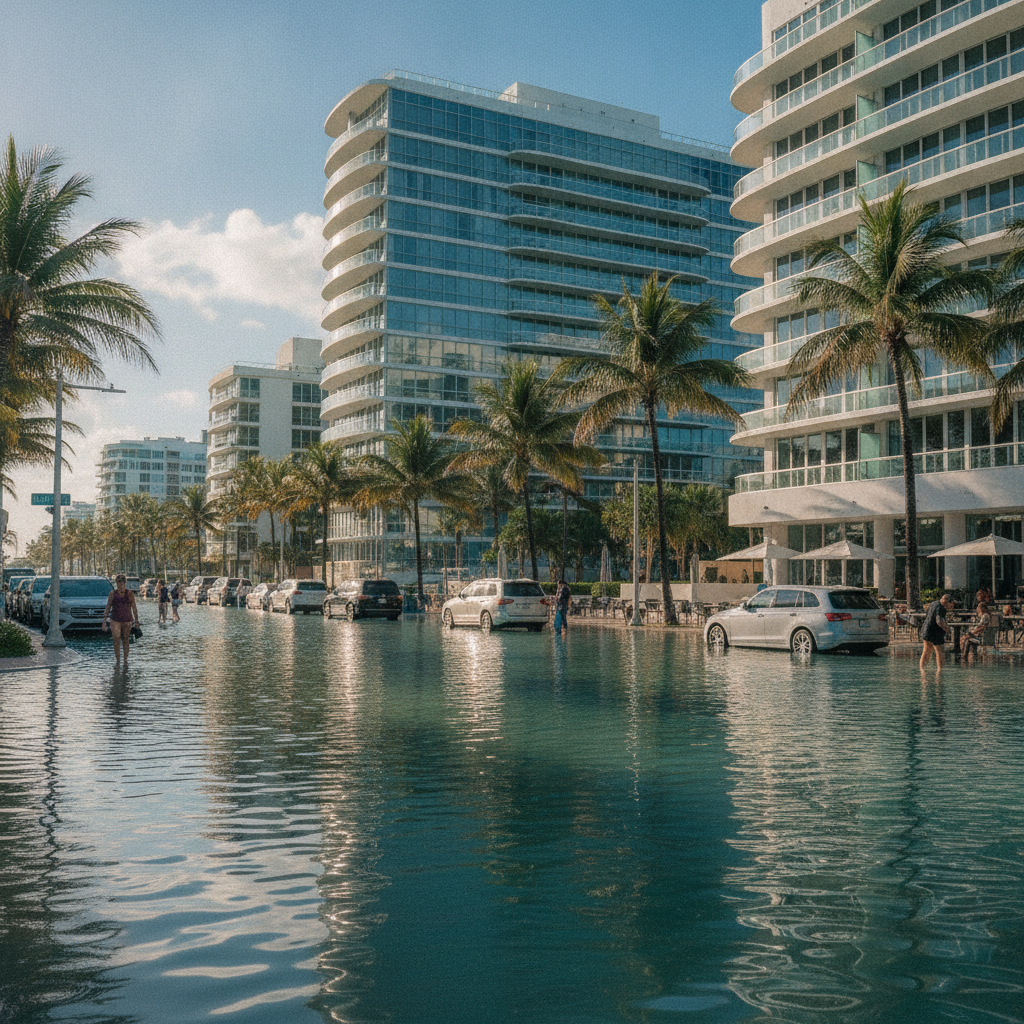
Understanding Tidal Flooding vs. Storm-Induced Flooding
It is critical to distinguish between tidal flooding and storm surge. While both involve coastal water inundation, their mechanisms and engineering responses differ significantly. Storm surge is an acute, event-driven rise in water level caused by a hurricane’s low pressure and high winds. In contrast, tidal flooding is a chronic condition resulting from the gravitational pull of the moon and sun, exacerbated by long-term sea-level rise. This regular inundation has a persistent impact on infrastructure, particularly by raising the local groundwater elevation. This elevated water table directly compromises traditional stormwater management systems, which rely on gravity and soil percolation. When the groundwater is already high, there is no capacity for rainwater to infiltrate, leading to prolonged standing water after even minor rain events. A competent Civil Engineer near me must analyze both FEMA flood data for storm events and local tidal gauge data to establish a comprehensive water-level baseline for any new site development Orlando or Miami project.
Establishing Resilient Site Elevations and Grading
Tidal Flooding Design Adaptation Strategies
| Design Element | Conventional Approach (Inland) | Tidal-Resilient Approach (Coastal) |
|---|---|---|
| Finished Floor Elevation (FFE) | Set based on FEMA BFE + local freeboard. | Set based on FEMA BFE plus additional height for sea-level rise projections and king tide data. |
| Stormwater Outfall | Gravity flow pipe with a simple flared-end section. | Gravity pipe with an anti-backflow valve; may require a pumped system if tailwater is consistently high. |
| Underground Utilities | Standard materials (e.g., ductile iron, RCP) with standard burial depth. | Corrosion-resistant materials (e.g., HDPE, PVC, polymer-coated metals) with watertight connections. |
| Pavement Sub-base | Standard limerock or crushed concrete base, assuming dry conditions. | Requires a stabilized subgrade and consideration of a capillary break to prevent saltwater wicking up into the base. |
| Landscaping & Irrigation | Use of traditional turfgrass and ornamental plants with standard irrigation. | Emphasis on salt-tolerant native species; irrigation systems designed with backflow preventers to avoid saltwater contamination. |
| Geotechnical Analysis | Standard soil borings to determine bearing capacity. | Requires analysis of groundwater salinity, seasonal high water table, and a detailed Geotechnical soil report. |
The first line of defense against any type of flooding is elevation. Setting appropriate finished floor elevations (FFEs) is arguably the most critical decision in coastal site design. Historically, designers relied solely on FEMA Base Flood Elevations (BFEs), which primarily model storm surge risk. However, many South Florida municipalities now mandate higher FFEs and site elevations to account for sea-level rise projections and tidal flooding. This often involves significant earthwork and importing fill to raise the entire project site, not just the building pads. This strategy impacts more than just the structure; it requires a complete rethinking of the site grading and drainage plan. Roadways, parking lots, and pedestrian access routes must also be elevated to ensure functionality during high tide events, which is a key component of ADA compliance. The design must create a seamless, accessible environment while directing water away from critical infrastructure, a core task for any civil engineering firm near me specializing in coastal regions.
Rethinking Stormwater Management Systems
Conventional stormwater management systems in Florida are designed to collect runoff and discharge it via gravity to a nearby water body. This model fails when tidal flooding raises the tailwater elevation at the outfall pipe above the water level in the drainage system. When this occurs, saltwater flows backward into the pipes, inundating the site from within. This requires a fundamental shift in drainage design. Modern solutions include the installation of anti-backflow valves (e.g., check valves or flap gates) at all discharge points. In many low-lying areas, passive gravity systems are being replaced with pumped systems that can forcibly discharge stormwater even against a high tide. Furthermore, on-site storage solutions like exfiltration trenches or underground vaults must be designed with the understanding that a high water table severely limits their effective storage volume, necessitating more complex hydrologic modeling during the design phase.
Material Selection and Infrastructure Durability
Tidal flooding introduces a highly corrosive element to the site: saltwater. Persistent exposure to saline water and spray accelerates the degradation of common construction materials. This necessitates a careful review of specifications for all site infrastructure. For example, reinforced concrete pipe (RCP) is vulnerable to chloride-induced corrosion, making high-density polyethylene (HDPE) or specialized polymer-coated pipes a more durable choice for storm drainage systems. This concern extends to all underground infrastructure. Protecting electrical conduits, potable water lines, and sanitary sewer systems from saltwater intrusion is paramount. This involves specifying corrosion-resistant materials, ensuring watertight seals, and coordinating placement to minimize exposure. Effective utility coordination with a forward-looking perspective on material durability is a hallmark of resilient site engineering services in coastal zones.
Permitting Challenges with Water Management Districts and Municipalities
The regulatory landscape in South Florida is rapidly evolving to address tidal flooding. Permitting a project now involves demonstrating resilience to future conditions, not just compliance with historical data. Agencies like the South Florida Water Management District (SFWMD) and local county environmental departments are scrutinizing permit submittals for evidence of sea-level rise consideration in the drainage design and overall site plan. Applicants must often provide more sophisticated hydrologic and hydraulic (H&H) modeling that simulates system performance under various tidal scenarios. This can extend review timelines and require additional justification for design choices. Proactive engagement with agency staff during the pre-application phase is crucial to align the project with emerging resilience criteria and avoid costly delays during the formal agency review process.
Integrating Seawalls and Coastal Armoring Solutions
For waterfront properties, structural shoreline protection is often a necessary component of the overall site plan. Seawalls, revetments, and bulkheads serve as direct barriers against tidal inundation. However, modern design standards require more than just a simple vertical wall. Today’s seawalls must be designed to new height standards set by local municipalities, often several feet above existing grade, and must have deep foundations to prevent undermining from scour and hydrostatic pressure. An integrated approach also considers green infrastructure solutions like living shorelines, which use natural elements like mangroves and marsh grasses to dissipate wave energy and stabilize the coast. The choice between a hard-armored solution and a nature-based one depends on site-specific conditions, regulatory constraints, and project goals. This decision is a key part of the initial site development strategy and has long-term implications for both the property and the surrounding ecosystem.
RSP Engineers’ Proactive Approach to Coastal Resilience
At RSP Engineers, we treat tidal flooding not as an obstacle, but as a fundamental design parameter. Our process begins with a comprehensive Coastal Hazard and Vulnerability Assessment for every project in a tidal-influenced zone. We analyze historical tidal data, local sea-level rise projections from sources like the Southeast Florida Regional Climate Change Compact, and perform a detailed review of the site’s unique topography and soil conditions, often recommending a thorough Soil boring test. Our design phase incorporates dynamic modeling to simulate how the stormwater management system will perform under king tide conditions. We work collaboratively with architects, landscape architects, and marine contractors to develop an integrated site plan where buildings, infrastructure, and shoreline protection function as a single, resilient system. This proactive approach streamlines the permitting process and delivers a final product that is durable, compliant, and prepared for the future.
Common Issues in Tidal-Impacted Site Design
Even with careful planning, several common issues can arise. A primary one is underestimating the true seasonal high groundwater table, leading to failed drainage fields and saturated pavement subgrades. Another frequent problem is the misapplication of anti-backflow valves, which can fail if not properly specified and maintained. We also see challenges with saltwater intrusion damaging expensive landscaping and causing premature failure of concrete and asphalt. Finally, permitting delays are common when engineering plans fail to adequately document how the design addresses long-term sea-level rise, often resulting in extensive requests for additional information from review agencies.
Partner with RSP Engineers for Resilient South Florida Development
Successfully navigating the complexities of tidal flooding requires specialized expertise and a forward-thinking approach. The team at RSP Engineers provides the comprehensive civil engineering services needed to bring your South Florida project to life. From initial site feasibility studies and resilient site plan design to navigating complex multi-agency permitting and providing Construction Management Services, we are your partners in building a durable and profitable future. Don’t let rising tides compromise your investment. Contact us today to discuss your project’s unique challenges and how our expertise in stormwater management and coastal design can ensure its success.
Building for the Future: Engineering Beyond the Floodplain
The reality of tidal flooding in South Florida has permanently altered the standards for responsible land development. Proactive, resilient design is no longer a premium feature but a fundamental requirement for project approval, insurability, and long-term value. By integrating an understanding of coastal processes into every aspect of site development, from initial grading to final material selection, we can create projects that not only withstand but thrive in this changing environment. Partnering with an experienced civil engineering firm is the first and most critical step in achieving that resilience.
FAQs
-
Tidal flooding adds a layer of complexity and scrutiny to the permitting process. Review agencies will require detailed calculations and modeling to prove your stormwater management system can function during high tides and that your proposed elevations meet new resilience standards. This can add several months to a typical review cycle if not addressed proactively.
-
Not necessarily. While effective, seawalls are expensive and can have ecological impacts. Depending on the shoreline energy and local regulations, a ‘living shoreline’ using natural vegetation or a hybrid approach might be a more sustainable and cost-effective solution. The best approach depends on a site-specific analysis of both engineering and environmental factors.
-
In many cases, yes. Retrofitting can include adding anti-backflow valves to existing outfalls, installing small pump stations to assist with drainage during high tides, and improving on-site water storage. A thorough assessment by a qualified Professional Engineer is needed to determine the most effective retrofitting strategy.