
How 3D Printing is Reshaping the Future of Civil Engineering
Explore how 3D printing technology is set to revolutionize civil engineering, from rapid prototyping to constructing complex stormwater structures. Learn about the potential impacts on Florida land de
From Concept to Reality: Rapid Prototyping for Site Development
One of the most immediate applications of 3D printing in civil engineering is in rapid prototyping. Before a single shovel hits the ground, creating detailed, scaled physical models of a project site can be invaluable. These models offer a tangible way for stakeholders, investors, and permitting agencies to visualize complex topography, understand proposed drainage design, and see how new infrastructure integrates with the existing environment. This is a significant leap from 2D drawings or even digital 3D renderings. For a complex site development project in Florida, a 3D printed model can clearly illustrate the layout of retention ponds, the path of underground utilities, and the grading plan. This facilitates more productive discussions around zoning compliance and potential construction challenges. By identifying issues with sight lines, ADA compliance, or utility conflicts at this early stage, our team can refine the site plan design, saving significant time and money before construction begins. This level of detail helps streamline the agency review process by providing clarity that traditional plans cannot always offer.
Structural Components and Custom Infrastructure
Comparison: Traditional vs. 3D Printed Construction Methods
| Feature | Traditional Construction Method | 3D Printing (Additive) Method | Potential Impact on Florida Projects |
|---|---|---|---|
| Formwork & Molds | Requires extensive, custom-built wooden or steel formwork; labor-intensive and creates significant waste. | Largely eliminates the need for formwork, as the material is extruded into its final shape layer by layer. | Reduced labor costs, faster setup times, and less construction debris on site development projects. |
| Material Waste | Significant waste from concrete over-pour, cutting materials (CMU, wood), and discarded formwork. | Additive process uses only the material needed for the structure, minimizing waste to as little as 1-2%. | Lower material costs and improved sustainability, a key factor for environmentally sensitive Florida sites. |
| Design Complexity | Complex curves and unique geometries are expensive and difficult to execute, often limiting design possibilities. | Enables easy creation of complex, optimized shapes and organic forms at little to no additional cost. | Allows for innovative stormwater management structures and unique architectural features. |
| Construction Speed | Dependent on manual labor, curing times for concrete within forms, and sequential trade scheduling. | The structural shell can be printed rapidly, often in a matter of days, running 24/7. | Accelerated project timelines, potentially reducing carrying costs for developers. |
| Labor Requirements | Requires a large, skilled workforce for various trades (carpentry, masonry, concrete finishing). | Requires a smaller team of trained technicians to operate and monitor the printing equipment. | Helps mitigate impacts of skilled labor shortages and can improve job site safety. |
| Quality Control | Relies on manual inspection of rebar placement, concrete slump tests, and formwork integrity. | Digital process allows for real-time monitoring of material extrusion and dimensional accuracy via sensors. | Potential for higher consistency and quality, with a digital record of the entire construction process. |
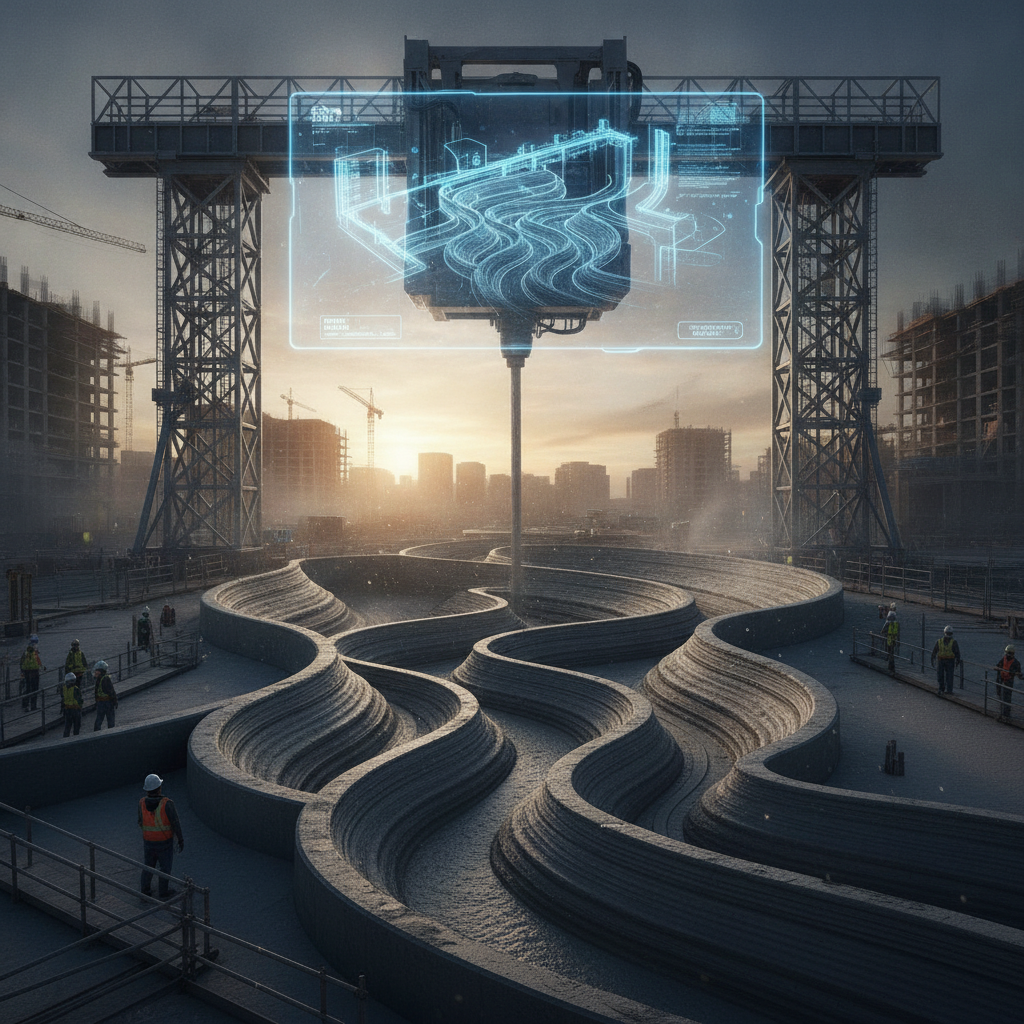
Beyond models, 3D printing is being used to create functional, load-bearing structural components. Using specialized concrete mixes and other advanced materials, large-scale printers can fabricate everything from wall panels to entire building shells. The key advantage is the ability to create complex geometries without the need for expensive and labor-intensive formwork. This opens up new possibilities for architectural expression and structural optimization, which is a core part of our site engineering services. Imagine printing custom-shaped concrete elements for a unique bridge abutment, an architecturally complex facade, or specialized junction boxes for utility coordination. This technology allows a Professional Engineer to design components that are precisely tailored to the specific loads and environmental conditions of a site. This could lead to more efficient material usage, reduced construction waste, and stronger, more resilient infrastructure—all critical factors for projects in Florida’s demanding climate.
Innovations in Stormwater Management and Drainage Structures
Florida’s intense rainfall and sensitive ecosystems make stormwater management a top priority for any land development project. 3D printing offers groundbreaking potential in this area. Instead of relying on standard, pre-cast concrete structures, engineers can design and print highly efficient, custom drainage components. This could include vortex separators that improve water quality, intricately shaped inlets that maximize hydraulic efficiency, or custom weirs for specialized flow control within a retention pond. This level of customization allows for a more effective stormwater management system that can be better integrated into the site’s landscape. For example, we could print permeable pavement blocks with optimized void structures for enhanced infiltration, helping to recharge local aquifers and reduce runoff. Such innovations could significantly streamline the permitting process with Water Management Districts by demonstrating superior environmental performance compared to conventional methods.
Material Science and Sustainability Implications
The evolution of 3D printing in construction is intrinsically linked to advancements in material science. While concrete is the primary material today, research is rapidly progressing on using recycled materials, geopolymers with a lower carbon footprint, and even bio-composites. This aligns with a growing industry focus on sustainability. The precision of 3D printing also drastically reduces material waste compared to subtractive methods or the over-pour common in traditional concrete work. However, any new material must undergo rigorous testing to ensure it meets the stringent requirements of the Florida Building Code and other local ordinances. This includes assessments of compressive strength, durability, and resistance to Florida’s humid, salt-laden air. The validation process will be critical for gaining acceptance from regulatory bodies and ensuring the long-term safety and viability of 3D printed structures, a process that requires diligent construction administration and quality control.
Addressing Florida’s Unique Environmental Challenges
3D printing technology is uniquely suited to address some of Florida’s specific environmental and infrastructure challenges. For coastal communities, it could be used to print custom-designed artificial reef structures or living shoreline components that promote marine habitats while providing erosion control. The ability to create complex, porous structures is ideal for mimicking natural systems, a key goal in modern, resilient design. In roadway engineering, 3D printing could be used to create specialized, lightweight fill materials for construction over soft soils, a common issue in many parts of the state. It could also be used for rapid repair of infrastructure after a hurricane, printing custom patches for damaged seawalls or culverts. This adaptability makes it a powerful tool for enhancing the resilience of our public works and private developments, a key concern for all Civil Engineering Firms in the region.
Regulatory Hurdles and the Path to Code Acceptance
Despite its immense potential, the widespread adoption of 3D printing in construction faces significant regulatory hurdles. Building codes are traditionally prescriptive, based on decades of experience with conventional materials and methods. A 3D printed wall does not have the same internal structure as a standard CMU wall, requiring a new framework for inspection and certification. The permitting process for these innovative structures is still being defined. Forward-thinking municipalities and agencies will need to develop performance-based standards to evaluate these new systems. This will involve extensive testing, pilot projects, and collaboration between engineers, material scientists, and regulators. A Professional Engineer will play a crucial role in validating the safety and durability of these designs, preparing detailed permit submittals that demonstrate compliance with the intent of the Florida Building Code, and educating reviewers on the technology’s capabilities and safeguards.
How RSP Engineers Approaches New Technologies
At RSP Engineers, we are committed to leveraging technology to deliver superior results for our clients. While 3D printing is still an emerging field in construction, we are actively monitoring its development, engaging with industry leaders, and evaluating its practical applications for land development in Florida. Our approach is one of cautious optimism and rigorous due diligence. We believe in innovation that is backed by sound engineering principles and a clear path to regulatory approval. Our process involves assessing new technologies like 3D printing against key performance indicators: safety, durability, cost-effectiveness, and compliance. We help clients understand the risks and rewards, ensuring that any proposed solution, whether traditional or cutting-edge, aligns with their project goals and meets all requirements for zoning compliance, environmental regulations, and long-term performance. We see our role as a trusted advisor, guiding clients through the complexities of both established and emerging construction methods.
Common Issues and Limitations of 3D Printing in Construction
While the future is bright, it’s important to acknowledge the current limitations of 3D printing in civil engineering. The high initial capital investment for large-scale printers can be a significant barrier to entry. Material science, while advancing, still faces challenges in developing concrete mixes that are both printable and possess the required structural properties without traditional reinforcement. Integrating steel rebar into a printed structure remains a complex and often manual process, though new techniques are being developed. Furthermore, scalability is a concern for massive infrastructure projects. Printing a single-story building is one thing; printing a multi-level parking garage or a large bridge is another. Finally, the lack of established standards and clear permitting pathways remains the single largest obstacle. Until building departments have a codified process for reviewing and inspecting these structures, its use will likely be limited to pilot programs and non-critical applications.
Partner with a Forward-Thinking Civil Engineering Firm
Navigating the future of construction requires a partner who understands both the proven methods of today and the promising innovations of tomorrow. RSP Engineers provides the expert guidance needed to make your project a success. Whether you are planning a traditional build or exploring cutting-edge technologies, our team offers comprehensive site engineering services. We specialize in navigating complex permitting, optimizing site plan design, and ensuring your land development project is built on a foundation of excellence. Contact us to discuss how we can bring our expertise to your next project in Florida.
Conclusion
3D printing is poised to become a powerful tool in the civil engineering toolkit. While it may not replace traditional methods entirely, its ability to create complex structures, reduce waste, and potentially accelerate construction is undeniable. For Florida, the technology offers intriguing solutions for enhancing stormwater management, building resilient infrastructure, and improving the overall efficiency of site development. As the technology matures and the regulatory framework evolves, the firms that have invested in understanding its capabilities will be best positioned to lead the industry forward.
FAQs
-
Currently, the use of 3D printing for major public infrastructure in Florida is limited to pilot projects and research. While some private residential projects have been completed, its application for critical components like bridges or large-scale stormwater systems requires further development and regulatory approval from agencies like the FDOT and local municipalities.
-
It shifts the design process to be more integrated and digitally driven. Engineers can use generative design tools to create structurally optimized shapes that would be impossible with traditional methods. This requires a deeper collaboration between the structural engineer, the architect, and the construction team from the very beginning of the site plan design phase.
-
The primary hurdle is demonstrating compliance with the Florida Building Code, which is not written with additive manufacturing in mind. Key challenges include verifying structural integrity, ensuring proper material quality control, and developing new inspection protocols. A successful permit submittal would require extensive documentation, third-party testing reports, and a strong engineering analysis.