
Heavy-Lift Planning Around Data Center Buildings
Explore the critical civil engineering and site logistics for heavy-lift operations at data centers. Learn about engineered lift plans, exclusion zones, and protecting active infrastructure.
The Critical Role of Engineered Lift Plans
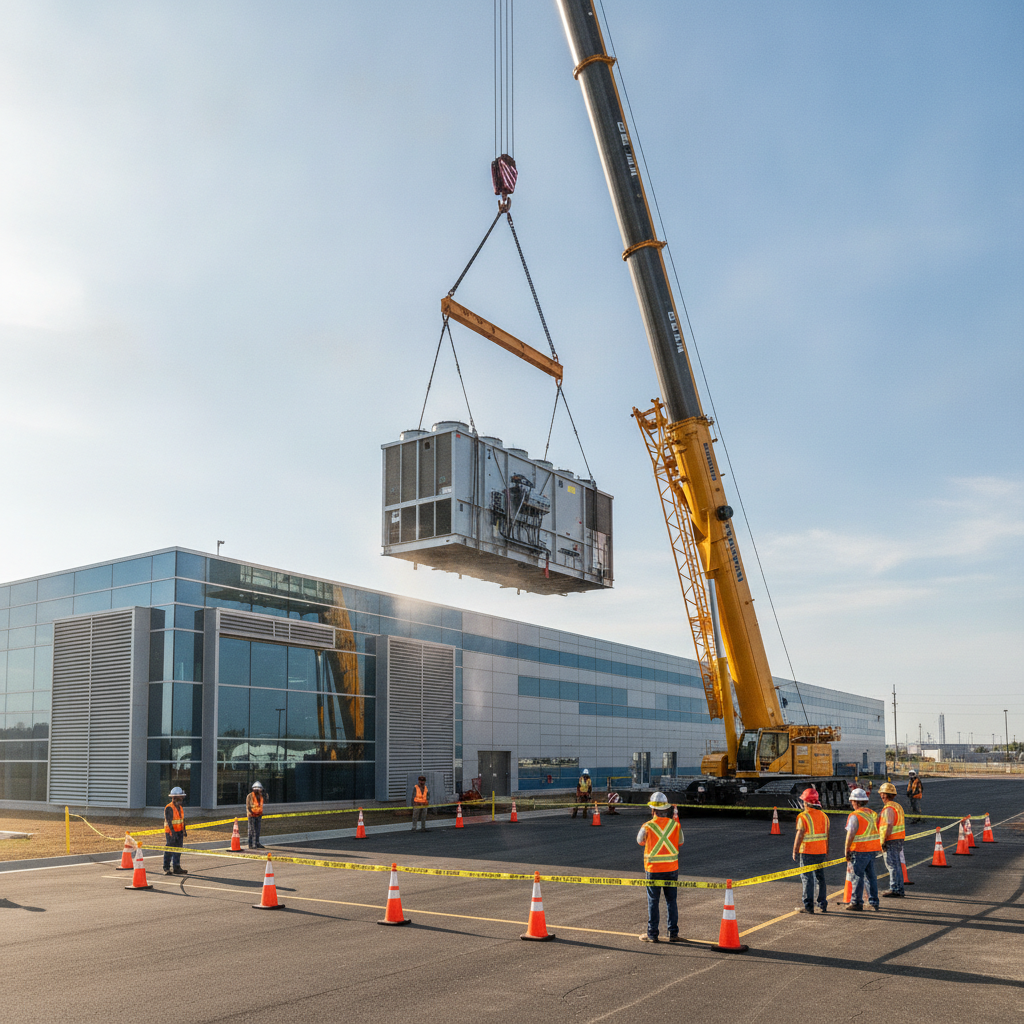
An engineered lift plan is the foundational document for any major lift operation. It is a comprehensive set of drawings and calculations prepared and certified by a qualified Professional Engineer. This plan goes far beyond just the crane’s capacity chart; it provides a holistic analysis of the entire operation, ensuring every variable is accounted for. Key components include crane selection and placement, detailed rigging design, load charts, and critical path analysis. The plan must also include a thorough assessment of subsurface conditions to determine the ground bearing pressure and specify requirements for crane mats or ground improvements to ensure a stable foundation. The level of detail required in these plans is significant, as they serve as the primary safety and execution guide for the entire team. Permitting and review requirements for engineered lift plans vary by jurisdiction, and every project team should confirm the applicable standards with the local, state, regional, and federal authorities that hold review authority over the site. This often includes review by the local building department or other agencies to ensure compliance with safety regulations and building codes. The plan becomes the single source of truth for the crane operator, riggers, signal persons, and project managers involved in the lift.
Establishing and Enforcing Exclusion Zones
Key Considerations for Heavy-Lift Risk Mitigation
| Risk Category | Primary Concern | Mitigation Strategy | Key Personnel |
|---|---|---|---|
| Ground Conditions | Insufficient bearing capacity leading to crane instability. | Geotechnical Engineering analysis, geotechnical soil report review, and engineered crane matting design. | Geotechnical engineer, Civil Engineer |
| Structural Integrity | Damage to existing roofs, facades, or underground utilities. | Structural analysis, utility locating (GPR), protective matting, and outrigger load distribution pads. | Structural Engineer, Civil Engineer |
| Weather Events | High winds or lightning creating unsafe lift conditions. | On-site anemometer, strict adherence to wind speed limits, and clear weather hold protocols. | Site Safety Manager, Crane Operator |
| Operational Disruption | Interfering with the data center's critical power or cooling systems. | Detailed Method of Procedure (MOP), stakeholder review meetings, and scheduling during maintenance windows. | Facility Operations Manager, Project Manager |
| Emergency Access | Blocking fire lanes and preventing first responder access. | Phased logistics plan, designated temporary access routes, and coordination with the local fire marshal. | Civil Engineer, Site Superintendent |
An exclusion zone, often called a drop zone or lift zone, is a clearly demarcated area on the ground where access is strictly prohibited during a lift. The primary purpose of this zone is to protect personnel and property from the catastrophic consequences of a dropped load or equipment failure. The size of the exclusion zone is not arbitrary; it is calculated based on the lift radius, the height of the lift, the type of load being hoisted, and the crane manufacturer’s specifications. This area must be large enough to contain any debris in the event of an incident. A comprehensive site logistics plan must detail the location and dimensions of the exclusion zone. Enforcement is just as critical as establishment. This requires physical barriers, clear multilingual signage, and dedicated spotters or safety personnel to prevent unauthorized entry. On an active data center campus, this process must be coordinated with the facility’s security team to manage employee and contractor movements and ensure the integrity of the zone is maintained throughout the operation, safeguarding both the lift and the site’s ongoing activities.
Protecting Existing Structures and Critical Infrastructure
When a lift occurs adjacent to or over an existing building, the risk profile changes dramatically. The plan must include specific measures to protect roofs, facades, and sensitive equipment from potential damage. This can involve installing heavy-duty protection mats on rooftops, erecting temporary shielding, or strategically planning the lift path to minimize time spent over critical areas. The structural integrity of the underlying building must be verified to ensure it can handle any incidental loads, even from protective materials. Equally important is the protection of underground utilities. The immense point loads from a crane’s outriggers can easily damage shallow conduits, fiber optic lines, or storm drainage pipes. The lift plan must be developed in conjunction with a thorough utility survey. The Geotechnical engineer may recommend specific load distribution strategies, such as using larger crane mats or bridging over sensitive utility corridors, to prevent costly damage and service interruptions. In some cases, vibration monitoring may be required for nearby equipment that is sensitive to ground-borne vibrations.
Navigating Weather Constraints and Operational Holds
Weather is one of the most unpredictable variables in a heavy-lift operation. High winds are the primary concern, as they can cause the load to swing uncontrollably, creating a severe safety hazard and potentially overloading the crane. Every engineered lift plan specifies maximum wind speed limits, and a calibrated anemometer must be present on-site to provide real-time data. When wind speeds approach or exceed the predetermined threshold, a mandatory weather hold is initiated, and all lifting activities cease until conditions are safe. Beyond wind, other weather phenomena like lightning, heavy rain, or snow can also force a shutdown. These conditions can impair visibility for the operator and signal person, make surfaces slick, and introduce electrical hazards. A robust risk assessment includes establishing clear criteria for weather-related work stoppages and a chain of command for making the final call. This proactive approach prevents teams from taking unnecessary risks in a rush to meet deadlines.
Coordinating with Data Center Facility Operations
On an active data center campus, a heavy lift is not just a construction activity; it is an event that can impact mission-critical operations. Close coordination with the facility operations team is non-negotiable. The lift schedule must be integrated with the facility’s operational calendar to avoid conflicts with maintenance activities or periods of high electrical demand. A detailed Method of Procedure (MOP) should be developed and reviewed by all stakeholders, outlining every step of the lift and its potential impact on the facility. This level of stakeholder communication is vital for protecting the critical load. If the lift path crosses over power feeds or cooling lines, the MOP must include contingency plans for potential disruptions. This might involve temporarily re-routing power, having backup systems on standby, or scheduling the most sensitive parts of the lift during a pre-approved maintenance window. The goal is to execute the lift with zero impact on the data center’s uptime and service level agreements.
Maintaining Emergency Vehicle Access During Lifts
The sheer footprint of a large crane and its support equipment can easily obstruct roadways and access points. This poses a significant safety risk by potentially blocking emergency vehicle access. The site logistics plan must explicitly address how fire apparatus access roads will be maintained throughout the lift operation. This is a key life-safety consideration that requires early consultation with the local fire marshal or authority having jurisdiction. Solutions may include phasing the crane setup to keep a lane open, establishing a pre-approved temporary fire lane, or having personnel on standby to immediately clear a path if an emergency occurs. The plan must ensure that fire trucks, ambulances, and other first responders can reach all parts of the campus at all times. This proactive planning demonstrates a commitment to safety and is often a mandatory requirement for securing the necessary permits for the operation.
The RSP Engineers Approach to Heavy-Lift Coordination
At RSP Engineers, we view heavy-lift planning as an integral part of our site development services for mission-critical facilities. Our process begins with a detailed site assessment and a thorough review of the project’s geotechnical analysis to understand ground conditions. We work collaboratively with the general contractor, crane subcontractor, and facility owner to develop a logistics plan that is safe, efficient, and minimally disruptive. Our role often includes performing a constructability review of the proposed lift plan, ensuring it aligns with the overall site design, utility layout, and emergency access requirements. During execution, we provide construction administration support, acting as a key point of contact to help resolve unforeseen site issues and verify that the operation is proceeding in accordance with the approved plans. This integrated approach helps de-risk the operation for our clients.
Common Issues in Data Center Heavy-Lift Operations
Even with careful planning, challenges can arise. One of the most frequent issues is inadequate ground preparation, where subsurface conditions are not properly addressed, leading to delays while the ground is improved. Another common problem involves last-minute utility conflicts, where undocumented underground lines are discovered during crane setup. This underscores the need for comprehensive, up-to-date utility surveys before any planning begins. Furthermore, poor communication protocols between the lift crew and facility operations can lead to confusion and potential impacts on the data center’s systems. Finally, scope creep, where additional small lifts are informally added to the day’s work without proper planning, can introduce significant, un-assessed risks. A disciplined approach to planning and execution is the best defense against these common pitfalls.
Partner with RSP for Your Next Mission-Critical Project
Successful heavy-lift operations demand a partner with deep expertise in the complexities of data center site development. RSP Engineers provides the comprehensive site engineering services, permitting support, and construction management oversight needed to navigate these high-stakes activities. Our team collaborates with you to ensure every logistical detail is addressed, from initial geotechnical review to final equipment placement. Contact us to discuss how we can help de-risk your next mission-critical project and ensure its success.
Conclusion
Heavy-lift planning in a data center environment is a testament to the importance of proactive and detailed engineering. It is a discipline where the principles of civil engineering, geotechnical science, and operational logistics converge. By prioritizing engineered lift plans, rigorous safety protocols, and clear stakeholder communication, developers and operators can mitigate risks, protect their assets, and ensure these pivotal construction milestones are achieved safely and efficiently. A successful lift is the result of a comprehensive risk mitigation strategy that is integrated into the overall site development process from day one.
FAQs
-
The engineered lift plan is typically created by the specialized crane and rigging subcontractor. However, it must be reviewed and stamped by a qualified Professional Engineer to certify its safety and technical soundness. The project’s Civil Engineer often reviews the plan for coordination with site logistics, utility protection, and access.
-
Weather, particularly high winds, is the most common cause of delay. Lifts are planned with weather contingency days for this reason. The second most common reason is often related to unforeseen subsurface conditions that require additional ground preparation before the crane can be safely set up.
-
Protection involves a multi-step process. First, all utilities must be accurately located. Second, the crane’s outrigger positions are planned to avoid direct contact with critical lines. Finally, if avoidance is not possible, load distribution methods like steel plates or heavy-duty timber mats are used to bridge over the utilities and spread the load across a wider area.