
Fuel Storage Environmental Compliance at Data Center Sites
A guide for data center developers on environmental compliance for on-site fuel storage. Learn about ASTs vs. USTs, secondary containment, SPCC plans, and permitting.
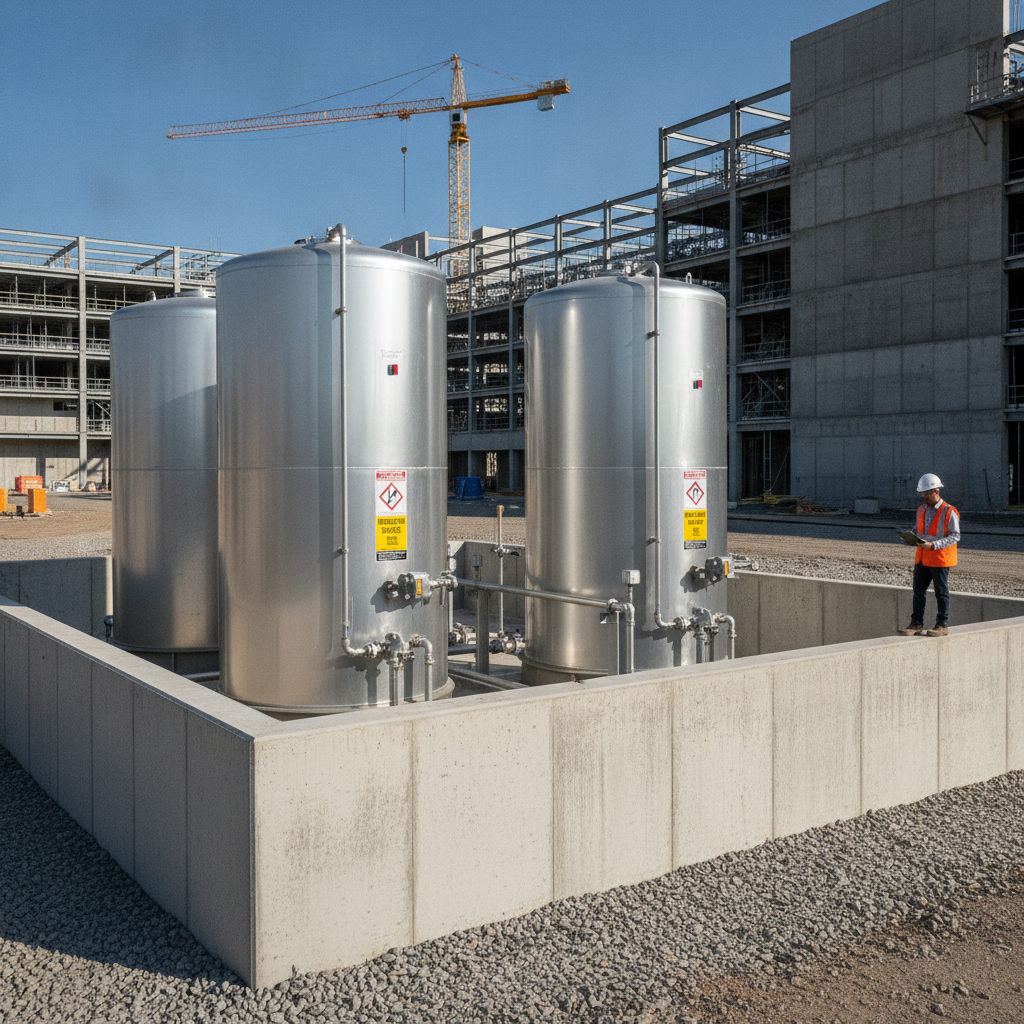
The Role of On-Site Fuel in Mission-Critical Operations
The primary purpose of on-site fuel at a data center is to power backup generators during a utility outage, ensuring 100% uptime for critical IT infrastructure. The volume of fuel required is often substantial, calculated to sustain operations for 24, 48, 72 hours, or even longer, depending on the facility’s service level agreement (SLA) and risk profile. This strategic fuel reserve is a cornerstone of a facility’s resiliency and business continuity plan. The scale of this storage—often tens of thousands of gallons—triggers specific federal, state, and local regulations designed to prevent and contain spills. The design of these systems must be integrated into the overall site plan design from the earliest stages. This includes considerations for tanker truck access for refueling, safe distances from buildings and property lines, and integration with the site’s overall stormwater management and fire protection systems. Effective planning ensures that the fuel system supports mission-critical goals without becoming a liability.
Aboveground vs. Underground Storage Tanks (AST vs. UST)
Comparison of AST and UST Compliance Considerations
| Feature | Aboveground Storage Tank (AST) | Underground Storage Tank (UST) |
|---|---|---|
| Installation & Footprint | Lower installation cost but requires significant surface area. Subject to visual impact and physical hazards. | Higher installation cost but preserves surface land use. Protected from surface activities. |
| Leak Detection & Monitoring | Visual inspection is primary method. Double-walled options allow for interstitial monitoring. SPCC plan required. | Relies on electronic systems (ATG, interstitial sensors). More complex to verify and repair. Subject to specific federal and state UST programs. |
| Inspection & Maintenance | Easier and less costly to inspect shell, welds, and foundation. More exposed to weather and corrosion. | Difficult and expensive to inspect externally. Internal inspections require tank emptying and confined space entry. |
| Spill Containment | Requires engineered secondary containment (dike/berm) sized for tank volume plus precipitation. Stormwater management is critical. | Typically relies on double-walled construction and containment sumps for piping and turbine pumps. Spill buckets required at fill ports. |
| Regulatory Complexity | Primarily governed by EPA's SPCC rule and local fire codes. Regulations can be less prescriptive than for USTs. | Heavily regulated under separate federal and state UST programs with strict technical standards for design, installation, and operation. |
A fundamental decision in fuel system design is whether to use Aboveground Storage Tanks (ASTs) or Underground Storage Tanks (USTs). Each approach has distinct advantages, disadvantages, and associated regulatory pathways. ASTs are generally less expensive to install and allow for easier visual inspection and maintenance. However, they occupy valuable surface real estate, can be considered aesthetically undesirable, and may have stricter fire code setback requirements. USTs, conversely, preserve surface space for other uses like parking or equipment yards and are protected from surface impacts. The trade-off is higher installation cost, more complex leak detection requirements (such as interstitial monitoring for double-walled tanks), and greater difficulty in performing inspections and repairs. The choice between an AST and a UST depends on site constraints, project budget, local regulations, and the owner’s operational preferences. A thorough feasibility analysis during the initial site development phase is crucial for making an informed decision.
Core Principles of Secondary Containment
Secondary containment is the most critical engineering control for preventing a fuel release from reaching the environment. It is essentially a backup system designed to hold the entire contents of the primary tank in the event of a failure. For ASTs, this typically takes the form of a concrete containment dike or a double-walled tank. The containment structure must be impervious to diesel fuel and large enough to hold a specified volume, often 110% of the largest tank’s capacity, plus an allowance for precipitation (freeboard). The design of the secondary containment system must also incorporate a compliant stormwater management plan. Rainwater that collects within the containment area is considered potentially contaminated and cannot be discharged directly. It must be inspected for fuel sheen and, if clean, discharged through a manually operated valve; if contaminated, it must be properly collected and disposed of. Permitting requirements for these systems, including sizing calculations and materials specifications, vary by jurisdiction, and every project team should confirm the applicable standards with the local, state, regional, and federal authorities that hold review authority over the site. This is a key component of the federal Spill Prevention, Control, and Countermeasure (SPCC) rule.
Navigating Tank Registration and Inspection Protocols
Facilities that store more than a certain threshold of fuel are typically required to register their tanks with a state or regional environmental agency. This registration creates a record of the tank’s location, size, age, and contents, facilitating regulatory oversight. The specific thresholds for registration and the information required can differ based on whether the tank is an AST or UST and the total site storage capacity. This process is a critical step in achieving initial environmental compliance. Beyond registration, regulations mandate a schedule of regular inspections to ensure the ongoing integrity of the storage system. These can range from daily visual checks by facility staff to more formal monthly and annual inspections. Many jurisdictions also require periodic integrity testing performed by a qualified inspector or certified Professional Engineer. This testing may involve ultrasonic thickness measurements for steel tanks or other non-destructive methods to verify that the tank is not corroding or weakening. Meticulous recordkeeping of all inspections and maintenance activities is a mandatory part of long-term zoning compliance and operational permitting.
Overfill Prevention and Leak Detection Systems
Human error during fuel delivery is a common cause of spills. To mitigate this risk, modern fuel storage systems are equipped with sophisticated overfill prevention equipment. Common devices include automatic shutoff valves that stop the flow of fuel when the tank reaches a certain capacity (typically 95%), and high-level alarms that provide an audible or visual warning to the delivery operator. These systems are a primary line of defense and are required by most environmental and fire codes. For continuous protection, robust leak detection systems are essential. For double-walled ASTs and USTs, this often involves interstitial monitoring, where a sensor is placed between the inner and outer walls to detect any breach. Other methods include automatic tank gauging (ATG) systems that can perform periodic tightness tests, and statistical inventory reconciliation (SIR) for older tanks. The goal of these systems is to provide early warning of a potential release, allowing for a rapid response before significant environmental damage occurs.
Piping, Dispensing, and Fire Code Integration
The integrity of the fuel system extends beyond the tank itself to include all associated piping and dispensing equipment. All underground fuel piping is typically required to be double-walled with its own interstitial monitoring. Aboveground piping must be adequately supported, protected from physical damage, and designed to prevent leaks at joints and connections. Dispensing areas, where fuel is transferred to day tanks or mobile equipment, must have spill containment pads and proper drainage controls to capture small drips and spills. Crucially, the entire fuel storage system design must be coordinated with fire code officials. This involves meeting minimum setback distances from buildings, property lines, and public roadways, as well as integrating fire suppression systems like foam cannons or sprinklers where required. The utility coordination between the civil engineering plans, the fire protection design, and the electrical plans for monitoring equipment is a complex task that requires an experienced design team to ensure all aspects of building code compliance are met.
RSP’s Approach to Fuel System Design and Permitting
At RSP Engineers, we approach fuel storage compliance with a comprehensive, integrated strategy. Our process begins with a thorough site assessment to evaluate constraints and opportunities, followed by a detailed analysis to help clients select the optimal storage solution (AST vs. UST) for their operational and financial goals. We believe in a proactive approach to permitting, engaging with regulatory agencies early to clarify requirements and streamline the review process. Our civil engineering team designs the complete system, including the tank foundation, secondary containment, stormwater controls, and associated site grading and drainage design. We coordinate closely with mechanical, electrical, and fire protection engineers to deliver a fully integrated design package. We manage the preparation and submission of all necessary permit submittals, from local building permits to state environmental registrations, and provide support throughout the agency review and construction administration phases to ensure the final installation is fully compliant.
Common Issues in Fuel Storage Compliance
Even with a well-designed system, data center operators can face several common compliance challenges. One of the most frequent issues is inadequate recordkeeping. Regulators require meticulous documentation of inspections, maintenance, fuel inventory, and employee training. Another common pitfall is failing to update the facility’s SPCC Plan after a modification to the fuel system or a change in key personnel. An outdated plan is a direct violation and can result in significant penalties. Other issues include undersized or compromised secondary containment structures, malfunctioning alarms or leak detection sensors, and improper management of stormwater within containment areas. Conflicts can also arise between the requirements of environmental regulations and local fire codes, particularly regarding tank placement and venting. Avoiding these issues requires diligent operational procedures, regular training, and a strong partnership with a qualified civil engineering firm near me that understands the nuances of mission-critical compliance.
Partner with RSP Engineers for Your Data Center Project
Ensuring environmental compliance for your data center’s fuel storage system is a complex but essential task. The team at RSP Engineers provides the expert site engineering services needed to navigate this landscape successfully. We specialize in the integrated design and permitting of mission-critical facilities, offering comprehensive solutions for utility coordination, stormwater management, and environmental compliance. Let our experienced engineers help you design a resilient, compliant, and cost-effective fuel storage system that protects your investment and the environment. Contact us today to discuss your project needs.
Conclusion
For data center developers and operators, on-site fuel storage is a critical asset for ensuring operational resiliency. However, it also represents a significant environmental liability if not managed correctly. Achieving and maintaining compliance requires a deep understanding of engineering principles and a complex regulatory framework. By focusing on robust design, including proper secondary containment and leak detection, and implementing diligent operational protocols, facilities can mitigate risks effectively. A successful project hinges on integrated civil engineering, proactive permitting strategies, and a detailed site plan design that addresses compliance from day one.
FAQs
-
An SPCC (Spill Prevention, Control, and Countermeasure) Plan is a federally required document under EPA regulations for facilities that store above certain thresholds of oil or fuel products. It details the facility’s design, equipment, and procedures to prevent and respond to fuel spills. A plan is generally required for sites with more than 1,320 gallons of total aboveground storage capacity. The plan must be certified by a Professional Engineer.
-
Inspection frequency depends on the type of tank, its age, and applicable regulations. It typically includes frequent visual walk-throughs by facility staff (e. g. , weekly or monthly) to check for obvious issues. Formal inspections, including detailed checklists and sometimes non-destructive testing, are required periodically (e. g. , annually or every five years) and must be documented. The facility’s SPCC Plan will outline the specific inspection schedule.
-
Tank placement is heavily regulated by local fire codes and sometimes zoning ordinances. These codes specify minimum setback distances from property lines, public ways, and buildings. The required distances depend on the tank’s size, its contents (e. g. , diesel is a combustible liquid), and whether it is an AST or UST. This is a critical consideration in the initial site plan design.