
Florida Data Center Substation Site Requirements: A Civil Engineering Guide
A detailed guide by RSP Engineers on the critical civil engineering, permitting, and utility requirements for siting data center substations in Florida. Learn about zoning, stormwater, and more.
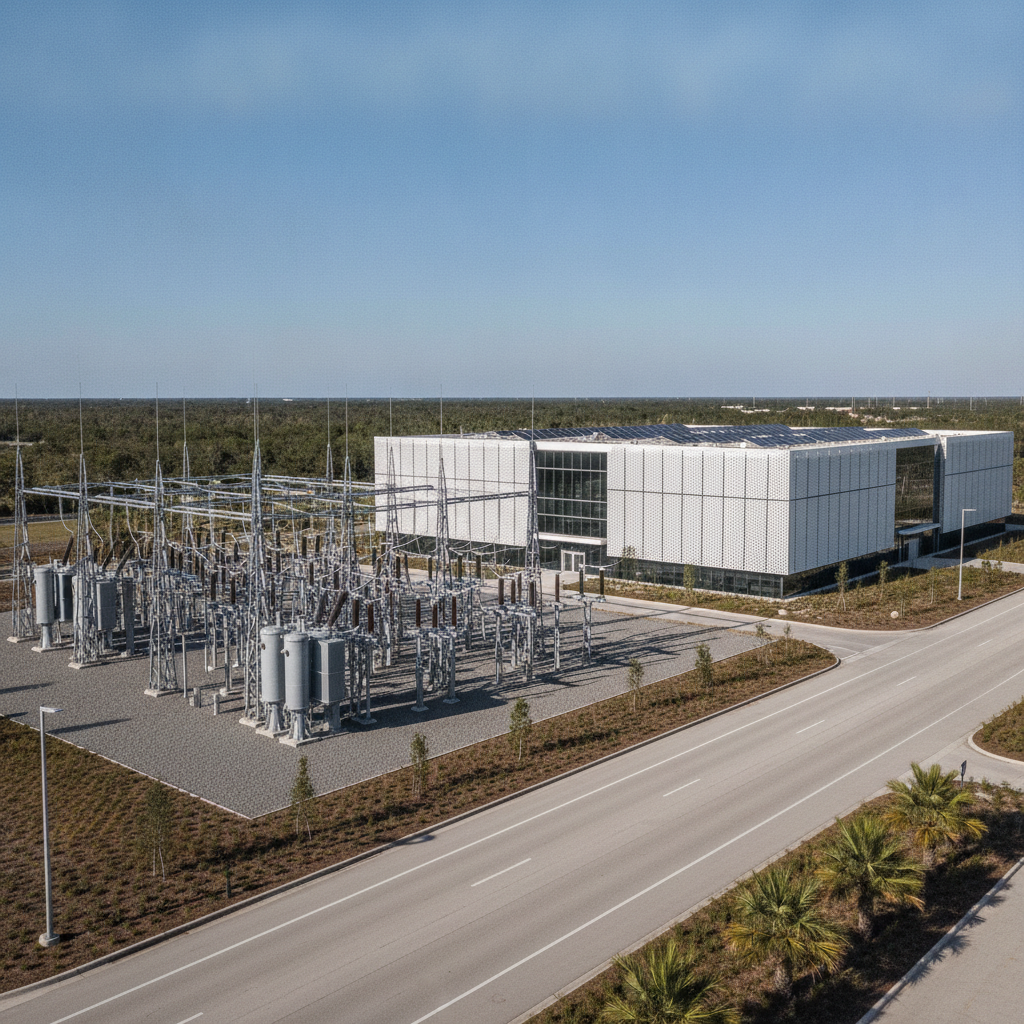
Initial Site Selection: Balancing Power, Proximity, and Permitting
The first step in any data center project is identifying a viable site, and for the substation, this involves a unique set of criteria. The primary driver is proximity to high-voltage transmission lines capable of providing the required power load with N+1 or 2N redundancy. A thorough feasibility study, conducted by a qualified civil engineering firm near me, is essential to evaluate potential sites against critical factors. This initial due diligence, or ‘fatal flaw’ analysis, assesses not just power availability but also constructability, potential environmental impacts, and the local permitting landscape. Our engineers analyze GIS data, utility maps, and local comprehensive plans to shortlist properties. We evaluate physical and legal access, identify existing easements that could conflict with development, and perform a preliminary review of zoning compliance. This early-stage analysis is crucial for identifying risks before significant capital is invested. A site that looks perfect on paper may be unworkable due to wetland impacts, inadequate soil conditions, or restrictive zoning overlays, making expert site development analysis indispensable.
Zoning and Land Use Compliance for Critical Infrastructure
Substation Site Feasibility Checklist
| Criteria | Key Civil Engineering Consideration | Typical Florida Permitting Agency |
|---|---|---|
| Proximity to Transmission Lines | Feasibility of interconnection, easement acquisition costs, and structural analysis for tap-in points. | Electric Utility (e.g., FPL, Duke Energy), County/City |
| Zoning Designation | Verification of 'Utility' or 'Industrial' use allowance; need for rezoning or special exception. | Local Planning & Zoning Department |
| Geotechnical Stability | Soil bearing capacity, groundwater elevation, and need for soil improvements or deep foundations. A Geotechnical soil report is required. | Local Building Department (Foundation Permit) |
| Stormwater Capacity | On-site land required for retention/detention ponds; compliance with pre- vs. post-development runoff rates. | Water Management District (e.g., SFWMD, SWFWMD), FDEP |
| Utility Easements | Identification of existing easements (power, water, gas, fiber) and acquisition of new easements for required services. | County Property Appraiser, Utility Providers |
| Secure Access | Design of heavy-haul capable access roads, turning radii analysis, and right-of-way permitting. | County Engineering Department, Florida DOT |
| Environmental Constraints | Presence of wetlands, protected species, or archaeological resources requiring mitigation and special permits. | FDEP, US Army Corps of Engineers, FWC |
Navigating Florida’s complex web of zoning and land use regulations is a critical task. Electrical substations are typically classified as a utility or industrial use, which may not be permitted by right in all zoning districts. This often necessitates a more intensive approval process, such as a special exception, conditional use permit, or a full rezoning application. Success depends on a well-prepared application that demonstrates compliance with the local land development code and comprehensive plan, addressing everything from setbacks and buffering to noise and aesthetic standards. Early engagement with local planning and zoning staff is paramount. As one of the leading Civil Engineering Firms in the state, RSP Engineers facilitates these conversations to understand agency expectations and potential community concerns. We prepare detailed site plans and supporting documentation for the permit submittals, clearly illustrating how the project meets all applicable codes. Proactively addressing potential issues during the pre-application phase can significantly streamline the public hearing and approval process for this critical piece of site development infrastructure.
Geotechnical and Topographical Considerations for Substation Pads
The immense weight of transformers, circuit breakers, and steel support structures demands a stable foundation. A comprehensive Geotechnical Engineering investigation is non-negotiable. This process begins with soil boring test procedures to determine the subsurface soil profile, groundwater levels, and the soil’s load-bearing capacity. The findings are compiled into a Geotechnical soil report, which provides the foundational data for the entire site plan design. In many parts of Florida, high water tables and sandy soils present unique challenges. The Geotechnical engineer will provide recommendations for soil improvement, deep foundations, or the use of specialized fill material to ensure long-term stability. The site’s topography is also critical. A precise grading and drainage design is required to create a level equipment pad, manage surface water flow, and prevent ponding around critical infrastructure. This earthwork must be carefully balanced to minimize import/export costs while meeting strict elevation and compaction specifications.
Advanced Stormwater Management for Impervious Surfaces
A substation site is almost entirely impervious, consisting of concrete pads, gravel layers, and access roads. In Florida, with its intense rainfall and stringent environmental regulations, managing the resulting stormwater runoff is a primary design challenge. Every project must obtain an Environmental Resource Permit (ERP) from the state’s Water Management Districts, which requires a sophisticated stormwater management system designed to control both water quantity and quality. The design must prevent flooding and protect downstream water bodies from pollutants. Common solutions include dry retention or wet detention ponds, exfiltration trench systems, and other Low Impact Development (LID) techniques. The design involves complex hydrological and hydraulic modeling to demonstrate that the post-development runoff does not exceed pre-development conditions. A robust drainage design is fundamental to regulatory approval and the long-term operational integrity of the substation, preventing washouts and equipment damage.
Utility Coordination: The Critical Path for Power and Data
While the substation’s primary purpose is power, it does not exist in a vacuum. Extensive utility coordination is required to bring the project to life. This process is managed by the Professional Engineer and involves constant communication with the electric utility to coordinate the high-voltage transmission line tie-in, which is often the project’s critical path. This includes defining points of interconnection, securing necessary easements, and scheduling outages for construction. Beyond the main power feed, the site requires coordination for water service (for fire suppression and control building facilities), sanitary sewer or septic systems, and telecommunications. Fiber optic conduits are especially critical for a data center’s operation. The civil engineering team is responsible for identifying existing utility corridors, designing new service routes to avoid conflicts, and incorporating all necessary easements into the final site plan design. Failure to manage this process proactively can lead to significant construction delays and redesign efforts.
Secure Access, Roadway Engineering, and ADA Compliance
A substation requires secure and reliable access for both initial construction and ongoing maintenance. This involves designing access roads capable of supporting heavy haul vehicles delivering transformers and other large equipment. The roadway engineering design must consider turning radii, pavement section thickness, and intersection sight distances. If the project requires a new connection to a county or state road, a separate right-of-way permit and potentially off-site improvements may be necessary. Security is paramount, with site access strictly controlled through secure gating and fencing. The overall site layout must accommodate these security features while ensuring efficient circulation for maintenance vehicles. Furthermore, if the substation includes a control building with staff facilities, the site must adhere to ADA compliance standards for accessible routes, parking, and building access. This integration of security, logistics, and accessibility is a key component of a comprehensive site development plan.
RSP Engineers’ Approach to Substation Site Development
At RSP Engineers, we employ a phased, systematic approach to guide data center substation projects from concept to completion. Our process begins with exhaustive due diligence and feasibility studies to identify and vet potential sites, ensuring our clients invest in viable properties. We then move into conceptual design and permitting strategy, where we work closely with regulatory agencies to establish a clear path to approval. This proactive engagement is a hallmark of our site engineering services. Our detailed engineering phase translates the concept into construction-ready documents, covering everything from grading and drainage design to utility layouts and erosion control plans. We manage the entire permitting process, submitting comprehensive application packages and responding to agency comments swiftly and effectively. During construction, we provide Construction Management Services and administration to ensure the project is built according to plan, on schedule, and in full compliance with all approved designs and permits.
Common Challenges in Florida Substation Permitting
Even with meticulous planning, challenges can arise during the development of a substation in Florida. One of the most common issues is receiving stringent review comments from a Water Management District on the proposed stormwater management model, often requiring design revisions to meet specific water quality or flood control criteria. Unexpected subsurface conditions, such as rock formations or contaminated soils discovered during a Soil Test, can also impact foundation design and project costs. Another frequent hurdle is navigating conflicting utility easements, where existing underground infrastructure interferes with the proposed layout, requiring complex utility coordination and relocation agreements. Finally, public opposition during zoning compliance hearings can pose a significant risk. Successfully overcoming these challenges requires an experienced engineering team that can anticipate issues, communicate effectively with all stakeholders, and develop creative, technically sound solutions.
Partner with RSP Engineers for Your Data Center Infrastructure
Developing mission-critical infrastructure like a data center substation in Florida demands engineering precision and regulatory expertise. The complexities of site development, from initial feasibility studies to final construction, require a partner who understands the landscape. RSP Engineers provides the comprehensive civil engineering services needed to navigate these challenges successfully. Our team of Florida Licensed Engineers specializes in complex land development projects, offering expert guidance on permitting, utility coordination, and stormwater management. We are committed to delivering designs that are efficient, compliant, and constructible. Contact us today to discuss how we can support your next data center project and ensure its foundation is engineered for success.
Conclusion: Engineering Precision for Mission-Critical Infrastructure
The successful siting and development of a data center substation is a foundational pillar of a data center’s operational reliability. It is a multidisciplinary process where meticulous civil engineering serves as the critical link between raw land and a functioning, secure facility. Key factors like geotechnical stability, advanced stormwater management, and diligent zoning compliance are not just checklist items; they are core components of a resilient and permittable design. For developers in Florida, navigating the state’s unique environmental and regulatory challenges requires a proactive and experienced engineering partner. By prioritizing thorough due diligence, robust design, and a strategic approach to permitting, you can mitigate risks and set your mission-critical project on a clear path to success.
FAQs
-
You should engage a Civil Engineer near me during the earliest stages of site selection, even before a purchase agreement is signed. Early due diligence can identify costly ‘fatal flaws’ related to permitting, zoning, or site conditions, saving you significant time and investment.
-
Often, the most complex and time-consuming permit is the Environmental Resource Permit (ERP) from the regional Water Management District. This permit governs stormwater management and any impacts to wetlands, requiring detailed engineering analysis and hydraulic modeling to demonstrate compliance.
-
A high water table, identified through a Geotechnical soil report, significantly impacts design. It can require elevating the entire equipment pad with engineered fill, specialized foundation designs to resist hydrostatic uplift, and a more complex drainage design, such as exfiltration systems, to manage stormwater effectively.