
Evaluating Adjacent Land Uses Near Data Center Sites
A deep dive into why adjacent land uses are critical for data center site selection. Learn how residential, industrial, and environmental neighbors impact zoning, permitting, and design.
Zoning Compatibility and Future Development Risk
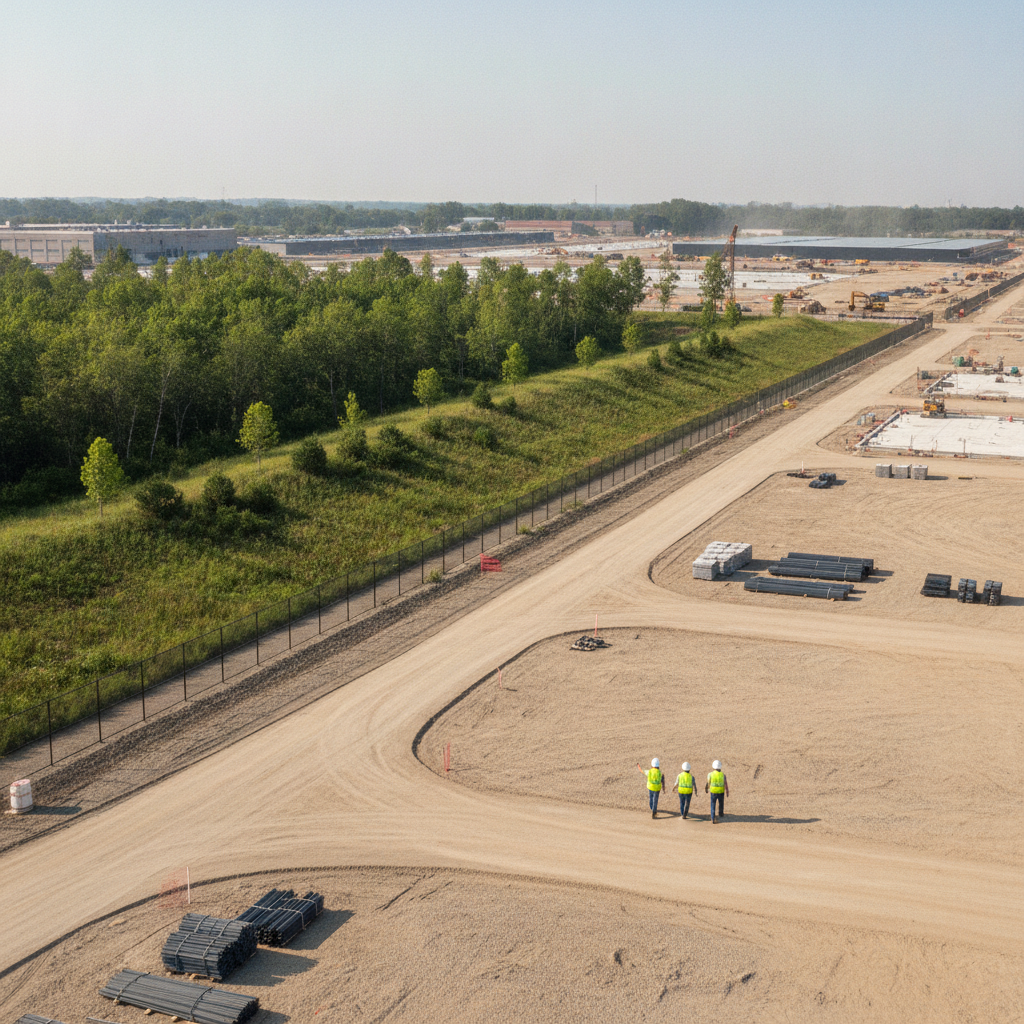
The first step in evaluating adjacent properties is a deep dive into local zoning codes and future land use maps. The current zoning of neighboring parcels directly influences the data center’s path to entitlement. A site surrounded by compatible industrial or commercial zones typically faces a more straightforward zoning compliance process. Conversely, a property abutting residential or mixed-use districts may trigger requirements for special exceptions, conditional use permits, or even a full rezoning application, adding time and uncertainty to the project. Beyond current zoning, it is crucial to assess the potential for future development on adjacent vacant land. A review of the local government’s comprehensive plan can reveal long-term intentions for the area. A parcel that is currently undeveloped forest could be designated for a future school or high-density housing, creating future conflicts. Proactive land development due diligence allows the project team to anticipate these changes and incorporate necessary design elements, such as enhanced buffers or alternative access routes, into the initial Site plan design.
Residential Proximity: Managing Noise, Light, and Visual Impacts
Adjacency Risk Assessment Matrix for Data Center Sites
| Adjacent Land Use | Key Civil Engineering Concern | Potential Mitigation Strategy |
|---|---|---|
| Single-Family Residential | Noise, light trespass, visual impact, community opposition. | Acoustic walls, enhanced landscape buffers, full cut-off lighting, architectural screening, community outreach. |
| Vacant / Undeveloped Land | Uncertainty of future use, potential for incompatible development. | Review comprehensive plans, design for worst-case future adjacency, secure right-of-first-refusal if possible. |
| Heavy Industrial | Ground vibration, hazardous material routes, competition for utility capacity. | Vibration monitoring/analysis, specialized foundation design, risk assessment, early utility coordination. |
| Airport / Flight Path | FAA height restrictions on buildings and equipment. | Conduct aeronautical study, constrain building/stack heights in design, confirm compliance with all FAA regulations. |
| Conservation Land / Wetlands | Regulatory buffers extending onto site, habitat fragmentation concerns. | Conduct wetland delineation, maximize setbacks, design compact site layout, engage in early agency consultation. |
| Major Roadway / Rail Line | Vibration, access management, traffic impacts. | Perform vibration analysis, conduct transportation impact analysis, design compliant access points. |
Perhaps the most sensitive adjacency for a data center is a residential neighborhood. The 24/7 operation of cooling systems, backup generators, and site security lighting can create significant friction with nearby homeowners. Local ordinances often have strict limits on noise levels at the property line, requiring detailed acoustic modeling and the implementation of expensive noise mitigation measures. These can include sound walls, acoustical louvers, and specifying quieter equipment. The placement of emergency generators, which must be tested regularly, becomes a critical design consideration. Visual impact is another major concern. The scale and industrial character of data center buildings can be perceived as a detriment to a residential community’s character. This often leads to requirements for extensive landscape buffers, architectural screening, and limitations on building height. Similarly, light trespass from security fixtures must be carefully managed through the use of full cut-off fixtures and strategic placement. Permitting requirements for buffers, screening, and lighting vary by jurisdiction, and every project team should confirm the applicable standards with the local, state, regional, and federal authorities that hold review authority over the site. Failure to adequately address these issues can fuel community opposition and derail the permitting process.
Industrial and Commercial Neighbors: Synergies and Conflicts
Locating a data center next to other industrial or commercial properties can offer benefits, such as compatible zoning and shared expectations for traffic and operational noise. These areas are often well-served by robust utility infrastructure, which can simplify utility coordination. However, industrial adjacencies are not without risk. A neighboring facility that involves heavy manufacturing could generate ground vibrations that threaten sensitive server equipment, necessitating specialized foundation design. Furthermore, proximity to facilities that use or transport hazardous materials introduces a potential risk that must be evaluated. It is also important to consider competition for resources. In an area with multiple large-scale users, there may be constraints on utility capacity for power, water, and sewer that require significant and costly off-site improvements. A thorough due diligence process must include an assessment of both the existing infrastructure and the planned capacity upgrades by local utility providers.
Proximity to Airports and Transportation Corridors
Airports and major transportation corridors present unique challenges. Sites located near airports are subject to FAA regulations that impose strict height restrictions on buildings and ancillary structures, including exhaust stacks and communication antennas. This can directly impact the architectural design and equipment layout. The project’s civil engineering team must conduct a thorough analysis to ensure all elements of the site plan comply with these vertical clearance requirements. Major highways and rail lines can also be problematic. While they offer excellent logistical access, they can be sources of ambient vibration that may affect sensitive IT equipment. A vibration analysis performed by a qualified consultant may be necessary to determine if mitigation measures are needed. Additionally, a data center project will likely be required to complete a transportation impact analysis to evaluate its effect on the local road network and identify any required improvements, such as turn lanes or traffic signal modifications, to gain site plan approval.
Shared Stormwater and Drainage Infrastructure
Water does not respect property lines. A data center’s stormwater management system is intrinsically linked to the surrounding topography and drainage patterns. An upstream adjacent property with inadequate drainage controls can send uncontrolled sheet flow onto the data center site, overwhelming its systems and creating a flood risk. Conversely, the data center’s own discharge must be carefully managed to avoid negative impacts on downstream properties, which can lead to legal liability. A comprehensive drainage design requires analyzing off-site, upstream contributing areas and confirming the capacity of the downstream receiving system, whether it’s a municipal storm sewer, a channel, or a regional pond. This often involves securing off-site easements for conveyance systems or outfall structures. Understanding these relationships early is critical for developing a resilient and permittable drainage design and avoiding costly redesigns during the agency review process.
Environmental and Ecological Adjacencies
Proximity to environmentally sensitive lands such as wetlands, streams, or protected species habitats can impose significant constraints on site development. Federal programs like the Clean Water Act and the Endangered Species Act, along with state and local regulations, mandate protective buffers around these resources. If a neighboring property contains a large wetland system, the associated buffer requirements may extend onto the data center site, reducing the usable land area. The environmental permitting process for sites near these features can be lengthy and complex, potentially requiring a wetland delineation, habitat assessments, and coordination with multiple regulatory agencies. A desktop environmental screening is a critical first step in due diligence to identify potential red flags. Ignoring these adjacencies can lead to project-killing delays and substantial mitigation costs discovered late in the site development process.
Our Process: A Comprehensive Adjacency Analysis
At RSP Engineers, our approach to adjacency analysis is a core component of our site selection and due diligence services. We begin with a comprehensive desktop review, utilizing GIS data, zoning maps, aerial imagery, and local comprehensive plans to identify potential conflicts and opportunities. This initial screening informs a targeted site investigation where our Civil Engineers and planners conduct a physical reconnaissance of the property and its surroundings. We believe in proactive engagement. Our process includes early-stage coordination with local planning and engineering departments to understand not just the written code, but also the unwritten expectations and political sensitivities of the jurisdiction. This integrated approach to civil engineering and entitlement strategy ensures that potential issues related to adjacent land uses are identified and addressed long before they can become critical path delays, providing our clients with the clarity they need to make confident investment decisions.
Common Issues in Adjacent Land Use Evaluation
Even with a structured process, several common pitfalls can emerge when evaluating adjacent land uses. One of the most frequent is underestimating the impact of future development on a neighboring vacant parcel. A developer might secure a permit based on current conditions, only to face conflicts years later when a new subdivision is built next door. Another issue is failing to model off-site drainage contributions accurately, leading to an undersized stormwater management system. Community opposition, particularly from nearby residential areas, is a major risk that is often not given enough weight in the initial analysis. Finally, discovering late-stage utility conflicts, such as a major transmission line on an adjacent property that requires a significant easement or setback, can force a costly and time-consuming redesign. These issues highlight the importance of a front-loaded, exhaustive due diligence process that looks beyond the four corners of the site itself.
Partner with RSP Engineers for Your Mission-Critical Site Development
Navigating the complexities of adjacent land use requires a partner with deep expertise in site development, permitting, and infrastructure design. RSP Engineers provides the comprehensive site engineering services needed to de-risk your data center project. Our team of experienced professionals excels at identifying and resolving challenges related to zoning compliance, stormwater, utilities, and transportation. From initial due diligence and feasibility studies to final permit submittals and construction administration, we provide the strategic guidance to get your facility online. Contact us today to discuss how we can support your next mission-critical project.
Conclusion
In the competitive landscape of data center development, a successful project is one that anticipates and mitigates risk from every angle. While on-site characteristics are paramount, a comprehensive evaluation of adjacent land uses is a non-negotiable component of thorough due diligence. By carefully analyzing zoning, environmental factors, infrastructure, and community context, developers can avoid costly surprises and streamline the path to approval. Partnering with experienced Civil Engineering firms is essential to navigate these complexities, ensuring the final Site plan design is resilient, compliant, and positioned for long-term operational success in its unique surrounding environment.
FAQs
-
A neighboring property’s zoning is a primary indicator of compatibility. If it’s zoned for industrial use, the path to zoning compliance is often smoother. If it’s zoned residential, you can expect heightened scrutiny regarding noise, traffic, and aesthetics, likely requiring special permits and more extensive mitigation measures in your Site plan design.
-
The primary risks are community opposition and stringent regulatory requirements. Continuous noise from cooling equipment and periodic noise from generator testing are major concerns. This can lead to expensive noise mitigation requirements, limitations on operating hours for testing, and potential legal challenges that can delay or halt a project.
-
Absolutely. If an upstream property has significant impervious surfaces and inadequate stormwater management, a major storm event can send a large volume of runoff onto your site. A thorough upstream drainage analysis is essential to ensure your site’s infrastructure can handle both its own runoff and any contributing off-site flows.