
Dry vs. Wet Pond: Which Is Right for Your Site?
Explore the differences between dry and wet ponds for Florida land development. Learn about water-quality performance, site factors, maintenance, and costs to make an informed decision.
Understanding Dry Ponds
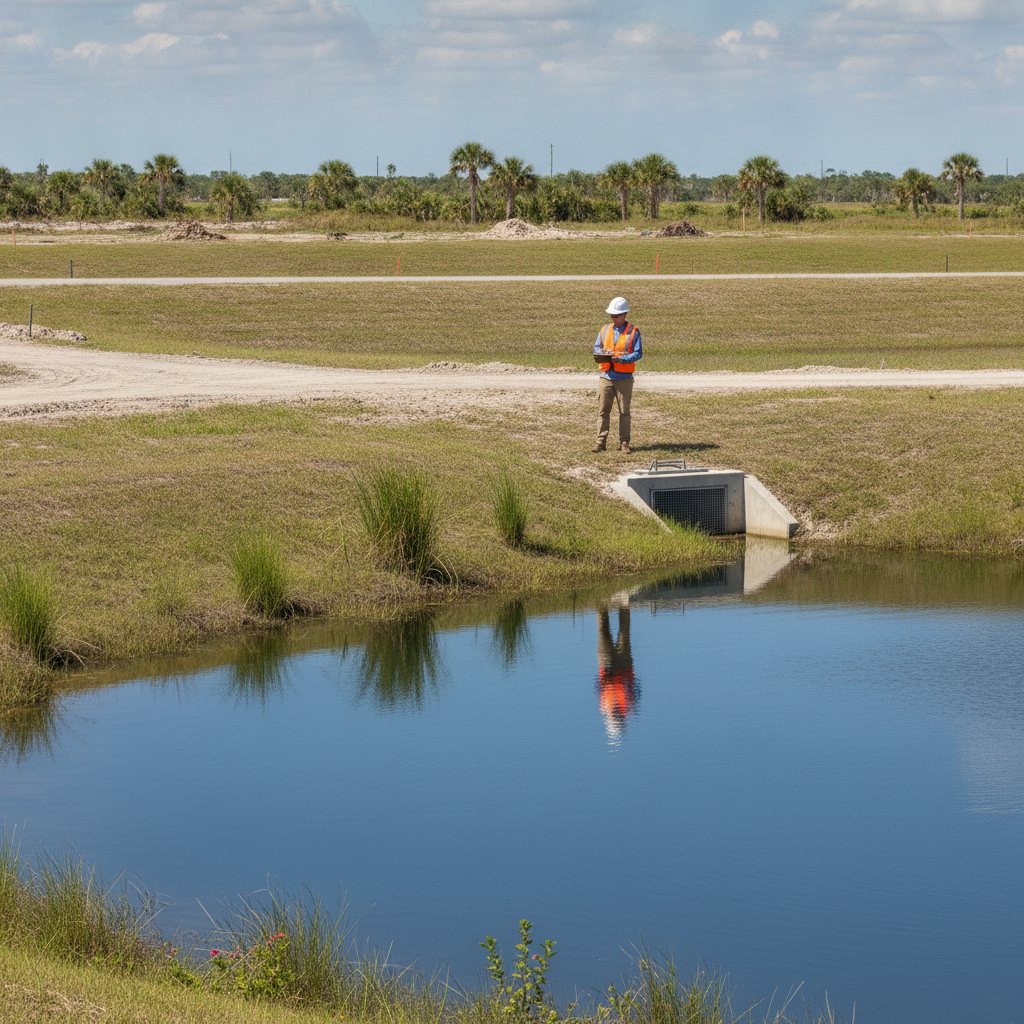
A dry pond, also known as a dry detention basin, is designed to temporarily store stormwater runoff and release it slowly over time. Unlike wet ponds, dry ponds remain dry between storm events, draining down within 24 to 72 hours. This type of pond is ideal for sites where the seasonal high water table is lower, allowing for adequate separation from the pond’s bottom. Dry ponds are often preferred for their lower initial construction costs and reduced maintenance requirements. However, they may offer less effective pollutant removal compared to wet ponds, as they rely primarily on sedimentation for treatment.
Exploring Wet Ponds
Dry vs. Wet Pond Comparison Table
| Factor | Dry Pond | Wet Pond |
|---|---|---|
| Water Table | Requires separation | High water table needed |
| Treatment Performance | Moderate | High |
| Footprint | Smaller | Larger |
| Maintenance | Lower | Higher |
| Aesthetics | Minimal | Enhanced |
| Cost | Lower | Higher |
| Best-Fit Site | Low water table, limited space | High water table, ample space |
Wet ponds, or wet detention basins, maintain a permanent pool of water and are surrounded by a littoral planting zone. These ponds provide enhanced water-quality performance through biological uptake and settling of pollutants. Wet ponds are particularly effective in areas with a high water table, as they require the water table to be at or above the permanent pool level. While wet ponds can be more costly to construct and maintain, they often offer aesthetic benefits and increased property value. They also provide habitat for wildlife and can be integrated into the landscape as a visual amenity.
Site Factors Influencing Pond Choice
Several site-specific factors influence the decision between a dry and wet pond: Water Table: Wet ponds require a high water table, while dry ponds need separation above it. Soils and Percolation: Soil type affects infiltration rates and pond performance. Available Land and Footprint: Wet ponds typically require more space due to their permanent pool. Depth: Wet ponds are generally deeper, accommodating a permanent pool. Aesthetics and Property Value: Wet ponds can enhance site aesthetics and value. Mosquito and Nuisance Considerations: Wet ponds may attract mosquitoes if not properly managed. Safety: Both pond types require safety considerations, such as fencing and signage. Pollutant Loading: Wet ponds offer superior pollutant removal capabilities. Treatment Credit: Wet ponds may receive higher treatment credits under Environmental Resource Permitting.
RSP Engineers’ Approach to Pond Selection
At RSP Engineers, we take a comprehensive approach to site development, considering all relevant factors to recommend the most suitable pond type for your project. Our team of Florida Licensed Engineers conducts thorough site assessments, evaluates soil conditions, and analyzes stormwater management needs to ensure compliance with local regulations. We work closely with clients to balance cost, aesthetics, and environmental impact, providing tailored solutions that align with project goals and regulatory requirements.
Common Issues with Pond Implementation
Implementing a stormwater pond can present challenges, including: Permitting Delays: Navigating the Environmental Resource Permitting process can be complex. Construction Challenges: Site conditions may complicate excavation and grading. Maintenance Requirements: Regular upkeep is essential for pond performance. Community Concerns: Addressing aesthetic and safety concerns is crucial for community acceptance.
Contact RSP Engineers
For expert guidance on stormwater management and pond selection, contact RSP Engineers. Our team of Florida Licensed Engineers is ready to assist with your site development needs, ensuring compliance and optimal performance. Reach out today to discuss your project requirements.
Conclusion
Choosing between a dry pond and a wet pond involves careful consideration of site-specific factors, regulatory requirements, and project goals. By understanding the differences in stormwater management performance, cost, and aesthetics, you can make an informed decision that aligns with your development objectives. RSP Engineers is here to support you in navigating these choices and achieving successful project outcomes.
FAQs
-
A dry pond remains dry between storms, while a wet pond maintains a permanent pool of water.
-
Wet ponds generally provide superior pollutant removal due to biological uptake and settling.
-
A high water table is necessary for wet ponds, whereas dry ponds require separation from the water table.