
Differences in Drainage Code Enforcement by County
Explore how drainage code enforcement varies across Florida counties, focusing on stormwater requirements, design criteria, and compliance in Miami-Dade, Broward, Palm Beach, Orange, and Hillsborough.
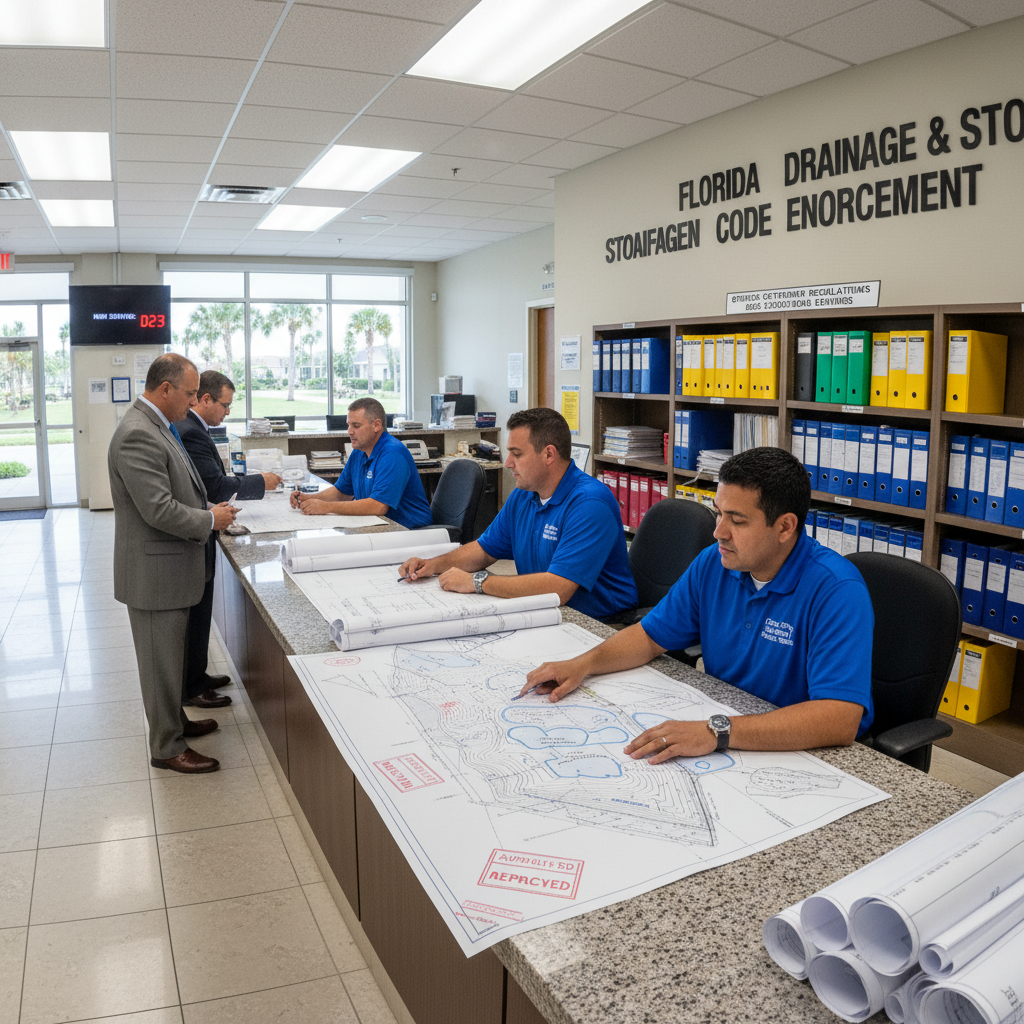
Stormwater Requirements Across Florida Counties
Each Florida county has its own set of stormwater management requirements, tailored to its unique environmental conditions. For instance, Miami-Dade County emphasizes the need for flood control due to its low-lying topography, while Orange County focuses on water quality to protect its numerous lakes and rivers. Understanding these distinctions is crucial for developers and engineers working on projects across different regions. In Broward County, the emphasis is on retention and detention systems to manage runoff effectively. Palm Beach County, on the other hand, requires detailed hydrologic and hydraulic analyses to ensure that new developments do not adversely impact existing drainage systems.
Drainage Design Criteria and County-Specific Standards
Comparison of Drainage Review, Permitting, Inspections, and Enforcement
| County | Review Standards | Inspection Requirements | Enforcement Procedures |
|---|---|---|---|
| Miami-Dade | Comprehensive regional impact assessment | Annual maintenance reports required | Permit revocation for major violations |
| Broward | Detailed site inspections | Regular inspections during construction | Fines and corrective actions for non-compliance |
| Palm Beach | Hydrologic and hydraulic analyses | County-conducted inspections | Focus on education and collaboration |
| Orange | Functionality-focused post-construction inspections | Guidance during permitting process | Proactive approach to prevent violations |
| Hillsborough | 100-year storm event criteria | Regular inspections during construction | Emphasis on public safety and infrastructure maintenance |
The drainage design criteria can vary significantly between counties. Miami-Dade County, for example, requires a minimum design storm event of a 25-year frequency, while Hillsborough County mandates a 100-year storm event for critical infrastructure. These criteria influence the design and construction of stormwater management systems, impacting project timelines and costs. County-specific standards also dictate the materials and methods used in drainage construction. For instance, Palm Beach County has specific requirements for the use of permeable pavements in certain areas to enhance groundwater recharge.
County-Specific Review Standards and Inspection Requirements
Review standards and inspection requirements are critical components of the permitting process. In Miami-Dade County, the review process includes a comprehensive assessment of the project’s impact on the regional drainage system. Broward County requires detailed site inspections to ensure compliance with approved plans. Orange County’s inspection requirements focus on the functionality of stormwater management systems post-construction, ensuring they operate as designed. Hillsborough County, meanwhile, mandates regular inspections during construction to monitor compliance with drainage design criteria.
Inspection and Maintenance Obligations
Inspection and maintenance obligations are essential for the long-term success of stormwater management systems. Miami-Dade County requires property owners to conduct regular maintenance and submit annual reports to the county. In contrast, Palm Beach County conducts its own inspections to verify compliance. Hillsborough County emphasizes the importance of maintaining drainage infrastructure to prevent flooding and ensure public safety. This includes regular cleaning of storm drains and detention basins.
Permit Enforcement Procedures
Permit enforcement procedures vary by county, impacting how violations are addressed. In Broward County, non-compliance can result in fines and mandatory corrective actions. Orange County takes a proactive approach, offering guidance to developers during the permitting process to prevent violations. Miami-Dade County has a robust enforcement mechanism, including the ability to revoke permits for significant violations. Palm Beach County focuses on education and collaboration with developers to achieve compliance.
RSP Engineers’ Approach to Drainage Code Compliance
At RSP Engineers, we understand the complexities of navigating drainage code enforcement across Florida’s diverse counties. Our team of licensed engineers is well-versed in county-specific requirements and offers comprehensive site engineering services to ensure compliance. We provide detailed drainage design and analysis, assist with permit applications, and conduct thorough inspections to support successful project outcomes.
Common Compliance Issues in Florida Counties
Common compliance issues include inadequate stormwater management designs, failure to adhere to county-specific drainage criteria, and insufficient maintenance of drainage infrastructure. Developers often face challenges in understanding the nuances of each county’s requirements, leading to delays and increased costs. Proactive planning and collaboration with experienced civil engineers can mitigate these issues, ensuring projects meet all necessary standards and avoid costly penalties.
Contact RSP Engineers for Expert Guidance
For expert guidance on navigating Florida’s complex drainage code enforcement, contact RSP Engineers. Our team of licensed engineers offers tailored site engineering services to ensure your project meets all regulatory requirements. We provide comprehensive support from design through construction, helping you achieve successful outcomes.
Conclusion
Understanding the differences in drainage code enforcement across Florida counties is essential for successful project execution. By recognizing county-specific stormwater requirements and drainage design criteria, developers and engineers can navigate the permitting process more effectively. Partnering with experienced professionals like RSP Engineers ensures compliance and mitigates risks associated with non-compliance.
FAQs
-
The main differences include varying stormwater management requirements, drainage design criteria, and enforcement procedures. Each county tailors its regulations to address local environmental conditions and challenges.
-
Developers can ensure compliance by working with experienced civil engineers who understand the specific requirements of each county. Engaging in early planning and maintaining open communication with county officials is also crucial.
-
Consequences can include fines, mandatory corrective actions, and in severe cases, permit revocation. Non-compliance can also lead to project delays and increased costs.