
Box Culvert Replacement Standards for Aging Florida Roadway Crossings
Explore the standards and considerations for replacing aging box culverts at Florida roadway crossings, including design, permitting, and construction best practices.
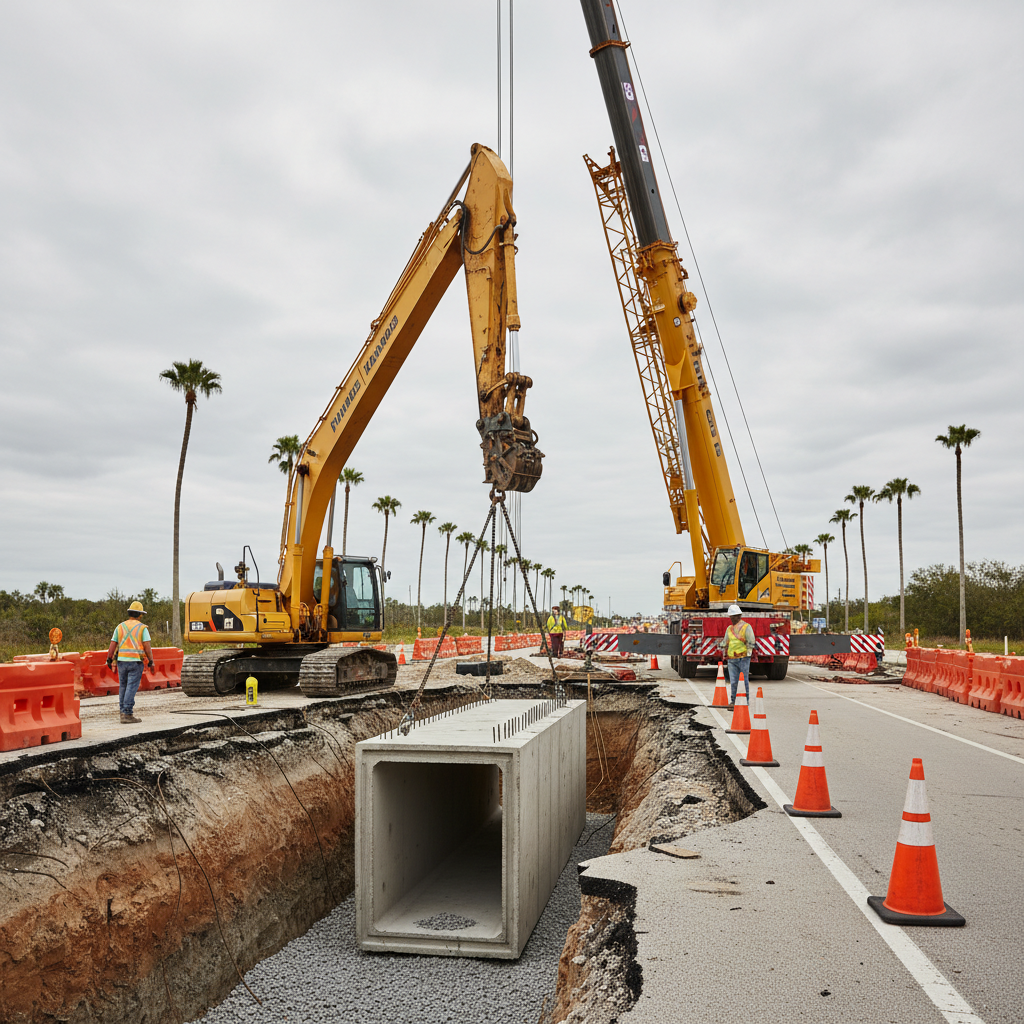
Understanding Box Culvert Functionality
Box culverts are essential components in Florida’s infrastructure, designed to facilitate the passage of water under roadways, railways, and other structures. They are typically made of reinforced concrete and are preferred for their durability and ability to handle large volumes of water. Understanding their functionality is crucial for effective replacement and maintenance. The primary function of a box culvert is to manage stormwater flow, preventing flooding and erosion. They also support the weight of the overlying roadway and traffic, requiring precise engineering to ensure long-term performance. Properly functioning box culverts are vital for maintaining roadway safety and preventing water-related damage.
Key Design Considerations for Replacement
Comparison of Replacement Standards and Criteria
| Criteria | Existing Culvert | Replacement Culvert |
|---|---|---|
| Hydraulic Capacity | Designed for historical flow rates | Accommodates increased stormwater flow |
| Structural Integrity | Subject to wear and degradation | Enhanced materials for longevity |
| Environmental Impact | Potential disruption to habitats | Minimized ecological footprint |
| Regulatory Compliance | May not meet current standards | Fully compliant with updated codes |
| Installation Practices | Traditional methods | Incorporates modern techniques |
When replacing aging box culverts, several design considerations must be addressed to ensure compliance with Florida’s engineering standards. These include hydraulic capacity, structural integrity, and environmental impact. Engineers must evaluate the existing conditions and design the replacement to accommodate current and future needs. Hydraulic capacity is a critical factor, as the culvert must handle peak stormwater flows without causing upstream flooding. Structural integrity involves selecting materials and construction methods that provide long-term durability and resistance to environmental stressors. Environmental considerations include minimizing disruption to local ecosystems and ensuring compliance with state and federal regulations.
Permitting and Regulatory Requirements
Replacing a box culvert in Florida requires navigating a complex landscape of permitting and regulatory requirements. Engineers must obtain permits from various agencies, including the Florida Department of Environmental Protection (FDEP) and local water management districts. These permits ensure that the project complies with environmental standards and stormwater management regulations. Key permitting considerations include demonstrating that the replacement will not adversely affect water quality or disrupt natural habitats. Engineers must also ensure that the design meets the requirements of the Florida Building Code and other relevant standards. Proper documentation and timely submission of permit applications are essential to avoid project delays.
Construction and Installation Best Practices
Effective construction and installation practices are crucial for the successful replacement of box culverts. Best practices include proper site preparation, material selection, and quality control measures. Engineers must ensure that the construction process minimizes disruption to traffic and the surrounding environment. Site preparation involves clearing and grading the area to provide a stable foundation for the new culvert. Material selection is critical, with reinforced concrete being the preferred choice for its strength and durability. Quality control measures, such as regular inspections and testing, help ensure that the installation meets design specifications and regulatory standards.
RSP Engineers’ Approach to Box Culvert Replacement
At RSP Engineers, we approach box culvert replacement with a focus on precision and compliance. Our team of experienced engineers conducts thorough assessments of existing structures and designs replacements that meet the specific needs of each project. We prioritize stormwater management, structural integrity, and regulatory compliance in all our designs. Our process includes detailed site evaluations, hydraulic modeling, and collaboration with regulatory agencies to ensure seamless permitting. We employ advanced construction techniques and materials to deliver durable and efficient solutions that enhance roadway safety and functionality.
Common Issues in Box Culvert Replacement
Replacing box culverts can present several challenges, including unexpected site conditions, permitting delays, and environmental concerns. Engineers must be prepared to address these issues to ensure successful project completion. Unexpected site conditions, such as unstable soil or hidden utilities, can complicate construction efforts. Permitting delays may arise from incomplete applications or regulatory changes. Environmental concerns, such as protecting local wildlife, require careful planning and mitigation strategies.
Contact RSP Engineers
For expert guidance on box culvert replacement and other infrastructure projects, contact RSP Engineers. Our team specializes in stormwater management, regulatory compliance, and advanced construction techniques to deliver reliable and efficient solutions. Let us help you navigate the complexities of Florida’s engineering standards and ensure the success of your project.
Conclusion
Replacing aging box culverts at Florida roadway crossings is a complex task that requires careful planning and execution. By understanding the functionality, design considerations, and regulatory requirements, engineers can ensure successful replacements that enhance infrastructure safety and performance. RSP Engineers is committed to providing expert solutions that meet the unique challenges of Florida’s infrastructure needs.
FAQs
-
Key considerations include hydraulic capacity, structural integrity, and environmental impact. The design must accommodate current and future stormwater flows, provide long-term durability, and comply with environmental regulations.
-
Permits are typically required from the Florida Department of Environmental Protection (FDEP) and local water management districts. These ensure compliance with environmental standards and stormwater management regulations.
-
RSP Engineers conducts thorough assessments and collaborates with regulatory agencies to ensure all designs meet the Florida Building Code and other relevant standards. Our team prioritizes regulatory compliance in every project.