
Data Center Telecom Coordination for Mission-Critical Facilities
A detailed guide for data center developers on water demand analysis, including cooling load calculations, utility coordination, and permitting in Florida. Learn how RSP Engineers ensures water resili
The Critical Role of Water in Data Center Cooling Systems
The primary function of water in a data center is heat rejection. As servers process vast amounts of data, they generate significant thermal loads that must be continuously removed to prevent equipment damage. The most common method for large-scale facilities is water-based cooling, particularly evaporative cooling systems that leverage cooling towers. In these systems, water is circulated through a chiller plant and then to the cooling towers, where evaporation dissipates heat into the atmosphere. The effectiveness of this process is directly tied to a facility’s Power Usage Effectiveness (PUE) and Water Usage Effectiveness (WUE). The choice of cooling technology dictates the water demand profile. While some designs use closed-loop chilled water systems, most large-scale deployments rely on open-loop towers that constantly consume water through evaporation, drift, and blowdown. Understanding the specific requirements of these systems, including the need for high-quality makeup water and the management of concentrated solids in blowdown water, is a core task in the initial phases of site engineering services. This foundational analysis prevents costly design changes and ensures the mechanical systems are supported by robust civil infrastructure.
Quantifying Cooling Water Demand: Peak vs. Average Load
Data Center Water Demand Component Analysis
| Component | Key Metrics | Primary Driver | RSP Engineering Focus |
|---|---|---|---|
| Cooling Tower Makeup | Gallons per Minute (GPM), Gallons per Day (GPD) | IT Load (MW), Ambient Wet-Bulb Temperature | Peak demand modeling, climate data analysis, WUE optimization. |
| Chiller Plant Blowdown | Cycles of Concentration, GPM | Makeup Water Quality, Evaporation Rate | Water quality analysis, discharge permitting, water balance calculations. |
| Domestic Use | Gallons per Capita per Day (GPCD) | Facility Staffing Levels | Fixture counts, compliance with Florida Building Code, sizing of service lines. |
| Fire Suppression | GPM, Pressure (PSI) | Building Size, Hazard Classification (NFPA) | Fire flow testing, coordination with Fire Marshal, design of on-site storage/pumps. |
| Irrigation | Gallons per Square Foot | Landscaped Area, Plant Type | Drought-tolerant landscape planning, coordination with CUP requirements, smart irrigation controls. |
| System Testing & Flushing | Total Volume (Gallons) | Commissioning Requirements, Pipe Network Volume | Construction sequencing, coordination with contractors, temporary water source planning. |
Estimating water demand begins with the facility’s IT load, measured in megawatts (MW). This electrical load is the primary driver of heat generation. Our analysis translates this thermal load into a water consumption rate, typically measured in gallons per minute (GPM). A critical distinction is made between average and peak water demand. While average demand informs operational cost projections, the entire water infrastructure—from municipal connections to on-site pumps and storage—must be designed to handle the absolute peak load, which often occurs on the hottest, most humid days of the year. To accurately model this, our engineers use local climate data, specifically the historical wet-bulb temperature records for the project site in Florida. This data determines the efficiency of evaporative cooling and the corresponding volume of cooling tower makeup water required. We model various scenarios, including full IT build-out at peak summer conditions, to define a worst-case demand that the system must reliably meet. This rigorous approach to drainage design and utility planning prevents performance throttling during critical high-temperature events.
Calculating Domestic, Fire Protection, and Ancillary Water Needs
While cooling accounts for the vast majority of water use, other demands must be precisely calculated. Domestic water use for restrooms, breakrooms, and administrative offices is a relatively small but consistent component of the overall demand. This requires a separate analysis based on the facility’s projected staffing levels and compliance with the Florida Building Code for sanitary facilities. More significant from an infrastructure standpoint are the fire flow requirements. Data centers are high-value assets requiring robust fire suppression systems that demand extremely high flow rates for a short duration. Our civil engineering analysis involves coordinating with the local fire marshal and adhering to NFPA standards to determine the required GPM and residual pressure. This often dictates the size of the main water service line and may necessitate dedicated on-site fire water storage tanks and pumps to ensure the municipal system is not overdrawn during an emergency.
Utility Coordination and Supply Adequacy Assessment
One of the most critical phases of site development is early and detailed utility coordination with the local water provider. We initiate this process by submitting a formal request for a water availability letter, which provides preliminary data on the capacity of the existing municipal system. This initial step is followed by a more in-depth analysis of the provider’s hydraulic models to confirm that their infrastructure can deliver the required flow and pressure to the site’s connection point without negatively impacting other users. If the existing municipal water supply is insufficient, our role expands to identifying necessary off-site improvements. This can range from upgrading a segment of water main to requiring the construction of new booster pump stations or storage facilities. We work with the utility to define the scope, cost, and timeline for these upgrades, ensuring they are integrated into the overall project schedule and budget. This proactive engagement is essential for successful permitting and avoiding costly delays during construction.
On-Site Water Storage and Redundancy Planning
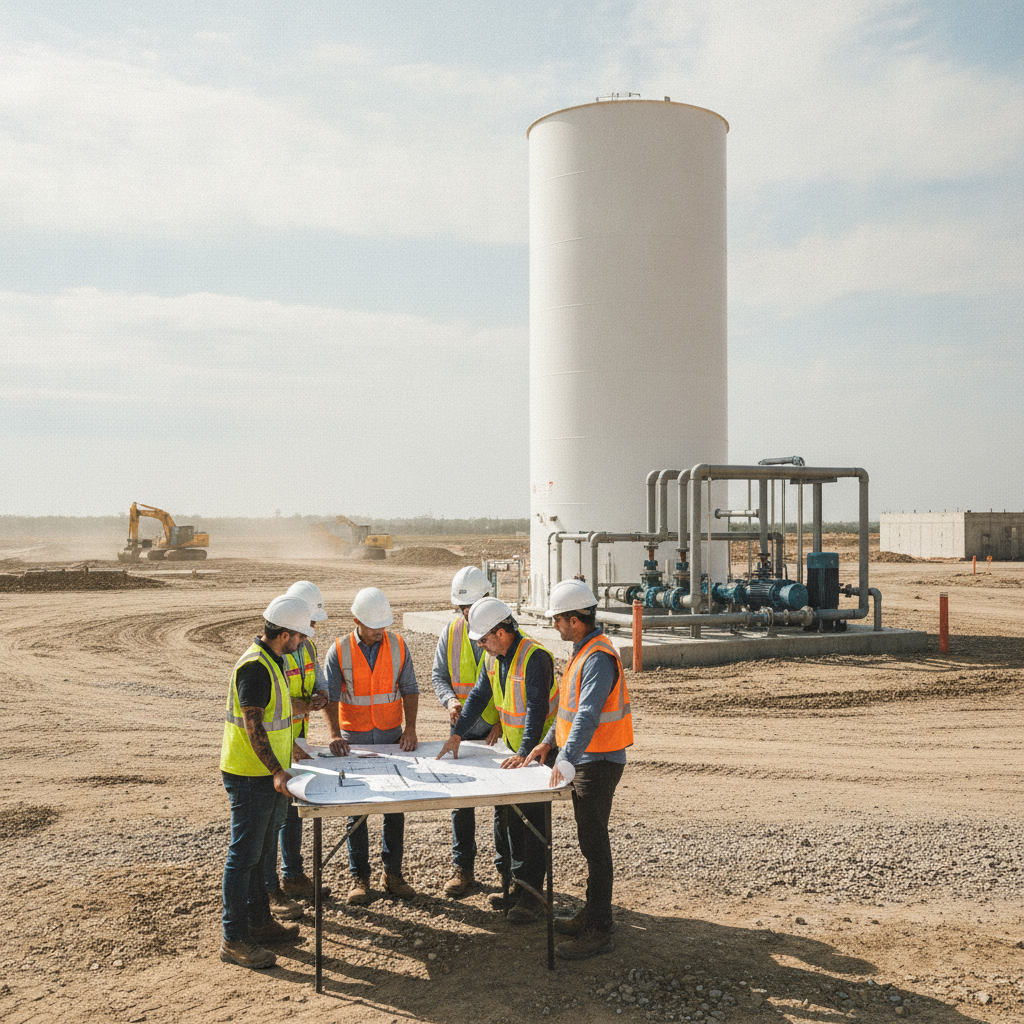
For a mission-critical facility, 100% reliance on a municipal water supply introduces an unacceptable single point of failure. A water main break, pump station failure, or contamination event could force a complete shutdown. To mitigate this risk, redundancy planning is non-negotiable. The standard is to design and build on-site water storage tanks capable of supporting full cooling operations for a predetermined duration, typically 24 to 72 hours, without any external supply. Sizing these tanks is a direct output of our peak demand analysis. We calculate the total volume needed to cover evaporative losses, blowdown, and domestic use over the target resiliency period. The design often incorporates N+1 redundancy in pumps and controls to ensure a component failure doesn’t compromise the system. This on-site infrastructure is a significant capital investment, but it is essential for guaranteeing the level of uptime and operational continuity that data center tenants demand. This is a key part of the site plan design.
Navigating Florida’s Water Permitting Landscape
Large-volume water users like data centers are subject to a rigorous regulatory framework in Florida. The state’s five Water Management Districts (WMDs) are responsible for protecting water resources, and any project exceeding certain consumption thresholds will likely require a Consumptive Use Permit (CUP). Securing a CUP involves demonstrating that the proposed water withdrawal is reasonable, beneficial, will not harm the environment or existing legal users, and is consistent with the public interest. Our team guides clients through this complex permitting process. We prepare the detailed technical documentation required for the CUP application, including the water demand calculations, conservation plans, and environmental impact assessments. We also manage the agency review process, responding to requests for additional information and representing the project’s interests. Proactively addressing these regulatory requirements is crucial for keeping the project on schedule and ensuring long-term compliance with Florida’s water use regulations.
Our Approach to Water Demand Analysis at RSP Engineers
At RSP Engineers, we employ a systematic, multi-phase approach to ensure water infrastructure is a source of strength, not vulnerability. Our process begins with an initial site feasibility study, where we collect preliminary utility data and climate information to create a high-level demand model. This allows clients to make informed go/no-go decisions early in the site selection process. Once a site is selected, we move into detailed demand modeling and utility coordination. We build a comprehensive water balance for the site, accounting for every component of demand under various operational scenarios. This model becomes the basis for our negotiations with utilities and our applications for permitting. Finally, our site engineering services integrate the water infrastructure design—including on-site storage, pumps, and distribution piping—into the overall civil construction documents, providing seamless support through construction administration and final commissioning.
Common Challenges in Data Center Water Planning
Even with careful planning, data center water projects can face significant hurdles. One of the most common is underestimating the timeline for off-site utility upgrades. A new municipal water main can take years to design, permit, and construct, a timeline that often conflicts with the aggressive schedules of data center developers. Another frequent issue is discovering poor raw water quality late in the design process, which can necessitate costly on-site pre-treatment systems that were not originally budgeted. Furthermore, navigating the agency review process for a Consumptive Use Permit can be unpredictable. Regulatory priorities can shift, and public or environmental opposition can emerge, leading to delays. Proactive engagement with regulators, a robust application package, and a clear understanding of the local water resource constraints are the best defenses against these common challenges in land development.
Partner with RSP Engineers for Your Mission-Critical Facility
Ensuring water resiliency for a mission-critical data center requires specialized expertise that bridges civil engineering, utility policy, and regulatory permitting. The team at RSP Engineers has a proven track record of guiding developers through this complex process in Florida. We provide the detailed analysis and strategic foresight needed to secure a reliable water supply for your project. From initial feasibility and utility coordination to final permitting and construction administration, we are your dedicated partner in building resilient, high-performance digital infrastructure.
Conclusion: Securing Water Resiliency for Your Data Center Investment
In conclusion, a comprehensive water demand analysis is not a discretionary item but a foundational requirement for any successful data center development. It directly impacts site selection, design, budget, and long-term operational viability. By meticulously quantifying every aspect of water use, from peak cooling loads to fire suppression, and proactively managing utility coordination and permitting, developers can mitigate significant risks. Investing in expert civil engineering at the outset ensures that the facility’s water infrastructure is as robust and reliable as the digital systems it is built to protect.
FAQs
-
A preliminary water demand analysis should be conducted as part of the initial site due diligence, even before an offer is made on a property. This early assessment identifies potential ‘fatal flaws’ related to water supply or permitting, saving significant time and capital. A full, detailed analysis should commence immediately upon site control.
-
Makeup water is the fresh water added to a cooling tower to replace water lost to evaporation, drift, and blowdown. Blowdown is the intentional draining of a small portion of the highly concentrated circulating water to prevent the buildup of minerals and solids, which can cause scaling, corrosion, and biological fouling in the cooling system.
-
Yes, and it is often encouraged by Florida’s Water Management Districts as a conservation measure. Using reclaimed water can ease the path to securing a Consumptive Use Permit (CUP). However, it requires a thorough analysis of the reclaimed water quality and may necessitate additional on-site treatment to make it suitable for use in sensitive cooling equipment.