
Data Center Cooling Water Infrastructure Design
A technical guide for developers on designing and permitting data center cooling water infrastructure, covering makeup water, basins, discharge, and utility coordination in Florida.
Sourcing and Conveying Makeup Water
A data center’s cooling system is in a constant state of evaporation, requiring a massive and uninterrupted supply of makeup water. The first critical task for the civil engineer is to identify and secure a reliable source. This typically involves a detailed analysis of municipal water systems, reclaimed water availability, or the feasibility of on-site deep wells. We conduct a thorough utility availability analysis to confirm the local provider can meet the demand, which can exceed a million gallons per day for a large campus. This requires early and frequent utility coordination with the water authority. Once a source is confirmed, we design the conveyance infrastructure. This includes large-diameter makeup water lines, often requiring dedicated easements and significant off-site improvements. The design must account for required pressure and flow rates, incorporating booster pump stations if necessary. For mission-critical reliability, redundancy is key. This often means designing dual feeds from different points in the municipal grid or a combination of a primary municipal source and a backup well system, ensuring the site development plan can accommodate this parallel infrastructure.
Cooling Tower Basin and Sump Design
Cooling Water System Civil Design Comparison: Municipal vs. On-Site Well Source
| Design Element | Municipal Water Source | On-Site Well Source |
|---|---|---|
| Permitting Complexity | Requires utility service agreements, capacity analysis, and potentially off-site improvement permits from the city/county. Simpler than well permitting. | Requires permits from the Water Management District (WMD) for consumptive use, plus well construction permits. Often a longer and more complex process. |
| Intake Infrastructure | Large-diameter taps on existing water mains, backflow preventers, and master meter vaults. Often involves roadway and existing utility work. | Requires well drilling, pump installation, a well house, and on-site primary water treatment/filtration systems before use in the cooling loop. |
| Redundancy Strategy | Dual taps from different parts of the municipal grid. Often supplemented with on-site storage tanks as a buffer against service interruptions. | Multiple wells drilled into the aquifer. Can be a primary source with municipal backup, or vice-versa. Requires redundant well pumps and power. |
| Water Quality Impact | Water quality is predictable and pre-treated. Primary concern is managing chlorine/chloramine levels and coordinating with the utility. | Raw water quality can vary. Requires on-site treatment for hardness, iron, or other minerals, impacting the blowdown chemistry and discharge permit. |
| Initial Capital Cost | Typically lower initial cost, dominated by connection fees and off-site main extensions. Long-term operational cost is based on utility rates. | Higher initial capital cost due to drilling, well pumps, and on-site treatment infrastructure. Lower long-term cost if water rates are high. |
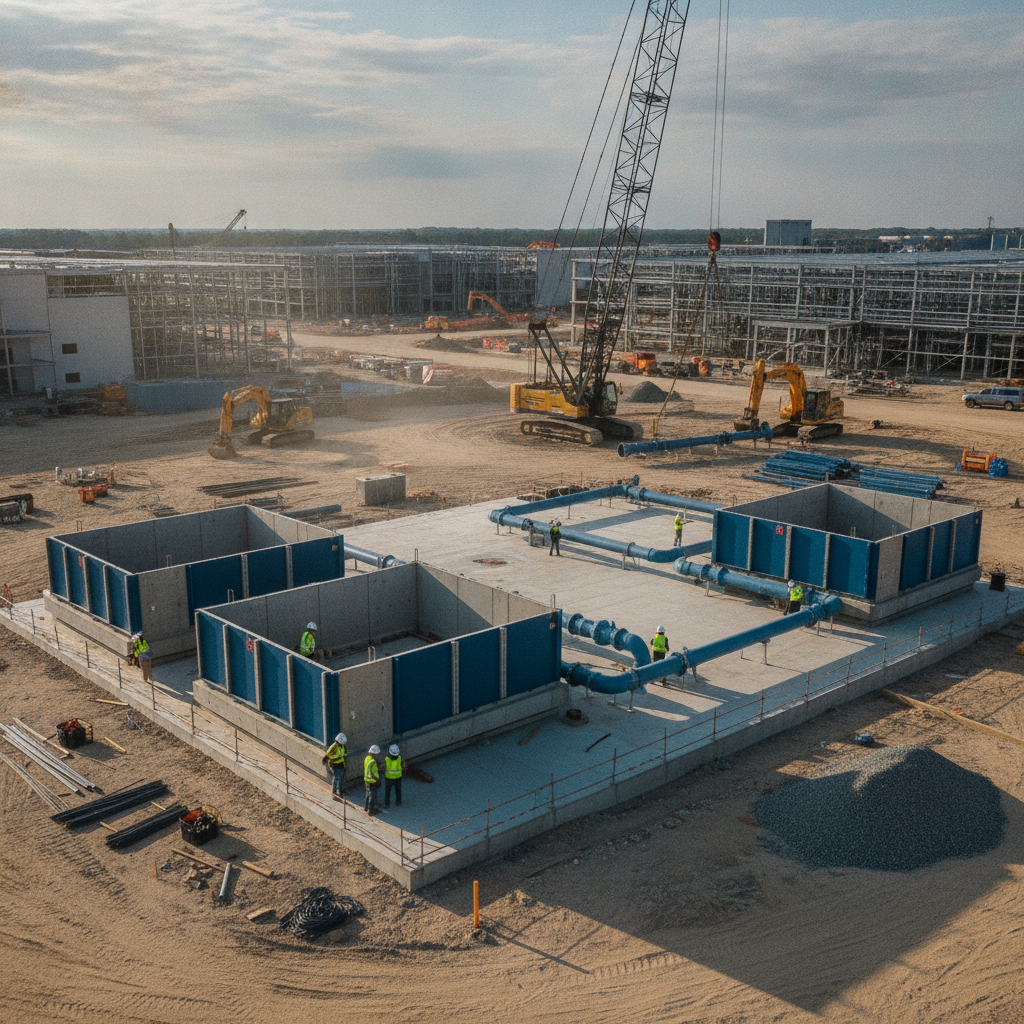
The cooling tower basin is more than just a concrete tub; it’s a critical piece of engineered infrastructure. The civil and structural design must ensure the basin is sized to provide adequate water volume for the cooling loop, accounting for emergency reserves and system cycle times. The structural design of these massive, water-retaining structures requires a thorough Geotechnical Engineering analysis to prevent settlement and ensure long-term stability. The geotechnical soil report informs the foundation design, whether it’s a mat foundation or a deep foundation system. Our design process includes integrating pump sumps, intake screens, and overflow structures directly into the basin’s form. We pay close attention to waterproofing details and concrete mix designs to guarantee water tightness and durability against chemical treatments. Furthermore, the basin’s location and elevation are coordinated with the overall site drainage design to prevent inundation from major storm events, a crucial consideration in Florida’s intense rainfall environment. Proper stormwater management around these structures is non-negotiable.
Pumping, Distribution, and Return Piping Networks
Moving water from the cooling tower basins to the data halls and back is a large-scale plumbing exercise managed by the civil engineer. We design the extensive network of underground process piping that forms the circulatory system of the cooling infrastructure. This involves selecting appropriate pipe materials, such as HDPE or ductile iron, based on pressure, corrosion resistance, and cost. The design includes detailed hydraulic modeling to ensure proper flow and pressure is maintained throughout the campus. A key aspect of this work is clash detection and utility coordination. The cooling water pipes share crowded underground corridors with power conduits, communications lines, and other site utilities. Our site plan design meticulously lays out these corridors to prevent conflicts during construction. We also design concrete thrust blocks at all bends and fittings to counteract the immense hydraulic forces within the large-diameter pipes, preventing catastrophic joint failure. This is a fundamental part of responsible site engineering services.
Blowdown Discharge and Environmental Permitting
As water evaporates in cooling towers, minerals and treatment chemicals become concentrated. This mineral-rich water, known as “blowdown,” must be periodically discharged to maintain system efficiency. Managing this discharge is one of the most significant environmental and permitting challenges in data center development. The discharge path dictates the regulatory framework. Discharging to a municipal sanitary sewer system requires an industrial wastewater discharge permit and often pre-treatment to meet the utility’s quality standards. Alternatively, discharging to a stormwater system or surface water body falls under the National Pollutant Discharge Elimination System (NPDES) program, administered in Florida by the FDEP. This path requires extensive water quality analysis, environmental impact studies, and a complex permit submittal process. As one of the leading Civil Engineering firms in Florida, we guide clients through this decision-making process, modeling discharge plumes and negotiating permit conditions with regulatory agencies to secure a compliant and operationally viable solution.
Integrating Water Treatment Systems
While mechanical engineers and specialty vendors specify the water chemistry, the civil engineer provides the physical platform for the water treatment equipment. This involves designing concrete pads for treatment skids, chemical storage tanks, and pump houses. A critical component of this design is providing for secondary containment around all chemical storage areas, as required by the Florida Building Code and environmental regulations. This containment is designed to hold 110% of the volume of the largest tank to prevent spills from reaching the environment. The design also includes routing smaller-diameter chemical feed lines and ensuring proper drainage is in place for the treatment area. This drainage must be isolated from the main stormwater management system to capture any potential spills. Effective integration requires close collaboration between the civil engineer, the mechanical team, and the water treatment vendor to ensure all physical requirements, from foundation loads to utility connection points, are met in the final site plan design.
Redundancy and Resiliency in Water Systems
In the world of mission-critical facilities, downtime is not an option. Resiliency is therefore a core principle of our design philosophy. For data center cooling water, this translates to building robust redundancy into every component of the system. This often means designing for N+1 or 2N redundancy, where a complete backup system stands ready to take over in case of a primary component failure. This philosophy extends across the entire civil infrastructure. Our designs incorporate dual makeup water lines from independent sources, multiple parallel pump configurations, and often large on-site water storage tanks that can supply the cooling system for a predetermined duration during a utility outage. The site development plan must be strategically laid out to accommodate this duplicate infrastructure, including separated utility corridors to prevent a single point of failure, such as a localized excavation accident, from taking down both primary and backup systems. This level of planning is a hallmark of experienced mission-critical design.
RSP Engineers’ Approach to Cooling Water Infrastructure
At RSP Engineers, we approach data center projects with a comprehensive, phased methodology. Our process begins with an in-depth feasibility study and utility availability analysis to identify viable water sources and discharge paths, flagging key permitting risks early. We then develop a preliminary site plan design that strategically locates major infrastructure like cooling tower yards, pump houses, and storage tanks, optimizing the layout for hydraulic efficiency and future expansion. From there, our team of Florida Licensed Engineers produces detailed engineering plans for all civil components, including grading, drainage design, utility profiles, and structural details for basins and vaults. We manage the entire agency review process, submitting permit applications to Water Management Districts, the FDEP, and local utilities. During construction, we provide robust Construction Management Services, reviewing submittals, responding to RFIs, and ensuring the infrastructure is built exactly as designed to meet the stringent demands of a mission-critical facility.
Navigating Common Challenges in Water Infrastructure Design
Even with careful planning, data center water projects present unique challenges. One of the most common issues is underestimating the timeline and complexity of environmental permitting for blowdown discharge, which can significantly delay a project schedule. Another frequent problem arises from insufficient upfront geotechnical investigation, leading to unforeseen soil issues that complicate basin foundation design and increase costs. A soil boring test is essential early on. Poor utility coordination is a persistent source of construction delays and change orders. Without a proactive and detailed coordination effort, conflicts between the large-diameter cooling pipes and other critical utilities are almost inevitable. Finally, a failure to plan for future phases can be a costly mistake. We always design the core infrastructure with future expansion in mind, ensuring that mains are sized appropriately and corridors are reserved to support the ultimate campus build-out, saving significant capital on future phases. Frequently Asked Questions How much water does a modern data center use? Water usage varies greatly depending on the cooling technology, IT load, and local climate, but it’s not uncommon for a large data center to use over a million gallons per day. This is why a detailed utility availability analysis is one of the first steps in site selection and design. What is the biggest permitting hurdle for data center water systems in Florida? The most complex and time-consuming permit is typically the blowdown discharge permit. Whether discharging to a sanitary sewer or a surface water body, the process involves stringent water quality standards, detailed negotiations with regulatory agencies like the FDEP, and can significantly influence the project’s overall timeline. Can we use reclaimed water for data center cooling? Yes, using reclaimed water is an increasingly popular and sustainable option in Florida. However, it requires a robust on-site water treatment system to manage the specific water chemistry, which often has higher nutrient and mineral content. Close coordination with the reclaimed water provider is essential to ensure supply reliability and quality. How does the site’s grading and drainage impact the cooling water system? The site’s overall drainage design is critical. We design the site grading to ensure that the cooling tower basins and pump stations are protected from flooding during major storm events. The site’s stormwater management system must be designed to work in concert with, but separate from, the process water systems to maintain environmental compliance. What level of redundancy is typical for a mission-critical facility? For hyperscale and colocation data centers, N+1 or 2N redundancy is the industry standard. For the water system, this means having at least one independent backup for every critical component, from the makeup water lines and pumps to the power feeds that run them. This is a core principle of mission-critical design.
Your Partner for Mission-Critical Site Development
Designing and permitting the water infrastructure for a data center requires a specialized blend of civil engineering disciplines. At RSP Engineers, our team has the expertise to manage every aspect of your project, from initial site selection and utility coordination to final commissioning. We navigate the complexities of environmental permitting and deliver robust, resilient site development plans that ensure your facility’s critical cooling systems are built on a solid foundation. Don’t let water infrastructure be the weak link in your mission-critical investment. Contact us today to discuss how we can support your next data center project in Florida.
Conclusion
The civil engineering that supports a data center’s cooling system is a foundational element of its operational success and reliability. It is a complex undertaking that extends far beyond simply laying pipes. It requires a forward-thinking approach to site development, meticulous utility coordination with public and private entities, and a deep understanding of Florida’s demanding environmental permitting landscape. Investing in experienced engineering from the outset ensures that this critical infrastructure is resilient, compliant, and capable of supporting the facility’s needs for decades to come.
FAQs
-
Data Center Cooling Water Infrastructure Design requires careful planning, qualified engineering, and compliance with the applicable codes and permits.
-
Getting Data Center Cooling Water Infrastructure Design right protects safety, supports regulatory compliance, and avoids costly redesigns or delays.
-
RSP Engineers provides licensed expertise and end-to-end support for Data Center Cooling Water Infrastructure Design, from early planning through permitting.