
Data Center Stormwater Integration
Explore effective stormwater integration strategies for data centers, focusing on retention, bioswales, and infrastructure design.
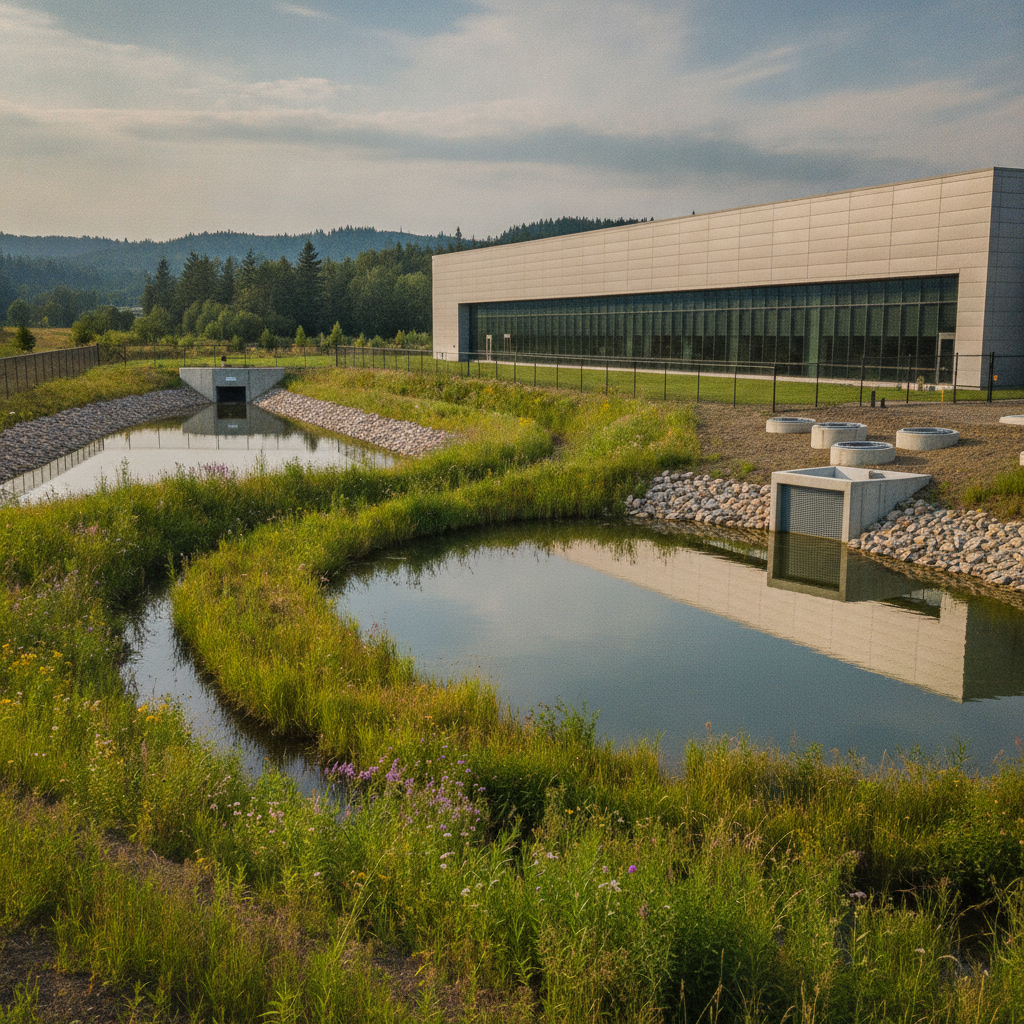
Understanding Stormwater Management in Data Centers
Retention vs. Detention Pond Features
| Feature | Retention Pond | Detention Pond |
|---|---|---|
| Primary Function | Infiltration and slow release | Temporary storage and controlled release |
| Water Quality Improvement | High | Moderate |
| Space Requirement | Larger | Smaller |
| Maintenance Needs | Moderate | Low |
| Cost | Higher | Lower |
Effective stormwater management is essential for data centers due to their large impervious surfaces, which can lead to increased runoff and potential flooding. Key components include retention ponds, bioswales, and engineered drainage systems. These elements help manage runoff, improve water quality, and mitigate flood risks. Retention ponds are designed to hold stormwater temporarily, allowing it to infiltrate into the ground or be released slowly. Bioswales, on the other hand, are vegetated channels that filter and convey stormwater, enhancing infiltration and reducing pollutants.
Additional Context
Design Considerations for Stormwater Systems
When designing stormwater systems for data centers, several factors must be considered. The site plan design should incorporate natural topography and existing water flow patterns to optimize stormwater capture and treatment. Additionally, the choice of materials and vegetation in bioswales can significantly impact their effectiveness. Engineers must also consider the potential impact of climate change, which may alter precipitation patterns and increase the frequency of extreme weather events. This requires flexible and scalable stormwater solutions that can adapt to changing conditions.
Retention vs. Detention Pond Features
Feature Retention Pond Detention Pond Primary Function Infiltration and slow release Temporary storage and controlled release Water Quality Improvement High Moderate Space Requirement Larger Smaller Maintenance Needs Moderate Low Cost Higher Lower
The Process of Stormwater Integration
At RSP Engineers, our Professional Engineering Team follows a comprehensive process to integrate stormwater systems into data center projects. This includes initial site assessments, hydrological studies, and detailed design phases. Our Engineering Consultants work closely with clients to ensure that all solutions meet regulatory requirements and align with the facility’s operational goals.
Common Issues in Stormwater Integration
Challenges in stormwater integration often arise from inadequate planning or unforeseen site conditions. Common issues include insufficient drainage capacity, erosion, and sediment control failures. Addressing these challenges requires proactive design and regular maintenance to ensure system functionality and compliance.
Contact RSP Engineers
For expert guidance on integrating stormwater systems into your data center project, contact RSP Engineers. Our Engineering Professionals are ready to assist with site development, utility coordination, and stormwater management solutions.
Conclusion
Integrating effective stormwater management systems into data center designs is crucial for operational success and environmental compliance. By leveraging advanced engineering solutions and sustainable practices, data centers can mitigate flood risks and enhance water quality. Partnering with Civil Engineering Experts like RSP Engineers ensures that your project meets all necessary standards and operates efficiently.
Related Articles
FAQs
Data Center Generator Yard Planning Data Center Campus Master Planning Data Center Future Expansion Planning
-
Bioswales offer several benefits, including improved stormwater management, enhanced water quality, and reduced runoff. They also contribute to the aesthetic value of the site.
-
Retention ponds are designed for infiltration and slow release of stormwater, while detention ponds temporarily store water and release it at a controlled rate.
-
Key factors include site topography, soil conditions, climate patterns, and regulatory requirements. These influence the choice of stormwater management techniques.