
Data Center Project Closeout Checklist for Owners and Developers
A detailed checklist for data center project closeout in Florida. Learn about final inspections, as-built submittals, utility handovers, and stormwater certification with RSP Engineers.
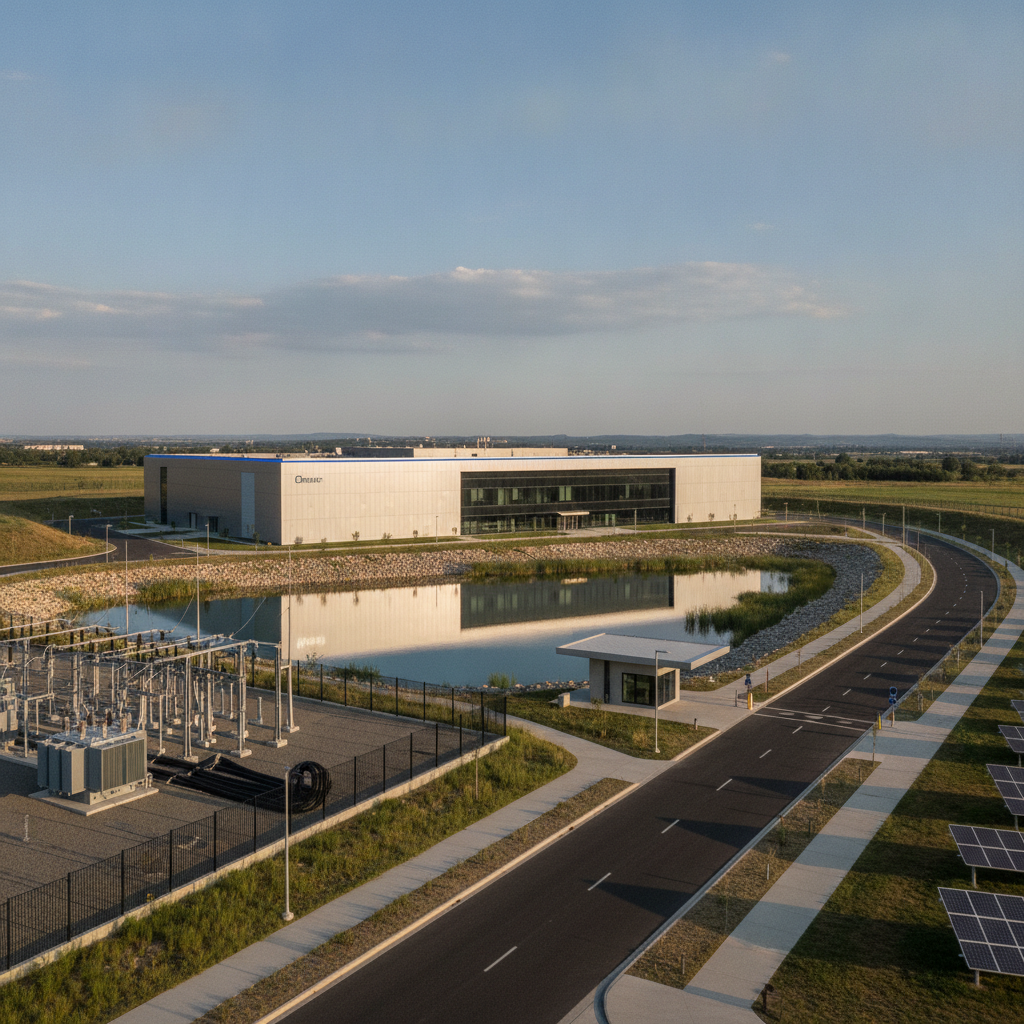
Finalizing Site Civil and Infrastructure As-Built Documentation
The foundation of a successful project closeout is accurate and complete documentation. As-built drawings, also known as record drawings, are not just a formality; they are the official record of what was constructed. For a data center, where underground utilities are dense and complex, precise as-builts are essential for future maintenance, troubleshooting, and expansions. These documents must reflect the final, in-place locations, elevations, and materials of all site components. Our process involves a thorough review of the contractor’s field surveys against the approved site plan design. We verify everything from the invert elevations of storm pipes to the exact routing of water and sewer lines. This step is crucial for confirming that the constructed infrastructure meets the design intent and regulatory requirements. Incomplete or inaccurate as-built surveys can jeopardize final agency acceptance and create significant operational risks for the facility owner long after the construction team has left the site.
Securing Stormwater Management System Certification and Closeout
Key Closeout Submittal and Certification Matrix
| System/Component | Key Documentation Required | Certifying/Accepting Entity | Critical Note for Owners |
|---|---|---|---|
| Stormwater Management System | Signed/Sealed As-Built Certification, As-Built Survey | Water Management District / Local Government | Permit remains open and owner is liable until certification is accepted. |
| Potable Water & Fire Lines | Record Drawings, Passed Pressure & Bacteriological Test Results | Local Utility Authority / Health Department | System cannot be activated for use until officially accepted. |
| Sanitary Sewer System | Record Drawings, Passed Mandrel/Air/Vacuum Test Results, CCTV Inspection Video | Local Utility Authority | Failure to transfer ownership leaves owner responsible for public infrastructure. |
| Paving, Grading & Drainage | Final Inspection Approval, As-Built Spot Elevations | Local Government Engineering/Public Works Dept. | Required for Certificate of Occupancy (CO); ensures proper site drainage. |
| ADA Compliance Elements | Final Inspection Approval | Local Government Building/Engineering Dept. | Strict compliance is mandatory; non-compliance will prevent CO issuance. |
| Geotechnical & Materials | Final Summary Report with all field test results (compaction, concrete, etc.) | Owner / Engineer of Record | Provides critical quality assurance and a baseline for future forensic analysis. |
In Florida, the closeout of the stormwater management system is a major regulatory milestone. Data centers, with their vast expanses of impervious surfaces like rooftops and parking lots, require robust drainage systems to manage runoff and comply with state and local regulations. The closeout process typically involves submitting a formal certification to the governing Water Management District (WMD) and local municipality, confirming the system was built in substantial conformance with the Environmental Resource Permit (ERP). This certification must be signed and sealed by a Florida Professional Engineer, who attests that the system’s components—such as retention/detention ponds, control structures, and conveyance pipes—were constructed correctly. The process requires a final as-built survey of the entire system to verify pond volumes, weir elevations, and pipe slopes. Any deviation from the permitted drainage design must be justified or corrected before the agency will officially close out the permit, releasing the owner and developer from construction-phase liability.
Coordinating Final Utility Agency Acceptance and Handovers
Transferring ownership and maintenance responsibility of new public utilities to the local authority is a non-negotiable step. This utility coordination process involves far more than just paperwork. For potable water and fire protection lines, it requires successful pressure testing and bacteriological testing to ensure public health and safety. For sanitary sewer systems, it often includes mandrel testing to check for pipe deflection and low-pressure air tests or vacuum testing of manholes to ensure integrity. Each utility agency has its own specific procedures for final inspection, testing, and acceptance. The civil engineer facilitates this process by scheduling inspections, compiling test results, and submitting the final package of record drawings and supporting documentation. Only upon formal acceptance by the utility provider is the project’s responsibility for these systems officially transferred. Failure to complete this handover can leave the property owner liable for public infrastructure, a significant and unintended risk.
Navigating Final Inspections for Paving, Grading, and ADA Compliance
The final site walkthrough with local government inspectors is where the visible elements of the site development are scrutinized. Inspectors will verify that all paving, striping, and signage match the approved plans. They will pay close attention to site grading to ensure positive drainage away from the building and across parking areas, preventing localized flooding. A critical component of this inspection is verifying full ADA compliance. This includes measuring the slopes of accessible parking spaces, access aisles, and curb ramps to ensure they meet federal and state requirements. The location and installation of ADA-compliant signage are also checked. Any deficiencies identified during this final inspection must be corrected before a final Certificate of Occupancy (CO) or Certificate of Completion can be issued. Proactive construction administration and quality control throughout the build process are key to passing this inspection on the first attempt.
Compiling the Geotechnical and Materials Testing Final Report
Throughout construction, a third-party testing agency documents the quality of materials and workmanship. This includes soil compaction tests for building pads and roadways, concrete cylinder break tests for foundations and curbs, and asphalt density tests for pavement. The closeout phase requires compiling all of these individual field reports into a single, comprehensive final report. This documentation serves as proof that the site infrastructure was built to the specifications outlined by the Geotechnical engineer. This final package, often including the original Geotechnical soil report, is a vital record for the owner. It provides quality assurance and can be invaluable if future issues like pavement settlement or structural problems arise. A complete materials testing record demonstrates due diligence and adherence to the standards of care required for a mission-critical facility. It’s a key part of the turnover package that protects the owner’s long-term investment.
Releasing Liens and Finalizing Financial Documentation
While the civil engineer’s primary role is technical, we often play a part in the financial closeout process. The final payment to the general contractor is typically contingent upon receiving lien releases from all subcontractors and major suppliers involved in the project. This ensures that all parties have been paid and that the property owner will not face future legal claims or liens on the property. This is a critical step in achieving a clean financial close. As part of our construction administration services, we review the contractor’s final pay application to confirm that all work, including punch list items, is complete and satisfactory. We help ensure that all required documentation, from as-builts to agency acceptance letters, is in hand before the owner releases final payment and retainage. This methodical process protects the owner from financial and legal complications after the project is complete.
RSP Engineers’ Proactive Approach to Project Closeout
At RSP Engineers, we believe a successful project closeout begins during the design phase. We establish a clear closeout requirements matrix from day one, outlining every anticipated submittal, inspection, and certification. This matrix becomes a living document used throughout the construction process to track progress and identify potential roadblocks before they become critical path delays. We act as the central point of communication between the contractor, testing agencies, surveyors, and regulatory reviewers. Our approach is hands-on. We facilitate pre-closeout meetings to align all stakeholders on the final steps, review preliminary as-built data to catch errors early, and personally attend final agency walkthroughs. By managing the intricate details of permit submittals and agency follow-up, we ensure a seamless transition from construction to operation, allowing our clients to focus on bringing their data center online without unnecessary delays or lingering liabilities.
Common Pitfalls in Data Center Site Closeout
Even with careful planning, challenges can arise during closeout. One of the most common issues is a discrepancy between the permitted drainage design and the as-built conditions of the stormwater pond, often requiring costly remediation. Another frequent problem is failed bacteriological tests for new water lines, which can be caused by construction debris and require a time-consuming process of repeated flushing and re-testing. Delays in receiving final as-built surveys from the contractor can also stall the entire certification process. Furthermore, discovering ADA compliance issues, such as incorrect ramp slopes or signage, during the final inspection can trigger last-minute, expensive fixes. These pitfalls underscore the importance of continuous quality control during construction and a civil engineering partner who actively oversees the project from start to finish. Anticipating these issues and addressing them proactively is key to avoiding costly delays right at the finish line.
Streamline Your Data Center Closeout with RSP Engineers
A successful data center launch depends on a flawless project closeout. Don’t let avoidable administrative and technical hurdles delay your operational timeline. The team at RSP Engineers provides expert site engineering services and meticulous construction administration to ensure every requirement is met. We specialize in navigating the complexities of Florida’s regulatory environment, from stormwater management certification to final utility coordination and agency acceptance. Let our experience in complex site development projects guide you to a smooth and successful finish.
A Successful Closeout: The Foundation for Operational Excellence
Ultimately, the project closeout process is more than just a checklist of tasks; it’s about transitioning a construction project into a fully functional, compliant, and sustainable asset. For a data center, where uptime is paramount, a well-documented and properly certified site provides the stable foundation needed for long-term operational success. By focusing on the critical details of as-built documentation, stormwater management certification, and final agency approvals, owners and developers can mitigate future risks, simplify facility management, and protect their significant investment. A thorough closeout ensures that the project’s conclusion is not an end, but a proper beginning. Related Articles Navigating Civil Engineering for Multifamily Developments in Florida The Developer’s Guide to Florida’s Environmental Resource Permitting (ERP) Critical Utility Coordination Strategies for Large-Scale Site Development
FAQs
-
Though often used interchangeably, there’s a technical distinction. As-built drawings are prepared by the contractor, marking up the construction plans to show what was built. Record drawings are prepared by the engineer, who reviews the contractor’s as-builts, field survey data, and other information to create a final, professionally certified set of drawings representing the completed project.
-
Florida’s ecosystem is highly sensitive to water quality and quantity. The stormwater management system certification provides assurance to the Water Management Districts that the development will not adversely impact surrounding properties or natural water bodies. Without this formal permit closeout, the owner remains legally responsible for the system’s performance and can face compliance issues or fines.
-
While the contractor performs the physical work and testing, the project’s Professional Engineer is typically responsible for managing the utility coordination and acceptance process. This includes compiling the required test data, submitting the record drawings, and serving as the primary point of contact with the agency’s engineering and inspection staff to resolve any issues.