
Data Center Construction Administration Services Explained
A detailed guide to civil engineering construction administration (CA) services for data center projects in Florida. Learn about submittals, RFIs, utility coordination, and stormwater compliance.
The Civil Engineer’s Role Beyond the Design Phase
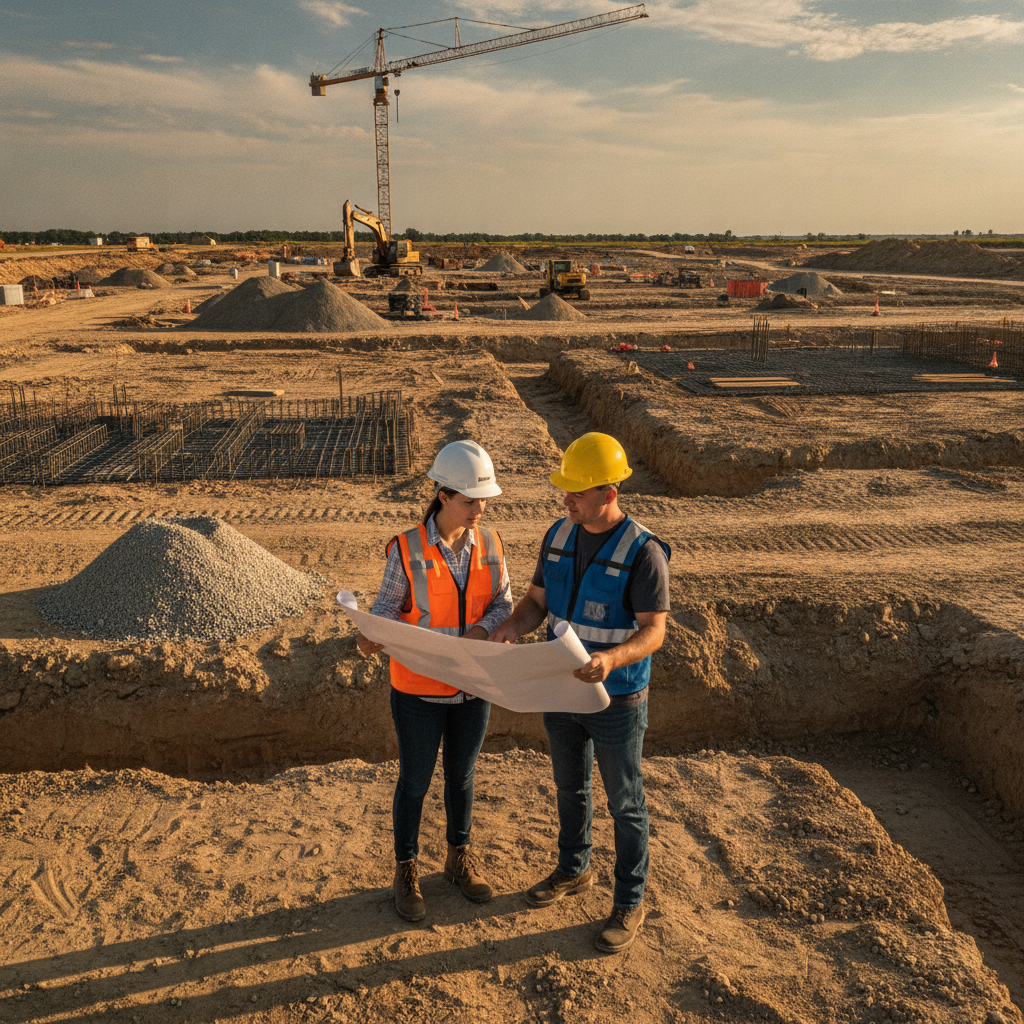
A common misconception is that a civil engineer’s work concludes once a construction permit is issued. In reality, this milestone marks the beginning of a crucial phase: ensuring the design is built as intended. During construction, the Professional Engineer acts as the owner’s technical representative for all site-related matters. This role is centered on interpreting the design documents, clarifying complexities for the contractor, and verifying that the work adheres to the approved site development plans. This oversight is vital for maintaining project integrity and preventing costly rework. Our role involves regular site visits to observe progress at critical milestones, such as the installation of underground utilities or the grading for the stormwater management system. We document these observations in field reports, providing the owner with a clear record of compliance and identifying potential issues before they escalate. This proactive involvement in the construction administration process ensures that the contractor’s methods align with the engineering specifications and the stringent requirements of Florida’s regulatory agencies.
Managing Submittals and RFIs for Mission-Critical Facilities
Data Center CA Verification Checklist
| System/Component | Key Verification Item | Compliance Standard / Risk Mitigation |
|---|---|---|
| Underground Electrical Duct Banks | Conduit spacing, depth of cover, and concrete encasement quality. | Prevents utility conflicts, ensures power reliability, and meets utility provider standards. |
| Stormwater Management System | Pond elevations, control structure orifice sizes, and exfiltration trench aggregate. | Ensures compliance with Water Management District permits and prevents on-site/off-site flooding. |
| Generator & Fuel Tank Foundations | Reinforcing steel placement, concrete strength, and anchor bolt locations. | Guarantees structural integrity for mission-critical equipment under design loads, including wind. |
| Site Grading & Earthwork | Subgrade compaction test results and finished floor elevation verification. | Prevents pavement/slab settlement and ensures positive drainage away from the building. |
| Fire Protection Water Lines | Pipe material, depth, thrust block installation, and successful pressure testing. | Confirms system reliability for fire suppression, a requirement for Certificate of Occupancy. |
| ADA Accessible Routes | Running slopes, cross slopes, and curb ramp transitions. | Ensures full ADA compliance, avoiding legal liability and costly remediation. |
The flow of information during construction is managed through two key processes: submittal reviews and Requests for Information (RFIs). Contractor submittals include shop drawings, material specifications, and product data for components like storm pipes, manholes, and utility conduits. Our engineering team meticulously reviews these documents to confirm they meet the design specifications and performance requirements. For a data center, verifying the correct load-bearing capacity of a precast drainage structure or the specific material of a utility duct bank is essential for long-term reliability and permit compliance. Inevitably, questions or unforeseen conditions arise on site, which are formalized as RFIs. A timely and accurate response is critical to avoid construction delays. Our team prioritizes RFI responses, providing clear, actionable guidance that resolves the issue while upholding the design intent and code requirements. Efficiently managing this process prevents bottlenecks, maintains the construction schedule, and ensures that every component, from generator pads to fire hydrants, is installed correctly, safeguarding the facility’s operational future and satisfying all agency review criteria.
Ensuring Stormwater Management and Drainage System Integrity
In Florida, stormwater management is one of the most scrutinized aspects of any land development project. The approved design is based on complex calculations to manage water quality and quantity, and its proper installation is non-negotiable. During construction administration, we conduct detailed inspections of the entire drainage system. This includes verifying the elevations and dimensions of retention or detention ponds, checking the installation of control structures and weirs, and ensuring exfiltration trenches are built with the specified filter fabric and aggregate. These elements are critical for both flood prevention and environmental protection. Furthermore, we oversee the implementation of the Erosion and Sediment Control Plan, ensuring measures like silt fences and turbidity barriers are properly installed and maintained to protect adjacent properties and water bodies during construction. Upon completion, the engineer must provide as-built surveys and certifications to the local Water Management District, confirming the system was built in substantial conformance with the permitted drainage design. Failure to achieve this certification can prevent the issuance of a Certificate of Occupancy, halting the entire project.
Verifying Utility Coordination and Infrastructure Installation
Data centers are defined by their immense power and connectivity requirements, making utility coordination a cornerstone of the construction process. The site’s civil infrastructure includes a complex web of underground electrical duct banks, telecommunications conduits, potable water lines, and sanitary sewer systems. Our construction administration services include verifying the precise horizontal and vertical location of these utilities to prevent conflicts and ensure required separation distances are met. This is not just a matter of following lines on a drawing; it involves confirming proper bedding and backfill, witnessing pressure tests for water mains, and ensuring concrete encasement for critical power feeds is poured to specification. We work closely with utility providers like FPL, Duke Energy, and local water authorities to coordinate service connections and inspections. Verifying that the contractor has installed infrastructure that meets the stringent standards of each utility company is crucial for a smooth transition to commissioning and operation. A mistake in the installation of a primary power duct bank, for example, could jeopardize the entire facility’s operational timeline and require extremely expensive remediation, making diligent site engineering services during this phase invaluable.
Pavement, Curbing, and ADA Compliance Inspections
While underground infrastructure is critical, the site’s surface elements are equally important for functionality, safety, and regulatory compliance. Our CA services cover the inspection of all paving and concrete work. We observe the subgrade preparation and compaction testing, review the thickness of the lime rock base, and verify the asphalt lifts meet project specifications. This ensures the roadways and parking lots can withstand the heavy truck traffic associated with data center operations without premature failure. Proper installation of curbing is also verified to ensure it correctly channels stormwater to the drainage inlets. A key area of liability and focus is ADA compliance. We meticulously inspect all accessible routes, from the parking spaces to the building entrance, to ensure they meet the strict slope, width, and surface requirements of the Americans with Disabilities Act and the Florida Building Code. This includes verifying the correct placement of curb ramps, detectable warning surfaces, and accessible parking signage. Ensuring 100% compliance during construction prevents costly post-completion retrofits and potential legal challenges.
The Change Order and Pay Application Review Process
Even with the most detailed plans, unforeseen conditions or owner-requested modifications can lead to changes in the scope of work. The civil engineer plays a vital role in managing this through the change order process. We review contractor-proposed changes for technical merit, assess the cost and schedule implications, and provide the owner with a professional recommendation. This ensures that any changes are justified, fairly priced, and properly documented. This oversight is a key part of our comprehensive Construction Management Services. Equally important is the review of the contractor’s monthly pay applications. We compare the application against the actual work completed on-site, verifying the quantities of materials installed and work performed. This process protects the owner’s financial interests by ensuring payments accurately reflect the project’s progress. By certifying the civil site work portion of the pay application, we provide the owner and their lender with confidence that their investment is being managed responsibly and transparently.
Our Approach to Data Center Construction Administration
At RSP Engineers, our approach to construction administration is proactive and collaborative. The process begins with a pre-construction conference, where we meet with the owner, contractor, and key subcontractors to establish clear lines of communication, review the project schedule, and define protocols for submittals and RFIs. We believe that setting clear expectations from day one is the key to a smooth construction process. We leverage modern tools for documentation and communication, ensuring all stakeholders have access to real-time information. Our methodology is built on a foundation of regular site visits at critical construction milestones, detailed field reports with photographic documentation, and swift responses to contractor inquiries. We don’t just identify problems; we work with the project team to find efficient and effective solutions that maintain the project’s budget, schedule, and design integrity. Our goal is to serve as a trusted partner, providing the technical oversight needed to navigate the complexities of site development and deliver a facility that meets the highest standards of quality and compliance.
Common Pitfalls in Data Center Construction Administration
Without diligent construction administration, data center projects can encounter several common and costly issues. One of the most frequent problems is incorrect utility installation, where conduits are placed at the wrong depth or without the specified separation, leading to major rework. Another significant pitfall is deviation from the approved stormwater management plan; contractors may alter pond slopes or inlet elevations, jeopardizing the drainage permit and potentially causing flooding. These issues often stem from a misinterpretation of the plans and can be prevented with regular engineering oversight. Poor subgrade compaction is another hidden issue that can lead to long-term pavement and concrete slab failure. Without an engineer present to review compaction test reports and observe proof-rolling, this critical step can be overlooked. Finally, misinterpreting zoning compliance requirements for landscaping, buffering, or equipment screening can lead to violations that must be corrected before a Certificate of Occupancy is granted. Proactive CA services identify and correct these issues early, saving time and money.
Partner with RSP for Your Data Center Construction
Ensuring your data center is built to the highest standards of quality and compliance requires a dedicated engineering partner through every phase of the project. RSP Engineers provides comprehensive construction administration services tailored to the unique demands of mission-critical facilities in Florida. Our team excels in complex utility coordination, rigorous stormwater management compliance, and meticulous site observation to protect your investment. Don’t leave the execution of your multi-million dollar project to chance. Let our experienced engineers provide the oversight needed to verify quality, solve problems, and deliver a successful project. Contact RSP Engineers today to discuss how our site development and construction administration expertise can ensure your data center is built right, from the ground up.
Conclusion: Building Confidence from the Ground Up
Effective Construction Administration is the final, crucial step in realizing the vision of a data center project. It is an active, engaged service that transforms permitted plans into a functional, compliant, and resilient facility. By providing expert oversight, managing information flow, and verifying quality at every stage, the civil engineer ensures that the finished site performs as designed. This rigorous process provides owners and developers with confidence and peace of mind. Ultimately, investing in thorough construction administration is investing in the long-term success of your facility. It mitigates risk, prevents costly rework, and ensures a smooth path to project closeout and operation. For a successful Florida data center, robust civil engineering oversight during construction isn’t an option—it’s an essential component of a well-executed site development strategy.
FAQs
-
Construction Administration (CA) is typically performed by the design engineer and focuses on ensuring the project is built in conformance with the permitted plans and specifications. Construction Management (CM) is a broader role, often handled by a separate firm, that manages the overall project schedule, budget, and contractor coordination. While there can be overlap, the engineer’s CA role is specifically focused on design integrity and permit compliance.
-
The frequency of site visits depends on the project’s complexity and construction schedule. Visits are scheduled around critical activities such as underground utility coordination and installation, key phases of the stormwater management system construction, subgrade preparation, and final grading. A typical schedule might involve bi-weekly visits, supplemented by additional visits for specific milestones or to address unforeseen issues.
-
Data center construction operates on highly compressed schedules where every day of delay can translate into significant lost revenue. A slow response to an RFI or submittal can halt a critical path activity, causing a cascading effect on the entire project schedule. Prompt and accurate engineering responses are essential to keep the project moving forward and avoid costly delays in a time-sensitive market.