
Data Center Value Engineering: Reducing Costs Without Sacrificing Reliability
Explore value engineering strategies for Florida data center projects. Learn how RSP Engineers reduces site development costs in civil engineering, stormwater, and utilities without compromising relia
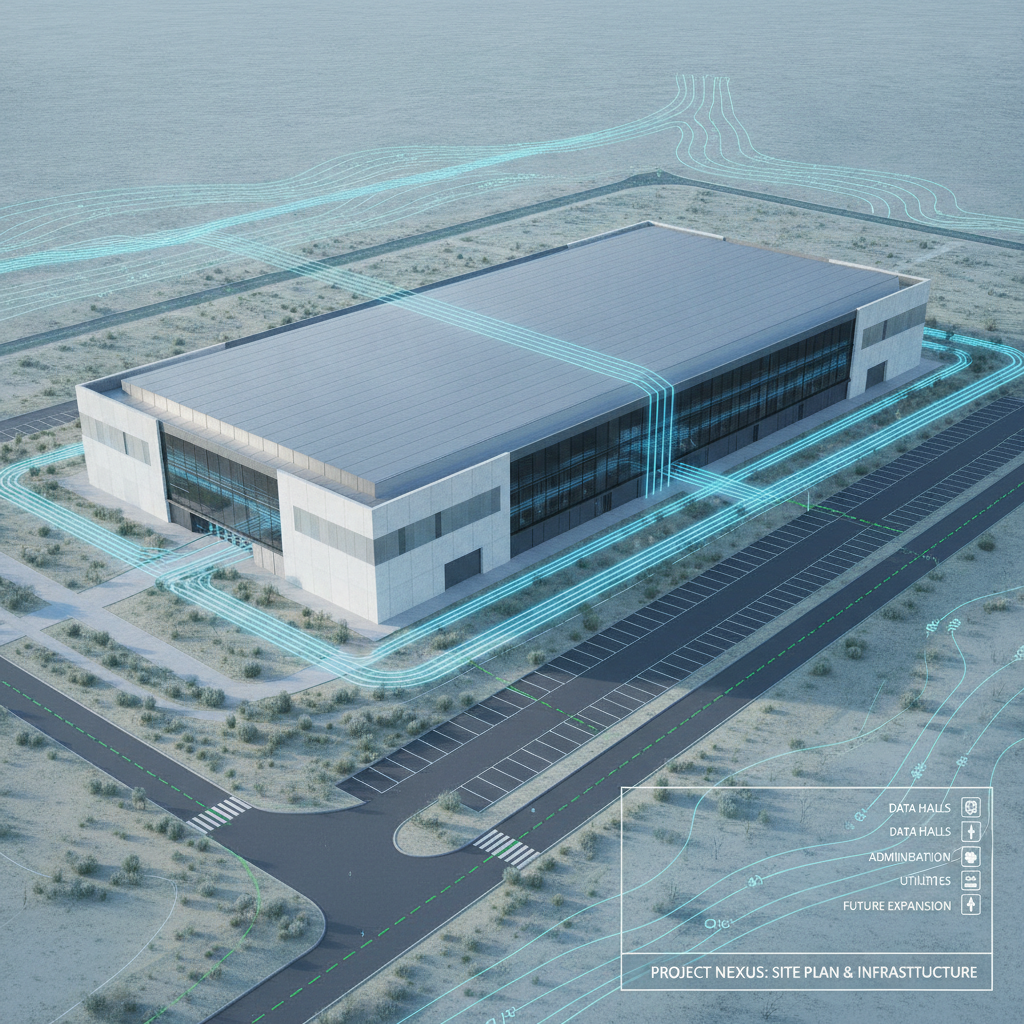
Optimizing Site Layout and Grading for Maximum Efficiency
The initial layout of a data center campus is a foundational cost driver. An optimized site plan minimizes expensive earthwork, reduces the need for costly retaining walls, and streamlines utility runs. Our process begins with a thorough analysis of the site’s topography to develop a grading plan that balances cut and fill volumes. Achieving an on-site earthwork balancing act prevents the significant expense of importing or exporting soil, which carries heavy trucking and disposal fees. This is a primary objective of effective site engineering services. Furthermore, strategic placement of the main facility, generator yards, and cooling infrastructure can significantly impact cost. By aligning the building pad with natural contours, we can reduce foundation costs and simplify stormwater conveyance. We also analyze vehicle circulation, ensuring that access roads for construction, maintenance, and fuel delivery are efficient and meet local roadway engineering standards without excessive pavement. A well-designed layout considers not just Day 1 needs but also future expansion, ensuring that initial grading and utility placement don’t preclude cost-effective growth.
Strategic Stormwater Management System Design
Data Center Site Development VE Comparison
| Feature/System | Standard Approach (Higher Cost) | Value Engineered Approach (Optimized Cost) | Key Consideration |
|---|---|---|---|
| Stormwater Management | Single, large, deep wet retention pond. | Integrated system with shallower ponds, bioretention, or underground detention. | Land value, future expansion needs, and local regulations. |
| Earthwork & Grading | Significant import or export of soil to meet design grades. | Balanced cut/fill design that minimizes soil transport off-site. | Requires detailed topographic survey and strategic building placement. |
| Utility Duct Banks | Concrete-encased duct banks for all utility runs. | Direct-bury conduits in less critical areas; consolidated, expandable duct banks. | Coordination with utility providers and assessment of physical risk. |
| Equipment Yard Pavement | Uniform 12-inch reinforced concrete across the entire yard. | Thicker, reinforced pads only at transformer/generator locations; heavy-duty asphalt elsewhere. | Requires precise equipment specifications and load calculations. |
| Perimeter Security Fencing | Continuous concrete mow strip and uniform bollard spacing. | Gravel mow strip; leveraging natural barriers to reduce fence length; strategic bollard placement. | Balance between security requirements and long-term maintenance costs. |
| Site Lighting | Standard high-mast lighting across the entire site. | LED fixtures with targeted optics; motion-sensor controls in low-traffic areas. | Meets security illumination standards while minimizing energy consumption. |
Data centers, with their massive building footprints and extensive paved areas, create vast amounts of impervious surface. In Florida, managing the resulting stormwater runoff is a major regulatory and engineering challenge. A conventional approach might involve a single, oversized, deep wet retention pond, which consumes valuable land and can be expensive to excavate and maintain. Value engineering in stormwater management explores more creative and efficient solutions. We evaluate alternatives like Low Impact Development (LID) techniques, such as bioretention areas or permeable pavements in non-critical zones like employee parking. For sites with limited space, an underground detention system can preserve surface area for future expansion or equipment staging, providing immense long-term value. The design must also navigate the complex requirements of Florida’s Environmental Resource Permitting (ERP) program. A VE approach involves modeling various scenarios to find the most cost-effective system that meets both regulatory discharge requirements and the site’s specific hydrological conditions, avoiding over-design while ensuring robust drainage design.
Rightsizing Utility Infrastructure and Redundancy
The lifeblood of any data center is its utility infrastructure—power, water, and fiber. While redundancy is non-negotiable, over-specification is a common source of unnecessary expense. Value engineering in utility coordination involves a detailed analysis of the facility’s phased power demands and cooling requirements. Instead of building out the ultimate capacity from Day 1, we design utility corridors and duct bank systems that can be expanded modularly. This defers significant capital expenditure until it’s actually needed. This process includes optimizing the routing of conduits to minimize trenching length, pavement cuts, and conflicts with other systems. We work closely with local utility providers to understand their connection requirements and identify the most efficient points of connection. A key VE strategy is to consolidate utility runs into common, well-planned corridors, which simplifies construction, reduces the site footprint, and makes future maintenance more manageable. This proactive planning avoids costly relocations and ensures the site plan design supports both initial and future phases of multifamily development of server racks.
Pavement Design and Material Selection Alternatives
Not all pavement on a data center site is created equal. The service yard that supports heavy generators, transformers, and fuel tankers requires a robust heavy-duty pavement design, often involving reinforced concrete. In contrast, employee parking areas and light access roads can be designed to a less stringent standard. Value engineering challenges the one-size-fits-all approach, tailoring pavement sections to their specific loading requirements. This requires a solid understanding of the underlying soils, informed by a thorough Geotechnical soil report. We analyze the life-cycle costs of different materials. While asphalt may have a lower initial cost for a parking lot, roller-compacted concrete (RCC) or a concrete pad might be more cost-effective in the long run for high-stress areas due to lower maintenance needs. We also explore soil stabilization techniques to improve the load-bearing capacity of native soils, potentially reducing the required thickness of the aggregate base and pavement layers. This data-driven approach ensures durability where it matters most while capturing savings in less critical areas, all while maintaining ADA compliance for accessible routes.
Navigating Permitting and Zoning for Cost Avoidance
The fastest way to add cost to a project is through delays, and in Florida, the permitting process can be a significant hurdle. Value engineering extends to the entitlement and permitting strategy. By engaging with local and state agencies early, we can identify potential roadblocks in the zoning compliance process and proactively address them. For example, a municipality might have stringent landscaping or architectural requirements that add significant cost but little functional value to a data center. Our team works to find alternative compliance pathways, negotiate reasonable conditions, and prepare meticulous permit submittals that anticipate reviewer comments. This reduces the number of review cycles and accelerates approval timelines. Understanding the nuances of local land development codes, from setback requirements to noise ordinances affecting generator placement, allows us to optimize the site layout to avoid the need for costly variances or special exceptions. A smooth permitting journey is one of the most effective cost-saving tools in any project.
Value Engineering in Security and Access Control Infrastructure
Physical security is paramount for a data center, but its civil infrastructure components can be value-engineered. The design of perimeter fencing, anti-ram bollards, and access gates has a direct impact on the site’s civil engineering plans. A standard approach might call for a continuous concrete mow strip under all fences and extensive bollard placement. A VE approach analyzes the actual threat vectors and optimizes the design accordingly. For instance, we can leverage natural topography or stormwater ponds as part of the site barrier, reducing the length of required security fencing. The roadway engineering for patrol routes can be designed for efficiency, minimizing pavement. We also coordinate the placement of gate operators and card readers with the electrical and communication conduit plans to avoid redundant trenching. Ensuring that all pedestrian access points meet ADA compliance from the outset also prevents costly retrofits later in the construction process.
RSP Engineers’ Approach to Data Center VE
At RSP Engineers, our value engineering process is integrated into the project lifecycle from the very beginning. We don’t treat it as a separate, cost-cutting exercise late in the design phase. Our approach involves four key stages: Early Engagement and Due Diligence: We partner with clients during site selection to identify potential civil engineering challenges and opportunities, providing critical input on feasibility and development costs before land is even acquired. Integrated Design Workshops: We facilitate collaborative workshops with the owner, architect, MEP engineer, and other stakeholders. This ensures that civil VE decisions, like adjusting building elevation to save on fill, are fully coordinated with other disciplines. Life-Cycle Cost Analysis: Our recommendations look beyond the initial construction bid. We analyze the long-term maintenance, replacement, and operational costs associated with different design choices, such as pavement materials or stormwater system types. Proactive Agency Coordination: As a leading civil engineering firm near me, we leverage our deep relationships with Florida’s regulatory agencies. We proactively discuss design concepts to streamline the permitting process, ensuring our VE solutions are not only cost-effective but also approvable.
Common Pitfalls in Data Center Cost Reduction
Aggressive cost-cutting, when not guided by proper engineering principles, can be disastrous for a data center. A common pitfall is de-scoping critical infrastructure. This includes reducing the number of redundant utility feeds, using undersized conduits that prevent future fiber expansion, or compromising the geotechnical engineering recommendations for foundation and pavement stability. Another frequent mistake is underestimating stormwater needs, which can lead to site flooding and equipment damage—a catastrophic failure for a mission-critical facility. Finally, a short-sighted approach might save money on the initial phase but make future expansion prohibitively expensive by not pre-planning utility stubs or grading for future building pads.
Partner with RSP Engineers for Your Data Center Project
Developing a data center in Florida requires a Professional Engineer with specialized expertise in mission-critical facilities. The complexities of utility coordination, resilient stormwater management, and expedited permitting demand a seasoned partner. RSP Engineers provides the strategic civil engineering insight needed to optimize your project’s value from the ground up. Our team is ready to help you navigate the challenges of site development and deliver a reliable, cost-effective foundation for your investment. Contact us today to discuss your project goals.
Conclusion: Strategic Investment, Not Just Cost Cutting
Ultimately, data center value engineering is about maximizing the return on a massive investment. It is a methodical, data-driven process that enhances project value by optimizing the relationship between cost, performance, and reliability. By focusing on high-impact areas like site development, stormwater management, and utility infrastructure, developers can achieve significant savings without compromising the integrity of their facility. A successful project hinges on a smart permitting strategy and a design that is both resilient and efficient, ensuring the data center is built on a foundation of value from day one.
FAQs
-
The most impactful value engineering occurs during the conceptual design and site development planning stages. Early decisions about site layout, grading, and utility strategy have the largest financial impact. Implementing VE late in the process often results in minor changes with diminishing returns.
-
When done correctly, VE can accelerate the permitting timeline. By proposing smart, efficient designs that anticipate agency concerns (especially regarding stormwater management and environmental impacts), the number of review comments and resubmittals can be significantly reduced.
-
No. True value engineering does not compromise core functions. The goal is to optimize, not eliminate. For civil engineering, this means ensuring that the site infrastructure—such as the stability of equipment pads, the reliability of underground utilities, and the effectiveness of the drainage design—fully supports the facility’s uptime requirements.