
Data Center Medium Voltage Routing: Best Practices for Site Development
A technical guide for data center developers on medium voltage (MV) power routing. Learn best practices for duct banks, utility separation, thermal derating, and permitting from Florida civil engineer
The Critical Role of MV Power Routing in Data Center Site Design
The reliability of a data center begins outside the building walls. The MV power distribution system is the primary artery feeding the facility, and its design must be treated with the same rigor as the data hall’s cooling system. Effective MV routing is not merely about connecting Point A to Point B; it involves a comprehensive site development strategy that accounts for electrical performance, physical security, and long-term operational needs. Key considerations include ensuring adequate separation from other utilities, planning for future expansion, and protecting conduits from potential site activities or environmental hazards. A failure in the underground distribution network can be just as catastrophic as an equipment failure inside the building, but far more difficult and costly to repair. From a civil engineering perspective, the MV routing plan directly influences site grading, roadway layout, and even the placement of stormwater management features. Early and integrated planning prevents costly rework and ensures that power corridors are not compromised by other site elements. This requires close utility coordination between the civil engineer, the electrical engineer, and the local power utility from the earliest stages of design. Neglecting this upfront collaboration can lead to significant permitting delays and constructibility issues down the line.
Duct Bank Systems vs. Direct-Buried Cable: A Civil Engineering Perspective
MV Conduit Installation Method Comparison: Duct Bank vs. Direct-Buried
| Feature | Concrete-Encased Duct Bank | Direct-Buried Cable |
|---|---|---|
| Physical Protection | Excellent. Concrete encasement provides high resistance to excavation damage and soil movement. | Poor to Moderate. Relies on warning tape and backfill quality. Vulnerable to rock impingement and accidental digs. |
| Repair & Replacement | Simpler. Damaged cables can be pulled out and new ones pulled in without major excavation (assuming conduit is intact). | Highly Disruptive. Requires complete excavation of the affected trench section to access and repair/replace the cable. |
| Future Capacity | Excellent. Spare conduits can be installed initially at a low marginal cost for future expansion. | Poor. Adding capacity requires trenching an entirely new parallel route. |
| Thermal Dissipation | Good, but requires careful thermal derating analysis based on conduit spacing, soil resistivity, and load. | Generally better thermal dissipation than a concentrated duct bank, but highly dependent on soil conditions. |
| Initial Cost | Higher due to costs of conduit, concrete, rebar, and increased labor. | Lower due to fewer materials and simpler installation process. |
| Permitting & Utility Approval | Often preferred or required by utility providers for mission-critical facilities due to its robustness and clear pathway. | May face more scrutiny from utility providers for primary data center feeds due to lower reliability. |
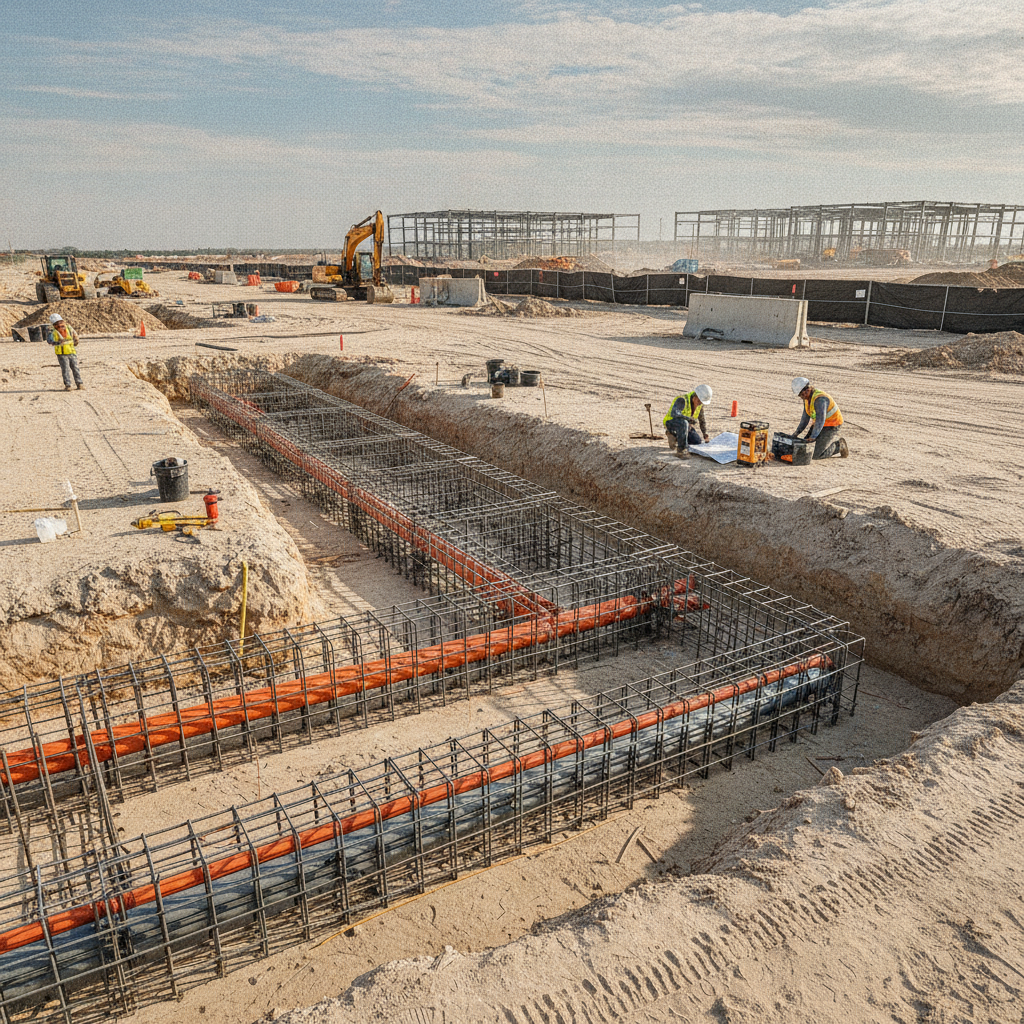
One of the first major decisions in MV site design is the choice between a concrete-encased duct bank system and direct-buried cable. A duct bank consists of multiple conduits (typically PVC) encased in concrete, providing superior physical protection and a clear, organized pathway for pulling cables. This method is the standard for most mission-critical facilities due to its robustness and flexibility. It allows for cables to be replaced or added in the future without major excavation, which is a significant operational advantage. The design of a duct bank must consider conduit spacing for thermal derating, rebar reinforcement for structural integrity, and proper alignment to minimize pulling tension. Direct-buried cable, while less expensive upfront, involves placing the armored MV cable directly in a trench with sand or fine-aggregate bedding. This method offers less physical protection and makes future repairs or upgrades extremely disruptive, requiring extensive excavation. For data centers, where uptime is non-negotiable, the risks associated with direct-buried cable often outweigh the initial cost savings. The decision also impacts the permitting process, as utility providers and local jurisdictions often have specific requirements for conduit systems, burial depth, and protective measures, especially in a complex land development project.
Strategic Placement of Manholes, Handholes, and Pull Points
Long MV cable runs are not installed in a single, continuous pull. The system requires strategically placed manholes, handholes, or pull boxes to facilitate installation and future maintenance. The spacing of these access points is dictated by the cable manufacturer’s maximum recommended pulling tension and the geometry of the route. A typical rule of thumb is to place a pull point every 400-600 feet on a straight run, with additional points required for any significant bends. A civil engineering firm must work closely with the electrical engineer to locate these structures effectively. The placement of manholes is a significant site development consideration. They must be located in accessible areas, away from future building foundations, heavy traffic paths (unless appropriately rated), and critical drainage design features. The top elevation of each manhole must be carefully coordinated with the final site grading to ensure proper surface drainage and avoid creating tripping hazards. Furthermore, the design must account for grounding requirements and provide adequate space for cable splicing and training, which is a critical aspect of the overall utility coordination effort.
Utility Separation and Clash Detection for Mission-Critical Infrastructure
A data center site is a complex network of underground utilities, including water, sewer, gas, fiber optics, and stormwater pipes. Maintaining adequate separation between the MV duct bank and these other systems is critical for safety and reliability. A direct fault from a high-pressure water line break or an accidental excavation could compromise the primary power feed. Most utility providers and local agencies mandate minimum horizontal and vertical separation distances. For example, a common requirement is a minimum of 3 to 5 feet of horizontal clearance and 1 to 2 feet of vertical clearance from water and sewer lines. Modern site development relies heavily on 3D modeling and clash detection to prevent utility conflicts before construction begins. An experienced civil engineering team will model the proposed MV duct bank alongside all other existing and proposed utilities. This digital coordination process identifies potential clashes early, allowing for route adjustments during the design phase rather than costly and time-consuming field changes. This proactive approach to utility coordination is essential for maintaining the project schedule and budget, and it is a key part of a successful permit submittal package.
Addressing Thermal Derating and Soil Conditions in MV Design
Medium voltage cables generate significant heat under load. If this heat is not dissipated effectively into the surrounding soil, the cable’s temperature can rise, increasing its resistance and reducing its ampacity (current-carrying capacity). This phenomenon, known as thermal derating, must be accounted for in the design. The configuration of the duct bank—how closely conduits are spaced—and the thermal resistivity of the surrounding soil are the primary factors. A Geotechnical engineer can perform a Soil Test to determine the site’s specific thermal properties. In Florida, sandy soils generally have good thermal conductivity, but this can be affected by moisture content. The civil engineering design must ensure the duct bank is not placed in areas that will remain excessively dry or in poorly compacted fill. The electrical engineer uses this data to calculate the required conductor size, potentially upsizing the cable to compensate for thermal constraints. This analysis is a critical step in ensuring the power system can handle the full design load, especially for high-density AI and cloud computing facilities. Proper drainage design around the duct bank corridor is also important to maintain stable soil moisture and thermal properties.
Designing for Redundancy: A/B Power Paths and Site Constraints
For any mission-critical facility, redundancy is key. Data centers are typically designed with at least two independent power feeds (A and B paths) from the utility substation to the building’s electrical rooms. To achieve true redundancy, these MV paths must be physically separate and diverse. The goal is to prevent a single point of failure, such as a localized excavation or trench collapse, from taking down both power feeds simultaneously. The site development plan must accommodate two distinct corridors for these duct banks. Achieving sufficient separation can be challenging on constrained sites. The civil engineering team must strategically route these paths, often on opposite sides of the building or along different roadway corridors. The design must navigate property lines, easements, existing utilities, and environmental features. This requires careful planning and often involves negotiating with utility providers and navigating zoning compliance regulations. The cost and complexity of providing physically diverse paths is a significant factor in the overall project budget but is a non-negotiable requirement for Tier III and Tier IV data center designs. Our Process at RSP Engineers At RSP Engineers, our approach to data center MV routing is integrated and proactive. We begin with a thorough due diligence phase, reviewing utility provider standards, geotechnical reports, and local permitting requirements. Our process involves: 1. Preliminary Routing Studies: We develop multiple routing options, evaluating each for constructibility, cost, and risk, in close collaboration with the client and electrical engineer. 2. Detailed Utility Coordination: Using 3D modeling, we perform comprehensive clash detection to de-conflict the MV paths with all other site infrastructure, including stormwater, water, and communications. 3. Integrated Site Design: Our civil engineering team ensures the MV corridors are seamlessly integrated with the site’s grading, drainage, and roadway plans. 4. Permitting and Agency Liaison: We manage the complex process of securing approvals from power utilities and jurisdictional authorities, ensuring our designs meet all technical standards and codes. 5. Construction Administration: We provide oversight during construction to ensure the duct bank system is installed per the design specifications, addressing any field conditions that may arise. Common Issues in MV Routing and Construction Even with meticulous planning, challenges can arise. Some common issues include encountering undocumented utilities or difficult subsurface conditions like rock or a high water table, which can require route adjustments and redesign. Another frequent challenge is coordinating with the electrical utility, as their design standards and review timelines can significantly impact the project schedule. During construction, ensuring proper conduit spacing, concrete coverage, and backfill compaction is critical to the long-term performance of the system. Proactive construction administration and clear communication between the civil engineer, contractor, and owner are essential to overcoming these hurdles. Frequently Asked Questions (FAQ) How early should MV routing be planned in the site development process? MV routing should be considered during the earliest stages of due diligence and conceptual design. Early utility coordination with the power provider is essential to confirm available capacity, service points, and their technical requirements. Integrating the MV corridors into the initial site plan design prevents major layout changes later in the project. What are the primary permitting challenges for data center MV duct banks in Florida? In Florida, challenges often involve coordinating with the specific power utility (e.g., FPL, Duke Energy, TECO), each with unique standards for duct bank design and separation. Additionally, routing through or near wetlands or other environmentally sensitive areas requires separate environmental permitting. Proving compliance with local and state codes, including the Florida Building Code, is also a key part of the agency review process. How does soil type affect the design of our MV power infrastructure? Soil type significantly impacts both the structural and thermal design. A Geotechnical soil report is crucial. Poor soils may require over-excavation and replacement for structural stability, while soils with high thermal resistivity may necessitate larger conductor sizes or wider conduit spacing to manage thermal derating and prevent overheating. Can we route other utilities like fiber in the same trench as our MV duct bank? Generally, no. Co-locating low-voltage communications/fiber with medium-voltage power is strongly discouraged and often prohibited by utility standards and the National Electrical Code (NEC). This is to prevent electromagnetic interference (EMI) and for safety reasons. Separate, parallel trenches with specified clearance are the standard practice for proper utility coordination. What is the typical review time for an electrical utility’s approval of a data center MV design? Review times can vary widely, from a few weeks to several months, depending on the utility’s workload, the complexity of the project, and the quality of the permit submittal. It is critical to engage the utility early and factor their review cycle into the overall project schedule. A complete and compliant design package is the best way to expedite approval. How does the site’s stormwater management plan impact MV routing? The stormwater management system, including retention/detention ponds, swales, and underground pipes, can create significant constraints. MV duct banks cannot be routed through ponds and must maintain proper separation from large storm drains. The civil engineering design must harmonize the grading for both the power corridors and the site’s overall drainage design to ensure both systems function correctly. Partner with RSP Engineers for Your Mission-Critical Project Successfully navigating the complexities of data center site development requires specialized expertise. The team at RSP Engineers provides the expert civil engineering and site development services needed to ensure your mission-critical facility is built on a reliable foundation. We manage every aspect of the site design, from initial utility coordination and due diligence to final permitting and construction support. Our proactive approach de-risks your project, ensuring your power infrastructure is robust, redundant, and ready for the future. Contact us today to discuss how we can support your next data center project in Florida. Conclusion The routing of medium voltage power is a foundational element of data center design that demands rigorous engineering and foresight. The choice between duct banks and direct-buried cable, the strategic placement of access points, and the meticulous separation from other utilities all have profound impacts on reliability and cost. By integrating civil engineering expertise early in the process, developers can create a site plan that protects these critical assets. A successful project hinges on detailed utility coordination, a deep understanding of thermal and geotechnical factors, and a proactive approach to permitting and construction. Related Articles Navigating Stormwater Permitting for Large-Scale Commercial Developments in Florida The Civil Engineer’s Role in Due Diligence for Land Acquisition ADA Compliance in Site Design: Beyond the Parking Lot
FAQs
-
Data Center Medium Voltage Routing: Best Practices for Site Development requires careful planning, qualified engineering, and compliance with the applicable codes and permits.
-
Getting Data Center Medium Voltage Routing: Best Practices for Site Development right protects safety, supports regulatory compliance, and avoids costly redesigns or delays.
-
RSP Engineers provides licensed expertise and end-to-end support for Data Center Medium Voltage Routing: Best Practices for Site Development, from early planning through permitting.